
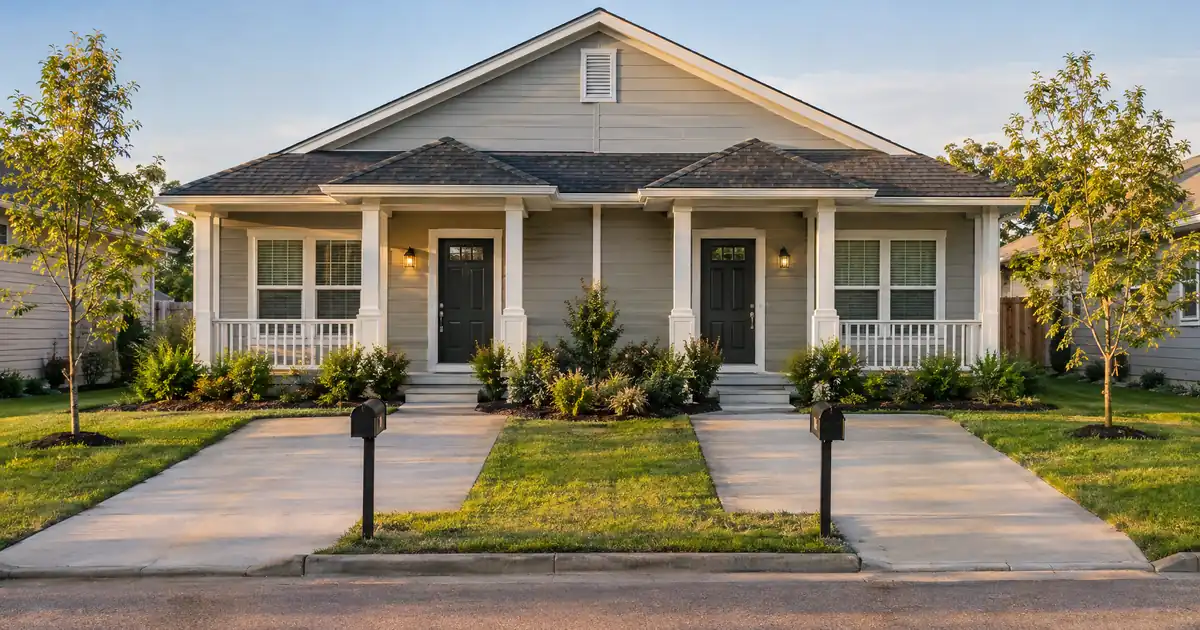
The Quick Read: No, a DSCR portfolio of houses, duplexes and condos does not need one policy, whether you mean one insurance policy or one loan: insurance can be scheduled, blanket or fully separate, and the loan can be one pooled note or separate notes, and the two choices are made independently of each other. Most investors end up with several policies anyway, because a condo unit carries its own coverage.
- A house, a duplex and a condo can sit under one landlord policy, but the condo unit still needs its own unit-owner (HO-6) policy.
- A standard DSCR loan is one property per note, and owning everything in one LLC does not merge the loans.
- One pooled loan is a separate decision from one insurance policy, and nothing ties the two together.
- Separate loans keep one weak property from dragging the others, while a pooled note trades that isolation for one closing and pooled coverage testing.
What Does “One Policy” Actually Mean Here?
It can mean one insurance policy or one loan structure, and the answer is no in both cases. Insurers write multi-property cover two ways. A scheduled policy lists each property with its own limit. A blanket policy puts one pooled limit across all of them.
The loan side works differently. A standard DSCR loan secures one property. A pooled loan, also called a blanket or cross-collateralized loan, is one note secured by several rentals. Lendmire’s wholesale network includes lenders that offer this structure, and those programs are covered below.
The rest of this piece takes insurance first, then the loan, then where they touch. For a broader primer on how these loans work, see the complete DSCR loans guide.
Can One Landlord Policy Cover a House, a Duplex and a Condo?
Partly. A multi-property agency explainer from Wexford Insurance says blanket or multi-property policies let landlords cover several rental units under one policy, and it lists mixed unit types, including duplexes, as eligible. The condo is where the one-policy idea breaks down.
A duplex is one structure, so one landlord dwelling policy typically covers both units. A house fits the same form. A condo is different because the owner insures the unit, not the building. The HOA master policy usually covers the shell and common areas. The interior, finishes and liability sit with the owner’s HO-6.
Master policies vary. Some cover bare walls only, some cover the original fixtures, and some cover nearly everything. How much HO-6 dwelling cover you need depends on which type the association carries. So a mixed portfolio usually ends up with a landlord form for the houses and duplexes plus one HO-6 per condo. A blanket policy generally does not replace the HO-6, because the condo’s exposure is defined by the HOA documents.
| Property | Typical policy form | What the HOA covers | Owner still carries |
|---|---|---|---|
| House | Landlord dwelling | Not applicable | Full structure and liability |
| Duplex | Landlord dwelling | Not applicable | Both units, one structure |
| Condo | HO-6 plus rental endorsement | Shell, common areas | Interior and liability |
Flood is a separate gap. An HO-6 policy excludes it, and flood, wind and short-term-rental activity can each need their own cover. Short-term rental rules can vary by city, county, HOA, and property type, so investors should confirm local rules before relying on projected rental income.
Scheduled or Blanket: Which Insurance Structure Fits?
Scheduled is the safer default for a mixed portfolio, and blanket suits portfolios whose properties are similar in age, type and value. The trade-off is real in both directions.
Hettler Insurance explains that scheduled policies cap payouts per location, while blanket policies make the full limit available for any single loss. The same source notes that blanket cover can carry higher premiums, stricter coinsurance, and margin clauses that quietly cap per-site payouts. It also warns that under-reporting one property’s value can trigger coinsurance penalties across the whole portfolio. Valuation accuracy matters more under a blanket.
The scheduled structure has its own catch. Each property has a fixed limit, so if one is underinsured, coverage from another cannot fill the gap. As for cost, blanket policies are sometimes pitched as a way to save, while other quotes come in with higher premiums. Treat savings as something a quote proves, not a rule.
Liability deserves its own thought. Wexford warns that a single lawsuit touching tenants in several units could exceed a standard single-property limit, and it suggests umbrella cover. Entity structure matters too. A BiggerPockets thread on blanket insurance describes some carriers keeping separate policies but billing them together, and others writing one policy with several dwellings. If you hold properties in several LLCs, shared limits across entities can be used up by one claim, and a lender may want each entity named on its own property.
Pick the structure by asking a few questions:
- Are the properties similar in age, construction and tenant type? Blanket becomes more workable.
- Do they sit in different entities? Separate policies usually isolate liability better.
- Is the portfolio large, or held in an LLC? A commercial landlord form may fit better than a residential one.
- Can you value each property accurately? If not, a blanket’s coinsurance terms add risk.
One Pooled Loan or Separate Loans?
Separate loans fit most mixed portfolios. A pooled note fits investors who want one closing, one payment and pooled testing, and who accept shared risk to get it. Neither is automatically better.
Start with a rule that surprises people. A single property can carry only one first lien, so it cannot sit inside a pooled loan and a standalone loan at once. And one LLC owning three rentals does not merge their loans. Each property still gets its own note unless you choose the pooled structure on purpose.
Lendmire’s network has two pooled structures. The first is the 30-year portfolio DSCR loan. It covers two to twenty properties under one note, with loan sizes from $300,000 to $5,000,000 and larger balances on review. Leverage runs up to 80% of value on a purchase or rate-and-term refinance. It accepts single-family, two-to-four unit, condo and townhome collateral, and an interest-only period is available. Coverage is measured on the pool, with a 1.00 floor on pooled rent against pooled debt service. Final terms depend on lender guidelines, property type, leverage, and the borrower’s complete credit picture.
The second is the rental portfolio term loan, built for five or more rental properties or units. Loan sizes run from $500,000 to $50,000,000, and leverage goes up to 75% of value. Terms are fixed at three, five, seven or ten years with a balloon at maturity. Recourse and non-recourse versions exist. A non-recourse loan looks to the real estate, with recourse limited to carve-outs such as fraud and bankruptcy. Small multifamily of five or more units is eligible only on this term loan, not on the 30-year structure. All of these figures are program ceilings and floors, subject to lender guidelines, not quotes.
A loan on one rental behaves differently. Most single-property purchase files land at 75%-80% LTV on an investment property, and credit floors differ from the pooled programs. The two sets of numbers should never be mixed. These specifics are subject to lender guidelines and a full review of property, leverage, and credit.
| Factor | One pooled note | Separate loans |
|---|---|---|
| Coverage test | Pooled rent vs pooled debt | Each property alone |
| Weak property | Can be offset by strong ones | Must stand on its own |
| Default exposure | Every pledged property | Only that property |
| Selling one | Release terms apply | Pay off that note |
| Closings | One | One per property |
How Does a Mixed Pool Get Tested?
Coverage is measured on the whole pool. Add the rent from every property, divide by the combined monthly obligation (principal, interest, taxes, insurance and any HOA dues), and compare the result to the 1.00 floor. Every property still needs a lease or an appraiser-supported market rent.
Run the numbers on a hypothetical three-property pool with roughly similar payments. The house covers around 1.3x, the duplex around 1.15x, and the condo, carrying high HOA dues, around 0.9x. Pooled coverage lands near 1.1x. The condo can sit in that pool because underwriting tests the pooled coverage, the leverage and the terms together, not each property alone. These ratios are modeled assumptions for illustration, not market data.
Now the flip side. If the duplex loses a tenant or the HOA raises assessments, the pooled ratio falls and every property feels it. With separate notes, the same problems stay contained to one loan. For a mixed portfolio that is the point that usually decides the question.
One more reality check. Clearing 1.00 is not the same as positive cash flow. DSCR compares rent to the monthly obligation only. Repairs, vacancy, management, utilities and capital expenses sit outside the calculation.
Where Insurance and the Loan Meet
The two decisions are independent, but the insurance premium is part of the loan math. It feeds the denominator of the coverage ratio. A stale or low insurance estimate can cut the ratio late in the file, so a fresh quote early prevents surprises.
Across Lendmire’s wholesale network, lenders typically ask for evidence of coverage on each property: a declarations page, the correct named insured, the lender clause, and an effective date on or before closing. Exact requirements depend on the lender. For a condo, a lender may review both the master policy and the HO-6, including deductibles. An LLC-held property generally needs the LLC as named insured, subject to program requirements.
In practice, a few combinations show up often:
- Separate loans with one blanket or scheduled insurance policy for the houses and duplexes, plus an HO-6 on each condo.
- One pooled loan with scheduled insurance, so each property’s limit stays clear.
- Separate loans and separate policies, which isolates risk the most but means more renewals and more paperwork.
A reminder that applies across all of them: manufactured homes, log homes and barndominiums are not reviewable through the network’s DSCR programs, and the pooled programs also exclude owner-occupied, co-op, mixed-use and commercial property.
Key Terms Defined
Scheduled policy: an insurance policy that lists each property with its own limit.
Blanket policy: an insurance policy with one pooled limit across several properties.
HO-6: the unit-owner policy that covers a condo’s interior, contents and the owner’s liability.
Master policy: the HOA’s policy, which typically covers the building shell and common areas.
Blanket (portfolio) loan: one note secured by several rentals, also called a cross-collateralized loan. A bank’s “portfolio loan,” meaning a loan the bank keeps on its own books, is a different use of the same word.
Release clause: loan-document language that lets one property leave the pool when conditions are met. It is a contract term, not a legal entitlement, and the release price runs above the property’s allocated balance.
Which Setup Fits Which Investor?
Choose separate loans if your properties were bought at different times, finish rehab on different dates, or carry very different risk. Staggered acquisitions rarely line up well in one pool. The same goes for older rentals with low balances. Pooling them adds cross-collateral exposure and a release price on any sale, and it gains little qualifying strength. If a personal guaranty applies, it typically stays in place after a property is released.
Choose a pooled loan if you hold a stable set of seasoned rentals, want one payment and one closing, and have no near-term plans to sell individual properties. It also helps when one property clears the floor comfortably and another sits close to it. If you already know you will sell one soon, the release terms deserve a close read before you sign.
For insurance, choose a blanket policy when properties are alike and you can value each one accurately. Choose scheduled or separate policies when entities, locations or risk profiles differ. In every case, add the HO-6 for condos and review liability limits against your combined exposure.
Before signing a pooled loan, read the note, each mortgage or deed of trust, the allocation schedule, the cross-default language and the release terms. Lendmire’s brokers see lenders vary a great deal on exactly those clauses, so the comparison is worth the time.
Common Mistakes
- Assuming one LLC means one loan. It does not.
- Assuming a pooled loan requires a blanket insurance policy, or the reverse. Nothing links them.
- Counting on the HOA master policy to cover a rented condo’s interior.
- Under-valuing a property on a blanket policy and triggering coinsurance penalties across the portfolio.
- Treating a release clause as automatic.
- Mixing single-property loan figures with pooled-program figures when comparing options.
Tax treatment varies by how a property is held and used, so consult a qualified professional before relying on any deduction.
Frequently Asked Questions
Can one insurance policy cover a house, a duplex and a condo?
It can cover the house and the duplex, and some carriers will list a condo on the schedule, but the condo unit still needs its own HO-6 because the HOA documents define its exposure. Ask the agent how the master policy type (bare walls, single entity or all-in) changes the HO-6 dwelling limit you need.
Does a pooled DSCR loan require one blanket insurance policy?
No. The loan and the insurance are separate decisions. A lender wants evidence of adequate coverage on each property, and it does not care whether that evidence comes from one policy or several, subject to lender guidelines. Scheduled coverage often makes each property’s limit easier to document.
Can a condo with weak rent sit inside a pooled loan?
It can, because underwriting tests the pooled coverage, the leverage and the terms together. The pool as a whole still has to clear its 1.00 floor on the 30-year structure. A weak condo reduces the cushion for every other property, which is why some investors keep it on its own note.
If I put all my rentals in one LLC, do they share one loan?
No. A standard DSCR loan is one property per note, whatever entity holds title. LLC-titled borrowing is subject to lender program eligibility, and the entity does not combine the loans. Only a pooled structure puts several properties under one note.
Is blanket insurance cheaper than separate policies?
It depends. Blanket cover can lower the cost for some portfolios, while for others premiums run higher and come with stricter coinsurance terms. Get quotes both ways, and compare limits and exclusions along with price.
If you are buying or refinancing a rental property and want to see how the numbers work, Lendmire can help you compare DSCR loan options based on the property income, credit profile, leverage, and investor goals. Programs and eligibility are subject to lender guidelines. This is not a commitment to lend.
Once the policies and the loan structure are separated in your head, the portfolio gets simpler to run, because each choice can be made on its own merits.
About Lendmire
Lendmire (NMLS# 2371349), a non-QM mortgage broker serving investors in 41 markets including Washington, D.C., helps structure DSCR scenarios commonly evaluated around a property’s rental income rather than personal income paperwork, subject to lender guidelines. A Scotsman Guide Top Mortgage Workplace in 2025 and 2026, Lendmire places loans through wholesale investor lenders and is not a direct lender.
Get Started
Ready to find the right loan for you?
In about 30 seconds you can review financing options available for your investment property. No commitment required.
Informational only. Not a Loan Estimate, approval, or commitment to lend. Program availability and eligibility are subject to lender guidelines, credit approval, property review, and underwriting.
References
1. Wexford Insurance – Insuring All Rental Properties Under One Policy
2. Hettler Insurance – Blanket Insurance
3. BiggerPockets – Is there such a thing as Blanket Insurance?
This article is part of Lendmire’s DSCR loan program — full qualification details, guidelines, and scenarios live on the program page.
Related reading: Does Every Property in a Portfolio DSCR Loan Need a Full Appraisal? · Whole-Portfolio DSCR Loan vs Pooling Only the Rentals That Need It · Can an Investor With 10+ Doors in LLCs Get a DSCR Portfolio Loan?
Brandon Miller
Founder & CEO, Mortgage Loan Originator, Lendmire LLC
- Mortgage Loan Originator · NMLS# 1129696 · Verify on NMLS Consumer Access
- North Carolina Real Estate Broker · License# 343312 · Verify on NCREC
- North Carolina Insurance Producer · License# 19053198 · Property, Casualty, Life, Health · Verify on NAIC SBS
- Lendmire LLC · Firm NMLS# 2371349 · Verify firm licensure
Disclosure information. Lendmire is a state-licensed mortgage brokerage under NMLS# 2371349. Lendmire is not a depository institution, direct lender, or financial advisor — all loans referenced are placed through wholesale lender partners and are subject to each lender's underwriting standards. This article is provided for general informational purposes and is not a commitment to lend, nor does it constitute financial, legal, or tax advice. Loan programs, terms, rates, and qualification standards change without notice and depend on borrower profile, property type, and the state in which the subject property is located. Equal Housing Opportunity provider. NMLS Consumer Access: nmlsconsumeraccess.org.