
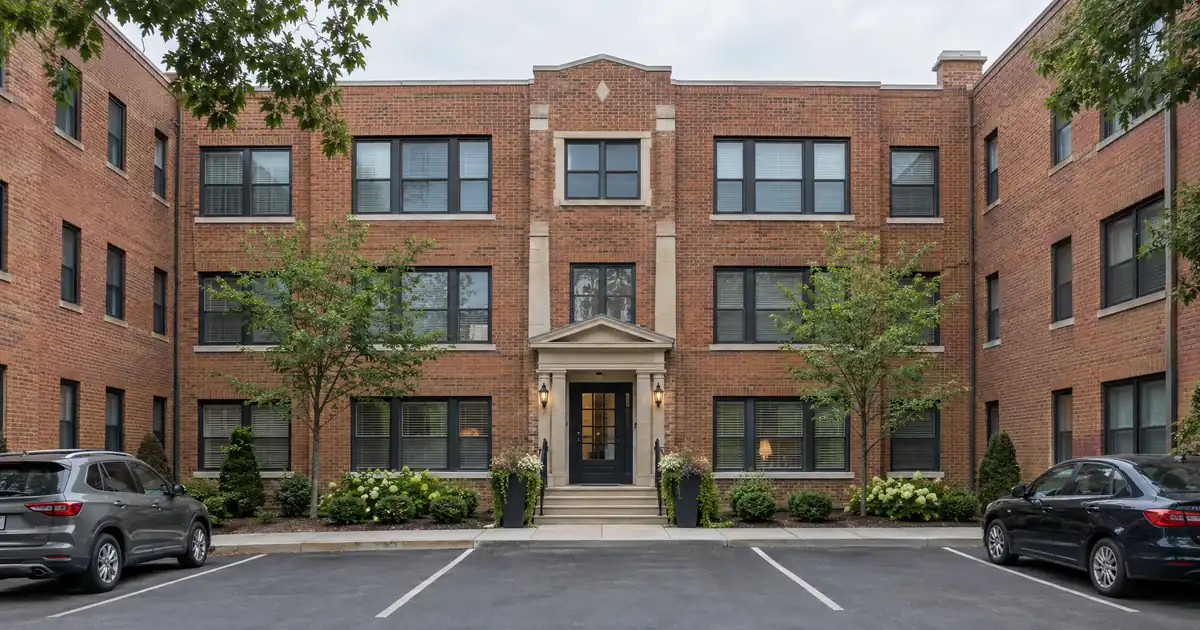
The Quick Read: A portfolio DSCR lender looks at the LLC as the borrower, the partners behind it as guarantors, and the rent from all ten doors as one pooled number, so the file turns on three things: how the loan is structured, which partners sign, and whether pooled rent covers pooled debt service.
- Ten doors is not a barrier. The 30-year portfolio DSCR loan takes 2 to 20 properties under one note, subject to lender guidelines.
- The LLC holds title and signs the note. Partners are underwritten as people, and a personal guarantee is common on recourse structures.
- Coverage is measured on the pool, so a strong door can offset a weak one.
- One note means shared collateral. A problem on one door can reach all ten.
- Splitting into separate notes is often the better call when partners, timelines or credit profiles differ.
Key Terms Defined
Door: One rentable unit. Lenders may count by property or by unit depending on the program, so confirm which.
Portfolio DSCR loan (also called a blanket loan or cross-collateralized loan): One note secured by several rentals. These three phrases name the same thing here.
Bank portfolio loan: A different meaning of the word. It is a loan a bank keeps on its own books, and it may still be secured by a single property.
Guarantor: A person who promises to repay if the borrowing LLC does not.
Vesting: The exact name in which title is held. It must match the borrower on the note.
Release clause: The loan-document term that sets what you pay to free one property from the pool.
Allocated balance: The share of the total debt assigned to each property.
PITIA: Principal, interest, taxes, insurance and association dues, the full monthly obligation that rent is measured against.
How Does a Portfolio Lender Read Ten Doors Held by Partners?
Think of the file in layers. The LLC borrows. The property supplies the rent. The partners supply credit, liquidity and experience. DSCR (debt service coverage ratio) divides rent by PITIA, and the loan is reviewed primarily on property-level rental income covering the payment, subject to lender guidelines.
Across our wholesale network, two portfolio structures matter here. The 30-year portfolio DSCR loan covers 2 to 20 properties, with loan sizes from $300,000 to $5,000,000 and leverage up to 80% on a purchase or rate-and-term refinance. Its coverage floor is 1.00, measured on the pool. Property types are single-family, 2-4 unit, condo and townhome. Leverage, reserves, and pricing vary by lender and program; the final terms follow the full file review.
The rental portfolio term loan is built for five or more rental properties or units. Loan sizes run from $500,000 to $50,000,000, with leverage up to 75%. Terms are fixed at 3, 5, 7 or 10 years with a balloon at maturity. It comes in recourse and non-recourse versions, and the non-recourse version looks to the real estate with carve-outs such as fraud and bankruptcy. Small multifamily of five or more units is eligible only on this term loan. Terms vary by lender guidelines, property type, leverage, credit profile, and full file review.
A ten-door group often fits either one. A partnership with a long hold and stabilized leases may lean toward the 30-year portfolio DSCR loan. A group that wants non-recourse terms may look at the term loan. Both are subject to lender guidelines.
Who Has to Sign When Partners Own the LLCs?
Usually the partners with meaningful ownership sign the guaranty, even though title sits in the LLC. The operating agreement shows each member’s percentage, and lenders set their own ownership thresholds for who signs and who gets a full credit pull. Closing in an LLC does not turn a recourse loan into an entity-only loan.
| Ownership pattern | Typical lender reaction |
|---|---|
| One majority owner, small minority holders | Majority owner signs; minority may need only identity checks |
| Equal partners | Often all sign, jointly |
| Silent investor | Depends on percentage and operating agreement |
| Different partners per LLC | Each LLC’s owners are reviewed for that entity |
Treat the table as a pattern, not a rule. Thresholds vary by lender and program.
How Do Partners’ Credit Profiles Combine?
Partners are reviewed as people, so credit matters even though the LLC is the borrower. The portfolio programs we place typically look for a 640 floor, with 680 or 720 on some portfolio structures. Where two guarantors sign, some lenders blend credit toward the lower middle score, so the weaker partner can set the tier.
The same guarantor can sit behind several LLCs. A lender may then look at that person’s total exposure across all ten doors, not just one loan. Reserves matter too. On the term loan, reserves are held for taxes, insurance and capital expenditures. Liquidity that looks fine against one loan can look thin against the whole portfolio.
Which Structure Fits Partners With Several LLCs?
Separate LLCs usually do not pool as they are. A lender may want the doors consolidated under one borrowing entity, or it may keep separate notes. Moving title can carry its own costs, so ask first.
| Option | Liability wall | Coverage test | Selling one door |
|---|---|---|---|
| Separate notes per LLC | Each LLC stands apart | Each door qualifies alone | Simple payoff |
| One pooled note | Shared collateral | Pooled across doors | Release terms apply |
| Partial pool | Mixed | Pool plus single notes | Depends on grouping |
Partners with different ownership on different doors often do better with separate entities and separate notes. One partner’s problem entity then cannot reach another partner’s property.
What Does a Ten-Door Pool Look Like in Numbers?
Run the numbers on a modeled group. Assume eight doors cover their full monthly obligation at about 1.25x each and two doors sit near 0.90x, with similar debt service per door. Those are assumptions for illustration, not market data.
Each weak door fails alone. Pooled, the group lands near 1.18x, which clears the 1.00 floor on the 30-year portfolio DSCR loan. A weak door can sit in the pool, and underwriting tests the pooled coverage, the leverage and the terms. As separate notes, those two doors would have to qualify on their own.
The pool has a downside. If a vacancy hits two strong doors, the blended number drops for every door. Also remember that DSCR compares rent to PITIA only. Clearing 1.00 is not the same as positive cash flow, because repairs, vacancy, management and capital costs sit outside the calculation.
Can One Door Be Sold Out of the Pool?
Sometimes, and the loan documents decide how. Every pooled loan assigns an allocated balance to each property, and the release clause sets the payoff to free one. The release price runs above the property’s allocated balance, so selling one door costs more than its slice of the debt.
Say the partners sell one strong door. The remaining nine would still sit near 1.17x in the model above, assuming the debt paid off matches that door’s share. The remaining portfolio must still cover its debt service. A sale that pushes it below the floor can be refused or can require a larger paydown.
On the term loan, prepayment follows yield maintenance, and assumption rules depend on loan size and underwriting. Substitutions and partial releases follow the documents and the lender’s release terms.
The guaranty does not disappear with a released door. It stays in place until the loan is paid or the lender releases it.
Does the LLC Remove Personal Liability?
Not on a guaranteed loan. DSCR loans are designed for non-owner-occupied investment properties. Because they are business-purpose investor loans, they are reviewed differently from a standard owner-occupied mortgage.
The Federal Reserve’s hosted copy of the CFPB’s official commentary on organizational credit says the exemption for credit to an organization applies even when a natural person guarantees or secures it. The entity is the borrower, but the guaranty still binds the person. The ABA Banking Journal adds that coverage turns on the loan’s primary purpose. If a door is partly owner-occupied, or the applicant is an individual rather than an entity, the analysis changes. Owner-occupied property is ineligible in these pools.
Also remember that DSCR describes the underwriting method. It does not decide the recourse terms.
Where the General Rule Breaks
- Different partners on different doors. Partner A in six doors and Partners A and B in four more rarely share one clean note. Separate notes keep the guarantor sets straight.
- Individual names plus an LLC. Title must be aligned before pooling.
- Ineligible property. Co-ops, mixed-use and commercial property are not eligible in the pool. Manufactured and mobile homes are not reviewable on any of these programs.
- Short count. Blanket structures set minimum property counts and loan sizes, which can exclude small groups.
- Staggered rehabs. Recently acquired doors face a cost-basis cap on the loan amount during the first year. Staggered timelines fit separate notes better.
- Partner events. A buyout, death, divorce or exit mid-loan may require a lender-approved assumption or payoff. Contribution among guarantors is a matter between partners and their operating agreement, not the lender.
What Documents Does Each Layer Need?
- LLC: formation documents, operating agreement, signing authority and proof that vesting matches the note.
- Partners or holding company: identity, credit authorization, liquidity evidence and a schedule of real estate owned.
- Each door: lease or appraiser-supported market rent, insurance and title. Appraisers use form 1007 for a single-family rent schedule and 1025 for 2-4 units.
When Not to Pool
- Partners with different credit or exit plans, where one weak file would drag the others.
- Doors still in rehab or lease-up.
- Groups that expect to sell doors in sequence and want simple payoffs.
- Doors whose partners should stay legally separate.
Pooling works best for stabilized, long-hold groups that value one closing. The tradeoff is shared collateral. For the broader picture, see Lendmire’s complete DSCR loans guide.
Frequently Asked Questions
Do minority partners have to sign the guaranty?
It depends on the lender’s ownership threshold and the operating agreement. Larger owners usually sign, while small or silent holders may only need identity checks. Confirm the rule for your program before you structure ownership.
What if one partner has weak credit?
Where several guarantors sign, some lenders blend credit toward the lower middle score. The portfolio programs we see typically want a 640 floor, and some structures want 680 or 720. A partner with weaker credit can push you toward separate notes.
How many LLCs do I need for ten doors?
There is no required number. One LLC is cheaper and pools more easily. One per door contains liability but raises cost and paperwork. Ask your attorney and your lender before moving title.
Does DSCR mean non-recourse?
No. DSCR describes how the loan is underwritten. The 30-year portfolio DSCR loan is generally recourse, and the rental portfolio term loan offers a non-recourse version with carve-outs.
Can I sell one door without paying off everything?
Often yes, through the release clause. You pay a release price above that door’s allocated balance, and the remaining pool must still cover its debt service.
Next Steps
If you are buying or refinancing a rental property and want to see how the numbers work, Lendmire can help you compare DSCR loan options based on the property income, credit profile, leverage, and investor goals. Lendmire is a broker arranging financing through select lenders in its wholesale network across 41 markets, including Washington, D.C. Programs change, and every file is underwritten individually. Nothing here is a commitment to lend.
About Lendmire
Lendmire is a non-QM mortgage brokerage (NMLS# 2371349) arranging DSCR investor loans in 41 markets, including Washington, D.C., through wholesale and investor-lending channels. DSCR loans are evaluated by the lender on rental income rather than personal income, subject to lender guidelines — a fit for LLC-owned portfolios, self-employed investors, and operators scaling beyond conventional loan caps. Recognized as a Scotsman Guide Top Mortgage Workplace in 2025 and 2026.
Get Started
Ready to find the right loan for you?
In about 30 seconds you can review financing options available for your investment property. No commitment required.
Informational only. Not a Loan Estimate, approval, or commitment to lend. Program availability and eligibility are subject to lender guidelines, credit approval, property review, and underwriting.
References
1. Federal Reserve-hosted CFPB official commentary on organizational credit
2. ABA Banking Journal: when the applicant is an individual but the guarantor is an LLC
This article is part of Lendmire’s DSCR loan program — full qualification details, guidelines, and scenarios live on the program page.
Related reading: Blanket DSCR Loan vs Smaller Portfolio Loans for 10+ Doors in LLCs · How a DSCR Portfolio Lender Re-Tests Coverage During the Term · Portfolio DSCR Loan vs. a DSCR Loan on Every Rental
Brandon Miller
Founder & CEO, Mortgage Loan Originator, Lendmire LLC
- Mortgage Loan Originator · NMLS# 1129696 · Verify on NMLS Consumer Access
- North Carolina Real Estate Broker · License# 343312 · Verify on NCREC
- North Carolina Insurance Producer · License# 19053198 · Property, Casualty, Life, Health · Verify on NAIC SBS
- Lendmire LLC · Firm NMLS# 2371349 · Verify firm licensure
Required disclosures. Lendmire (NMLS# 2371349) operates as a licensed mortgage broker, not a direct lender or depository. The discussion in this article is general in nature and should not be relied upon as financial, legal, or tax advice — every investment scenario is unique and should be reviewed by a qualified professional. Any loan inquiry is subject to lender underwriting, and this article is not a commitment to lend or a guarantee of approval. Mortgage rates, loan terms, and program guidelines vary by borrower, property, and state, and may change without notice. Equal Housing Opportunity. Verify licensure at NMLS Consumer Access.