
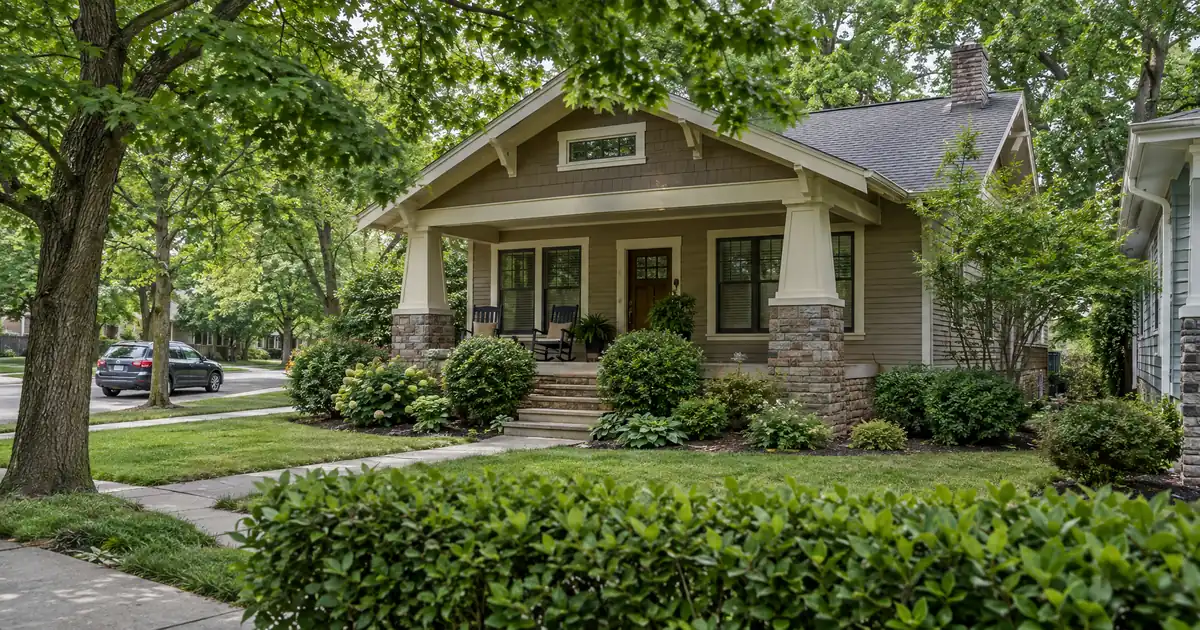
The Quick Read: A DSCR lender tests the property’s rent against its payment, not your home address or how hands-on you are. The proof you give is simple paperwork: a signed agreement and fee schedule if you hire a manager, or leases, rent ledgers, and deposit records if you run it yourself. Across our wholesale network, most programs do not require a manager at all.
- Where you live does not enter the ratio. Distance changes logistics, not eligibility.
- A management agreement is added only when a program asks for it, which is uncommon.
- Self-managing is allowed. Leases, ledgers, and bank records replace the agreement.
- Some programs deduct a management fee by formula and others do not, so ask before comparing ratios.
- Clearing the coverage test is not the same as positive cash flow. Management still costs you money.
Does Being Out of State Change What the Lender Asks?
No. Your address is not part of the coverage test. DSCR stands for debt service coverage ratio: the property’s monthly rent divided by its monthly PITIA. PITIA is principal, interest, taxes, insurance, and any HOA dues.
DSCR loans are designed for non-owner-occupied investment properties. Because they are business-purpose investor loans, they are reviewed differently from a standard owner-occupied mortgage. The file centers on the property, the entity, and the transaction rather than on your personal income documents. Qualification runs primarily on property-level rental income covering the payment, subject to lender guidelines.
What does change is logistics:
- A local appraiser visits the property and completes a market rent schedule (Form 1007).
- Title and closing happen in the property’s state.
- You may sign remotely, and any manager or helper needs to be reachable.
For the full program picture, see Lendmire’s complete DSCR loans guide.
What “Showing Management” Actually Means
Showing management means putting evidence in the file that someone is running the property. The evidence depends on who that someone is. Underwriting looks at four things: the rent figure, the payment, how the program treats any management fee, and the borrower, entity, and asset documents.
Management appears in two places. The first is documentation, meaning a management agreement if the file asks for one. The second is ratio math, meaning a fee deduction, which applies only in programs that deduct a fee by formula.
| Evidence item | What it shows | Usually required? |
|---|---|---|
| Signed management agreement | A third party runs the property | Rarely; program-specific |
| Fee schedule | What the manager charges | Helps your own review |
| Executed lease | In-place rent and tenant | Yes, if leased |
| Rent ledger | Rent actually collected | Common for self-managers |
| Bank deposit records | Where rent lands | Common for self-managers |
| Manager license (if state requires) | Manager is legal to operate | Your due diligence |
The right column is the honest answer to the question every remote owner asks: what is required? Most programs we place files with ask for leases and an appraiser-supported rent. The management items are mainly there to protect you. Programs change, and every file is underwritten individually.
Path One: You Hire a Property Manager
Hiring a manager is the most common remote setup. You gather a few documents, and you vet before you sign.
1. Get the signed agreement and the full fee schedule first. Investors who run rentals from overseas advise collecting both before committing, as Cashflow Rentals notes in its manager-vetting guide.
2. Check the manager’s license if your state requires one. Rules vary widely. Collecting rent, signing leases, or handling owner funds can trigger licensing, according to TenantCloud’s state-by-state overview.
3. Ask for a sample lease and a sample owner statement. These show how the manager reports to you.
4. Ask for proof of the manager’s insurance and a rent-roll history.
5. Confirm the agreement names the right party. If your LLC owns the property, the LLC signs the agreement, not you personally. Leases signed by the manager on your behalf should still name the owner correctly.
Check three clauses before you sign:
- Termination terms.
- Related-party vendor markups.
- Whether you keep signing authority on the bank accounts.
A sale commission clause is another clause worth refusing. These clauses protect your cash flow more than your loan file.
Path Two: You Self-Manage From a Distance
Self-managing remotely is allowed. You replace the agreement with evidence:
- Executed leases for every unit.
- A rent ledger showing what was due and what was collected.
- Bank deposit records, ideally into an account used only for that property.
- Payment-platform history if tenants pay through an app.
A local handyman or leasing contact is not a program requirement. It still helps your own operations, because a burst pipe does not care where you live.
Your own time is not a management cost in the ratio. The coverage test compares rent to PITIA. Any fee deduction is applied by formula, not by how many hours you spend.
| Item | Managed | Self-managed |
|---|---|---|
| Typical documents | Agreement, fee schedule, leases | Leases, ledgers, bank records |
| Effect on ratio | Depends on program | Depends on program |
| Cash-flow reality | Fee comes out of your income | Your time and travel |
| Main risk | Bad placement, fee stacking | Slow response to repairs |
Where the Ratio and the Real Numbers Diverge
Most programs we place files with measure gross rent against PITIA. A few lenders in the network deduct a management fee by a set formula before they compute coverage. The only way to know is to ask each program before you compare ratios.
Either way, management cost leaves your pocket. Surveys give a rough range. A Steadily breakdown reports a national average base fee of 8.49% of rent, drawn from 722 branches across 80 metros, with a full range of 3.75% to 14%. Leasing or placement fees commonly run 50% to 100% of one month’s rent, per ClearLead Digital. Once placement, renewals, and markups stack up, ARVCalc cites all-in costs near 12% to 17% of gross rent. These are vendor figures, not primary data. Think of the cost as typically high single digits to low teens, then confirm what your manager actually charges.
Here is the practical point. DSCR compares rent to PITIA only. Repairs, vacancy, utilities, capex, and management sit outside the calculation. A property can clear 1.00 and still lose money after the manager is paid. For reference, 1.00 is where many select programs start. A separate select-lender path takes coverage below 1.00, with leverage and terms adjusted.
Tax treatment varies; consult a qualified professional before relying on any deduction.
Entity Questions for Out-of-State Owners
Many investors hold rentals in an LLC, subject to lender program eligibility. If your LLC was formed outside the property’s state, it may need foreign-entity registration there. Rules vary by state, so verify with the state and your attorney.
Name consistency matters more than people expect. The same entity name should appear on the lease, the management agreement, the insurance policy, and the bank account. A mismatch is the kind of small paperwork problem that stalls a file.
Edge Cases Where the General Rule Bends
Programs that ask for management proof. Some lenders may request a management plan or proof of professional management. This is program-specific. Ask before you apply.
Short-term rentals. Operating intensity is much higher, and managers charge more than long-term managers do. Across the network, short-term rental purchases top out at 75% LTV (loan-to-value, the loan as a share of the property’s value). Expect a 640+ credit score and about 12 months of hosting history. If a manager controls the booking account, make sure you can still pull the income records. Lendmire’s piece How to Prove Legal STR Use to a DSCR Lender as an Out-of-State Buyer covers that side. The exact numbers vary by lender and program and follow a full review of property, leverage, and credit.
Informal helpers. A friend who collects rent without a license may create a compliance problem under state law. It is also hard to document for a lender.
Multiple properties. Every property still needs its own lease or an appraiser-supported market rent. Programs commonly credit the lower of in-place rent and market rent.
Ineligible property types. Manufactured homes, log homes, and barndominiums are not offered through the network’s DSCR programs, with or without a manager.
Four Short Scenarios
An inherited rental in another state. Picture an heir who lives far away and keeps the existing tenant. The lease is in place and rent flows to a personal account. Move deposits into an entity account, then provide the lease and a ledger. What you hand over: lease, ledger, entity documents.
A former home now rented. Say you moved and kept your old house as a rental. You hire a local manager. What you hand over: signed agreement, fee schedule, lease, and the manager’s license if required.
A short-term rental with a manager running the bookings. An operator handles the listing and the payouts. Ask for statements before you apply, because the history is what supports the income. What you hand over: hosting history, payout records, and the agreement.
A growing multi-property owner. Closing loan number 18 can depend on how clean loans 1 through 17 look on paper. Keep identical file folders for every property. What you hand over: the same set every time.
Pre-Application Checklist
- Decide managed or self-managed before you apply.
- Pull the signed agreement and fee schedule, or the ledger and bank records.
- Confirm the entity name matches every document.
- Check manager licensing for the property’s state.
- Gather executed leases for occupied units.
- Line up a local contact for the appraiser visit.
- Confirm your credit score and reserves against program ranges. Most programs want around 660, and 700+ opens the strongest leverage tiers. A 620 floor exists in parts of the network.
- Confirm your leverage and reserves. Purchases typically land at 75% to 80% LTV, and reserves run about 6 months of PITIA. They vary by lender, leverage, and loan size.
Common Mistakes
- Treating clearing 1.00 as positive cash flow.
- Signing a management agreement in your own name when the LLC owns the property.
- Letting the manager control the only account with no owner access.
- Letting the agreement expire before closing.
- Assuming DSCR means no documents. Entity, title, insurance, and reserve documents are still required.
- Comparing ratios across programs without checking whether a fee is deducted.
Key Terms Defined
DSCR: The property’s monthly rent divided by its monthly PITIA, used to test whether the rent covers the payment.
PITIA: Principal, interest, taxes, insurance, and any HOA dues, the full monthly cost of owning the property.
Management agreement: The signed contract between the owner and a property manager that sets duties and fees.
Rent ledger: A running record of rent due and collected for a property.
Owner statement: A monthly report from a manager showing income, expenses, and what was paid to you.
Foreign-entity registration: Registering an LLC formed in one state to do business in another.
Frequently Asked Questions
Do I need a local property manager to get a DSCR loan?
Usually not. Most programs we place files with do not require a manager, and your residence does not enter underwriting. A local team still helps you, because someone has to answer when a repair call comes in.
Can I self-manage a rental from another state?
Yes. Replace the management agreement with leases, a rent ledger, and bank deposit records. Keep rent flowing through an account tied to the entity that owns the property.
Do management fees count in the DSCR ratio?
It depends on the program. Many programs qualify primarily on property-level rental income covering the payment, subject to lender guidelines, with no management fee deducted, while a few deduct a fee by formula. Either way, the fee reduces your real cash flow.
Is a management agreement part of closing?
Only if a particular program or lender asks for one, which is uncommon. Even when it is not required, a signed agreement and fee schedule protect you. Confirm requirements for your program early.
Does my state of residence matter for approval?
Not to the coverage test. It affects logistics: a local appraiser, title and closing in the property’s state, and possibly foreign-entity registration for an out-of-state LLC.
Next Step
If you are buying or refinancing a rental property and want to see how the numbers work, Lendmire can help you compare DSCR loan options based on the property income, credit profile, leverage, and investor goals. As a broker, it arranges financing through select lenders in its wholesale network across 41 markets, including Washington, D.C., subject to lender guidelines and not a commitment to lend.
The investors who scale remotely tend to be the ones whose paperwork looks identical from the first property to the last.
About Lendmire
A DSCR-focused mortgage broker, Lendmire (NMLS# 2371349) places investor financing across 41 markets — 40 states plus Washington, D.C. — with DSCR eligibility generally reviewed by the lender on property cash flow instead of tax returns, subject to lender guidelines. Scotsman Guide named Lendmire a Top Mortgage Workplace in 2025 and 2026.
Get Started
Ready to find the right loan for you?
In about 30 seconds you can review financing options available for your investment property. No commitment required.
Informational only. Not a Loan Estimate, approval, or commitment to lend. Program availability and eligibility are subject to lender guidelines, credit approval, property review, and underwriting.
References
1. Cashflow Rentals – How to Vet a US Property Manager
2. TenantCloud – Property Management License Requirements by State
3. Steadily – Understanding Property Management Costs
4. ClearLead Digital – Average Property Management Fees
5. ARVCalc – Property Management Fee Calculator Guide
This article is part of Lendmire’s DSCR loan program — full qualification details, guidelines, and scenarios live on the program page.
Related reading: Portfolio DSCR Loan vs. a DSCR Loan on Every Rental · Five-Year vs Ten-Year DSCR Portfolio Term Loan at Maturity · Can Out-of-State Investors Pool Low-Value Rentals in One DSCR Loan?
Brandon Miller
Founder & CEO, Mortgage Loan Originator, Lendmire LLC
- Mortgage Loan Originator · NMLS# 1129696 · Verify on NMLS Consumer Access
- North Carolina Real Estate Broker · License# 343312 · Verify on NCREC
- North Carolina Insurance Producer · License# 19053198 · Property, Casualty, Life, Health · Verify on NAIC SBS
- Lendmire LLC · Firm NMLS# 2371349 · Verify firm licensure
Legal disclosures. Lendmire (NMLS# 2371349) is a state-licensed mortgage brokerage that arranges financing through wholesale lender relationships. Lendmire is not a direct lender, depository institution, or registered financial advisor. The discussion above is general informational content about real estate financing — it is not financial, legal, or tax advice, and readers should consult licensed professionals for guidance on their individual circumstances. Loan inquiries are subject to lender underwriting; this article does not represent a commitment to lend. Loan terms, rates, and qualification standards vary by borrower, property, and state, and are subject to change at any time. Equal Housing Opportunity. NMLS Consumer Access: nmlsconsumeraccess.org.