
The Quick Read: A portfolio DSCR lender counts a fourplex as one property with four rent lines and one payment, so the building is tested once, its combined rent joins the pool’s rent, and its payment joins the pool’s payment, no matter how many LLCs hold title. The LLC changes who signs and which documents the lender collects. It does not change the coverage math.
- One building, one test. All four unit rents are added together and divided by the building’s single PITIA (principal, interest, taxes, insurance and association dues). A fourplex never produces four ratios.
- The pool gets its own test. On the 30-year portfolio DSCR loan, which covers 2 to 20 properties under one note, coverage is measured on pooled rent against pooled debt service, with a 1.00 floor on the pool.
- Several LLCs create a structure question, not a math question. The real decision is whether each fourplex sits on its own note or whether all of them share one note, and that choice is program-specific.
- Clearing 1.00 is not positive cash flow. The calculation leaves out repairs, vacancy, management, utilities and capital spending.
- The appraiser’s rent opinion usually sets the numerator. An investor’s pro forma rarely does.
Lendmire is a mortgage broker that arranges DSCR investor loans through a wholesale network of lenders, so what follows describes how files like this one typically move across many programs. Every figure below is a program ceiling or floor, not a quote, and all of it is subject to lender guidelines.
Key Terms Defined
Door: One rentable unit inside a building. A fourplex has four doors.
Property: One parcel of collateral. A fourplex is one property even though it has four doors.
Pool: The group of properties that secure one note. Coverage is measured across the whole group.
PITIA: The full monthly obligation on a property: principal, interest, taxes, insurance and association dues, if any.
Portfolio DSCR loan (also called a blanket loan or a cross-collateralized loan): One note secured by several rental properties, where every property backs the whole debt. A bank’s portfolio loan, meaning a loan the bank keeps on its own books, is a different use of the word and is not what this article covers.
Guarantor: The person who signs a personal guaranty behind the borrowing entity. The lender reviews that person’s credit, liquidity and experience.
Vesting: The name in which title is held. Here it means title held in an LLC.
How Does the Lender Count One Fourplex?
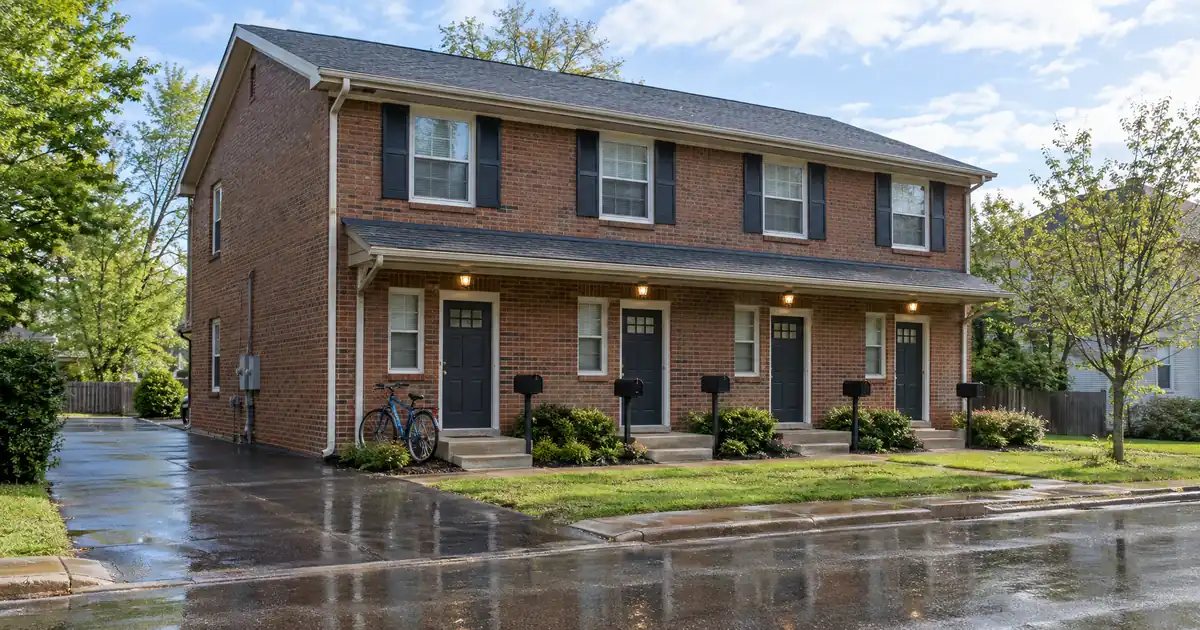
The lender counts a fourplex as one property for the pool, four doors for rent, and one payment for coverage. Each of those three counts answers a different question, and mixing them up is a common mistake investors make when they size a pooled loan.
Here is what each count controls:
| Count | What it is | What it drives |
|---|---|---|
| Property | The fourplex as one parcel | Pool size on the 30-year portfolio loan |
| Door | Each of the four units | The rent lines added together |
| Payment | One PITIA for the building | The denominator of the ratio |
| Pool | All properties on one note | The 1.00 floor test |
The 30-year portfolio DSCR loan runs from 2 to 20 properties under one note. A fourplex takes one of those slots. Four fourplexes use four slots and sixteen doors, while sixteen single-family homes use sixteen slots. That difference matters when an investor is near the property cap but holds many doors.
The rental portfolio term loan works differently. It is built for five or more rental properties or units under one loan, so that threshold is written in properties or units. A fourplex plus one single-family house can reach it by unit count, subject to lender guidelines. Small multifamily of five or more units is eligible only inside the rental portfolio term loan. It is not eligible on the 30-year portfolio structure or on a single-property DSCR loan.
Four units against one payment also tends to look strong. A single-family house has one rent stream and one payment, so a single vacancy takes coverage to zero. A fourplex spreads that risk across four rent lines. The cushion is real, but it depends on the rent figure the lender accepts, which is the next question.
How Is Rent Set for Each Unit?
Every property in the pool needs a lease or an appraiser-supported market rent, and a fourplex gets an appraisal on Form 1025, the small residential income property report that carries the rent analysis for two-to-four-unit buildings. HUD’s mortgagee letter names Form 1025, also numbered Form 72, as the appraisal that supports fair market rent where a property has little or no rental history. Form 1007 is the single-family rent schedule, so the two are not interchangeable.
The lender then picks the rent that goes into the numerator. Across the network, many programs credit the lower of the in-place lease rent and the appraiser’s market rent. Others rely on market rent alone when a unit is vacant. The exact rule varies by program, so a rent roll that looks strong on paper can come back lower once the appraiser weighs in.
Residential DSCR also uses gross rent. The lender does not subtract vacancy, management or repairs from the numerator. The general finance definition is different: the standard debt service coverage ratio definition divides net operating income by debt service. That version appears in commercial underwriting, and it is why five-plus-unit buildings outside the term loan are treated as a different product. A fourplex sits at the top of the gross-rent treatment.
What Does the Pool Do With the Building?
The pool adds the fourplex’s rent to every other property’s rent, adds its payment to every other payment, and tests the totals against the floor. This is the nesting that most explanations skip: four unit rents roll into one building line, and the building line rolls into the pool.
Run it with ratios rather than dollars. Say a fourplex covers its own payment at about 1.25x and a single-family house in the same pool covers its payment at about 0.90x. If the fourplex carries the larger share of the pooled payment, the blended result can land above the 1.00 floor. A rental below 1.00 coverage can sit in the pool in that situation, and underwriting tests the pooled coverage, the leverage and the terms.
The same math works in reverse. If the weak house is the larger piece of the pool, the strong fourplex cannot lift the blend above 1.00. A property that covers well helps the pool only to the extent of its share of the total payment.
Suppose one of the fourplex’s four doors is empty at the time of appraisal. The lender will typically look to the appraiser’s market rent for that door, but a building with a leased-and-vacant mix can still draw closer review. If the file leans on the fourplex to carry a weaker property, one empty door can turn a passing blend into a failing one.
What Changes When Several LLCs Hold the Fourplexes?
Holding each fourplex in its own LLC keeps ownership clean at the property level, and the coverage formula stays the same. The change is in the file. The LLC is the borrower and holds title, a person signs a separate guaranty, and the lender reviews that guarantor. Typical entity documents are formation papers, an EIN letter and an operating agreement. Programs generally accept LLC borrowers, subject to program terms, and some structures require a special-purpose entity, which is typically an LLC.
The decision that matters is whether the fourplexes sit on separate notes or share one:
| Factor | Separate notes | One pooled note |
|---|---|---|
| Coverage test | Each building tested alone | Blended across the pool |
| Weak property | Cannot drag others down | Can pull the blend under 1.00 |
| Strong property | Cannot rescue a weak one | Can offset a thin one |
| Default exposure | Property by property | Pool-wide, because of cross-collateralization |
| Release when one is sold | Not applicable | Follows the loan documents |
How a pool handles several borrowing entities is program-specific. Some structures use one borrowing entity across the properties, while others allow several borrowers on one note. The right answer depends on the program, so treat any single rule you read as a starting point for a conversation with a broker, not a settled fact.
The guarantor review is where partners matter. If an LLC has several members, who must sign the guaranty depends on the program and on ownership share. A weak credit profile on one member can affect the whole file. Different partners across different fourplexes are a reason to keep entities separate, though that is a structuring tradeoff and not a rule.
The credit floor for the portfolio programs is 640, with 680 or 720 required on some portfolio structures. Recourse loans carry a personal guarantee. An LLC separates property-level claims, but a personal guaranty means the entity does not make the loan non-recourse. Non-recourse structures do exist on the rental portfolio term loan, and they carry carve-outs such as fraud and bankruptcy. Tax treatment varies by how a property is held, so consult a qualified professional.
Which Program Structure Fits a Fourplex?
A fourplex fits the 30-year portfolio DSCR loan when the pool is small and the investor wants a long fixed term, and it fits the rental portfolio term loan when the pool is larger or the investor wants a non-recourse option. The two structures are built for different jobs.
| Factor | 30-year portfolio DSCR loan | Rental portfolio term loan |
|---|---|---|
| Size of pool | 2 to 20 properties | 5 or more properties or units |
| Loan size | $300,000 to $5,000,000 | $500,000 to $50,000,000 |
| Leverage | Up to 80% on a purchase or rate-and-term refinance | Up to 75% of value |
| Term | 30 years, interest-only period available | Fixed 3, 5, 7 or 10 years with a balloon |
| Recourse | Personal guarantee on recourse loans | Recourse or non-recourse, with carve-outs |
Larger balances are reviewed individually on both. The 30-year structure comes in fixed and adjustable forms, and the term loan comes with a yield-maintenance prepayment structure, so an investor who expects to sell a building early should read the release and prepayment terms before choosing. A term loan also holds reserves for taxes, insurance and capital expenditures.
Cash-out on either structure stops at 75% of the pooled value. Inside the first six months of ownership the loan is also capped at 90% of total cost (purchase price plus documented improvements), 100% of total cost from six to twelve months, and the leverage ceiling still applies, so the loan is the lower of the two. After twelve months the appraised value alone is the basis, and a rate-and-term refinance is not subject to the cost-basis cap. Investors who want a closer read on that side can start with Lendmire’s guide to DSCR cash-out refinancing.
A larger down payment can lift coverage, but it never erases leverage caps, credit floors, reserve rules or property eligibility. The strongest files clear both tests, enough equity and enough rental coverage.
Where the General Rule Breaks
The one-property, one-test rule holds until one of these edge cases changes the facts:
- Five or more units in a building. The 30-year portfolio loan and the single-property DSCR loan do not take it. Small multifamily is eligible only inside the rental portfolio term loan.
- Mixed-use buildings. A fourplex with a commercial unit on the ground floor is not eligible. Owner-occupied property, co-ops and commercial property are also ineligible in the pool.
- Manufactured homes. Manufactured and mobile homes are not reviewable on any of these programs.
- Vacancy or no lease. Every property still needs a lease or an appraiser-supported market rent, so a building with several empty doors and a weak market-rent opinion can hold the pool back.
- Selling one fourplex. Partial releases, substitutions and the sale of one property follow the loan documents and the lender’s release terms. The release price runs above the property’s allocated balance, and the remaining pool must still cover its debt service.
- Titling after closing. Moving a financed property into an LLC after the loan is in place can create complications, so many investors vest in the entity at closing.
What About Business Purpose?
DSCR loans are designed for non-owner-occupied investment properties. Because they are business-purpose investor loans, they are reviewed differently from a standard owner-occupied mortgage. The Federal Register’s ability-to-repay rule treats business-purpose and investment-purpose loans as outside its scope. That is why a DSCR file qualifies primarily on property-level rental income covering the payment, subject to lender guidelines, and not on the borrower’s personal income. The lender still reviews the guarantor’s credit, liquidity and experience.
What Does the Decision Look Like in Practice?
The decision is mostly about structure. An investor with one fourplex and a couple of other rentals usually compares a small pooled note against separate notes. The pooled note simplifies the file, and the separate notes keep each property’s result independent. An investor with a larger book and several LLCs looks harder at whether one borrowing structure can span all of them under program rules.
The practical steps run in this order. Gather the leases and the entity documents. Expect the appraisal rent to set the numerator. Decide whether a weak property is worth blending with a strong one. Check release terms before accepting a pooled structure, because that is the cost of pooling that investors overlook most often.
Most standard programs start at a 1.00 coverage floor on a single rental, and a separate select-lender path takes coverage below 1.00 with leverage and terms adjusted. The pooled structures here test the pool at the floor stated above, so a pool is not a way around a weak blend.
Frequently Asked Questions
Does a fourplex count as one property or four?
One property for the pool and four doors for the rent. On the 30-year portfolio DSCR loan, the property count (2 to 20) uses one slot for the fourplex. The rent from all four doors goes into the numerator, and the building’s single PITIA goes into the denominator.
Does holding the fourplex in an LLC change the coverage ratio?
No. The formula has no line for vesting, so the same rent and the same payment produce the same ratio. The LLC changes the borrower, the documents and the guarantor review, subject to program terms.
Does an LLC make the loan non-recourse?
Not by itself. On recourse loans the guarantor signs a personal guarantee behind the entity. Non-recourse structures exist on the rental portfolio term loan, and they carry carve-outs such as fraud and bankruptcy.
Can a strong fourplex rescue a weak house in the same pool?
Often, yes, up to a point. Coverage is measured on pooled rent against pooled debt service, so a strong building helps in proportion to its share of the total payment. Underwriting tests the pooled coverage, the leverage and the terms, and a weak enough property can still pull the blend under the floor.
Is a DSCR above 1.00 the same as positive cash flow?
No. DSCR compares rent to PITIA only, so repairs, vacancy, management, utilities and capital spending sit outside the calculation. A building can clear the ratio and still run thin once those costs are counted.
Next Step
If you are buying or refinancing a rental property and want to see how the numbers work, Lendmire can help you compare DSCR loan options based on the property income, credit profile, leverage and investor goals. Lendmire arranges DSCR investor loans through a wholesale network across 41 markets, including Washington, D.C., and the complete DSCR loans guide covers the wider program picture. Qualification and terms depend on lender guidelines, credit approval and property review, and nothing here is a commitment to lend.
About Lendmire
Lendmire (NMLS# 2371349), a non-QM mortgage broker serving investors in 41 markets including Washington, D.C., helps structure DSCR scenarios commonly evaluated around a property’s rental income rather than personal income paperwork, subject to lender guidelines. A Scotsman Guide Top Mortgage Workplace in 2025 and 2026, Lendmire places loans through wholesale investor lenders and is not a direct lender.
Get Started
Ready to find the right loan for you?
In about 30 seconds you can review financing options available for your investment property. No commitment required.
Informational only. Not a Loan Estimate, approval, or commitment to lend. Program availability and eligibility are subject to lender guidelines, credit approval, property review, and underwriting.
References
1. HUD Mortgagee Letter 2023-17
2. Wikipedia, Debt service coverage ratio
3. Federal Register, CFPB Ability-to-Repay final rule
This article is part of Lendmire’s DSCR loan program — full qualification details, guidelines, and scenarios live on the program page.
Related reading: How a DSCR Lender Sizes a Blanket Loan Across LLC-Held Doors · Can an Investor With 10+ Doors in LLCs Unbundle a DSCR Portfolio Loan? · How a Portfolio DSCR Lender Reads a Blanket Bridge Loan
Brandon Miller
Founder & CEO, Mortgage Loan Originator, Lendmire LLC
- Mortgage Loan Originator · NMLS# 1129696 · Verify on NMLS Consumer Access
- North Carolina Real Estate Broker · License# 343312 · Verify on NCREC
- North Carolina Insurance Producer · License# 19053198 · Property, Casualty, Life, Health · Verify on NAIC SBS
- Lendmire LLC · Firm NMLS# 2371349 · Verify firm licensure
Legal disclosures. Lendmire (NMLS# 2371349) is a state-licensed mortgage brokerage that arranges financing through wholesale lender relationships. Lendmire is not a direct lender, depository institution, or registered financial advisor. The discussion above is general informational content about real estate financing — it is not financial, legal, or tax advice, and readers should consult licensed professionals for guidance on their individual circumstances. Loan inquiries are subject to lender underwriting; this article does not represent a commitment to lend. Loan terms, rates, and qualification standards vary by borrower, property, and state, and are subject to change at any time. Equal Housing Opportunity. NMLS Consumer Access: nmlsconsumeraccess.org.