
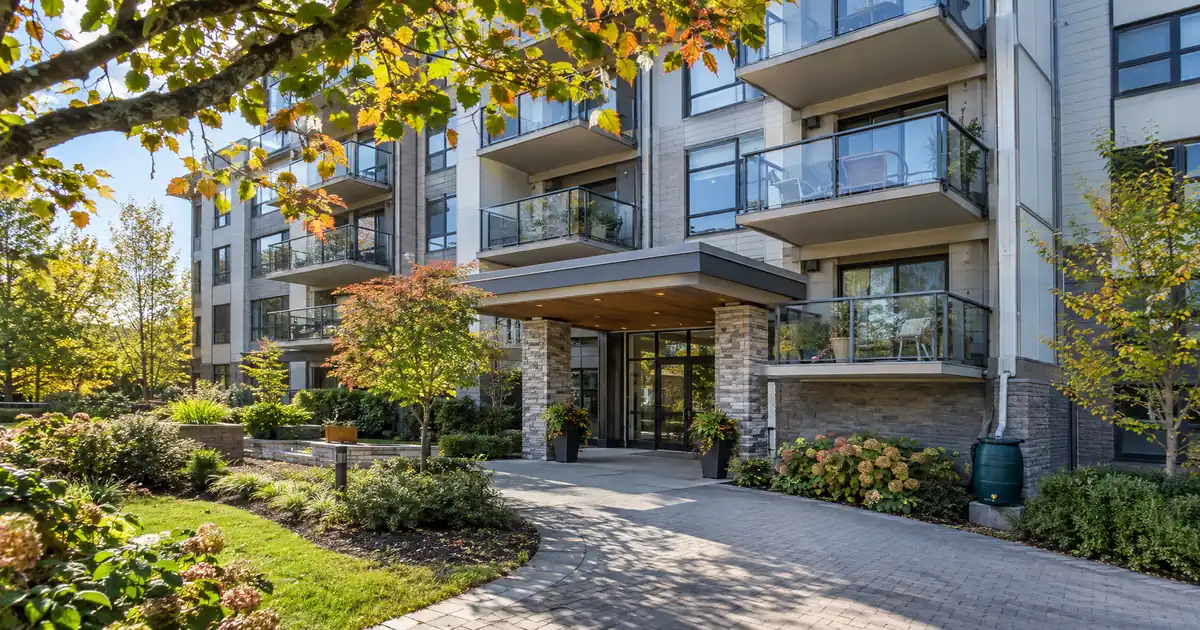
The Quick Read: Lenders test the rent from the four units against the full monthly payment, association dues included, and then review the condo association behind the building, either unit by unit on four separate loans or on pooled rent under one portfolio note. The building matters as much as the units, because four units under one roof share one budget, one master insurance policy, and one risk of a special assessment.
- Each unit needs its own rent figure, either a lease or an appraiser-supported market rent.
- Association dues sit inside the payment, so they pull coverage down on every unit.
- On one portfolio note, the 1.00 coverage floor is measured on the pool, so stronger units can offset weaker ones.
- Four separate loans isolate risk, but each unit has to pass on its own.
- Clearing the coverage test is not the same as positive cash flow, and the association review can change the outcome even when the math works.
One Note or Four Loans? The Structure Decision
You can finance four condos in one building two ways. One is four separate DSCR loans, each with its own note, appraisal, and coverage test. The other is a single portfolio loan with all four units as collateral. Everything else in the file follows from this choice, so make it first.
DSCR loans are designed for non-owner-occupied investment properties. Because they are business-purpose investor loans, they are reviewed differently from a standard owner-occupied mortgage. That is why the property’s rent, not your paycheck, carries the file.
Across the wholesale network, a portfolio DSCR loan covers two to twenty properties under one note. A blanket loan and a cross-collateralized loan are the same thing. One note, several rentals securing it. The 30-year portfolio DSCR loan takes condos, up to 80% of value on a purchase or rate-and-term refinance, with loan sizes from $300,000 to $5,000,000 (larger balances on review), subject to lender guidelines. Four condos in one building fit that structure. The separate rental portfolio term loan starts at five or more rentals, so it only matters if you add a fifth.
| Factor | One portfolio note | Four separate loans |
|---|---|---|
| Coverage test | Pooled rent vs pooled debt | Each unit on its own |
| One weak unit | Stronger units can offset it | Weak unit may fail alone |
| Closings | One closing, one servicer | Four files, four servicers |
| Selling one unit | Follows the lender’s release terms | Sell it without touching the others |
| Building problem | Hits all collateral under one note | Still hits every unit’s value |
| Entity | Special-purpose LLC on some structures | Varies by program |
Entity requirements vary by structure, subject to lender program eligibility. A single-property DSCR loan on a purchase typically lands at 75%-80% LTV. That is leverage on one investment property, not the pool figure above.
Key Terms Defined
DSCR (debt service coverage ratio): the monthly rent divided by the full monthly payment on the property.
PITIA: principal, interest, taxes, insurance, and association dues, which together make up the payment in the ratio.
Pooled coverage: total rent from all properties under one note divided by total payment on that note.
Cross-collateralization: every property under the note secures the whole loan, so a problem with one affects the rest.
Release: the lender’s process for letting one property leave the pool after a sale. The remaining properties must still cover the debt.
Warrantable condo: a project that meets the eligibility tests used for agency-sold loans, which DSCR lenders may borrow, relax, or replace.
Project review: the lender’s check of the association (budget, reserves, delinquencies, litigation, insurance), separate from the unit itself.
Step by Step: How the File Gets Underwritten
Step 1. Gather the documents. For each unit you need a lease or rent evidence, the dues statement, the tax bill, and the insurance quote for the unit. For the building you need the association questionnaire, budget, reserve study, delinquency report, master insurance certificate, and any litigation disclosure. Order the association items early, because managers are not always fast to produce them.
Step 2. Establish rent per unit. Every property still needs a lease or an appraiser-supported market rent. The appraiser’s rent opinion usually comes from a rent schedule. Fannie Mae’s appraisal-form guide defines Form 1007 as the single-family comparable rent schedule and Form 1025 as the report for small residential income properties. Form 1025 is built for a two-to-four unit property on one parcel. Four separately deeded condos are not that, so each unit is valued as a condo unit with its own rent opinion. Whether the lender credits the lease, the market rent, or the lower of the two is a program decision, and programs across the network differ.
Step 3. Build the full payment per unit. Add principal, interest, taxes, insurance, and dues. Dues are the line investors forget. A condo can look fine on rent minus mortgage and still miss once dues join the payment.
Step 4. Compute coverage per unit. Divide rent by that full payment. A 1.00 ratio means the rent covers the payment. It does not mean positive cash flow, since repairs, vacancy, management, utilities, and capital expenses sit outside the calculation. On the 30-year portfolio loan, 1.00 is the pooled floor. On a single-property loan, 1.00 is where many select programs start. A separate select-lender path takes coverage below 1.00, with leverage and terms adjusted.
Step 5. Compute pooled coverage. Add the four rents, add the four full payments, and divide. This is the test on a portfolio note. For scale, the standard definition of the ratio uses net operating income over debt service, and notes that traditional bank underwriting has historically looked for about 1.20. Residential DSCR uses the simpler gross-rent version, but the lesson holds: more cushion over the floor makes the file easier to place.
Step 6. Run the project review. The lender reads the association’s financial health and legal status. This step is where four-in-one-building files separate from four-in-four-buildings files, and the next sections cover it.
Step 7. Check cash and reserves. Reserves vary by lender, leverage, loan size, and transaction type. About 6 months of PITIA is common, and loans above $1,500,000 typically step up to about 9 months. Down payment, closing costs, and reserves all get funded at once on a pooled deal. On four separate files, you stage the cash across four closings.
| Document | Why it matters | Applies to |
|---|---|---|
| Lease or rent evidence | Supports the income side | Each unit |
| Dues statement | Feeds the payment | Each unit |
| Association questionnaire | Opens the project review | Building |
| Budget and reserve study | Shows funding health | Building |
| Delinquency report | Flags owners not paying dues | Building |
| Master insurance certificate | Confirms coverage | Building |
| Litigation disclosure | Can stop the file | Building |
Worked Example: Four Units, Uneven Numbers
Run the numbers on a modeled building. The ratios below are illustrative assumptions, not market data. Assume the four units carry similar full payments but different rents and dues.
| Unit | Modeled coverage on its own |
|---|---|
| Unit A | 1.35 |
| Unit B | 1.15 |
| Unit C | 1.05 |
| Unit D | 0.90 |
With similar payments across the units, pooled coverage is close to the average of the four ratios, about 1.11. On one portfolio note, that clears a 1.00 pooled floor, subject to lender guidelines. On four separate loans, Unit D stands alone below 1.00. It would need a separate select-lender path with leverage and terms adjusted, or a larger down payment. Pooling helps here.
Now stress it. Suppose the association raises dues enough to cut every unit’s coverage by 0.10. Pooled coverage drops to about 1.01, almost no cushion. A 0.15 hit puts the pool near 0.96, under the floor. The structure then needs lower leverage or more cash in. The sensitivity matters because dues changes hit all four units at once. That is the shared-building risk in one number.
A larger down payment lowers the payment and can lift the ratio, but it never erases a leverage cap, a credit floor, a reserve rule, or an eligibility problem. The strongest files clear both tests: enough equity and enough rental coverage. For the portfolio programs, the credit floor starts at 640, and some structures ask for 680 or 720, subject to lender guidelines.
What the Association Review Adds
Underwriting a unit is about the unit. Underwriting a condo is also about the project. When one investor holds four units, a lender looks harder at three things.
Concentration. If you own four of ten units, you hold a large share of the building. If you own four of four, you hold all of it. Lenders in the network look at how many units one owner controls and how many are rented rather than owner-occupied. Cutoffs vary by lender, and I will not hand you a single percentage, because there isn’t one.
Association health. Reserve funding, delinquent owners, pending special assessments, and the master policy all feed value and insurability. Condo-industry guidance describes how buildings with heavy rental concentration struggle to get agency-style approval, and how a project can regain warrantable status by raising owner-occupancy and rebuilding reserves.
Legal status. Active litigation, especially over a structural defect, matters to every lender because it affects value. Freddie Mac’s condo guide lists litigation, condo-hotel operation, and excessive commercial space among the traits that make a project ineligible for its loans. DSCR loans are not sold to the agencies, so those lists are a vocabulary guide, not the rulebook. Lenders in the network may borrow some of the tests, relax some, or replace them.
A non-warrantable condo is not automatically off the table. Select lenders in the network will look at one, often with lower leverage or added conditions. The reverse also holds. A DSCR loan does not ignore the project. Litigation, insurance, and reserves still get read.
Where the General Rule Breaks
You own every unit. In a four-unit building, owning all four means the structure may not function as a condo project for lending. Some programs may review it as a small residential building instead, depending on the program. Describe the situation to the lender up front rather than letting the questionnaire surprise them.
You live in one unit. Owner-occupied property is ineligible inside the pool. A unit you occupy cannot ride along with the three you rent.
A unit has a short lease history or sits vacant. Every property still needs a lease or appraiser-supported market rent, and the appraiser’s number becomes the rent. A vacant unit can sit in a pool, but underwriting tests the pooled coverage, the leverage and the terms.
Four appraisals in one building. The appraisers draw on overlapping comparable sales. A low value on one unit can reset the comps for the others.
Status changes mid-file. A new lawsuit, a reserve shortfall, or a special assessment can appear before closing. Ask the manager for updates rather than assuming the first answers hold.
Mixing lenders. Splitting the four units across lenders can keep one lender’s concentration or minimum-size rules from binding. The tradeoff is four appraisals, four notes, and four servicers.
What the Decision Looks Like in Practice
Honestly, this one is a toss-up in many files. Pooling is easier to close and lets a strong unit carry a weak one. Separate loans keep a problem unit from dragging the others and make selling one condo simple. Many investors choose by asking which unit is weakest.
If one unit fails alone and the pool clears with room to spare, lean toward the portfolio note. If all four units pass on their own, separate loans buy you flexibility on resale. If the association has litigation or thin reserves, neither structure fixes it, so resolve that first.
Before you submit, run this check:
- Every unit has a lease or appraiser-supported rent.
- Dues are in every payment calculation.
- Per-unit and pooled coverage are both computed.
- The dues-increase stress test still clears.
- The association documents are in hand.
- You know your ownership share of the building.
- Cash covers down payments, closing costs, and reserves across all four units.
Your complete DSCR loans guide covers the program basics behind each step: Lendmire’s complete DSCR loans guide. Tax treatment can depend on how the funds are used and how the property is held; investors should keep clear records and speak with a qualified tax professional before relying on any deduction.
Frequently Asked Questions
Do I have to use a portfolio loan for four condos in the same building?
No. You can finance each unit on its own DSCR loan, and each unit has to pass its own coverage test. A portfolio loan under one note is the alternative, and it tests pooled rent against pooled debt service, subject to lender guidelines.
What happens if one of the four units falls below 1.00?
On a pooled note, the pooled number is what gets tested, so stronger units can offset it. Underwriting tests the pooled coverage, the leverage and the terms. On a separate loan, a sub-1.00 unit goes through a select-lender path in the network, with leverage and terms adjusted.
Can I sell one condo later?
On four separate loans, yes, without disturbing the other three. On a portfolio note, a sale follows the loan documents and the lender’s release terms, and the remaining properties still have to cover the debt.
Does the condo association matter if the loan is based on rent?
Yes. Qualification runs primarily on property-level rental income covering the payment, subject to lender guidelines, but lenders still review the association’s reserves, delinquencies, litigation, and insurance. Dues also sit inside the payment, so they lower coverage directly.
Do I need an LLC?
It depends on the program. Some portfolio structures require a special-purpose entity, typically an LLC, per lender program requirements. Others do not. Confirm it before you take title, because moving a property into an entity after closing can complicate the loan.
Next Step
If you are buying or refinancing a rental property and want to see how the numbers work, Lendmire can help you compare DSCR loan options based on the property income, credit profile, leverage, and investor goals. As a broker with DSCR programs across 41 markets, including Washington, D.C., Lendmire arranges financing through select lenders in its wholesale network. Reach the team at 828-256-2183, and bring the association documents, because in a four-unit building the paperwork on the project decides as much as the rent does.
About Lendmire
Lendmire (NMLS# 2371349), a non-QM mortgage broker serving investors in 41 markets including Washington, D.C., helps structure DSCR scenarios commonly evaluated around a property’s rental income rather than personal income paperwork, subject to lender guidelines. A Scotsman Guide Top Mortgage Workplace in 2025 and 2026, Lendmire places loans through wholesale investor lenders and is not a direct lender.
Get Started
Ready to find the right loan for you?
In about 30 seconds you can review financing options available for your investment property. No commitment required.
Informational only. Not a Loan Estimate, approval, or commitment to lend. Program availability and eligibility are subject to lender guidelines, credit approval, property review, and underwriting.
References
1. Fannie Mae Selling Guide B4-1.2-01 Appraisal Forms
2. Wikipedia: Debt Service Coverage Ratio
3. Condo-Approval: Warrantable vs Non-Warrantable Condos Financing Guide
4. Freddie Mac Seller/Servicer Guide, Section 5701.3
This article is part of Lendmire’s DSCR loan program — full qualification details, guidelines, and scenarios live on the program page.
Related reading: Can a Maturing Blanket Loan Be Replaced With a 30-Year DSCR Loan? · How a DSCR Portfolio Loan Counts HOA Dues on Condos · Does a Portfolio DSCR Loan Save Money Over One Loan per Rental?
Brandon Miller
Founder & CEO, Mortgage Loan Originator, Lendmire LLC
- Mortgage Loan Originator · NMLS# 1129696 · Verify on NMLS Consumer Access
- North Carolina Real Estate Broker · License# 343312 · Verify on NCREC
- North Carolina Insurance Producer · License# 19053198 · Property, Casualty, Life, Health · Verify on NAIC SBS
- Lendmire LLC · Firm NMLS# 2371349 · Verify firm licensure
Legal disclosures. Lendmire (NMLS# 2371349) is a state-licensed mortgage brokerage that arranges financing through wholesale lender relationships. Lendmire is not a direct lender, depository institution, or registered financial advisor. The discussion above is general informational content about real estate financing — it is not financial, legal, or tax advice, and readers should consult licensed professionals for guidance on their individual circumstances. Loan inquiries are subject to lender underwriting; this article does not represent a commitment to lend. Loan terms, rates, and qualification standards vary by borrower, property, and state, and are subject to change at any time. Equal Housing Opportunity. NMLS Consumer Access: nmlsconsumeraccess.org.