
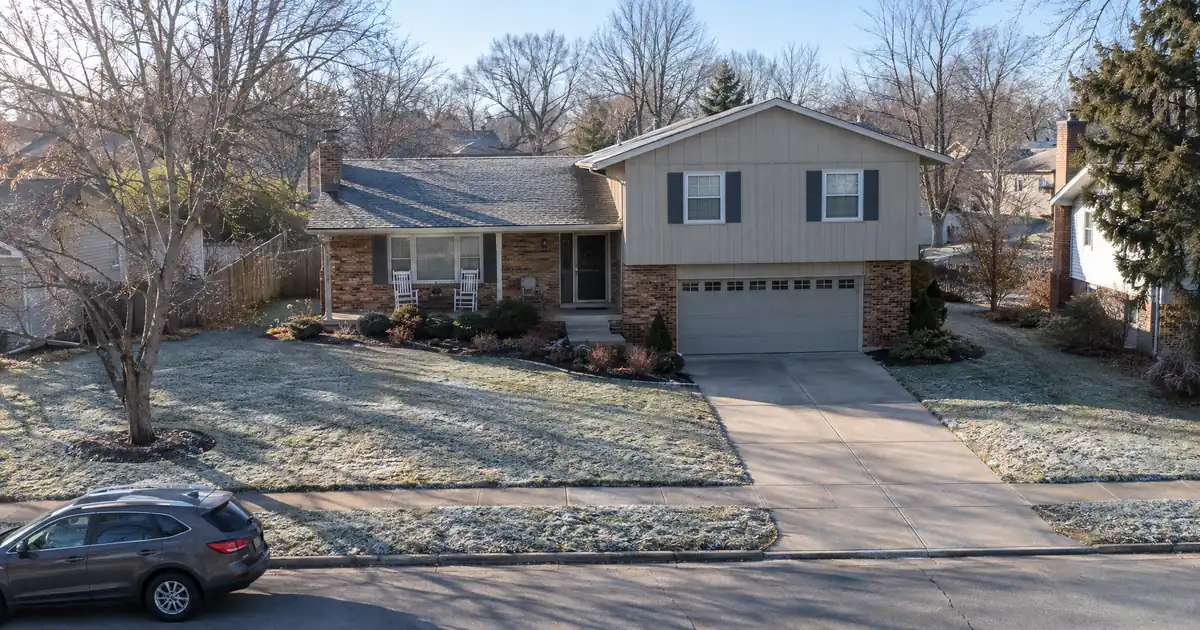
The Quick Read: A DSCR lender underwrites every house in a metro as its own file, using one consistent method, with no metro-wide ratio applied to the whole group. Each address gets its own rent used for lender review and its own payment, so two similar houses can land at different coverage numbers.
- The rent used for lender review is typically the lower of the in-place lease and the appraiser’s market rent.
- The payment is full PITIA: principal, interest, taxes, insurance, and any HOA dues.
- Taxes, insurance, HOA dues, rent comps, and property type change from address to address.
- A weak ratio usually costs leverage or pricing before it ends a file, subject to lender guidelines.
- Clearing 1.00 is not the same as positive cash flow.
A metro looks like one market on a map. To an underwriter it is a stack of separate addresses, each with its own rent evidence and its own bills. This piece walks through that process the way the files actually move. The complete DSCR loans guide covers the product basics.
What Does the Lender Actually Calculate?
The lender divides qualifying monthly rent by the full monthly housing payment. That payment is principal, interest, taxes, insurance, and HOA dues, together called PITIA. A result of 1.00 means rent equals the payment. A result of 1.25 means rent exceeds it by a quarter.
Many web articles use the commercial formula, net operating income over debt service. That is not how a 1-4 unit DSCR loan works. The residential version uses gross rent over PITIA, and operating expenses are not deducted. The ratio is often friendlier than investors expect because of that.
It is also narrower than investors assume. Repairs, vacancy, management, utilities, and capex sit outside the calculation. A house that clears 1.00 can still lose money in a bad year.
Key Terms Defined
PITIA: the full monthly housing payment: principal, interest, taxes, insurance, and association dues.
Market rent: the rent an appraiser supports using comparable rentals near the subject house.
Rent schedule: the appraiser’s rent analysis attached to the appraisal.
Leverage tier: the LTV band a file qualifies for, which moves with coverage, credit, and loan size.
Seasoning: the ownership period a lender expects before cash-out is available on a recent purchase.
How Does Underwriting Treat Each House, Step by Step?
Every house runs through the same checklist. The checklist is the consistency. The inputs are what change.
1. Classify the property and income type. A long-term rental is reviewed on a lease or market rent. Short-term rentals use different documentation, covered below.
2. Order the appraisal. It does two jobs. It sets value, which drives LTV. It also sets market rent, which drives coverage.
3. Build the rent opinion. The appraiser picks rental comps and adjusts only for significant differences between each comp and the subject. The form carries three comparable columns plus comments on the rent range, vacancy, and trend. Size, bedroom count, condition, and submarket all feed the number.
4. Compare against any lease. Across most programs in the wholesale network, underwriting generally takes the lower of the lease and market rent. A vacant house runs on market rent alone.
5. Build PITIA from the real address. Principal and interest follow the loan size. Taxes, insurance, and HOA dues belong to that house and its jurisdiction.
6. Divide and compare. The result goes against the program floor and the pricing and leverage tiers. 1.00 is where many select programs start. Stronger ratios open better pricing and leverage.
7. Test credit, reserves, and equity. The property carries the income test, but credit, reserves, and down payment still count. Most programs want around 660, a 620 floor exists in parts of the network, and 700+ unlocks the strongest leverage tiers. Reserves commonly run around 6 months of PITIA, stepping up to about 9 months above $1,500,000, subject to lender guidelines.
8. Collect documents. Typical items are the lease, the appraisal with its rent schedule, entity and ID documents, and bank statements showing reserves.
An early ratio from a screening call is an estimate. The appraisal rent can move it.
What Changes From House to House Inside One Metro?
Rent comps, taxes, insurance, HOA dues, and property type all change by address, even inside one metro. A metro is not one input set. It is dozens of neighborhoods, tax jurisdictions, and association rulebooks sharing a name.
| Input | Why it varies | Where the lender gets it |
|---|---|---|
| Rent comps | Size, beds, condition, submarket | Appraiser’s rent schedule |
| Taxes | Jurisdiction and reassessment | Tax records, forward estimate |
| Insurance | Location, age, coverage | Insurance quote for the house |
| HOA dues | Association rules and amenities | HOA questionnaire |
| Property type | SFR, 2-4 unit, condo, townhome | Appraisal and title |
| Condition | Repairs and deferred maintenance | Interior appraisal |
Inputs like these can differ meaningfully from one property to the next within a metro, so treat the spread as real but file-specific. Taxes deserve one practical note: a purchase can reset the bill, so a seller’s current tax figure can understate what the new owner pays. Underwriters tend to use a forward estimate.
Property type also gates eligibility. Single-family, 2-4 unit, condo, and townhome properties are standard. Manufactured homes, log homes, and barndominiums are not offered through the network’s DSCR programs.
A Four-House Example in One Illustrative Metro
Picture an investor with four houses under contract across one metro. All numbers below are illustrative ratios, not market data.
| House | Rent source | Payment picture | Outcome |
|---|---|---|---|
| A: leased SFR | Lease equals market rent | Moderate taxes, no HOA | Clears about 1.25x |
| B: leased SFR | Lease above market, so market rent counts | Same payment profile | Falls to about 1.05x |
| C: vacant SFR | Appraiser’s market rent only | Tax reset after purchase | Drops near 1.00x |
| D: townhome | Market rent | HOA dues added to PITIA | Lands around 1.10x |
House B is the common surprise. The seller’s lease sat above market, and programs typically credit the lower figure.
Four houses, four different ratios, one lender, one method.
Lease Versus Appraisal: Which Rent Counts?
The lower of the two typically counts. An occupied house with a lease at or above market runs on market rent. An occupied house with a below-market lease runs on the lease, and that lease drags the ratio down. A vacant house runs on the appraiser’s market rent alone, which makes the appraisal the whole numerator.
Rent estimators and listing-site numbers do not set the ratio. The appraiser’s supported rent does. A deal modeled on an assumed rent can shift once the appraisal lands, so stress-test the ratio at a lower rent before going under contract.
For contrast, the FHA side uses the same appraisal-plus-rent-schedule logic for owner-occupied loans with rental income, as shown in HUD Mortgagee Letter 2023-17. That is a different regime from a business-purpose DSCR loan, but it shows how standard the appraiser-sets-rent idea is.
Where the General Rule Breaks
A few cases bend the method.
- Short-term rentals. Income is variable, so lenders review it harder. Across the network, purchases go to 75% LTV, refinances run around 70%, and cash-out runs 70% on short-term-rental collateral. Expect a 640+ score, about 12 months of hosting history, and a 1.00 coverage floor on purchases and on refinances. A nightly rate times 30 is not a valid rent schedule figure. Short-term rental rules can vary by city, county, HOA, and property type, so investors should confirm local rules before relying on projected rental income.
- Interest-only structures. Select lenders in the network offer interest-only periods and extended 40-year terms, which change the payment the ratio is tested against.
- Coverage below 1.00. 1.00 is where many select programs start; a separate select-lender path goes below 1.00 with leverage and terms adjusted. No-ratio loans are available only through select lenders, generally for borrowers who already own a primary residence.
- Subsidized-voucher units. Market-rent substitution is often resisted on these files, so lease evidence matters more.
- Commercial-style deals. Larger multifamily and commercial properties use the net-operating-income version, not this residential method.
Are the Houses Tested Together or Separately?
By default, separately. Each house sits under its own loan and its own ratio. A strong house does not rescue a weak one, and one failed file does not sink the others.
| Factor | One loan per house | One note, several rentals |
|---|---|---|
| Coverage test | Per property | Pooled across the portfolio |
| Weak house | Stands alone | Can be offset by stronger ones |
| Eligible count | One house per loan | 2 to 20 under the 30-year portfolio DSCR loan |
| Size | Up to $3,000,000 standard | $300,000 to $5,000,000 |
A portfolio DSCR loan, also called a blanket or cross-collateralized loan, puts several rentals under one note with leverage up to 80% on a purchase or rate-and-term refinance and a 1.00 floor measured on the pool. Every property in the pool still needs a lease or appraiser-supported market rent. Exact terms depend on the lender’s guidelines, property type, leverage, and a full review of the borrower’s file.
When One House Falls Short
A weak ratio usually costs pricing or leverage before it kills the deal. The usual remedies:
- Put down more. Extra equity lowers the payment and can lift coverage, though it never erases credit floors, reserve rules, or property eligibility.
- Move to a lower leverage tier where terms adjust.
- Renew or reset a below-market lease, if the market supports it.
- Ask for an appraisal reconsideration with stronger rent comps.
- Use an interest-only period through a select lender.
- Drop or swap the house.
Preparing a Multi-House Submission
Clean files go in with fewer gaps. Keep the same vesting entity across the houses, and use one schedule of properties listing each address, lease status, and HOA. Gather these per house:
- Executed lease or a note that the house is vacant
- Insurance quote with full coverage detail
- HOA information, where applicable
- Entity documents and ID
- Bank statements showing reserves
DSCR loans are designed for non-owner-occupied investment properties. Because they are business-purpose investor loans, they are reviewed differently from a standard owner-occupied mortgage. Traditional personal-income documentation does not enter the ratio test, but credit, reserves, appraisal, and entity documents all still do.
For deeper background on the mechanics discussed here, see Fannie Mae Form 1007.
Frequently Asked Questions
Does a DSCR lender look at my whole metro portfolio together?
Not on single-property loans. Each house is its own file with its own rent and payment. Pooled testing happens only under a portfolio structure, where one note secures several rentals, subject to lender guidelines.
Who decides the rent used in the ratio?
The appraiser’s rent schedule sets market rent. Across most programs, underwriting then uses the lower of that figure and any in-place lease. A vacant house uses market rent alone.
Why did two similar houses get different ratios?
Different rent comps, tax bills, insurance quotes, and HOA dues. Price and loan size can match while the payment and supported rent do not.
Is a 1.25 ratio required?
No. 1.00 is where many select programs start, and stronger ratios generally open better pricing and leverage. Exact thresholds depend on the program, credit, and leverage.
Does clearing 1.00 mean the house cash flows?
Not necessarily. The ratio compares rent to PITIA only. Repairs, vacancy, management, utilities, and capex sit outside it.
If you are buying or refinancing a rental property and want to see how the numbers work, Lendmire can help you compare DSCR loan options based on the property income, credit profile, leverage, and investor goals. Reach the team at 828-256-2183. Tax treatment varies; consult a qualified professional. Program details are subject to lender guidelines and are not a commitment to lend.
About Lendmire
Lendmire — NMLS# 2371349 — is a mortgage brokerage specializing in DSCR investor loans, helping arrange financing across 41 markets, including Washington, D.C., through wholesale and investor-lending channels. The model centers on property-level rental income reviewed by the lender rather than W-2 documentation, subject to lender guidelines, suiting entity-owned and multi-property investors. Lendmire holds Scotsman Guide Top Mortgage Workplace recognition for 2025 and 2026.
Get Started
Ready to find the right loan for you?
In about 30 seconds you can review financing options available for your investment property. No commitment required.
Informational only. Not a Loan Estimate, approval, or commitment to lend. Program availability and eligibility are subject to lender guidelines, credit approval, property review, and underwriting.
References
1. HUD
This article is part of Lendmire’s DSCR loan program — full qualification details, guidelines, and scenarios live on the program page.
Related reading: How a DSCR Lender Reads a Stabilizing BRRRR Rehab Batch · How a DSCR Lender Sizes an LLC Portfolio Loan Without a Guarantor · How a DSCR Lender Sizes a Blanket Loan Across LLC-Held Doors
Brandon Miller
Founder & CEO, Mortgage Loan Originator, Lendmire LLC
- Mortgage Loan Originator · NMLS# 1129696 · Verify on NMLS Consumer Access
- North Carolina Real Estate Broker · License# 343312 · Verify on NCREC
- North Carolina Insurance Producer · License# 19053198 · Property, Casualty, Life, Health · Verify on NAIC SBS
- Lendmire LLC · Firm NMLS# 2371349 · Verify firm licensure
Legal disclosures. Lendmire (NMLS# 2371349) is a state-licensed mortgage brokerage that arranges financing through wholesale lender relationships. Lendmire is not a direct lender, depository institution, or registered financial advisor. The discussion above is general informational content about real estate financing — it is not financial, legal, or tax advice, and readers should consult licensed professionals for guidance on their individual circumstances. Loan inquiries are subject to lender underwriting; this article does not represent a commitment to lend. Loan terms, rates, and qualification standards vary by borrower, property, and state, and are subject to change at any time. Equal Housing Opportunity. NMLS Consumer Access: nmlsconsumeraccess.org.