
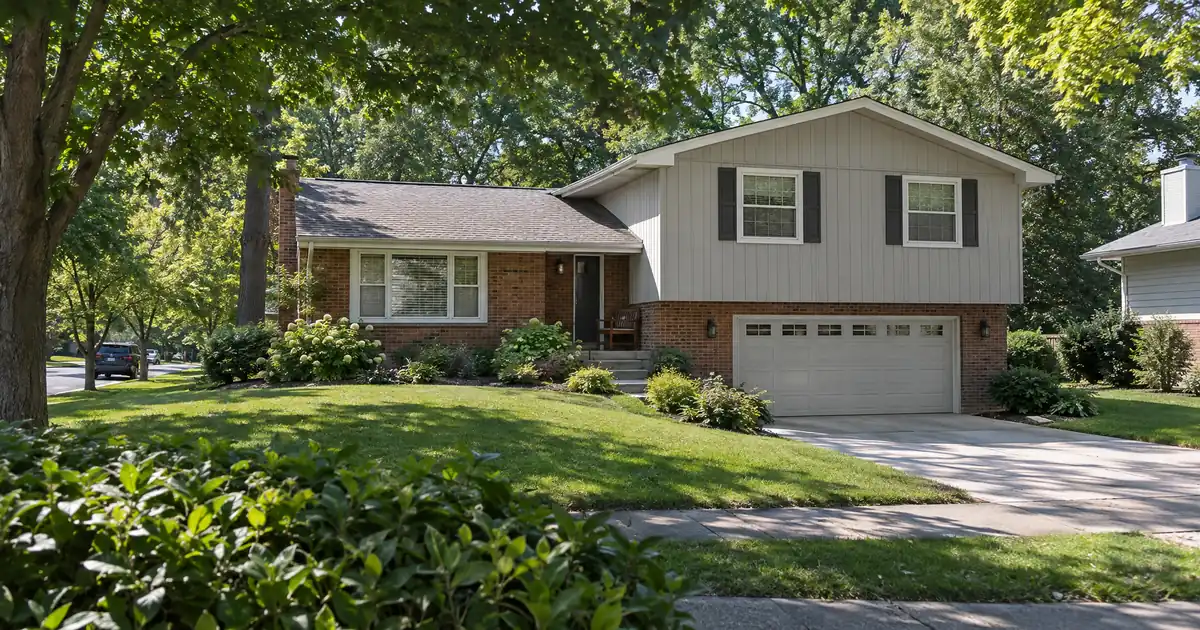
The Quick Read: Yes, usually, once the houses are finished and ready to rent. A DSCR loan is a permanent, income-based loan on a completed property. It does not fund construction, and it does not need a signed lease, because the appraiser’s market-rent opinion can stand in for one. Whether a given house clears depends on completion, coverage, leverage, credit, and reserves.
- A DSCR loan is a takeout loan. Cash or a construction or bridge loan pays for the build.
- Lease-up status does not block a file by itself. A house with no tenant is rated on appraised market rent.
- Leased houses are generally credited at the lower of the signed lease and market rent.
- Completion evidence comes first: certificate of occupancy, utilities on, final inspection.
- Clearing 1.00 coverage is not the same as positive cash flow.
Most of the friction on these files has nothing to do with the loan type. It sits in the gap between a finished house and a house a lender can value. This piece covers where DSCR fits in a build-to-rent timeline, how rent is counted when some houses are leased and some are not, and what to do when the answer is not yet.
Where Does a DSCR Loan Fit in the Build-to-Rent Timeline?
A DSCR loan fits at the end of the build, not the start. Construction is funded some other way. Lease-up happens after completion. The DSCR loan replaces the short-term debt once the house is finished and can be appraised for rent.
| Phase | Typical funding | What the lender needs to see |
|---|---|---|
| Construction | Cash, construction or bridge loan | Plans, budget, draw schedule |
| Completed, unleased | DSCR loan is possible | Certificate of occupancy, appraisal with rent schedule |
| Partly leased | DSCR loan is possible | Signed leases plus appraisal rent for the vacant houses |
| Stabilized | DSCR loan is possible | Lease history, deposits, rent roll |
Across the wholesale network, DSCR is treated as a permanent product. The short version: a DSCR lender is not funding draws on an unbuilt lot, and a house that is still a framed shell is not eligible collateral.
“Infill” matters here only in how the house gets valued. A scattered-site house in an established neighborhood is usually appraised against nearby sales and nearby rentals, not against a community of identical plans. That cuts both ways, and the appraisal section below covers it.
Key Terms Defined
Lease-up: the period after completion when houses are being marketed and leased but are not yet fully occupied.
Stabilized: a property with leases in place and a steady operating record, which is what many permanent programs prefer to see.
Market rent: the rent an appraiser opines the house would command, based on comparable rentals, whether or not a tenant is in place.
Certificate of occupancy: the local sign-off that a new house is complete and legal to occupy.
PITIA: principal, interest, taxes, insurance, and association dues, the full monthly obligation that rent is measured against.
Seasoning: the ownership period a lender wants before a cash-out refinance on a property, commonly about 6 months across the network.
Does the House Need a Tenant to Qualify?
No. Most DSCR files on a vacant or newly completed house run on the appraiser’s market-rent figure alone. A lease is not required to get to a coverage number, which is why lease-up is not a disqualifier by itself.
The appraiser documents that figure on a rent schedule. For a one-unit house the form is the 1007; for a two-to-four unit property it is the 1025, both listed on Fannie Mae’s appraiser forms page. DSCR lenders borrow these forms for their own purposes. They are not agency loans. Rates are not quoted in this article.
Form names may change as appraisal reporting changes. What stays constant is the idea: an appraiser’s comp-based rent opinion replaces a lease.
Two practical notes from files in this lane. Some lenders will finance a vacant house but attach a leasing condition, which means a signed lease before or after closing. And lenders differ on appraisal condition. A new house that has sat vacant for a long stretch without upkeep may not be treated as new at all. Ask early which way a given program leans.
How Is Rent Counted When Some Houses Are Leased and Some Are Not?
Leased houses are generally credited at the lower of the signed lease and market rent. Vacant houses are credited at appraised market rent. A lease above market does not lift the ratio, and a lease below market pulls it down.
For a lease-up community, that gives a simple read by status:
| Status | How rent is counted | Documents to expect |
|---|---|---|
| Vacant, finished | Appraiser’s market rent | CO, appraisal with rent schedule |
| Leased, short history | Lower of lease and market rent | Signed lease, deposit record |
| Partly leased, one loan | Pooled rent vs pooled debt service | Rent roll, leases, appraisals |
| Seasoned, leased | Lower of lease and market rent | Lease history, rent roll |
That table is a practitioner read of how lenders select rent, not a published rule. Lender conventions vary, and the lender, not the appraiser, decides how the figure is used.
The coverage test itself is plain. DSCR is monthly rent divided by PITIA. Across the network, 1.00 is where select programs start, and stronger ratios open better pricing and leverage. A separate select-lender path takes coverage below 1.00 with leverage and terms adjusted. No-ratio structures exist only through select lenders, generally for borrowers who already own a primary residence.
Consider a scenario where an investor owns three finished infill houses. One has a signed lease at market rent. Two are vacant. On single-property loans, each house stands on its own number, and the vacant two ride on the appraiser’s rent. If one of the vacant houses lands under 1.00 on its own, it is a separate file with its own leverage and term question. The leased house does not rescue it.
What Changes If the Houses Sit Under One Loan?
A single loan across several houses tests pooled rent against pooled debt service. Stronger houses can offset weaker ones, which helps a lease-up group where leasing is uneven. The tradeoff is cross-collateralization: one note secured by all the houses.
The network has two portfolio structures. The 30-year portfolio DSCR loan covers 2 to 20 properties under one note, with loan sizes from $300,000 to $5,000,000 and leverage up to 80% of value on a purchase or rate-and-term refinance, subject to lender guidelines. Coverage is measured on the pool against a 1.00 floor. An interest-only period is available. The rental portfolio term loan is for five or more rental properties or units, with loan sizes from $500,000 to $50,000,000 and leverage up to 75% of value, on fixed terms with a balloon at maturity. It can be written as recourse or non-recourse, and a non-recourse loan looks to the real estate with recourse limited to carve-outs such as fraud and bankruptcy.
A house that is below 1.00 on its own can still sit in the pool, but underwriting tests the pooled coverage, the leverage, and the terms.
Every house in the pool still needs a lease or an appraiser-supported market rent. Credit floors on the portfolio programs start at 640, with 680 or 720 on some structures. Some structures require a special-purpose entity, typically an LLC, subject to program terms. Releases, substitutions, and selling one house out of the pool follow the loan documents, and the remaining pool must still cover its debt service.
Infill-Specific File Issues
The infill problem is comps. A scattered-site house may be appraised against sales from different builders, elevations, and finishes. That can make value harder to support than in a platted community of identical plans. A reconsideration request with in-neighborhood sales and clear condition adjustments is a routine step, not an emergency.
Rent comps carry the same issue. The rent schedule uses three comparable rentals. In an infill pocket with few rentals, the appraiser may reach further, and the rent opinion can land lower than a pro forma. Test that early.
Other items that tend to surface on these files:
- Taxes and insurance often change after a new house is completed. Coverage that pencils on construction-period figures can move once the permanent numbers are in. Budget for that before ordering the appraisal.
- Concessions and short first leases can depress effective rent, and a lender looking at a lease will see them.
- Association dues and access arrangements belong in PITIA when they apply. Missing association paperwork is a common preventable gap.
- If the house is planned as a short-term rental, the standard rent schedule does not fit. Fannie Mae’s appraiser update notes the 1007 was not designed for short-term rentals because it asks for monthly market rent. Short-term rental files run through a different income path, and across the network that means purchase leverage up to 75%, refinance around 70%, a 640+ score, and about 12 months of hosting history. Short-term rental rules can vary by city, county, HOA, and property type, so investors should confirm local rules before relying on projected rental income.
What Leverage, Credit, and Reserves Look Like
On a single-property DSCR loan, most purchase files land at 75% to 80% LTV on an investment property, with select high-leverage programs reaching 85% at roughly a 700+ score. A cash-out refinance tops out around 75% LTV across most of the network, with about 6 months of seasoning as the common expectation. Credit floors run from 620 in parts of the network to around 660 on most programs, with 700+ unlocking the strongest leverage tiers. Loan sizes run up to $3,000,000 on standard programs (smaller balances available through select lenders), and above $2,500,000 the network generally holds to 30-year fixed structures.
Reserves vary by lender, leverage, loan size, and transaction type. Around 6 months of PITIA is common, conservative rate-term files at modest leverage under $1,500,000 can see reserves waived, and larger loans typically step up to about 9 months. Extended terms and interest-only periods are available through select lenders, and ARM structures exist for investors who want them.
One point trips up new-build owners. A bigger down payment lowers the payment and can lift coverage, but it never erases a leverage cap, a credit floor, a reserve rule, or a property-eligibility rule. The strongest files clear both tests: enough equity and enough rental coverage. All of this is subject to lender guidelines and individual underwriting, and none of it is a commitment to lend.
One property-type note. Manufactured homes, log homes, and barndominiums are not offered in the network’s DSCR programs, so a build-to-rent product in those forms is outside these programs.
If the Answer Is Not Yet
Not every lease-up house is ready on day one. The usual reasons are an incomplete certificate of occupancy, a rent opinion that comes in light, or a pool that does not clear its coverage floor. The options a lender would review are:
1. Wait for completion paperwork. If the house is not finished, nothing else matters yet. Get the CO and utilities done first.
2. Restructure leverage. A lower LTV can bring the payment down and lift coverage. This is the cleanest fix when rent is the only weak spot.
3. Look at a sub-1.00 path. Select lenders in the network take coverage below 1.00, with leverage and terms adjusted. Qualification is subject to lender guidelines and credit review.
4. Consider interest-only or an extended term. Both are available through select lenders and can change the coverage math.
5. Pool the houses. If several houses are finished and a few are weak, a pooled loan lets stronger rent offset weaker rent, within the pool’s coverage floor and leverage limits.
6. Extend the short-term loan. If the construction or bridge loan is maturing, lease-up risk sits there. A forced refinance on whatever terms exist that month is the failure mode to avoid.
Test the takeout’s rent assumption early. The DSCR loan is the exit for the construction or bridge debt. If appraised rent comes in low, the exit can fail, and the whole ratio rides on one appraiser’s comp grid.
Document Checklist for a Lease-Up File
Clean documents leave fewer gaps for the lender to chase. For a finished infill house, expect to assemble:
- Certificate of occupancy and final inspection
- Builder or contractor documents, plan set, and feature sheet
- Entity documents if vesting in an LLC, subject to program eligibility
- Reserves and asset statements
- Signed leases and deposit records for any leased house
- Insurance quote that reflects the finished house, not the construction-period policy
- Association paperwork where it applies
Personal income documents are not the core of a DSCR file. The loan is reviewed primarily on property-level rental income covering the payment, subject to lender guidelines.
Common Mistakes
Pro forma rent is the first one. The appraiser’s number governs, not the sales sheet. A second is assuming 1.00 means the house cash-flows. DSCR compares rent to PITIA only. Repairs, vacancy, management, utilities, and capex sit outside the calculation, a point covered further in Lendmire’s explainer on DSCR appraisals, 1007 rent schedules, comps, and what gets ordered.
A third is treating the 1007 as a mandatory rule for every DSCR loan. It is an appraisal form that DSCR lenders adopted, and the lower-of-lease-and-market-rent test is a lender convention, since the loan is reviewed primarily on property-level rental income covering the payment, subject to lender guidelines. A fourth is assuming new construction is always easy to appraise. Comps can be thin or builder-dominated, especially on infill lots.
Market Context
Build-to-rent supply is cooling. NAHB’s analysis of Census data estimates about 15,000 single-family built-for-rent starts in the second quarter, against about 18,000 a year earlier, and about 63,000 over the last four quarters, down 16% from 75,000. NAHB points to financing costs, multifamily supply, and legislative concerns over institutional capital. If institutional capital stays constrained, individual investors and small builders may keep a larger role in single-family rental supply, though that is a reading of the trend, not a forecast. The exact numbers vary by lender and program and follow a full review of property, leverage, and credit.
Frequently Asked Questions
Can a DSCR loan fund the construction of a rental house?
Generally no. A DSCR loan is a takeout loan on a finished property, so cash or a construction or bridge loan pays for the build. The DSCR loan then replaces that debt once the house has a certificate of occupancy and can be appraised for rent.
Does the house need a tenant at closing?
Usually not. The appraiser’s market-rent opinion stands in for a lease on a vacant house. Some lenders add a leasing condition before or after closing, so ask which way a program leans before ordering the appraisal.
What if only some of my houses are leased?
On single-property loans, each house stands alone, with leased houses credited at the lower of lease and market rent and vacant ones at appraised rent. Under one pooled loan, rent and debt service are tested together, so stronger houses can offset weaker ones within the pool’s coverage floor.
Does clearing 1.00 mean the house cash-flows?
No. DSCR compares rent to PITIA only. Repairs, vacancy, management, utilities, and capex are outside the calculation, so a house can clear coverage and still run thin.
What if the appraised rent comes in low?
Options a lender would review include lower leverage, a select-lender sub-1.00 path with adjusted terms, interest-only or an extended term, or pooling. Qualification stays subject to lender guidelines, credit approval, and property review.
If you are buying or refinancing a rental property and want to see how the numbers work, Lendmire can help you compare DSCR loan options based on the property income, credit profile, leverage, and investor goals. The complete DSCR loans guide covers the full program picture, and you can reach the team at 828-256-2183.
Lease-up risk on infill rentals sits in the short-term debt long before it shows up in the DSCR file, which makes the takeout’s rent assumption the number to test first.
About Lendmire
Lendmire (NMLS# 2371349) is a mortgage brokerage focused on DSCR investor financing, helping arrange programs through wholesale and investor-lending channels in 41 markets, including Washington, D.C. DSCR loans are evaluated by the lender on property cash flow rather than personal income, subject to lender guidelines, supporting LLC closings and accommodating investors with four or more financed properties. Scotsman Guide Top Mortgage Workplace in both 2025 and 2026.
Get Started
Ready to find the right loan for you?
In about 30 seconds you can review financing options available for your investment property. No commitment required.
Informational only. Not a Loan Estimate, approval, or commitment to lend. Program availability and eligibility are subject to lender guidelines, credit approval, property review, and underwriting.
References
1. Fannie Mae, Appraisers and Property Underwriting
2. Fannie Mae, Appraiser Update
3. NAHB Eye on Housing, built-for-rent starts
This article is part of Lendmire’s DSCR loan program — full qualification details, guidelines, and scenarios live on the program page.
Related reading: Can a Maturing Blanket Loan Be Replaced With a 30-Year DSCR Loan? · Can Houses, Condos and a Small Apartment Building Share One DSCR Loan? · Does a Portfolio DSCR Loan Save Money Over One Loan per Rental?
Brandon Miller
Founder & CEO, Mortgage Loan Originator, Lendmire LLC
- Mortgage Loan Originator · NMLS# 1129696 · Verify on NMLS Consumer Access
- North Carolina Real Estate Broker · License# 343312 · Verify on NCREC
- North Carolina Insurance Producer · License# 19053198 · Property, Casualty, Life, Health · Verify on NAIC SBS
- Lendmire LLC · Firm NMLS# 2371349 · Verify firm licensure
Legal disclosures. Lendmire (NMLS# 2371349) is a state-licensed mortgage brokerage that arranges financing through wholesale lender relationships. Lendmire is not a direct lender, depository institution, or registered financial advisor. The discussion above is general informational content about real estate financing — it is not financial, legal, or tax advice, and readers should consult licensed professionals for guidance on their individual circumstances. Loan inquiries are subject to lender underwriting; this article does not represent a commitment to lend. Loan terms, rates, and qualification standards vary by borrower, property, and state, and are subject to change at any time. Equal Housing Opportunity. NMLS Consumer Access: nmlsconsumeraccess.org.