
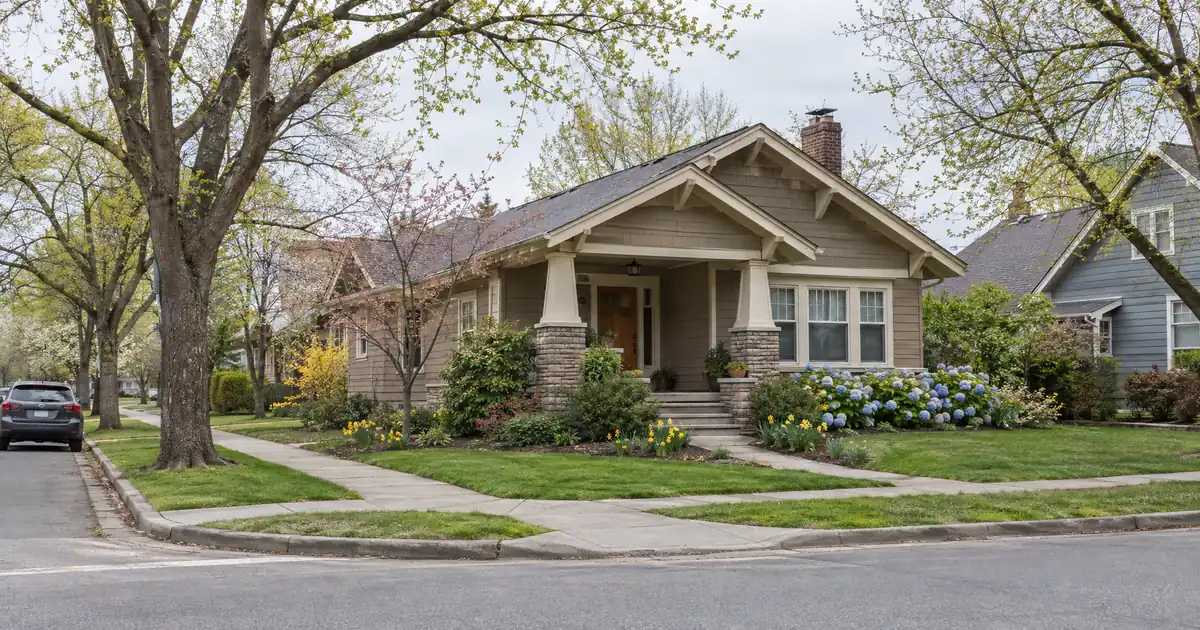
The Quick Read: Not directly. A portfolio DSCR note is built around finished, rentable houses, so a rebuild usually happens outside the note. You get the lender’s approval to release or swap out that house, fund the work with a separate construction or bridge loan, and bring the new house back under long-term financing once it is complete and rentable. A light cosmetic refresh is a different story and often fits inside the note.
- A DSCR loan finances a completed rental. It does not fund demolition, a gut rehab, or construction draws.
- In a portfolio loan, one note is secured by several houses, so the lender controls what happens to each one.
- Coverage is measured on the whole pool, but every house still gets its own condition review.
- A house with no rent hurts the pool’s coverage because the debt stays and the income does not.
- Your loan documents decide the route. Read them before you call a contractor.
Short Answer by Project Size
The size of the project decides the lender’s posture. Cosmetic work rarely changes anything. A gut rehab or tear-down changes the collateral itself, and that is where the note starts to matter.
| Project | Likely lender posture | Usual path |
|---|---|---|
| Cosmetic refresh | Usually fine if house stays rentable | Do the work in place |
| Major rehab, house unlivable | Treated as non-rentable collateral | Release or substitute, bridge funding |
| Tear-down and rebuild | Collateral is gone during build | Release, construction loan, then return |
Light renovation is not the same as a rebuild. A fresh coat of paint, new flooring, and updated fixtures leave the house rentable the whole time. Pulling out a kitchen, stripping the systems, or knocking the house down does not.
Never plan major work and hope the lender doesn’t notice. Your note has covenants about altering or destroying collateral. Asking first costs you a phone call. Skipping the question can cost you the loan.
Why Does the Note Care What Happens to the House?
The house is the lender’s security. In a portfolio loan, the pool of houses together secures one debt, so removing or destroying one changes what backs the whole note.
A portfolio DSCR loan is one loan secured by several rentals. You will also hear it called a blanket loan or a cross-collateralized loan. All three names mean the same thing. (A bank’s own portfolio loan, one the bank keeps on its books, is a different use of the word.)
Two tests run at once:
- Pool-level coverage. Underwriters compare pooled rent against pooled debt service. Strong houses can offset weak ones.
- Property-level review. Each house still needs a lease or an appraiser-supported market rent, plus an acceptable condition.
Coverage here is the DSCR math in its simplest form. The ratio is rent divided by the full monthly obligation: principal, interest, taxes, insurance, and any HOA dues. Wikipedia’s entry on the debt service coverage ratio explains the general logic: above 1.0, income covers the debt. A house under construction earns nothing, so it has no income to measure.
That is why a teardown is a collateral problem before it is a construction problem. Partial releases, substitutions, and the sale of one property out of the pool all follow your loan documents and the lender’s release terms. The remaining houses must still cover the debt on their own.
Where Does an Older House Sit on the Condition Scale?
Age alone is not the test. Condition is. Appraisers rate a house on a six-step scale, C1 for like-new through C6 for severely damaged. Across the wholesale network Lendmire works with, most programs want a house in solid, rentable shape at origination, with the roof, HVAC, electrical, and plumbing all working.
The scale itself is a borrowed convention. Rates are not quoted here. DSCR programs use the labels but set their own cutoffs. Treat that as a vocabulary lesson, not a rulebook for your loan.
| Condition tier | Typical read inside a pool |
|---|---|
| C1 to C3 | Can stay in the pool |
| C4, minor deferred maintenance | Can stay if all four major systems work |
| C5, notable repairs needed | Needs a cure first |
| C6, major damage or unlivable | Likely carved out of the pool |
Here is how an older house tends to land:
- Worn paint, tired flooring, dated fixtures. Generally fine. These are cosmetic.
- Aged roof near the end of its life. A gray zone. One appraiser may flag deferred maintenance and another may not.
- Original wiring or galvanized plumbing. Also a gray zone, handled case by case.
- No working HVAC, an active leak, foundation problems, or no utilities. Usually a cure-first or carve-out situation.
A fully renovated old house can rate as well as a new one. The reverse also holds, and the same house can be rated differently by different appraisers. Don’t count on a favorable read. Get the condition picture before you commit to a plan.
One more point. Appraisals on these files are generally done as-is. An appraisal that depends on future repairs typically triggers a re-inspection after the work is done. You can’t close on promised repairs.
What Are Your Four Routes?
You have four realistic routes, and the right one depends on how big the project is and how the pool is built. None of them is a loophole. Each one is a different way to answer the lender’s question about collateral.
| Route | What it needs | Effect on the pool | Best fit |
|---|---|---|---|
| Stay in the pool, cosmetic work | House stays rentable | Little change | Light refresh |
| Partial release, separate build loan | Lender consent, release terms | Pool loses a house | One rebuild, strong rest of pool |
| Refinance the whole pool | New note, new appraisals | Resets the structure | Several changes at once |
| Split into separate loans | Payoff and new loans | Ends cross-collateral link | Mixed-condition portfolios |
Stay in the pool. This works for cosmetic work only. The house keeps its rent and its rating.
Partial release. You ask the lender to release the house from the note. The release price runs above the property’s allocated balance, so expect to pay down more than that house’s share. The remaining houses must still cover the debt. You fund the build separately, then add the finished house back later, often by refinancing or by substitution if your documents allow it.
Refinance the whole pool. This makes sense when several things are changing at once. It also resets appraisals, terms, and costs for every house, not just the one you are rebuilding.
Split the pool. You trade simplicity for isolation.
Damage and a planned rebuild share many of the same collateral questions.
What Happens to the Pool While One House Is Down?
The pool’s coverage drops because the debt stays and the rent leaves. How far it drops depends on how much rent that house contributed.
Run it as an illustration only. Assume four similar houses, each contributing about the same rent and the same share of the debt. Say the pool covers its debt at 1.30x. Now one house goes dark for a rebuild. You lose a quarter of the rent, but the full debt remains.
The arithmetic is simple: 1.30 times 0.75 equals about 0.975. The pool now sits just under the 1.00 coverage floor that the 30-year portfolio DSCR loan measures on the pool. These are modeled assumptions, not market figures.
What does that tell you?
- A thin pool is the most exposed. If the pool begins with only a slim cushion above the floor, the same loss pushes you well under it.
- A strong pool gives you room. If the pool begins with a wide cushion, the same loss leaves you still above the floor.
- Release changes the math differently. If the house leaves the note, both its rent and its allocated debt leave, but the release price runs above the allocated balance, so you pay down more than that house’s share.
Missing the floor is not just a number problem. A pool that stops covering its debt is a problem you carry while paying for the build. Budget for both at once.
Seasoning rules add one more wrinkle on the way back. Inside the first six months of ownership, the loan is also capped at 90% of total cost (purchase price plus documented improvements). From six to twelve months the cap is 100% of total cost. The leverage ceiling still applies, and the loan is the lower of the two. After twelve months, appraised value alone is the basis. A rate-and-term refinance is not subject to the cost-basis cap.
For a recently bought older house, that means your documented rehab spend counts toward total cost. It does not mean your projected after-repair value sets the loan. The lender’s own appraisal does that.
What Is the Sequence From Release to Re-Entry?
The order matters because each step feeds the next. Skipping ahead is how projects stall.
1. Read your loan documents. Find the release, substitution, and alteration clauses.
2. Get the lender’s consent. Ask for release terms in writing before any demolition.
3. Line up the build money. Cash, a bridge loan, or a construction loan. Construction lenders generally want proof of building experience.
4. Build. The interim lender controls draws and inspections. Overruns are your cost, because the long-term loan is sized on appraised value, not on what you spent.
5. Reach a rentable state. Finish the work and obtain a certificate of occupancy where the project needs one. Substantially complete is typically not enough for a permanent lender.
6. Order the appraisal. The lender orders it and it produces a value and a market-rent opinion. Single-family uses a 1007 rent schedule and 2-4 unit uses a 1025.
7. Sign a lease or document the supported rent. Every house in the pool needs one or the other.
8. Re-enter. The finished house comes back through substitution, a new note, or a refinance. Treat it as a new property for review purposes.
Plan the exit before breaking ground. Two loans mean two sets of costs and two closings. The long-term lender may also have its own seasoning expectations after a refinance, so confirm them early.
What Can Go Wrong During the Build?
Most problems come from timing and coverage, not from the construction itself.
- Insurance gaps. A standard landlord policy may not respond the way you expect on a vacant or under-construction house. Ask your insurer about builder’s-risk coverage and loss-of-rent coverage before work starts.
- Permits and legal use. An older house may trigger code upgrades or lose grandfathered status once you rebuild. Confirm what the local authority will require before you commit.
- Missed pool payments. If a house stops producing rent while its share of the debt continues, the rest of the portfolio has to carry it. Keep cash on hand for that.
- Overbuilding. Putting more into the house than the neighborhood supports does not guarantee value. An improvement may support a higher appraised value, depending on comps and underwriter review. It does not add a fixed amount.
- Ineligible rebuild types. A kit home, a log home, or a barndominium does not work here. Manufactured homes are not reviewable on these programs either. If the rebuild is one of those, the long-term loan may not exist.
Treat the DSCR ratio as a coverage test, not a profit measure. Clearing 1.00 does not mean positive cash flow, because repairs, vacancy, management, utilities, and capital spending sit outside the calculation. Tax treatment varies; consult a qualified professional before relying on any deduction for rebuild costs.
One more pattern from the files. Borrowers often price the build and forget the carry. The cost of holding a pool with one dark house for the whole construction period is where thin plans break.
What Should You Read and Ask Before You Call?
Start with the documents, not the lender’s reaction. Do not rely on whether the servicer would notice work. An unreported teardown is a covenant problem whether anyone catches it or not.
Read these clauses:
- Release and partial release terms, including the release price formula
- Substitution rights and what a substitute house must meet
- Covenants on altering, demolishing, or changing the use of collateral
- Insurance requirements during vacancy or construction
- Cross-default language, so you know what one problem triggers elsewhere
Bring this to the conversation:
- The current rent roll and a schedule of all houses in the pool
- The age, systems, and condition picture of the house you want to rebuild
- The project scope, budget, and your build timeline
- A plan for the build funding and the exit
- The ownership entity, since some structures require a special-purpose entity, typically an LLC, subject to program terms
Then ask the lender plainly: what is the release price, what must the remaining pool cover, and how does the finished house return?
Which Portfolio Structures Are There?
Two structures cover most portfolio files in the network, and they work differently. All figures below are program ceilings or floors, typical and subject to lender guidelines. They are not quotes.
The 30-year portfolio DSCR loan covers two to 20 properties under one note. Loan sizes typically run from $300,000 to $5,000,000, with larger balances on review. Leverage goes up to 80% of value on a purchase or rate-and-term refinance of investment rentals. Coverage is measured on the pool at a 1.00 floor. Terms are 30 years, fixed or adjustable, with an interest-only period available. Eligible types are single-family, 2-4 unit, condo, and townhome.
The rental portfolio term loan covers five or more rental properties or units. Loan sizes typically run from $500,000 to $50,000,000, with larger balances on review. Leverage goes up to 75% of value. Terms are fixed at 3, 5, 7, or 10 years, with a balloon at maturity. Both recourse and non-recourse versions exist. A non-recourse loan looks to the real estate, with carve-outs such as fraud and bankruptcy. Small multifamily of five or more units is eligible only on this structure. Properties in several markets can sit under one loan, and reserves are held for taxes, insurance, and capital expenditures.
Across both, the credit floor is typically 640, and some structures ask for 680 or 720. Owner-occupied property, co-ops, mixed-use, and commercial property are ineligible. Cash-out on a portfolio loan never exceeds 75% of pooled value on standard rentals.
For the broader picture, Lendmire’s complete DSCR loans guide covers how the programs fit together. A larger down payment can lift coverage, but it never erases leverage caps, credit floors, reserve rules, or property eligibility. Strong files clear both tests: enough equity and enough rental coverage.
Key Terms Defined
Portfolio (blanket) loan: One loan secured by several rental properties instead of one note per house.
Cross-collateralization: A setup where every property in the pool secures the whole debt, not just its own share.
Pooled coverage: The combined rent of all houses divided by the combined debt service of the loan.
Release: The lender’s formal agreement to free one property from the note, usually for a price above its allocated balance.
Substitution: Swapping one property in the pool for another that the lender accepts.
Certificate of occupancy: The local sign-off that a finished building is legal to occupy.
Condition rating: The appraiser’s C1 to C6 score for a house’s physical state.
Seasoning: The ownership period a lender looks at before sizing a loan on appraised value rather than cost.
For deeper background on the mechanics discussed here, see Fannie Mae Selling Guide B4-1.3-06.
Frequently Asked Questions
Can I renovate after the loan closes?
Light cosmetic work generally fits, since the house stays rentable. Major work changes the collateral, and your note’s alteration covenants apply. Tell the lender what you plan before you start, and never misstate the plan on a file.
Does the lender have to approve a rebuild?
For a teardown or a gut rehab, yes in practice. Release and substitution follow your loan documents and the lender’s terms, and the remaining pool must still cover its debt service. Get consent in writing first.
Can I demolish one house and keep the rest of the pool?
Often, through a release, if the remaining houses still cover the debt. The release price runs above that house’s allocated balance. A lot with no house has no rent to underwrite, so it cannot go back into the pool as it stands.
Does a rebuilt house count as a new property?
Treat it that way. It typically needs a certificate of occupancy where required, a fresh appraisal with a rent opinion, and a lease or supported rent. Seasoning treatment follows the loan terms, and documented improvements count toward total cost on recent purchases.
Do I need a bridge or construction loan?
Almost always, unless you pay cash. A DSCR loan does not fund draws, so the build needs its own financing, and the DSCR loan comes after completion.
If You Are Planning a Rebuild
If you are buying or refinancing a rental property and want to see how the numbers work, Lendmire can help you compare DSCR loan options based on the property income, credit profile, leverage, and investor goals. Lendmire is a broker arranging DSCR financing through select lenders in its wholesale network, across 41 markets including Washington, D.C. Qualification runs primarily on property-level rental income covering the payment, subject to lender guidelines. This is not a commitment to lend.
The safest rebuild is the one where the exit is priced before the first wall comes down.
About Lendmire
Lendmire (NMLS# 2371349) is a mortgage brokerage built around DSCR investor lending, with programs available in 41 markets, including Washington, D.C. DSCR lenders commonly evaluate rental-income coverage instead of personal income paperwork — a practical fit for LLC-owned and multi-property investors. Terms vary by lender, property, leverage, and program. Scotsman Guide named Lendmire a Top Mortgage Workplace in both 2025 and 2026.
Get Started
Ready to find the right loan for you?
In about 30 seconds you can review financing options available for your investment property. No commitment required.
Informational only. Not a Loan Estimate, approval, or commitment to lend. Program availability and eligibility are subject to lender guidelines, credit approval, property review, and underwriting.
References
1. Wikipedia, Debt service coverage ratio
2. Fannie Mae Selling Guide B4-1.3-06
This article is part of Lendmire’s DSCR loan program — full qualification details, guidelines, and scenarios live on the program page.
Related reading: Can You Rebuild a Damaged Rental Inside a DSCR Portfolio Loan? · Can an Investor Keep HELOCs on Rentals Inside a DSCR Portfolio Loan? · Five-Year vs Ten-Year DSCR Portfolio Term Loan at Maturity
Brandon Miller
Founder & CEO, Mortgage Loan Originator, Lendmire LLC
- Mortgage Loan Originator · NMLS# 1129696 · Verify on NMLS Consumer Access
- North Carolina Real Estate Broker · License# 343312 · Verify on NCREC
- North Carolina Insurance Producer · License# 19053198 · Property, Casualty, Life, Health · Verify on NAIC SBS
- Lendmire LLC · Firm NMLS# 2371349 · Verify firm licensure
Important disclosures. Lendmire (NMLS# 2371349) is a licensed mortgage brokerage. Lendmire is not a direct lender, depository institution, or financial advisor. All loan inquiries are subject to lender underwriting; this article does not constitute a commitment to lend. Rates, terms, and program guidelines are subject to change without notice and vary by borrower profile, property type, and state. Information in this article is general in nature and is not financial, legal, or tax advice. Equal Housing Opportunity. NMLS Consumer Access: nmlsconsumeraccess.org.