
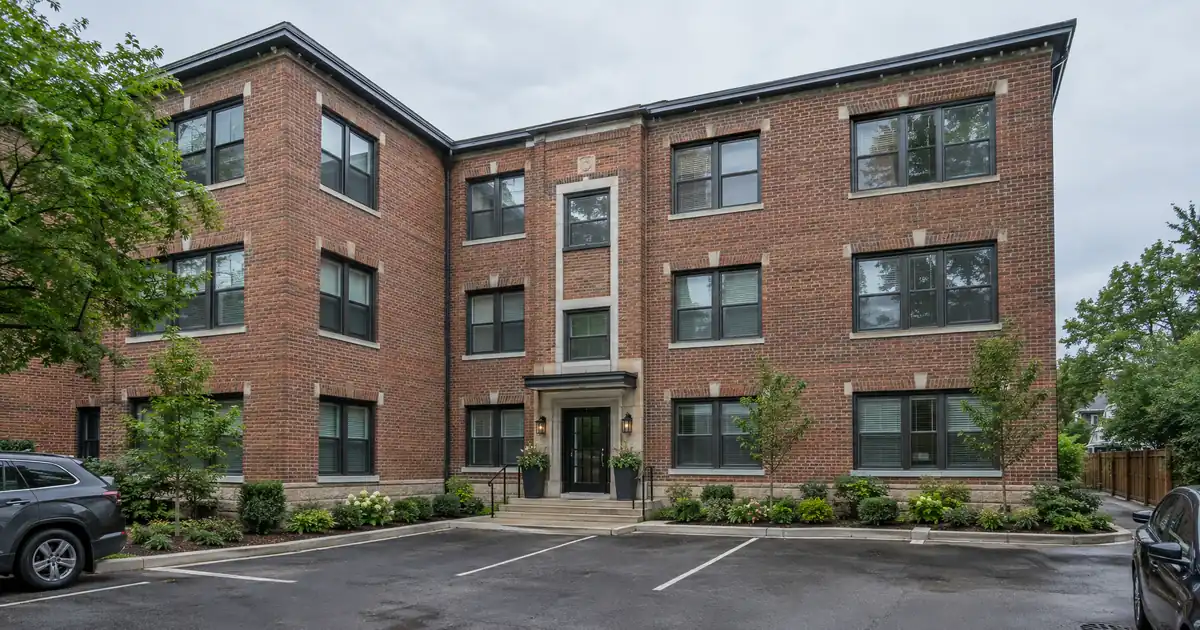
The Quick Read: For a 20-door investor, separate high-balance loans on each house fit a mixed or still-changing portfolio, while one pooled note fits a seasoned, similar group you plan to hold long term under a single set of terms, with the tradeoff being how far one problem can travel. Neither is better in the abstract. The choice turns on how uniform the houses are, how soon you might sell one, and how much you want a single default contained.
- Pooled notes test the whole group’s rent against the whole group’s debt, so strong houses can carry weak ones.
- Separate loans test each house alone, so a weak house must stand on its own.
- Selling one door is simple with separate loans and negotiated on a pooled note.
- Hybrids are common: pool a seasoned core and keep the odd doors on their own notes.
DSCR (debt service coverage ratio) simply asks whether a property’s rent covers its monthly debt payment. Lendmire’s complete DSCR loans guide covers the basics. This piece assumes you know them and want the structural choice.
Key Terms Defined
Super jumbo: a loan size label for balances well above the agency conforming limit. Where jumbo ends and super jumbo begins is set lender by lender.
Blanket loan: one note secured by several rentals. A portfolio DSCR loan and a cross-collateralized loan are the same thing. A bank’s portfolio loan is different: a loan the bank keeps on its own books.
Cross-collateralization: every property in the pool backs the whole debt, not just its own slice.
Release clause: the loan term that lets one property leave the pool when you pay a set amount.
Allocated balance: the share of the pooled debt assigned to a single house.
Side-by-Side
The table compares the two structures as the network’s programs generally describe them. Every figure is a program ceiling or floor, subject to underwriting, not a quote.
| Factor | Pooled Note | Per-House Super Jumbo |
|---|---|---|
| Notes and liens | One note, liens on every house | A note and lien per house |
| Property count | 2-20 (30-year); 5+ (term loan) | Up to 20 financed properties |
| Loan size | $300K-$5M; term loan $500K and up | $150K to $10M per loan |
| Coverage test | Pooled rent vs. pooled debt | Each house on its own rent |
| Rent evidence | Lease or appraiser market rent | Same, two appraisals above $2M |
| Property types | SFR, 2-4 unit, condo, townhome | 1-4 units, condos |
| Entity vesting | SPE required on some structures | Entity vesting welcome |
| Reserves | Held for taxes, insurance, capex (term loan) | 6 months on each subject property |
| Selling one door | Release terms, price above allocation | Pay off that one loan |
| Default spread | Built to spread across the pool | One lien per house |
Reading the table: the pooled column draws on two structures. The 30-year portfolio DSCR loan runs 2 to 20 properties, up to 80% leverage on purchase and rate-and-term. The rental portfolio term loan starts at five rentals and tops out at 75% leverage. Only the term loan accepts five-plus-unit small multifamily. Entity vesting is welcome on per-house loans, subject to program terms, with no layered entities. Each figure is subject to lender guidelines and a complete review of property type, leverage, and credit.
What “Super Jumbo” Actually Means Per House
Most 20-door portfolios hold houses well below super jumbo size, so the per-house ladder matters only on your high-value doors. The agency baseline conforming limit for a one-unit property is $832,750 per FHFA. Loans above it are jumbo, and lenders draw their own super jumbo line higher.
Across Lendmire’s wholesale network, per-house loans run from $150,000 to $10,000,000. The standard DSCR program stops at $3,000,000, and the large-balance ladder carries qualified investors past it. Leverage steps down as the loan grows:
- On investment-property purchases and rate-and-term refinances, up to 80% for loans to $1,000,000.
- Up to 75% from $1,000,000 to $3,000,000.
- Up to 65% from $3,000,000 to $4,000,000.
- Up to 60% on review above $4,000,000, purchase or rate-and-term only.
On cash-out refinances of standard rentals, the ceiling is 75% at loans to $1,000,000. It steps down to 60% in the $2,000,000 to $3,000,000 band, and there is no cash-out above $3,000,000. Every figure is a ceiling, subject to underwriting.
Credit works the same way. The top leverage cell needs 660 or higher up to $1,000,000, 700 in the next band, and 720 from $1,500,000 to $3,000,000. The program floor is 660 on loans to $3,000,000. Above $3,000,000 the super jumbo overlay lifts it to 700. A lower score takes a lower leverage cell inside the same band.
Because these are loan amounts, compute price times leverage first, then read the band for that loan.
The pool has its own size rungs. The 30-year portfolio DSCR loan runs $300,000 to $5,000,000, with larger balances on review. The rental portfolio term loan starts at $500,000 and tops out at $10,000,000. Pooling twenty houses can therefore land one big note on a different rung than any single house would reach. That is a structural fact, not a verdict.
How Each Structure Tests Your Twenty Doors
Picture a modeled portfolio of twenty single-family rentals. Nineteen cover their obligations at around 1.15x. One sits near 0.90x after a vacancy. These are assumptions for illustration, not market data.
On a pooled note, underwriters measure combined rent against combined debt service. The group clears 1.00 comfortably, and the weak house rides along. Whenever a rental below 1.00 sits in a pool, underwriting tests the pooled coverage, the leverage and the terms. On the 30-year structure, pooled coverage has to clear 1.00. A weak house is tolerated only while the pool still passes.
Per house, that 0.90x door is tested alone. A real path exists for coverage from 0.75 to 0.99 through select programs, up to $2,000,000, but LTV and terms adjust, subject to underwriting. The nineteen strong doors never help it.
The flip side matters too. Pooling stops your strongest houses from earning their best leverage on their own merits. A house with 1.40x coverage and plenty of equity gets averaged with the rest.
Every house still needs a lease or an appraiser-supported market rent under either structure. Appraisers document market rent on Form 1007 for single-family and Form 1025 for two-to-four units.
When a Pooled Note Is the Better Fit
A pooled note fits when your houses look alike and you plan to hold them. Think of twenty similar single-family rentals bought over time, seasoned, with steady leases and no near-term sales. One package, one servicer and one set of terms replace twenty of each.
It also helps when one or two doors run thin on coverage. The pool absorbs them, as long as the combined number holds.
Mixed locations are another case. The rental portfolio term loan allows cross-collateralization across markets, so properties in several states may sit under one loan. Its fixed terms run 3, 5, 7 or 10 years with a balloon at maturity. A balloon is a lump sum due when the term ends. It is available as recourse or non-recourse. Non-recourse looks to the real estate, with carve-outs such as fraud and bankruptcy. Recourse carries a personal guarantee. Prepayment is by yield maintenance, a charge that compensates the lender for interest lost if you pay off early. Reserves are held for taxes, insurance and capital expenditures. Larger term loans may carry a one-time purchaser assumption, subject to underwriting and an assumption fee.
Credit floors on the portfolio programs start at 640, with some structures wanting 680 or 720. Cash-out is capped at 75% of pooled value and never above the structure’s own ceiling.
One cost-basis rule bites on new acquisitions. Inside the first six months the loan is also capped at 90% of total cost (purchase price plus documented improvements), and 100% of total cost from six to twelve months. The leverage ceiling still applies, so the loan is the lower of the two. After twelve months the appraised value alone is the basis. Rate-and-term refinances are not subject to the cost-basis cap.
Ineligible in the pool: owner-occupied property, co-ops, mixed-use and commercial. Manufactured and mobile homes are not reviewable on any of these programs.
When Per-House Super Jumbo Is the Better Fit
Separate loans fit when the doors differ. Maybe three are luxury rentals with big balances, six are freshly renovated, and the rest are old holdings with deep equity. Each can take the leverage and terms its own numbers support.
They also fit investors who expect to sell, refinance or exchange individual doors. Selling one means paying off one loan. Nothing else moves. A default on one note does not automatically drag the rest, though a personal guaranty can still reach beyond the collateral.
Per-house also handles staged equity cleanly. A door with seasoning and big equity can take cash-out while a new purchase next to it takes purchase leverage. Cash-out here runs under the ladder above. Interest-only is available too: a 120-month interest-only period on 30- and 40-year terms, up to 75% leverage, with coverage of 0.75 or better, subject to underwriting. Leverage, reserves, and pricing vary by lender and program; the final terms follow the full file review.
Short-term rental doors are another reason. They qualify on documented operating history at a discount to gross rent, with loans to $2,000,000. Short-term rental rules can vary by city, county, HOA and property type, so investors should confirm local rules before relying on projected rental income. Per-house loans let you treat those doors separately from your long-term leases.
The cost is administrative. Per-house loans above $2,000,000 need two appraisals each. Reserves run six months on each subject property, twelve for first-time investors, with no extra reserves for your other financed properties. Cash-out proceeds never satisfy reserves above the $3,000,000 overlay.
Exits: Selling or Refinancing One Door
Exits are where the two structures differ most. With separate notes, you sell a house and pay off its loan. Done.
A pooled note depends entirely on the release clause. Nav advises securing a release clause, noting that without one, selling a property tied to the loan gets much harder. Release is a contract term, not a right. The release price runs above the property’s allocated balance. The remaining pool must still cover its debt service afterward.
Before you sign a pooled note, ask for these in writing:
1. How the lender assigns each house’s allocated balance.
2. What the release price is relative to that balance.
3. Whether released houses count toward a coverage or leverage test on the rest.
4. Whether you can substitute a different property instead of paying down.
5. What prepayment charges apply on a partial release.
6. How cross-default language treats a late payment on one house.
Exchanges and sales raise timing and tax questions. Tax treatment varies; consult a qualified professional.
Can You Do Both?
Yes, and many 20-door investors do. A common layout pools the seasoned, uniform houses and keeps the high-value or still-moving doors on their own loans. Later, once a renovated door has seasoned, you can fold it in at a refinance.
Hybrids also help with count limits. The 30-year portfolio loan covers 2 to 20 properties, and the term loan starts at five. A 20-door investor can fit either structure, or split the portfolio into two pools.
Common Mistakes
Treating portfolio loan and blanket loan as synonyms. A bank’s portfolio loan is a balance-sheet loan, not necessarily one note over several liens. The note and security documents settle it.
Assuming a pooled note automatically qualifies easier. It helps when the weak house is small relative to the pool. It does not fix poor credit or thin reserves.
Assuming an LLC erases a signed guaranty. It does not.
Applying agency property-count rules to DSCR files. Agency guidance, such as the Fannie Mae Selling Guide, counts financed properties where the borrower is personally obligated. DSCR loans are business-purpose investor loans, reviewed differently from standard owner-occupied mortgages.
The Balanced Verdict
Choose separate per-house loans if your doors vary in size, equity, seasoning or use, or if you expect to sell one in the next few years. Accept the paperwork.
Choose a pooled note if the houses are uniform and seasoned, you hold for the long term, and you want one servicer. Negotiate the release clause hard first.
On a close call, such as a mostly uniform portfolio with three odd doors, the hybrid is usually the sensible answer. Pool the core, carve out the exceptions.
Lendmire’s piece ARM vs Fixed on a Super Jumbo DSCR Loan for an LLC Portfolio Investor covers the term decision once you choose a structure. Its comparison of super jumbo non-QM loans against regional bank ARMs shows how a bank’s approach differs.
Next Step
If you are buying or refinancing a high-balance rental property and want to see how the numbers work, Lendmire, a DSCR-focused mortgage broker, can help you compare super jumbo DSCR loan options based on the property income, the loan balance, credit profile, leverage and investor goals. It arranges these business-purpose loans in 41 markets, including Washington, D.C. Every file is underwritten individually, and nothing here is a commitment to lend.
Frequently Asked Questions
Is a portfolio DSCR loan the same as a blanket loan?
Yes. Both mean one note secured by several rentals, and a cross-collateralized loan is the same thing. A bank’s portfolio loan is a different sense of the word: a loan the bank keeps on its books. Check the note and the security instruments to see what you actually have.
Can all twenty doors go on separate super jumbo loans?
Up to 20 financed properties fit the per-house program, subject to underwriting. Each loan is tested alone. Only doors whose balances are above the lender’s own super jumbo line, which sits higher than the conforming limit, are truly super jumbo. The rest are ordinary DSCR loans. Reserves are six months on each subject property, and twelve for first-time investors.
Does a pooled note require every house to cover its own payment?
No. On the 30-year portfolio DSCR loan, coverage is measured on the pool, which has to clear 1.00. A rental below 1.00 can sit in the pool, and underwriting tests the pooled coverage, the leverage and the terms. Every house still needs a lease or an appraiser-supported market rent.
Can I take cash-out on a pooled loan?
Yes, on seasoned properties, but never above 75% of pooled value and never above the structure’s own ceiling. Inside the first six months, the cost-basis cap also applies. Per-house cash-out steps down by loan size and stops above $3,000,000.
What happens if one house in a pooled note defaults?
Pooled notes are built to spread default across the pool, because every property secures the whole debt. Cross-default language in the documents decides how far it travels. Per-house loans confine the lien exposure to one house, though a personal guaranty can reach further.
Lendmire’s self-employed mortgages page presents both super jumbo programs, bank statement and DSCR, side by side.
About Lendmire
A DSCR-focused mortgage broker, Lendmire (NMLS# 2371349) places investor financing across 41 markets — 40 states plus Washington, D.C. — with DSCR eligibility generally reviewed by the lender on property cash flow instead of tax returns, subject to lender guidelines. Scotsman Guide named Lendmire a Top Mortgage Workplace in 2025 and 2026.
Get Started
Ready to find the right loan for you?
In about 30 seconds you can review financing options available for your investment property. No commitment required.
Informational only. Not a Loan Estimate, approval, or commitment to lend. Program availability and eligibility are subject to lender guidelines, credit approval, property review, and underwriting.
References
1. FHFA: Conforming Loan Limit Values
2. Nav: Cross-Collateralization
3. Fannie Mae Selling Guide B2-2-03: Multiple Financed Properties for the Same Borrower
This article is part of Lendmire’s super jumbo DSCR loan program — full qualification details, guidelines, and scenarios live on the program page.
Related reading: How to Qualify for a Super Jumbo DSCR Loan in Alaska · Super Jumbo DSCR vs Conventional Financing Past 10 Properties · LLC vs Personal Vesting on Super Jumbo DSCR for a Portfolio Operator
Brandon Miller
Founder & CEO, Mortgage Loan Originator, Lendmire LLC
- Mortgage Loan Originator · NMLS# 1129696 · Verify on NMLS Consumer Access
- North Carolina Real Estate Broker · License# 343312 · Verify on NCREC
- North Carolina Insurance Producer · License# 19053198 · Property, Casualty, Life, Health · Verify on NAIC SBS
- Lendmire LLC · Firm NMLS# 2371349 · Verify firm licensure
Legal disclosures. Lendmire (NMLS# 2371349) is a state-licensed mortgage brokerage that arranges financing through wholesale lender relationships. Lendmire is not a direct lender, depository institution, or registered financial advisor. The discussion above is general informational content about real estate financing — it is not financial, legal, or tax advice, and readers should consult licensed professionals for guidance on their individual circumstances. Loan inquiries are subject to lender underwriting; this article does not represent a commitment to lend. Loan terms, rates, and qualification standards vary by borrower, property, and state, and are subject to change at any time. Equal Housing Opportunity. NMLS Consumer Access: nmlsconsumeraccess.org.