
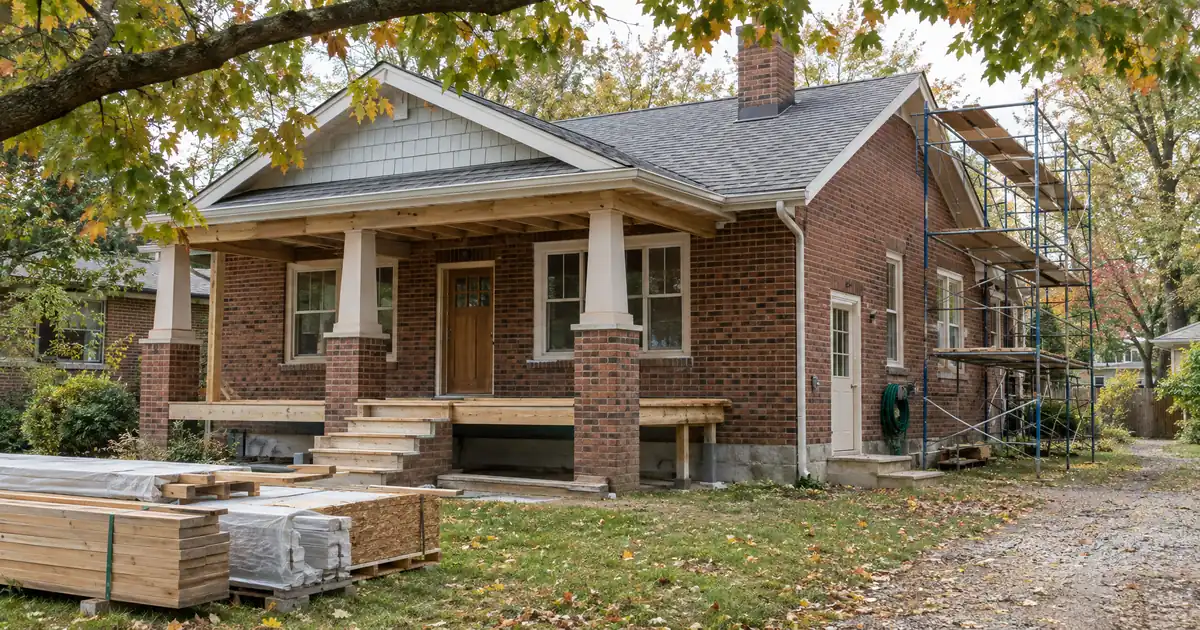
The Quick Read: Buying a rental on hard money works on a tight deadline when the property, the plan and the exit are documented before you sign the contract. The lender looks mainly at the asset, so a complete file leaves little to wait on. Hard money is short, interest-only debt, so the exit matters as much as the purchase.
- Hard money is short-term financing secured by the property. For rentals, the usual exit is a long-term DSCR refinance (DSCR means debt service coverage ratio, or rent compared with the full monthly housing payment).
- Typical terms run 6 to 18 months, interest-only, with no prepayment penalty. These vary by lender, property and experience.
- Most delays come from the borrower’s own paperwork, the appraisal and title, not from the lender’s decision.
- A no-financing-contingency offer can win a deal. It also removes your escape route if the exit fails.
- Model the exit before you buy. The refinance lender tests value and rent separately, and either test can sink the plan.
What Is Hard Money for a Rental, and Why Does It Fit a Tight Window?
Hard money is short-term, interest-only financing secured by the property, usually funded by private capital rather than a big bank. The lender reviews the property’s rental income, your plan and your exit. Your income documents matter less. That shortens the checklist, which is why it suits a deal with a hard deadline.
Picture a duplex under contract with a seller who wants certainty. A conventional lender asks for income verification, a long review and often a standard appraisal. A hard money lender asks whether the property is worth the loan, whether the rehab budget is realistic and how you will get out.
An offer without a financing contingency can read like cash to a seller. It is not cash. It is financed, with a lien, a maturity date and interest running the whole time. Treat it as a bridge you must cross.
Hard money is also not a no-underwriting product. The lender still reviews the deal, the budget, your experience and the exit. Underwriting stays asset-based, but it still happens. On our side, the minimum credit score is 620, with additional conditions below 660, and first-time investors qualify at the lower leverage tiers. Each loan is reviewed individually and nothing here is a commitment to lend.
Key Terms Defined
Hard money loan: short-term, interest-only financing secured by the property and underwritten mainly on its value and your plan.
After-repair value (ARV): what the property should be worth once the planned work is finished.
Loan-to-cost: the loan as a share of what the project costs, meaning purchase price plus rehab budget.
Draw: a release of rehab money after a stage of work is finished and inspected. You usually fund the first stage yourself, then request reimbursement.
Exit strategy: how the hard money loan gets paid off, usually by selling or refinancing into long-term rental financing.
Seasoning: the waiting period a refinance lender wants between buying the property and refinancing it.
How Does Underwriting Treat the Deal, Step by Step?
Underwriting follows the same path on most files. Each step has a place where it can stall, and most of those are within your control.
1. Pick the exit first. Decide how the loan gets repaid before you ask for it. Have a second exit and enough cash to carry interest if the plan slips.
2. Talk terms early. Some lenders want a specific property in mind before they discuss a pre-approval, though it need not be under contract yet.
3. Submit the package. This includes the contract, the scope of work, the budget, your entity documents and bank statements. The lender judges whether the budget is realistic. A scope that looks too thin or too ambitious draws questions.
4. Valuation. Leverage is sized against value or cost. The appraisal is the step you control least, so start it as early as the lender allows.
5. Closing. Once approved, closing looks much like any other purchase closing. The title company, insurance and funds all have to line up.
6. Carry and exit. You pay interest while you hold, then repay by sale or refinance. Plan for payoff, accrued interest and fees through the realistic exit date, not the hoped-for one.
Four things decide the outcome: how completely you deliver documents, the property’s value, the realism of the rehab budget and whether the exit works.
Can Your Deal Make the Window? A Go/No-Go Check
Before you commit to a short closing date, run the deal through a yes/no test. Any “no” is a reason to ask the seller for more room or to walk away.
| Question | Green light | Warning sign |
|---|---|---|
| Is the file staged? | Documents ready before contract | Gathering after you sign |
| Is title clean? | Preliminary title reviewed | Liens or ownership questions |
| Is the property eligible? | Non-owner-occupied, 1-4 units | Mixed-use, land, owner-occupied |
| Is the scope realistic? | Written budget and contractor bids | Rough guess at repairs |
| Will the exit work? | DSCR test modeled before buying | Hoping the numbers appear later |
| Do you have cash for slippage? | Interest carry plus a cushion | Every dollar already committed |
Collateral on our hard money programs is non-owner-occupied residential property, 1-4 units. Ground-up construction can go to 10 units. Commercial, industrial, land, lots, hospitality and owner-occupied property are not on the sheet.
Work Backward From the Closing Date
Most timelines run forward from the application. A short window is easier to manage in reverse. Start from the date in your contract and place each task in order, with several tracks running at once. Nothing here is a timeline promise. The point is order, not speed.
| Stage | Task | Owner |
|---|---|---|
| Before the offer | Form the entity; gather bank statements | You |
| Before the offer | Talk terms; confirm the property type fits | You and broker |
| At contract | Send the full package at once | You |
| At contract | Order title; request insurance quotes | You and title agent |
| During review | Appraisal; scope and budget review | Lender |
| During review | Answer every request the same business day | You |
| Before closing | Clear title issues; confirm funds | Title agent and you |
Send everything at once, not piece by piece. A lender cannot begin underwriting on a half-built file. Many investors also lose time forming an LLC after going under contract. Form it before, because entity documents take time and lenders need them. Whether a loan can be made to an LLC is subject to lender program eligibility.
How Do You Protect the Contract?
The contract is where a lender delay becomes either an annoyance or a lost deposit. Four terms matter most.
Closing date. Promise only what you can hit. A date you cannot meet turns your own offer into a liability.
Financing contingency. Waiving it makes your offer stronger. It also means the deposit may be at risk if the loan does not fund. Waive it only when your file is staged and your exit is modeled.
Extension rights. Ask for a short, paid extension option. Sellers often accept a small fee for a few extra days of room more readily than a changed date.
Deposit exposure. Know exactly what you lose if you miss the date. Have a real estate attorney read the terms before you waive anything.
A credible offer also needs proof of funds for your side of the deal and a clear story about the loan. Sellers worry about financed offers falling apart. Show them yours will not.
What Slows Closings, and How Do You Avoid Each Cause?
| Cause | Fix |
|---|---|
| Slow document delivery | Build a standing binder before you need it |
| Appraisal in a busy market | Request it as early as the lender permits |
| Title defects | Review a preliminary title report immediately |
| Rehab scope changes | Lock the scope before submitting |
| Entity not formed | Form it before making offers |
| Insurance not bound | Request quotes as soon as you have an address |
| Slow replies | Answer every lender request the same business day |
Some lenders with a borrower’s proven track record will close before the appraisal is done. That is a lender decision, not a right. Do not build a plan around it.
What Structures Exist for Buying Rentals on Hard Money?
Hard money leverage is sized on cost, not just value, and it tiers by how many completed projects you have. These are program ceilings, not quotes, and they vary by lender, property and experience.
| Structure | Typical ceiling |
|---|---|
| Fix-and-flip, 5+ completed projects | 93% of project cost |
| Fix-and-flip, 2+ completed projects | 90% of project cost |
| Fix-and-flip, fewer than 2 | 85% of project cost |
| Bridge purchase, no rehab | Up to 80% of purchase price |
| Cash-out or rate/term refinance | Up to 65% of value |
| Rehab budget | Up to 100%, paid in draws |
Every flip tier is also capped at 75% of ARV. The 100% figure applies to the rehab budget only, released against completed work. It is not a purchase loan-to-value. There is no true 100% purchase program, so beware any offer that implies one. The top tiers are reserved for experienced investors.
Loan amounts run up to $5,000,000, with larger balances by exception. Smaller balances vary by lender. Terms run 6 to 18 months, interest-only, with no prepayment penalty. There are no multi-year options on the current program. If you need longer runway, you refinance into long-term rental financing.
Where Does the General Rule Break?
Owner-occupied rentals. Hard money for rentals assumes a non-owner-occupied property. This is business-purpose lending, reviewed differently from a standard owner-occupied mortgage. Lenders typically want a written statement of purpose, because the CFPB’s summary of the Truth in Lending Act notes that credit extended primarily for business purposes is exempt and that a checked box without documentation may not be enough. If you plan to live in the property, the treatment changes. Compliance Alliance explains that a loan to acquire an owner-occupied rental counts as business-purpose only with more than 2 units. Our hard money programs do not cover owner-occupied property at all.
Vacant or unleased property. A DSCR exit needs rent evidence. A property with no lease may need lease-up before it can refinance. Plan the leasing timeline into your carry period.
Properties that cannot be financed. Manufactured and mobile homes are not reviewable on these programs, and neither are log homes or barndominiums on the DSCR side.
Cash-purchase logic. A hard money loan is a lien, not cash. Strategies built for all-cash purchases generally do not apply to a hard-money-financed one.
Bridge versus hard money. The terms overlap. A bridge loan usually refers to a property in transition, and hard money can imply a more distressed one. Ask the lender what the loan is, not what it is called.
What Does the DSCR Exit Actually Test?
The exit lender tests two things separately: value and rent coverage. Either can sink the payoff.
Coverage is monthly rent divided by the full monthly housing payment: principal, interest, taxes, insurance and any association dues. Across our wholesale network, 1.00 is where many select programs start, and stronger ratios open better pricing and leverage. A separate select-lender path takes coverage below 1.00, with leverage and terms adjusted. Clearing 1.00 does not mean positive cash flow. Repairs, vacancy, management, utilities and capital costs sit outside the calculation.
Purchase leverage on most DSCR files lands at 75% to 80% LTV on an investment property purchase. A cash-out refinance on a standard rental tops out around 75% LTV, with about six months of seasoning as the common expectation. Credit floors start at 620 in parts of the network, most programs want about 660 and 700 or higher unlocks the strongest leverage. Reserves vary by lender, leverage, loan size and transaction type, and are commonly around six months of PITIA (principal, interest, taxes, insurance and association dues).
Here is the trap. A hard money tier at 90% or 93% of project cost may sit well above what a 75% LTV refinance repays. If appraised value comes in short, the gap is yours to cover in cash. Size the hard money loan with the exit’s leverage ceiling in mind. Lendmire’s piece How a Refinance Pays Off a Hard Money Lender at Closing covers the payoff mechanics, and the complete DSCR loans guide covers program basics. Final terms depend on lender guidelines, property type, leverage, and the borrower’s complete credit picture.
| Factor | Hard money | DSCR refinance |
|---|---|---|
| Underwritten on | Property, plan, exit | Appraised value and rent coverage |
| Term | 6-18 months, interest-only | 30-year fixed is the spine |
| Best use | Acquire, rehab, stabilize | Hold long term |
| Main risk | Maturity before exit | Value or coverage short |
Worked Example: A Rental on a Tight Deadline
Run the numbers on a modeled scenario. These are assumptions, not market data. An investor with three completed projects is under contract on a duplex that needs light cosmetic work. The seller wants a short close.
Before writing the offer, the investor stages the file: entity formed, bank statements assembled, scope and budget written, proof of funds ready. They model the exit and find coverage of roughly 1.15x after the work, clearing the 1.00 start point many select programs use. They size the hard money request at the 90% of project cost tier, still under the 75% ARV cap. Rehab funds come in draws against completed work.
The exit refinance is then tested against 75% LTV on a cash-out basis. The investor sees that the payoff may not clear on a conservative appraisal. So they keep a cash cushion for the gap and for extra interest if the exit slips. These specifics are subject to lender guidelines and a full review of property, leverage, and credit.
Nothing about this is a promise. It is a plan with its weak points named in advance. The investor knows precisely where it could break.
What If the Window Slips?
Three things can break mid-file: title defects, an appraisal surprise or an insurance problem. Each has a fallback.
- Title defect: ask the seller for an extension and clear the defect. A paid extension option, agreed early, makes this easier.
- Appraisal comes in low: renegotiate price, bring more cash or reduce the loan to a lower tier.
- Insurance not bound: call the agent as soon as you have an address. A rental policy is different from a homeowner policy.
- Exit not ready at maturity: an extension may exist, but extensions cost money. Have cash and a second exit.
Interest runs the entire time. Every month of delay adds carry cost.
What About Buying Several Rentals at Once?
Sequential hard money purchases multiply the work, since every file needs its own title, insurance and appraisal. At exit, one option is a portfolio DSCR loan. It is also called a blanket loan or a cross-collateralized loan, and it means one note secured by several rentals.
The 30-year portfolio DSCR loan covers 2 to 20 properties under one note. Loan sizes run from $300,000 to $5,000,000, with larger balances on review. Leverage goes up to 80% of value on a purchase or rate-and-term refinance. Coverage is measured on the pool, so stronger properties can offset weaker ones, and the credit floor on this structure is 640. A property below 1.00 can sit in the pool only if underwriting tests the pooled coverage, the leverage and the terms. All of it is subject to lender guidelines.
A larger portfolio of five or more properties or units has a separate option, the rental portfolio term loan, with fixed terms and a balloon at maturity. Small multifamily of five or more units is eligible only there.
How Do You Vet a Lender’s Closing Promise?
Ask for evidence, not adjectives. Request the full document list on the first call, and ask who orders the appraisal and when. Ask what happens if value comes in short. Ask what the lender needs to see before issuing a written term sheet. A lender that cannot answer plainly will not perform plainly.
Working through a broker adds one thing. A broker sees many lenders’ requirements and can match your deal to the lender whose guidelines fit. Lendmire arranges financing through select lenders in its wholesale network, across 41 markets, including Washington, D.C. A broker does not make the lender’s decision, and none of this is a commitment to lend.
Many investors then refinance out of hard money into long-term DSCR financing once the property is stabilized. Lendmire brokers that path as well.
Frequently Asked Questions
Does a hard money offer count as cash to a seller?
It can read that way, because it usually has no financing contingency. But it is financed, with a lien and a maturity date. Be honest with the seller about the loan, and show proof of funds for your side so the offer is credible.
Do I need an LLC before I go under contract?
Form it beforehand if you plan to buy in an entity. Lenders need entity documents early, and forming one after contract can cost you time you do not have.
What credit score do I need?
Our hard money programs start at a 620 minimum score, with additional conditions below 660. First-time investors qualify at the lower leverage tiers. Underwriting stays asset-based, and nothing is guaranteed.
What happens at maturity if I cannot refinance?
The balance is still due, and interest has been running. That is why you need a second exit and cash set aside. Terms on our programs run 6 to 18 months, so the planning has to be realistic.
Does hard money affect my personal debt-to-income ratio?
Hard money is underwritten on the property and the plan, not on your personal income. Treatment varies by lender, so ask each one how the loan is reported and reviewed.
Next Step
If you are buying, rehabbing or refinancing an investment property on a short timeline and want to see how the numbers work, Lendmire can help you compare hard money options based on the project, the exit plan, leverage, and your goals. Reach out at 828-256-2183 or request a quote.
About Lendmire
Lendmire, NMLS# 2371349, is a mortgage brokerage focused on investor financing, arranging DSCR loans in 40 states plus Washington, D.C. — 41 markets total. Qualification is based on the property’s income rather than personal income documentation, subject to lender guidelines, making it a fit for LLC-held rentals and scaling portfolios. Scotsman Guide named Lendmire a Top Mortgage Workplace in both 2025 and 2026.
Get Started
Ready to find the right loan for you?
In about 30 seconds you can review financing options available for your investment property. No commitment required.
Informational only. Not a Loan Estimate, approval, or commitment to lend. Program availability and eligibility are subject to lender guidelines, credit approval, property review, and underwriting.
References
1. CFPB – Truth in Lending Act summary
2. Compliance Alliance – Regulation Z and “Investment” Properties
This article is part of Lendmire’s hard money loan program — full qualification details, guidelines, and scenarios live on the program page.
Related reading: One Blanket DSCR Loan vs Two Portfolio Loans for Consolidating Rentals · How to Buy Tenant-Occupied Rentals With One Portfolio DSCR Loan · How to Document Furnished Rentals in a Portfolio DSCR Loan
Brandon Miller
Founder & CEO, Mortgage Loan Originator, Lendmire LLC
- Mortgage Loan Originator · NMLS# 1129696 · Verify on NMLS Consumer Access
- North Carolina Real Estate Broker · License# 343312 · Verify on NCREC
- North Carolina Insurance Producer · License# 19053198 · Property, Casualty, Life, Health · Verify on NAIC SBS
- Lendmire LLC · Firm NMLS# 2371349 · Verify firm licensure
Required disclosures. Lendmire (NMLS# 2371349) operates as a licensed mortgage broker, not a direct lender or depository. The discussion in this article is general in nature and should not be relied upon as financial, legal, or tax advice — every investment scenario is unique and should be reviewed by a qualified professional. Any loan inquiry is subject to lender underwriting, and this article is not a commitment to lend or a guarantee of approval. Mortgage rates, loan terms, and program guidelines vary by borrower, property, and state, and may change without notice. Equal Housing Opportunity. Verify licensure at NMLS Consumer Access.