
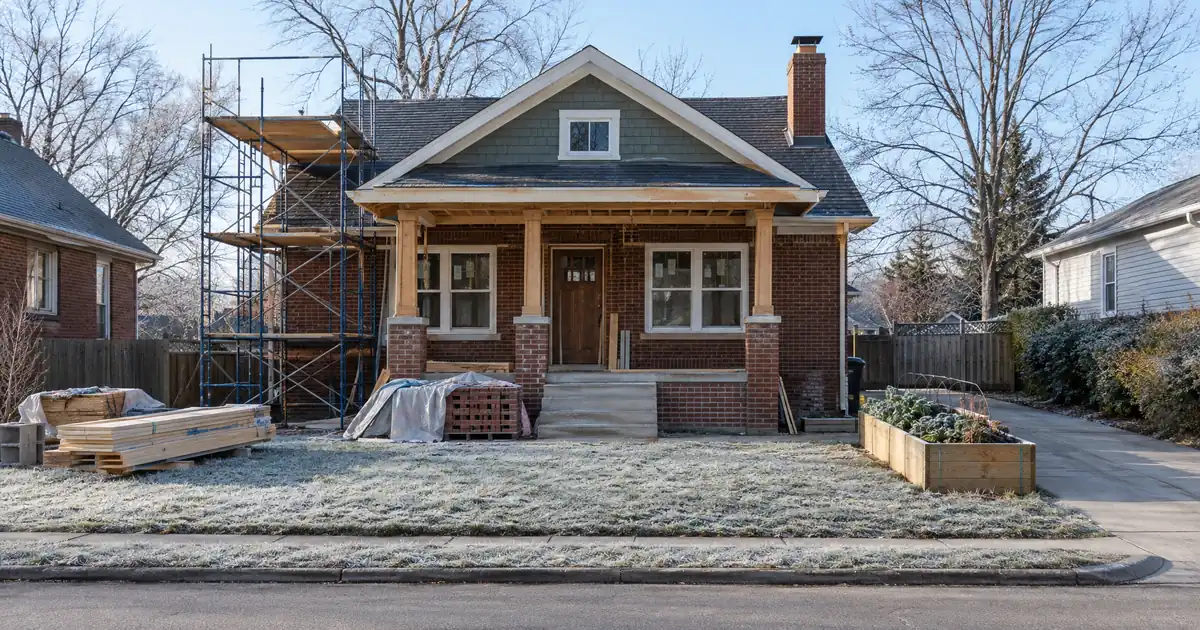
The Quick Read: At closing, the title or escrow company wires the new loan’s proceeds straight to the hard money lender to retire the old lien, pays the new closing costs, and sends any surplus to the borrower, provided the appraisal, the rental coverage, and the payoff figure all line up. The borrower never handles the payoff money. No special conversion product exists. The refinance is simply a new loan that replaces the old one.
- The payoff figure is not the last statement balance. It includes accrued per-diem interest and any fees under the note.
- The new lender sizes the loan off its own appraisal, not the investor’s after-repair estimate.
- Value, rental coverage, and seasoning are three separate tests, and failing any one cuts the cash returned or leaves a gap.
- Plan the exit backward from the hard money maturity, because the payoff grows every day.
What Actually Happens at the Closing Table?
The sequence is the same on nearly every file. Title requests a payoff statement from the old lender, the new lender funds into escrow, and escrow wires the old lender. Then the old lender releases the lien.
What this loan actually costs to carry.
Hard money is sized against the project and priced by time. Enter the deal and see how much the program will lend, the cash required at closing, the carry while you hold it, and what is left at the exit.
Leverage tiers on the current program: 85% with fewer than 2, 90% with 2 or more, 93% with 5 or more completed projects — every tier capped at 75% of after-repair value. Loan amounts up to $5,000,000, larger by exception; terms of 6 to 18 months, interest-only, no prepayment penalty. The rehab portion funds in draws against completed work, not at closing.
Program parameters shown update from Lendmire’s centralized guideline source. Rate, points, and months are editable assumptions, not quoted terms.
Cost cap sets the loan · positive spread
Illustrative estimate only — not a quote, Loan Estimate, approval, or commitment to lend. Rate, points, and months are editable assumptions. Hard money is business-purpose financing for real estate investors, not a consumer mortgage. Leverage on the current program tops out at 93% of project cost for investors with a documented track record, capped at 75% of after-repair value, with rehab funding up to 100% of the documented budget released in draws; actual terms vary by lender, borrower experience, property, and exit. Lendmire is a mortgage broker, not a lender.
1. Classify the file. If the new loan covers only the old balance and costs, it is payoff-only. If it exceeds payoff plus documented costs, it is cash-out.
2. Order the payoff statement early. Title usually needs the borrower’s written authorization to request it.
3. The new lender orders its own appraisal and rent opinion. Both drive the loan amount.
4. Title runs a search. It identifies every lien that must be paid off, not only the hard money mortgage.
5. Funding. The payoff shows up as a payment to a third party on the settlement statement, and funds move by wire to the old lender.
6. Lien release. After payoff, the old lender records a release or satisfaction. Recording timelines vary by state.
Surplus, if any, goes to whoever holds title. When an LLC owns the property, the entity receives it.
What Is Inside the Payoff Number?
A payoff statement is built from the note, not from your last monthly statement. A National Law Review analysis of payoff letters lists what a good one contains: the amount due, the date through which that amount is good, per-diem amounts that keep accruing after that date, wire instructions, the conditions for lien release, and a statement that the lien will be released once those conditions are met. It also says the letter should come from the lender itself and reach the title company as well as the borrower.
| Component | What it is | Can it change before closing? |
|---|---|---|
| Principal | Remaining loan balance | Only with draws or paydowns |
| Accrued interest | Interest owed through the good-through date | Yes, grows daily |
| Per-diem amount | Daily interest after that date | Yes, applied if closing slips |
| Extension or exit fees | Charges under the note | Yes, if maturity passes |
| Other note charges | Default interest, minimum-interest terms | Depends on the note |
If closing slips inside the good-through window, title typically recalculates using the per-diem figure. If it slips past that window, a new letter is needed, according to a legal explainer on payoff letters. Check every line against your note. The number can include fees you forgot about.
One more point on cost. Hard money placed through Lendmire’s wholesale network carries no prepayment penalty, and terms run 6 to 18 months, interest-only, varying by lender, property, and experience. Notes from other sources differ, so read yours before assuming the same.
How Does the New Loan Get Sized Against the Payoff?
The new lender does not take your word on value. It orders its own appraisal and a rent opinion, then sizes the loan from both. The lower of the value-based amount and the rent-based amount governs.
On the DSCR side, qualification is primarily on property-level rental income covering the payment, subject to lender guidelines. Coverage compares rent to the full monthly obligation: principal, interest, taxes, insurance, and any HOA dues. Across the wholesale network, 1.00 is where select programs start, and stronger ratios open better pricing and leverage. A separate select-lender path takes coverage below 1.00, with leverage and terms adjusted. Clearing 1.00 is not the same as positive cash flow, because repairs, vacancy, management, utilities, and capital spending sit outside the calculation.
Here is the value test as a formula. The break-even appraisal is the payoff plus exit costs, divided by the leverage cap.
Run it on an illustrative index. This is modeled, not market data. Say the payoff is 100 units and new closing costs and exit fees add 5 more. On a cash-out refinance of a non-owner-occupied rental, most of the network tops out around 75% of value. The break-even appraisal is 105 divided by 0.75, or 140 units.
| Scenario | Appraised value | Max loan at 75% | Result |
|---|---|---|---|
| Clean close | 150 | 112.5 | Covers 105 with 7.5 surplus |
| Short close | 130 | 97.5 | 7.5 short, borrower brings cash |
Standard rentals reach about 75% on a cash-out; short-term-rental collateral is typically capped nearer 70%. Credit matters too. A 620 floor exists in parts of the network, most programs want around 660, and 700 or better unlocks the strongest tiers. Loan sizes run up to $3,000,000 on standard programs (smaller balances available through select lenders). All of this varies by borrower, property, and lender.
More equity improves the loan-to-value picture. It does not erase credit floors, reserve rules, or property eligibility. The strongest files clear both tests: enough equity and enough rental coverage.
Payoff-Only or Cash-Out: What Decides the Label?
The label depends on the math at closing, not on how you describe the project. A refinance after a rehab is cash-out only when the new loan exceeds payoff plus documented costs.
| Factor | Payoff-only | Cash-out |
|---|---|---|
| Cash back | None | Surplus after payoff and costs |
| Leverage ceiling | Set by program | Around 75% on standard rentals |
| Seasoning | Often lighter, lender policy | About 6 months is common |
| Scrutiny | Value and coverage | Value, coverage, and cash-out sources |
The label drives the seasoning clock, the leverage ceiling, and the paperwork. Extra payables that ride along at closing, such as a contractor balance or a second lien, can tip a file from one label to the other. Ask the lender how it treats them before you set expectations. For how the numbers flow when a refinance retires other debt at the table, see Lendmire’s piece How to Structure a Cash-Out Refinance That Pays Off Debt at Closing.
If cash does come back, record-keeping matters. Tax treatment can depend on how the funds are used and how the property is held; investors should keep clear records and speak with a qualified tax professional before relying on any deduction.
The Seasoning Clocks
Seasoning is not one clock. There are three that investors mix up:
- Ownership seasoning: how long you have held title.
- Lease seasoning: how long a tenant has been in place under a signed lease.
- Prior-loan seasoning: how long the old loan has been on the property.
Lenders differ on which date starts the clock and which one they care about. Across most of the network, about 6 months is the common expectation on a cash-out. Rate-and-term files can see lighter treatment. Ask for the lender’s written seasoning rule before you pick a maturity date for the bridge loan.
Record the purchase price and the construction financing correctly on the settlement statement. If they do not appear, the lender may not credit your full basis, and getting all your capital out gets slower. Keeping the borrowing LLC single-member also helps keep later refinancing possible. Clear it with the lender before you take the loan.
Where the General Rule Breaks
The mechanics above hold for most files. These edge cases are where they stop holding.
Delayed financing rarely rescues a hard money exit. The agency exception exists for cash buyers, and DSCR lenders set their own seasoning. A hard money loan secured by the property means the purchase was financed, so the cash-purchase fact pattern generally fails. Treat it as a contrast, not a plan.
Value comes in short. You bring cash, restructure as payoff-only, or wait. The break-even formula above shows how much cash.
The payoff keeps growing. Extension fees, default interest, and per-diem interest climb as maturity nears. A minimum-interest clause, if your note has one, shows up in the payoff.
Property type is not eligible. DSCR financing is not offered on manufactured homes (single- and double-wide), log homes, or barndominiums. A rehab of one of those cannot exit into DSCR.
Several properties, one note. Blanket loans need lender-specific release language for partial releases. Raise this at origination, not at exit.
Title is held in an entity. Surplus goes to the entity, and the loan may be made to an LLC subject to lender program eligibility. Confirm entity documents are clean before the appraisal is ordered.
Does a Payoff Deadline Protect Investors?
Probably not, and investors should not rely on one. Federal Regulation Z requires an accurate payoff statement within a reasonable time, and in no case more than seven business days after a written request. But that rule covers consumer credit secured by a dwelling. The OCC’s Truth in Lending handbook notes two exemptions: credit extended primarily for a business purpose, and credit to anyone other than a natural person.
A typical investor hard money loan, especially one made to an LLC, likely sits outside that deadline. That is an interpretation, not settled law, and facts vary. In practice, the payoff timeline depends on the note and the lender’s cooperation. Request the statement early and in writing.
What If the Payoff Doesn’t Clear?
A shortfall leaves four options, in rough order of how often investors use them:
1. Bring cash to closing to cover the gap between the loan and the payoff plus costs.
2. Restructure as payoff-only by dropping any cash-out request and trimming the loan to the payoff.
3. Ask the old lender for an extension, knowing that extension fees add to the payoff.
4. Sell the property and repay the bridge from sale proceeds.
A stale payoff letter has its own cost. It can mean extra interest or a delayed lien release, so refresh it when closing moves.
Pre-Closing Checklist: Plan Backward From Maturity
Start from the hard money maturity date and work backward. Build in a cushion, because the payoff grows daily and appraisal, title, and document delays do not follow your calendar. For a view on sizing the bridge so the exit works, see Lendmire’s guide How to Size Hard Money for a BRRRR So the DSCR Refinance Pays It Off.
Typical files include:
- Payoff letter and written payoff authorization
- Recorded deed and purchase settlement statement
- Hard money note and draw history
- Rehab invoices
- Signed lease
- Entity documents, if an LLC holds title
- Insurance
- Business-purpose statement
Many investors refinance out of hard money into long-term DSCR financing once the property is stabilized, and Lendmire brokers that path through select lenders. Terms start with a 30-year fixed as the spine, while 40-year, interest-only periods, and ARMs are available through select lenders. Reserves vary by lender, leverage, loan size, and transaction type. They commonly run around 6 months of PITIA, and conservative rate-and-term files at modest leverage under $1,500,000 can see them waived. Larger loans typically step up to about 9 months. The full picture is in the complete DSCR loans guide.
Key Terms Defined
Payoff statement: A lender-issued document stating the exact amount needed to retire a loan as of a specific date.
Per-diem interest: The daily interest that keeps accruing after the good-through date on the payoff statement.
Lien release: The recorded document in which the old lender confirms the debt is paid and its claim on the property ends.
Rate-and-term (payoff-only) refinance: A new loan that covers the old balance and costs, with no cash returned to the borrower.
Cash-out refinance: A new loan larger than the payoff plus documented costs, with the difference going to the borrower.
Seasoning: The time a lender wants to pass, measured from ownership, a lease, or a prior loan, before it will use the new appraised value.
Break-even appraisal: The lowest value at which the new loan covers the payoff and costs, found by dividing payoff plus costs by the leverage cap.
Frequently Asked Questions
Do I ever touch the payoff money?
No. Title or escrow wires the payoff from the new loan’s proceeds directly to the old lender. You sign documents and, if there is a shortfall, send your cash to escrow. You do not wire anything to the hard money lender yourself.
Why is my payoff higher than my balance?
The payoff adds accrued per-diem interest and any extension, exit, or default charges under the note. The figure is good only through the date on the statement. If closing slips past it, the number changes and a fresh statement is needed.
Can I get cash back at the refinance?
Yes, if the new loan exceeds the payoff plus documented costs and the file clears the cash-out tests. Most of the network tops out around 75% LTV on a cash-out of a non-owner-occupied standard rental, with about 6 months of seasoning common. Value, rental coverage, and seasoning each have to clear on their own. Final terms depend on lender guidelines, property type, leverage, and the borrower’s complete credit picture.
What happens if the appraisal comes in low?
The maximum loan falls, which can leave a gap between the loan and the payoff plus costs. You can bring cash, restructure as payoff-only, seek an extension, or sell. Running the break-even formula before you take the bridge loan shows how much room you have.
Can an LLC-owned property use this exit?
Often, depending on program guidelines. Entity documents become part of the file, and surplus proceeds go to the entity. Keeping the borrowing LLC simple, such as single-member, generally keeps later refinancing options open.
Next Step
If you are buying, rehabbing or refinancing an investment property on a short timeline and want to see how the numbers work, Lendmire can help you compare hard money options based on the project, the exit plan, leverage, and your goals. Lendmire is a broker arranging financing through select lenders in its wholesale network across 41 markets, including Washington, D.C. Programs vary by lender, property, and experience, and nothing here is a commitment to lend.
For current guidelines and terms, see Lendmire’s DSCR loan programs page.
About Lendmire
Lendmire (NMLS# 2371349), a non-QM mortgage broker serving investors in 41 markets including Washington, D.C., helps structure DSCR scenarios commonly evaluated around a property’s rental income rather than personal income paperwork, subject to lender guidelines. A Scotsman Guide Top Mortgage Workplace in 2025 and 2026, Lendmire places loans through wholesale investor lenders and is not a direct lender.
Get Started
Ready to find the right loan for you?
In about 30 seconds you can review financing options available for your investment property. No commitment required.
Informational only. Not a Loan Estimate, approval, or commitment to lend. Program availability and eligibility are subject to lender guidelines, credit approval, property review, and underwriting.
References
1. National Law Review, Payoff Letter Pitfalls for Commercial Lenders
2. LegalClarity, What Is a Loan Payoff Letter and How Do You Get One
3. CFPB, Regulation Z § 1026.36
4. OCC Comptroller’s Handbook, Truth in Lending Act
This article is part of Lendmire’s hard money loan program — full qualification details, guidelines, and scenarios live on the program page.
Related reading: How to Fit a BRRRR Hard Money Payoff Within DSCR Leverage · How to Get a DSCR Loan From Application to Closing · DSCR Refinance Loans for Landlords Weighing a Rental Refinance
Brandon Miller
Founder & CEO, Mortgage Loan Originator, Lendmire LLC
- Mortgage Loan Originator · NMLS# 1129696 · Verify on NMLS Consumer Access
- North Carolina Real Estate Broker · License# 343312 · Verify on NCREC
- North Carolina Insurance Producer · License# 19053198 · Property, Casualty, Life, Health · Verify on NAIC SBS
- Lendmire LLC · Firm NMLS# 2371349 · Verify firm licensure
Disclosures. The information presented in this article is general market commentary, not financial, legal, or tax advice. Lendmire is a mortgage brokerage (NMLS# 2371349) — not a direct lender or depository institution — and loan placement is subject to lender underwriting. Nothing in this content represents a commitment to lend. Loan terms, pricing, and program availability vary based on borrower qualifications, property characteristics, and state of subject property, and are subject to change at any time. Lendmire complies with Equal Housing Opportunity requirements. Consumer access: nmlsconsumeraccess.org.