
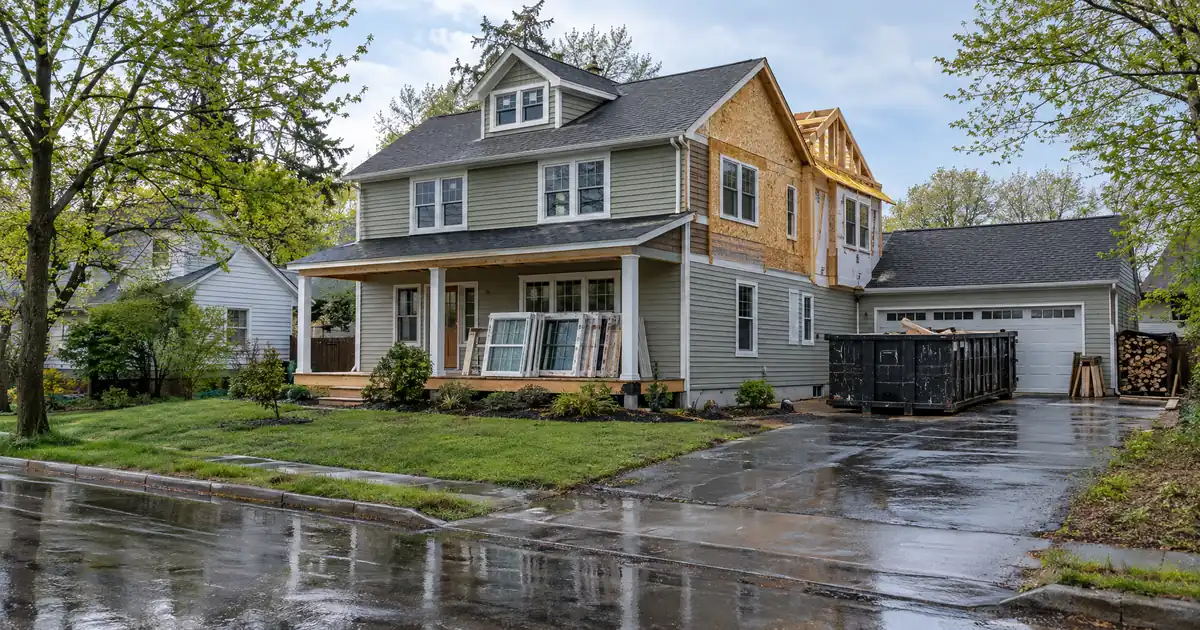
The Quick Read: A portfolio DSCR loan does not repay your rehab receipts; it sizes to the appraised value of the pool, or to total cost inside the first year, and to the rent the pool earns, so the cash that returns is whatever that sizing leaves after paying off the bridge loans and closing costs. Rehab dollars come back only to the extent they show up in value and rent.
- The loan is sized on appraised value once a property is seasoned, and on cost inside the first year.
- Pooled rent must cover pooled debt service, which on the 30-year portfolio structure typically means a 1.00 floor.
- Net cash equals the new loan minus every payoff and cost, so a low appraisal on one house shrinks the whole check.
- A pooled loan ties your houses together, so the cash you receive has a price in sale flexibility.
What Does a Portfolio DSCR Loan Actually Return After a Rehab Batch?
It returns the new loan amount minus what you owe and what it costs to close. The formula is short: net cash = new loan − bridge payoffs (principal, unpaid draws, exit fees, interest) − closing costs − escrows or holdbacks.
Nothing in that formula says “rehab receipts.” The refinance is an ordinary payoff or cash-out transaction. As one BRRRR explainer puts it, no product exists for this purpose. BRRRR means buy, rehab, rent, refinance, repeat. The same explainer says the strategy rests on the appraised value after repairs, and that the loop breaks at two points: the appraisal and the seasoning rules.
Brokers see this misunderstanding often. Investors add up contractor invoices and expect the lender to hand that sum back. The lender looks at what the properties are worth, what they rent for, and how much debt is already on them.
Key Terms Defined
Portfolio DSCR loan: one note secured by several rentals, also called a blanket or cross-collateralized loan. A bank’s portfolio loan, meaning one the bank keeps on its own books, is a different sense of the word.
Seasoning: the waiting period between buying a property and refinancing it on a new value.
Cost basis: the purchase price plus documented improvements.
Pooled DSCR: total rent divided by total PITIA across every property in the loan. PITIA is principal, interest, taxes, insurance and association dues.
Allocated balance: the share of the loan assigned to one property.
Release: the right to pay off one property and take it out of the pool, on terms written in the loan documents.
Payoff-only refinance: a refinance that retires existing debt and costs without putting cash in your pocket.
How Does the Lender Size the Pool?
Two limits apply, and the lower one binds. The first is a value limit. The second is a coverage limit.
Across our wholesale network, two portfolio structures matter here. The 30-year portfolio DSCR loan covers 2 to 20 properties under one note, with loan sizes typically from $300,000 to $5,000,000. It allows leverage up to 80% of value on a purchase or rate-and-term refinance, and up to 75% of pooled value on a cash-out. The rental portfolio term loan covers five or more rental properties or units, from $500,000 to $50,000,000, with leverage up to 75% of value. Its fixed terms of 3, 5, 7 or 10 years end in a balloon, and it carries yield-maintenance prepayment. Non-recourse structures exist on it, with carve-outs such as fraud and bankruptcy. All figures are program ceilings and floors, subject to lender guidelines.
The coverage test is where rent can cap the loan before value does. On the 30-year structure, pooled rent against pooled debt service typically needs to clear 1.00. Stronger houses can offset weaker ones. A rental under 1.00 on its own can sit in the pool, and underwriting tests the pooled coverage, the leverage and the terms. Every property still needs a lease or an appraiser-supported market rent.
Credit matters too. The portfolio programs’ floor is typically 640, and some structures ask for 680 or 720. Some require a special-purpose entity, usually an LLC, subject to program terms.
Why Seasoning Decides Whether the Appraisal Counts
Inside the first year, cost basis caps the loan, so a strong post-rehab appraisal does not raise proceeds yet. The rule works like this: inside the first six months the loan is also capped at 90% of total cost (purchase price plus documented improvements), 100% of total cost from six to twelve months, and the leverage ceiling still applies, so the loan is the lower of the two. After twelve months the appraised value alone is the basis. A rate-and-term refinance is not subject to the cost-basis cap. Cash-out proceeds are generally available on seasoned properties, and about six months of seasoning is the common expectation.
A batch complicates this. Houses bought on different dates season on different clocks. If one house was bought three months ago, it may drag the pool or wait for a later closing.
Your hard-money maturity dates need to outlast the seasoning clock. A bridge note that matures before the property seasons forces a bad choice: extend at a cost, or refinance on cost basis.
What a Batch Looks Like in Index Numbers
Index numbers keep this honest. Say the pool’s appraised value totals 100 across three seasoned houses. These are modeled assumptions, not market data.
| Property | Appraised value | Bridge payoff | Note |
|---|---|---|---|
| House A | 40 | 24 | Strong appraisal |
| House B | 35 | 20 | Average |
| House C | 25 | 18 | Overspent rehab |
| Pool | 100 | 62 | Cash-out cap: 75 |
The new cash-out loan can reach up to 75 (75% of pooled value). Subtract 62 in payoffs and 2 in closing costs, and net cash is about 11, or 11% of pooled value.
Now suppose House C appraises at 15 instead of 25. Pooled value drops to 90. The ceiling falls to 67.5, and net cash falls to about 3.5. One weak appraisal removed roughly two-thirds of the check.
The break-even point sits near a pooled value of 85. Below that, the loan covers payoffs and costs and nothing more, and you bring cash to close. On a payoff-only result, the transaction may be treated as a rate-and-term refinance, depending on lender guidelines.
The overspend did not come back, because the appraiser credits what a renovation contributes to value, not what it cost. A title-company explainer calls the refinance appraisal the moment of truth for the same reason. House A’s strength helped the pool, but only inside the pooled ceiling.
Which Rehab Spend Gets Credited?
Spend that moves value and rent gets credited, and it may support a higher appraised value, depending on comps and underwriter review. Spend that does not move value stays in the deal as your own cash.
Documentation helps the appraiser and the lender see what was done. Keep the scope of work, contractor invoices, bridge draw history, dated before-and-after photos, the signed lease, and the renovated comps. Unfinished or unpermitted work can get a house trimmed from the pool, because incomplete construction is not lease-ready.
A screening rule is useful before you buy. Inman notes that the 70% of after-repair value guideline for purchase plus repairs is a screening tool, not a law. It adds that the after-repair value must support the refinance and rent must cover the new loan. Treat it as a first filter, then run the sizing math above.
What Shrinks the Number
Six things commonly cut the check:
- A low appraisal on any one property, since the pool is summed.
- Bridge loans sized near their own caps, which leave little room.
- A young property still under the cost-basis cap.
- A vacant or unleased house, which lowers pooled coverage.
- Prepayment penalties on the old loans, plus bridge exit fees and unpaid draws.
- Closing costs, escrows and holdbacks.
There is also a concentration problem. One account warns that a repeated-BRRRR portfolio is several properties financed near the ceiling on appraisals from the same market at the same time. A batch rehab magnifies that. If values soften, every appraisal softens together.
Pool, Split, or Wait?
The right structure depends on how ready the batch is.
| Situation | Usually fits | Why |
|---|---|---|
| All finished, leased, seasoned | Pool | One closing, pooled coverage |
| Staggered finish dates | Split or wait | Young houses cap proceeds |
| One weak asset | Pool, or exclude it | Strong houses can offset it |
| Houses you may sell soon | Split | Keeps each lien separate |
| Several entities | Split | Entity structure varies by program |
| Five or more rentals or units | Term loan | Balloon structure, fixed terms |
Waiting out seasoning usually beats an early cost-based refinance on a heavy rehab. Forced appreciation is only recognized once value-based sizing applies.
Small multifamily with five or more units is eligible only inside the rental portfolio term loan. It is not eligible on the 30-year portfolio structure or on a single-property DSCR loan. Owner-occupied, co-op, mixed-use and commercial property are ineligible in the pool. Manufactured and mobile homes are not reviewable on any of these programs.
What You Give Up for the Cash
A pooled note ties your houses together. A default on one can put every property in the pool at risk, since each secures the whole loan.
Selling one house later follows the release terms in your loan documents. The release price runs above that property’s allocated balance, and the remaining portfolio must still cover its debt service. The terms are written into the note, so price them before including any house you may sell.
One damaged or idle house can also lower pooled coverage, whereas a separate note isolates the problem.
Higher leverage raises the pooled payment too, and that lowers coverage on the new loan. Run the coverage number before you take the full cash-out.
Where the General Rule Breaks
Delayed financing is an agency idea, not a DSCR product. Fannie Mae’s Selling Guide lets qualifying all-cash buyers skip its six-month title wait. That recovers documented purchase cost, not rehab, and a financed purchase generally does not qualify. In our network, seasoning is set by each lender’s own policy, with about six months the common expectation on cash-outs.
Payoff-only results. If the pool’s value only covers payoffs, you get a refinance with no cash back. That is still a useful exit if the goal is to retire hard money.
Heavy rehab on a young property. The cost-basis cap can leave that house out of the first closing, so the batch may need splitting.
The pool’s weakest link. A low-coverage rental can ride in a strong pool, but each lender tests the pooled coverage, the leverage and the terms. With separate notes, that weak house must qualify alone.
Back-Solve Before You Buy
Work backward from the exit. For a cash-out where you want full recovery, the maximum all-in cost across the pool is about 75% of projected pooled value, less closing costs. Over-improving breaks the formula, because rehab dollars past what the appraiser credits stay yours.
For a batch, run it two ways: once on cost basis, for houses that may not be seasoned, and once on appraised value. Then check pooled rent against pooled PITIA for coverage. Clearing the coverage test is not the same as positive cash flow. Repairs, vacancy, management, utilities and capital spending sit outside the DSCR calculation.
The complete DSCR loans guide covers the basics.
Frequently Asked Questions
Can I refinance right after the rehabs finish?
You can apply, but the loan inside the first year is capped by cost basis, so the appraisal may not raise proceeds yet. Each lender sets its own seasoning, and about six months is the common expectation for cash-out.
Does the lender use my after-repair value?
Not directly. Your projected value only matters if the appraiser reaches the same conclusion from comps and the finished condition.
Do I need an appraisal on every property?
Expect one per property, since the pool is summed from individual values. Each property also needs a lease or an appraiser-supported market rent, subject to lender guidelines.
What if one house is vacant?
It can still sit in the pool, but underwriting tests the pooled coverage, the leverage and the terms. A vacant house contributes no rent and may lower pooled coverage below the floor, so it may be trimmed.
Do I get cash if my appraisals come in low?
Possibly less, and sometimes none. Net cash is the new loan minus payoffs and costs, so a low pooled value can leave only enough to retire the bridge loans.
Next Step
If you are buying or refinancing a rental property and want to see how the numbers work, Lendmire can help you compare DSCR loan options based on the property income, credit profile, leverage, and investor goals. As a broker, it arranges financing through select lenders across 41 markets, including Washington, D.C., and does not itself commit to lend.
About Lendmire
A DSCR-focused mortgage broker, Lendmire (NMLS# 2371349) places investor financing across 41 markets — 40 states plus Washington, D.C. — with DSCR eligibility generally reviewed by the lender on property cash flow instead of tax returns, subject to lender guidelines. Scotsman Guide named Lendmire a Top Mortgage Workplace in 2025 and 2026.
Get Started
Ready to find the right loan for you?
In about 30 seconds you can review financing options available for your investment property. No commitment required.
Informational only. Not a Loan Estimate, approval, or commitment to lend. Program availability and eligibility are subject to lender guidelines, credit approval, property review, and underwriting.
References
1. adviceonly, BRRRR Method glossary
2. americanhomelandtitle.com: The Brrrr Method Explained
3. inman.com: Brrrr Method Investor Strategy
4. Fannie Mae Selling Guide B2-1.3-03
This article is part of Lendmire’s DSCR loan program — full qualification details, guidelines, and scenarios live on the program page.
Related reading: Portfolio DSCR Loan vs. a DSCR Loan on Every Rental · Is a DSCR Portfolio Loan Smart If You Will Sell Within Ten Years? · Does a Portfolio DSCR Loan Save Money Over One Loan per Rental?
Brandon Miller
Founder & CEO, Mortgage Loan Originator, Lendmire LLC
- Mortgage Loan Originator · NMLS# 1129696 · Verify on NMLS Consumer Access
- North Carolina Real Estate Broker · License# 343312 · Verify on NCREC
- North Carolina Insurance Producer · License# 19053198 · Property, Casualty, Life, Health · Verify on NAIC SBS
- Lendmire LLC · Firm NMLS# 2371349 · Verify firm licensure
Disclosure information. Lendmire is a state-licensed mortgage brokerage under NMLS# 2371349. Lendmire is not a depository institution, direct lender, or financial advisor — all loans referenced are placed through wholesale lender partners and are subject to each lender's underwriting standards. This article is provided for general informational purposes and is not a commitment to lend, nor does it constitute financial, legal, or tax advice. Loan programs, terms, rates, and qualification standards change without notice and depend on borrower profile, property type, and the state in which the subject property is located. Equal Housing Opportunity provider. NMLS Consumer Access: nmlsconsumeraccess.org.