
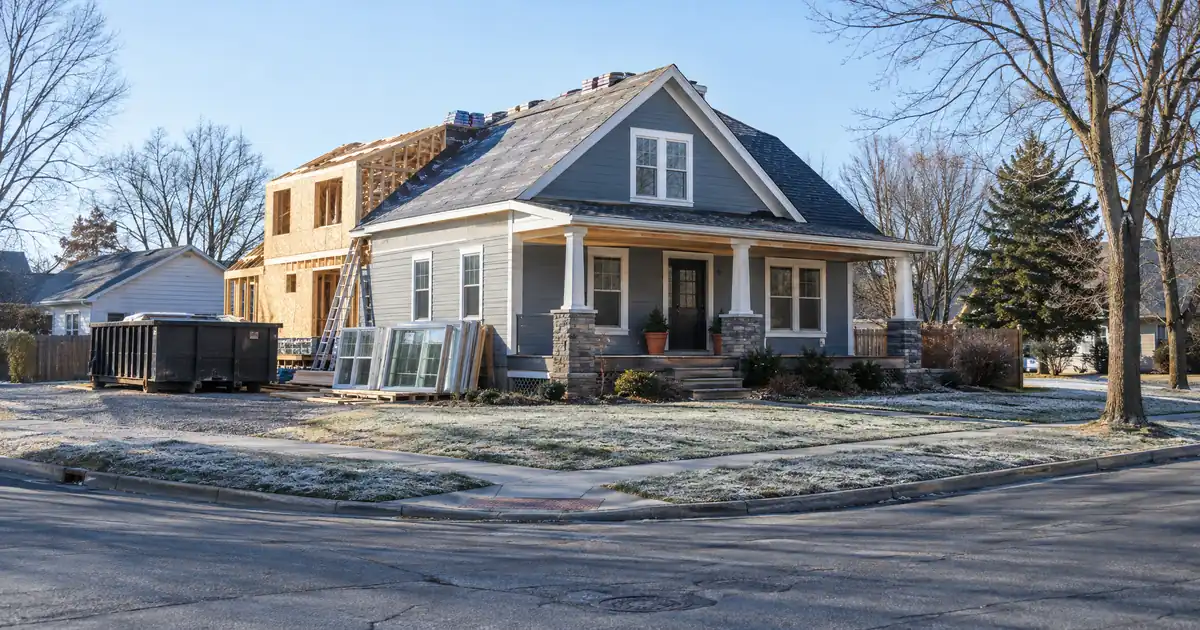
The Quick Read: A DSCR lender does not fund the build. It replaces the short-term hard money note after the building is finished, permitted, and able to produce rent, and it sizes the new loan on appraised value and appraiser-supported market rent. Four gates decide the takeout, and each one gets tested after construction ends.
- The structure must be complete: certificate of occupancy, closed permits, working utilities, and insurance for the finished use.
- The appraisal sets both the value for leverage and the market rent for coverage.
- The new loan has to cover the full hard money payoff, including accrued interest and fees, plus closing costs.
- Reserves, credit, and property type must fit the lender’s program, subject to lender guidelines.
Hard money and DSCR investor loans do different jobs. Hard money buys time and pays for construction. DSCR financing is the permanent hold loan. Planning the second before closing the first is the single habit that separates smooth exits from stressful ones.
What a DSCR Takeout Is (and Isn’t)
A DSCR takeout is a refinance of a completed rental into long-term financing. It is not a construction product. The collateral on an unbuilt lot produces no rent, and a DSCR loan is reviewed primarily on property-level rental income covering the payment, subject to lender guidelines. No rent, no coverage figure.
You will see “DSCR construction loan” used in marketing. Usually that means two loans bundled: a short-term construction or hard money loan first, then a DSCR takeout. The labels get blurred, but the two underwriting events stay separate.
On the hard money side, the investor’s experience and the project drive the file. Across the wholesale network where Lendmire places hard money, ground-up construction leverage runs up to 90% of cost and 75% of completed value at three or more completed projects, with draws releasing against completed work. Terms run 6-18 months, interest-only. Those figures vary by lender, property, and experience, and nothing here is a commitment to lend.
Many investors then refinance out of hard money into long-term DSCR financing once the property is stabilized. Lendmire brokers that path through select lenders in its wholesale network, a DSCR-focused footprint covering 41 markets, including Washington, D.C. The complete DSCR loans guide covers the permanent loan in full.
How the Build Loan Behaves Before the Takeout
Construction money does not arrive in one lump. Investors Paradise describes the typical lifecycle: closing, draws released as milestones are met, third-party inspections, completion, then payoff, sale, or permanent financing. Inspections may review invoices, lien waivers, and budget status before the next draw goes out.
Two consequences matter for the exit:
- Interest accrues on the drawn balance. Slow permits or slow inspections mean carrying the debt longer, and the payoff grows with it.
- Draws reimburse work already done. Investors usually fund contingency and early costs from their own cash.
Hard money underwriting is asset-based: property, plan, and exit. Credit still matters, with a 620 minimum score on the hard money program and added conditions below 660. First-time investors qualify at the lower leverage tiers, not the top one.
How Underwriting Treats the Finished Building
The DSCR lender starts when the building can be lived in, not when the contractor says it is done. A practitioner’s checklist looks like this:
1. Completion. Permits and inspections are closed, utilities run, hazards are resolved, and insurance is available for the finished use. The certificate of occupancy is the usual proof.
2. Appraisal. The appraiser opines on value and on market rent. With no lease history and few comparable rentals, that rent opinion is often the only rent number on the file. Your own pro forma does not qualify the loan.
3. Coverage test. DSCR compares monthly rent to PITIA: principal, interest, taxes, insurance, and any HOA dues. Rent divided by that obligation gives the ratio.
4. Leverage and credit. Purchase files across most of the network land at 75%-80% LTV. Cash-out refinances top out around 75% LTV, with about six months of seasoning commonly expected. Most programs want a score near 660, a 620 floor exists in parts of the network, and 700+ opens the strongest tiers.
5. Reserves. They vary by lender, leverage, loan size, and transaction type, commonly around six months of PITIA. Larger loans typically step up.
Coverage thresholds vary too. Many select programs start at 1.00. A separate select-lender path takes coverage below 1.00, with leverage and terms adjusted. Stronger ratios open better pricing and leverage.
One misreading deserves a flag. Clearing 1.00 is not the same as positive cash flow. DSCR sees rent and PITIA only. Repairs, vacancy, management, utilities, and capex sit outside the calculation, so a new building that “passes” can still be thin in real life.
The Appraisal’s Two Jobs
The appraisal sets the value that LTV is measured against and the rent used for coverage. Appraisers document rent on a rent schedule. Under the newer appraisal data standard, Opteon’s UAD 3.6 FAQ explains that rent schedules repeat per unit, so one can cover the main house and another the ADU. The old standalone Form 1007 name survives only for grandfathered reports.
Here is where ground-up builds get hurt. Hard money was sized on a projected after-completion value. If the refinance appraisal lands lower, leverage on the new loan shrinks, and the investor brings cash to close the gap. Overruns do not rescue the file either. The lender does not raise the permanent loan because the contractor ran over, since value follows comps, not invoices.
Payoff Math: What the New Loan Must Cover
The takeout has to retire the whole hard money balance: principal drawn, accrued interest, any extension or exit fees, plus the new loan’s closing costs. Whatever the loan amount leaves over is cash to the borrower. Whatever it leaves short is cash the borrower must bring.
Picture a build financed at high loan-to-cost. If the appraised value comes in near cost, a 75% cap on the new loan can fall well below the payoff. The investor funds the difference. That is why the leverage cap that actually binds matters: on a ground-up file, check whether the cost-based hard money tier or the value-based permanent cap leaves less room.
The classification also matters. A payoff-only refinance and a cash-out refinance can carry different leverage, seasoning, and reserve expectations. Lendmire’s piece Will A Hard Money Lender Cash Out Refinance walks through that distinction. Investors who want proceeds on top of the payoff face the 75% cash-out ceiling, which stays at 70% for short-term-rental collateral. The exact numbers vary by lender and program and follow a full review of property, leverage, and credit.
Structures and Variations
| Path | How it works | Best fit |
|---|---|---|
| Hard money, then DSCR takeout | Two loans, two underwritings | Investors who plan to hold |
| Hard money, then sale | Payoff from sale proceeds | Spec builders, thin coverage |
| Bridge, then hold | Longer runway needed | Slow lease-up files |
| Portfolio takeout | Several rentals, one loan | Build-to-rent communities |
Term structures on the permanent side start with the 30-year fixed. Extended terms such as 40-year and interest-only periods are available through select lenders, and adjustable structures exist for investors who want them. Loan sizes run up to $3,000,000 on standard programs (smaller balances available through select lenders), and above $2,500,000 the network generally holds to 30-year fixed.
Investors who build several rentals can look at a blanket structure. The 30-year portfolio DSCR loan places two to twenty properties under one note, with coverage measured on the pool. A rental portfolio term loan covers five or more rentals, in fixed terms with a balloon at maturity. Phased takeouts depend on each program’s guidelines.
Small multifamily is a real design choice. A three- or four-unit build sits under the 1-4 residential umbrella and spreads vacancy risk across more doors, which some builders argue improves coverage and exit options versus a single house. That is a judgment, not a rule, and results depend on the appraisal.
ADU Builds: Where the General Rule Bends
ADUs add three wrinkles: permits, appraisal comps, and occupancy.
Permits decide whether the ADU counts. An unpermitted ADU generally cannot support income or value. Underwriters have to ask how the property would perform if the lender ever took it back, and an unpermitted unit fails that test. Get the permit and the final sign-off in the file.
Appraisers are still learning ADUs. Many do not credit even the full construction cost, and rent comps often come from similar-size units nearby rather than from other ADUs. Any improvement may support a higher appraised value, depending on comps and underwriter review. Expect no automatic dollar-for-dollar lift.
Owner-occupied ADUs are a different product. If the borrower lives in the main house, the loan is not DSCR. DSCR is business-purpose and non-owner-occupied. For contrast only, HUD Mortgagee Letter 2023-17 shows how FHA documents ADU rent on owner-occupied homes, which is a separate rulebook.
When the main house and a permitted ADU are both rented, the rent schedules for each can feed combined coverage. Unit count and property type still have to fit program eligibility. Manufactured homes, log homes, and barndominiums are not offered on DSCR in this network.
Where the Plan Breaks
- Low appraisal. Leverage falls with value. Bring cash, renegotiate with the builder on remaining costs, or sell.
- Late build. Interest keeps accruing on the drawn balance. Ask in writing about extension fees and what happens at maturity. Hard money terms are 6-18 months, with no multi-year option.
- Vacant at completion. Without a lease, the appraiser’s market rent governs. A signed lease and deposit can still strengthen the file.
- Thin coverage. A ratio below 1.00 is available through select lenders in the network, with leverage and terms adjusted. If that is the only path, the stronger move may be to sell or to reconsider the unit mix.
- Experience gaps. First-time builders may see reduced leverage on the construction side, which raises the cash needed before the takeout ever matters.
On files like these, the surprises rarely come from the DSCR formula itself. They come from the gap between projected value and appraised value, and from a payoff that grew while permits dragged on. Investors who ask for the payoff statement, draw history, and fee schedule early rarely get ambushed at the refinance.
Documents to Gather Before the Takeout
- Hard money note, draw history, and a current payoff statement
- Certificate of occupancy and final permit sign-off
- Invoices for completed work
- Lease and deposit, if any
- Entity documents (LLC-titled borrowers are reviewed subject to program terms)
- Reserve verification
- The appraisal with its rent schedule
Key Terms Defined
Takeout loan: the permanent loan that pays off a short-term construction or hard money note.
Loan-to-cost (LTC): the loan amount divided by the project’s total cost, used on the build loan.
Certificate of occupancy: the local sign-off that a finished building can legally be occupied.
Rent schedule: the appraiser’s form documenting market rent for each unit.
Seasoning: how long the borrower has owned the property before a cash-out refinance is sized on value.
Frequently Asked Questions
Can a DSCR loan pay for the construction itself?
Generally no. The property has no rent until it is built, so a DSCR loan works as the exit rather than the build money. Some products labeled DSCR construction are a short-term loan plus a DSCR takeout.
When should I talk to a DSCR lender during the build?
Before you close the hard money loan. Knowing the takeout’s leverage, coverage, reserve, and document needs shapes the budget, unit mix, and timeline. Formal permanent underwriting generally begins after the certificate of occupancy.
Does the ADU’s rent count toward coverage?
When the ADU is permitted and the appraiser documents its rent on a rent schedule, it can. An unpermitted ADU generally cannot count toward income or value. Final treatment is subject to lender guidelines and the appraisal.
Is clearing 1.00 coverage the same as making money?
No. DSCR compares rent to PITIA only. Vacancy, repairs, management, utilities, and capex all sit outside it, so run a separate operating budget.
What if the appraisal comes in below my projected value?
The new loan is sized on the lower value, so the payoff may exceed the loan. The borrower brings cash for the difference. This is the most common failure point on ground-up exits, so build in cushion.
If you are buying, rehabbing or refinancing an investment property on a short timeline and want to see how the numbers work, Lendmire can help you compare hard money options based on the project, the exit plan, leverage, and your goals. Investors planning the second loan before the first closes tend to find the cleanest exits, and Lendmire’s piece Can a Rehabber Do a Two-Step DSCR Cash-Out After Hard Money? shows how that sequencing plays out. Programs change, and every file is underwritten individually.
Tax treatment varies; consult a qualified professional.
About Lendmire
Lendmire — NMLS# 2371349 — is a DSCR and non-QM mortgage brokerage with investor loan programs in 41 markets, including Washington, D.C. DSCR eligibility is commonly reviewed by the lender around property-level rent rather than personal income documentation, subject to lender guidelines, and the brokerage helps arrange financing for LLC-owned portfolios beyond conventional financed-property limits. Recognized by Scotsman Guide as a Top Mortgage Workplace in 2025 and 2026.
Get Started
Ready to find the right loan for you?
In about 30 seconds you can review financing options available for your investment property. No commitment required.
Informational only. Not a Loan Estimate, approval, or commitment to lend. Program availability and eligibility are subject to lender guidelines, credit approval, property review, and underwriting.
References
1. Investors Paradise – Ground-up construction financing
3. HUD – Mortgagee Letter 2023-17
This article is part of Lendmire’s hard money loan program — full qualification details, guidelines, and scenarios live on the program page.
Related reading: How a Portfolio DSCR Lender Counts Three Houses and a Fourplex · How a Portfolio DSCR Lender Handles a Trust and an LLC on Title · How a Portfolio DSCR Lender Underwrites a Small Partnership
Brandon Miller
Founder & CEO, Mortgage Loan Originator, Lendmire LLC
- Mortgage Loan Originator · NMLS# 1129696 · Verify on NMLS Consumer Access
- North Carolina Real Estate Broker · License# 343312 · Verify on NCREC
- North Carolina Insurance Producer · License# 19053198 · Property, Casualty, Life, Health · Verify on NAIC SBS
- Lendmire LLC · Firm NMLS# 2371349 · Verify firm licensure
Legal disclosures. Lendmire (NMLS# 2371349) is a state-licensed mortgage brokerage that arranges financing through wholesale lender relationships. Lendmire is not a direct lender, depository institution, or registered financial advisor. The discussion above is general informational content about real estate financing — it is not financial, legal, or tax advice, and readers should consult licensed professionals for guidance on their individual circumstances. Loan inquiries are subject to lender underwriting; this article does not represent a commitment to lend. Loan terms, rates, and qualification standards vary by borrower, property, and state, and are subject to change at any time. Equal Housing Opportunity. NMLS Consumer Access: nmlsconsumeraccess.org.