
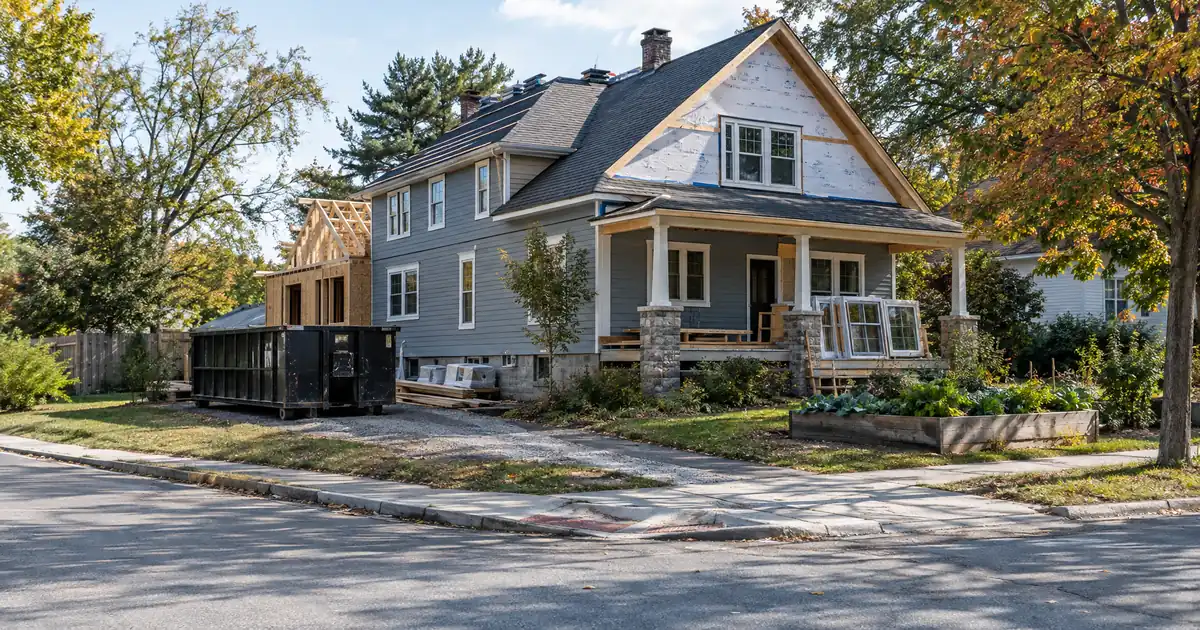
The Quick Read: A hard money bridge fits a property that is still in transition, while a DSCR loan fits a rental that is leased, rent-ready and ready to be judged on whether its rent covers the full payment, and many investors use the bridge first and the DSCR loan second. The choice depends on the stage the property is in today. It does not depend on which product sounds better.
- A bridge is underwritten on the property, the plan and the exit. A DSCR loan is reviewed primarily on property-level rental income covering the payment, subject to lender guidelines.
- A bridge carries a maturity date. A standard DSCR structure is built for a long hold.
- Vacant, mid-rehab or partly leased properties usually belong on the bridge side of the line.
- Leased, rent-ready properties with documented rent usually belong on the DSCR side.
- The handoff is where deals break, because the exit loan has to be sized on a new appraisal and a new rent figure.
Here is the honest short answer. A hard money bridge is for the investor who owns or is buying a property that cannot yet be judged on rent. It may be vacant, under renovation, or leased below market. It carries a short term and an exit requirement in exchange for flexibility. A DSCR loan is for the investor whose property already works as a rental. It trades that flexibility for a longer runway and underwriting built around the rent. If your property is between those two states, the sections below sort out which side it falls on.
Side-by-Side
The table below compares structure, not pricing. The hard money column reflects the business-purpose bridge guidelines Lendmire works with, and the DSCR column reflects the programs in its wholesale network. Both vary by lender, property, and experience, and nothing here is a commitment to lend.
| Factor | Hard Money Bridge | DSCR Loan |
|---|---|---|
| Review basis | Property, plan and exit | Rent covering the full payment |
| Credit | 620 minimum, extra conditions below 660 | 620 floor in parts of the network; most want about 660 |
| Property condition | Vacant, rehab or transitional | Rent-ready and leased or leasable |
| Property types | Non-owner-occupied, 1-4 units | Rental property; manufactured, log, barndominium not offered |
| Entity vesting | Common, program-specific | Common, subject to lender program eligibility |
| Term structure | 6-18 months, interest-only | 30-year fixed spine; extended terms select |
| Reserves | Set by lender and file | Commonly about 6 months of PITIA |
| Main risk | Maturity before the exit works | Coverage or appraisal falls short |
Key Terms Defined
Stabilized: A rental that is leased, has documented rent, is in rent-ready condition and has been owned long enough to satisfy a lender’s seasoning rule.
DSCR (debt service coverage ratio): Monthly rent divided by the full monthly obligation of principal, interest, taxes, insurance and any association dues (PITIA).
ARV (after-repair value): The estimated value of a property once planned renovations are finished.
Loan-to-cost: The share of total project cost, purchase plus rehab, that a lender will advance.
Seasoning: The period a borrower must own a property, measured from title recording, before certain refinance options open up.
Exit: The planned event, a sale or a refinance, that repays the bridge.
What Does a Lender Mean by Stabilized?
Stabilized means the property can be judged on rent alone. A DSCR reviewer wants four things to be true at the same time. The property is leased or has a defensible market rent. The rent is documented. The condition is rent-ready. And the ownership history fits the transaction type.
For documentation, appraisers commonly use a rent schedule (Form 1007) or a small residential income report (Form 1025), as listed on Fannie Mae’s appraiser guidance page. Those are only form names. Fannie Mae’s rules do not govern DSCR loans.
The lender decides which rent figure counts. A signed lease helps, but the appraiser’s market-rent opinion can govern, especially on a fresh lease that is above or below the area norm. Short-term rentals are handled separately and are covered in the FAQ.
When a Hard Money Bridge Is the Better Fit
A bridge is the better fit when the property cannot yet pass the stabilized test and the investor has a credible plan to fix that. Three situations come up most often.
The property needs work before it can rent. A vacant or distressed property cannot be judged on rent it is not earning. DSCR programs are built for rent-ready property, so a rehab usually starts on the bridge side. On fix-and-flip files in the bridge guidelines, leverage runs up to 93% of project cost at 5 or more completed projects, 90% at 2 or more, and 85% with fewer. Every tier is capped at 75% of after-repair value. Up to 100% of the rehab budget funds in draws against completed work. The top tier is reserved for experienced investors, and all of it varies by lender, property, and experience.
The investor is buying a transitional rental without a rehab. Bridge purchases without rehab run up to 80% of the purchase price. That suits an investor who needs to buy now and lease up afterward.
The investor needs room for a longer lease-up. A bridge can work well here. Say you buy a four-unit property with two units vacant and one on a month-to-month tenancy. A bridge buys time to sign leases at market rent before a long-term lender looks at it.
Underwriting is still real. Credit starts at 620, with extra conditions below 660. First-time investors qualify at the lower leverage tiers. Loans run up to $5,000,000, with larger amounts by exception. The collateral is non-owner-occupied residential property of 1-4 units, and the lender examines the budget, the draw process and the exit.
The tradeoff is the clock. Terms run 6-18 months, interest-only, with no prepayment penalty. There are no multi-year options. If the plan slips, the maturity date does not. A bridge is a poor choice for an investor who has no clear exit and is hoping one will appear.
When a DSCR Loan Is the Better Fit
A DSCR loan is the better fit when the property is already working as a rental and the investor wants a long hold without a balloon. Qualification rests on the property’s rent against its full payment, with credit, reserves and appraisal still in play.
This is the stronger choice for three kinds of investor. The first is the self-employed investor whose traditional personal-income documentation understates real income. The second is the investor holding properties in an LLC, subject to lender program eligibility. The third is the investor with enough financed properties that personal debt-to-income no longer tells the story.
Here are the figures that matter, which vary by lender, loan size and transaction type:
- On a purchase, most files land at 75%-80% LTV, and select high-leverage programs reach 85% LTV with roughly a 700+ score.
- On a cash-out refinance of an investment property, leverage tops out around 75% LTV. About 6 months of ownership, counted from title recording, is the common expectation.
- On a rate-and-term refinance, which returns no cash at closing, leverage can reach up to 85% LTV.
- Coverage of 1.00 is where select programs start. A separate select-lender path goes below 1.00, with leverage and terms adjusted.
- Credit runs from a 620 floor in parts of the network, to about 660 on most programs, to 700+ for the strongest tiers.
- Standard programs go up to $3,000,000, and smaller balances route through select lenders.
- Reserves are commonly around 6 months of PITIA. They can step up to about 9 months above $1,500,000, and conservative rate-and-term files at modest leverage may see them waived.
A larger down payment lowers the payment and can lift coverage. It does not erase leverage caps, credit floors or reserve rules, and the strongest files clear both the equity test and the coverage test.
The tradeoff is rigidity. A DSCR lender will not lend against a property that is not rent-ready, and a small coverage shortfall can mean a smaller loan. If the property needs work, DSCR is the wrong tool until the work is done.
The In-Between Cases
Most competing advice treats a property as either in transition or stabilized. Real properties spend weeks and months in between. Here is how the common middle states usually sort out.
- Vacant and unrenovated: bridge.
- Mid-rehab: bridge, with draws releasing against completed work.
- Rehabbed but unleased: usually still bridge, unless a lender accepts the appraiser’s market rent on a rent-ready property.
- Partly leased: a judgment call. If coverage on the in-place and market rent clears the program floor, DSCR may be open. If not, the bridge stays in place until leasing catches up.
- Leased below market: DSCR can still work, but the lender may use the lower figure, which lowers coverage.
- Between tenants: the appraiser’s market rent may carry the file, though a short vacancy can complicate reserves and review.
- Leased and seasoned: DSCR.
The in-between states are where it pays to run the coverage calculation before you buy, not after. A property that only works at the top of its rent range is a property that may not clear the exit.
Two Ceilings at the Handoff
This is the part of the sequence that catches investors. A bridge is sized on cost and projected value. A DSCR exit loan is sized on the new appraisal and the new rent. The lower of those two limits governs what comes out.
Consider a modeled clean exit. The property appraises where the plan said it would, and rent covers the new balance at about 1.25x. The DSCR loan pays off the bridge and the numbers hold with room to spare.
Now the downside. The appraisal comes in short, and the same rent covers the larger payoff only around 1.05x. If the bridge was funded near its ceiling, there may be little room for closing costs and reserves. The investor may have to bring cash to close, accept a smaller loan, or push for a different exit. These are modeled assumptions, not market data, and your own file will differ.
A cash-out exit adds another limit. On a standard rental, the DSCR loan caps out around 75% LTV on a cash-out refinance, and the payoff has to fit inside that after costs. Inside the bridge guidelines, a refinance runs up to 65% of value, which is one reason many investors move to long-term financing at the exit. Lendmire’s wholesale network places both sides of that handoff, and the hard money exit refinance program page lays out how that path works. Final terms depend on the lender’s guidelines, the property type, and the borrower’s complete credit picture.
Coverage Is Not Cash Flow
A DSCR number measures one thing. It compares rent to PITIA. Clearing 1.00 does not mean the property produces positive cash flow, because repairs, vacancy, management, utilities and capital expenses all sit outside the calculation.
For an investor stabilizing a rental, this matters more than usual. A freshly renovated property often has early vacancy and early repairs. A coverage ratio of 1.10x on paper can feel thin in the first year (it often does). The honest approach is to stress your own operating costs separately and treat the lender’s ratio as an entry gate, not a profit forecast.
If the Bridge Matures Before the Exit
Sometimes the lease-up runs long or the seasoning clock is not finished. When the maturity date is close, the options are few.
1. Extend the bridge, if the lender allows it. This buys time but adds carrying cost, and extension terms vary by lender.
2. Refinance on a rate-and-term basis. A payoff-only refinance returns no cash and, on a DSCR loan, can go up to 85% LTV, so it may fit when equity is thin. Seasoning rules are lighter than on cash-out.
3. Sell. This is the cleanest option if neither of the others works.
The comparison is cost of delay against leverage given up. Waiting for a cash-out, which needs about 6 months of seasoning, can cost more in carry than taking a lower-leverage payoff now. The right answer depends on how much cash the investor planned to pull out and what that cash was meant to do.
One more note on seasoning. Agency delayed-financing exceptions are for cash buyers and do not govern DSCR files, so they generally do not rescue a purchase made with bridge debt. Seasoning is lender policy and varies by program.
DSCR loans are designed for non-owner-occupied investment properties. Because they are business-purpose investor loans, they are reviewed differently from a standard owner-occupied mortgage, a point reflected in the CFPB’s Regulation Z business-purpose exemption and in the RESPA exemption text at Cornell Law School. Tax treatment varies, so consult a qualified professional.
Where Investors Go Wrong
Using a bridge on a property that already qualifies. That means two sets of closing costs and a maturity deadline for no benefit. If the rent works, a DSCR loan may be the simpler path.
Sizing the bridge to its ceiling. A maxed-out bridge leaves no cushion if the appraisal is short.
Treating coverage as profit. See above.
Choosing the entity after the deed records. Retitling between entities can disturb a seasoning count, so decide on vesting first.
Assuming a bigger down payment shortens the wait. It lowers the payment, but it does not change seasoning or leverage caps.
A readiness checklist before you apply for the exit loan: a lease or defensible rent evidence, a rent-ready property, bank statements for funds and reserves, entity documents if any, insurance, and a plan for the payoff. Lendmire’s piece Rental HELOC vs Hard Money for a BRRRR Investor’s Rehab Budget covers the front half of that sequence in more depth.
Verdict
Neither loan is better in the abstract. The bridge is the right tool while the property cannot yet be judged on rent. The DSCR loan is the right tool once it can. If you are an experienced investor with a clear plan and a realistic exit, the bridge-then-DSCR sequence works well. If you cannot say how the exit works, or the numbers only clear in the best case, fix that before you buy.
The decision tips on a few conditions. If the property needs work, use the bridge. If it is rent-ready and leased, start with DSCR. If it is somewhere in between, run the coverage and the two-ceiling math first. The complete DSCR loans guide walks through the long-term side in more detail.
If you are buying, rehabbing or refinancing an investment property on a short timeline and want to see how the numbers work, Lendmire can help you compare hard money options based on the project, the exit plan, leverage, and your goals. The brokerage arranges financing through select lenders across 41 markets, including Washington, D.C.
Frequently Asked Questions
Can I use both loans at the same time?
Yes, on different properties. An investor can hold a bridge on a rehab and a DSCR loan on a stabilized rental at once. On the same property they run in sequence, with the bridge repaid by the DSCR loan. Reserves and credit are reviewed on each file.
Can a hard money bridge buy a rental I plan to hold?
Yes. Bridge purchases without rehab run up to 80% of the purchase price, subject to lender guidelines and the investor’s experience. It suits a property that needs lease-up before it can pass a DSCR review.
Can a vacant property get a DSCR loan?
Sometimes, if it is rent-ready and the appraiser’s market-rent opinion supports the coverage. A vacant property that needs work generally fits a bridge first. Each lender reviews the file individually.
Does short-term rental income count for DSCR?
It can, but those files are reviewed separately. Purchase leverage runs to 75% LTV, and refinance leverage is around 70% on a short-term rental. A standard rental caps out at 75% on cash-out, while short-term-rental collateral is held to 70%. Expect a 640+ score and about 12 months of hosting history, with a 1.00 coverage floor on purchases and the same 1.00 on refinances. Short-term rental rules can vary by city, county, HOA, and property type, so investors should confirm local rules before relying on projected rental income. Each figure is subject to lender guidelines and a complete review of property type, leverage, and credit.
What happens if my appraisal comes in short at the exit?
The DSCR loan is sized on the new value, so a short appraisal means a smaller loan. The gap can come from extra cash at closing, a rate-and-term payoff with less leverage, or a different exit. Running the downside case before buying is the best protection.
About Lendmire
Lendmire, NMLS# 2371349, is a non-QM mortgage broker serving real estate investors in 41 markets, including Washington, D.C., through DSCR investor loan programs. Qualification is generally reviewed around the subject property’s rental income, not the borrower’s W-2 history — a practical fit for LLC-titled portfolios and self-employed investors. All scenarios remain subject to lender review and program guidelines. Two consecutive Scotsman Guide Top Mortgage Workplace recognitions (2025, 2026).
Get Started
Ready to find the right loan for you?
In about 30 seconds you can review financing options available for your investment property. No commitment required.
Informational only. Not a Loan Estimate, approval, or commitment to lend. Program availability and eligibility are subject to lender guidelines, credit approval, property review, and underwriting.
References
1. Fannie Mae – Appraisers and property underwriting
2. CFPB – Regulation Z § 1026.3
3. Cornell Law School – 12 CFR 1024.5
This article is part of Lendmire’s hard money loan program — full qualification details, guidelines, and scenarios live on the program page.
Related reading: Portfolio DSCR Loan vs Per-Rental Loans for a W-2 Investor Scaling Up · How to Consolidate Rental Loans Into One DSCR Loan Without Cash Out · How to Pool Rentals in a DSCR Loan as a W-2 Investor Near the Cap
Brandon Miller
Founder & CEO, Mortgage Loan Originator, Lendmire LLC
- Mortgage Loan Originator · NMLS# 1129696 · Verify on NMLS Consumer Access
- North Carolina Real Estate Broker · License# 343312 · Verify on NCREC
- North Carolina Insurance Producer · License# 19053198 · Property, Casualty, Life, Health · Verify on NAIC SBS
- Lendmire LLC · Firm NMLS# 2371349 · Verify firm licensure
Disclosures. The information presented in this article is general market commentary, not financial, legal, or tax advice. Lendmire is a mortgage brokerage (NMLS# 2371349) — not a direct lender or depository institution — and loan placement is subject to lender underwriting. Nothing in this content represents a commitment to lend. Loan terms, pricing, and program availability vary based on borrower qualifications, property characteristics, and state of subject property, and are subject to change at any time. Lendmire complies with Equal Housing Opportunity requirements. Consumer access: nmlsconsumeraccess.org.