
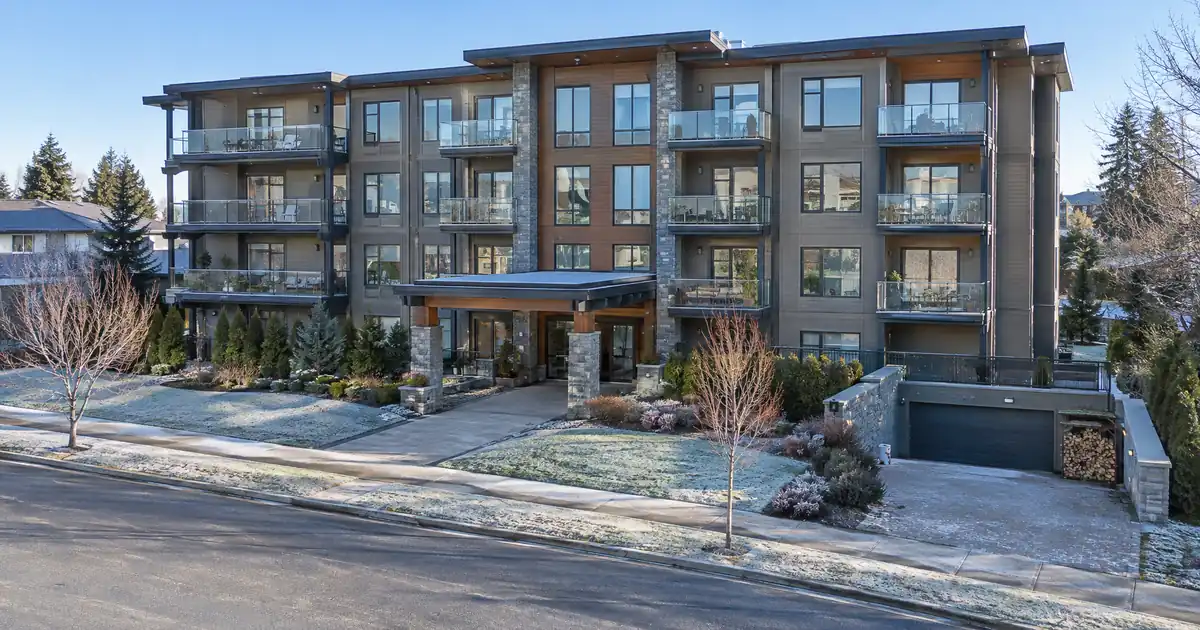
The Quick Read: A condo can sit inside a portfolio DSCR loan alongside houses and two-to-four-unit rentals, but it gets two layers of review: the unit’s own rent against its full payment including association dues, and a look at the building itself, with the pool’s combined coverage deciding whether the whole package works. Condos are usually the part of a consolidation that needs the most homework. Plan for that before you list every property.
- Condos are eligible in the pool, subject to lender guidelines, project review and the building’s status.
- Coverage is measured on the whole pool, so strong rentals can offset a weaker condo.
- Association dues count as part of the payment, which is why condos can pull a pool down.
- Non-warrantable condos are usually still workable, with tighter leverage and loan-size caps.
- A release clause and a swap right decide how easily a condo can leave the pool later.
Key Terms Defined
Portfolio DSCR loan: one note secured by several rentals. Blanket loan and cross-collateralized loan name the same thing. A bank’s own portfolio loan is a different sense of the word: a loan the bank keeps on its books.
Pooled coverage: the combined rent of every property divided by the combined payment of every property.
PITIA: principal, interest, taxes, insurance and association dues. DSCR compares rent to this number.
Warrantable condo: a unit in a project that meets standard project guidelines. A non-warrantable condo is in a project that misses one or more of them.
Condotel: a condo with hotel-style features, such as a booking desk or a rental pool.
Release clause: a loan term that lets one property leave the pool while the loan stays in place.
What a Portfolio DSCR Loan Actually Is
Think of it as several rentals under one note and one lender. Across our wholesale network, two structures cover most of this ground.
The 30-year portfolio DSCR loan holds 2 to 20 properties. Loan sizes typically run $300,000 to $5,000,000, with leverage up to 80% of value on a purchase or rate-and-term refinance. It offers fixed or adjustable rates and an interest-only period.
The rental portfolio term loan is for five or more rental properties or units. Loan sizes typically run $500,000 to $50,000,000, with leverage up to 75% of value. Terms are 3, 5, 7 or 10 years with a balloon at maturity, and prepayment follows a yield-maintenance schedule.
Both accept single-family homes, two-to-four-unit properties, condos and townhomes. Owner-occupied property, co-ops, mixed-use and commercial property are not eligible. Manufactured and mobile homes are not reviewable on these programs.
DSCR loans are designed for non-owner-occupied investment properties. Because they are business-purpose investor loans, they are reviewed differently from a standard owner-occupied mortgage. The loan is reviewed primarily on property-level rental income covering the payment, subject to lender guidelines.
The portfolio programs typically want a credit score of at least 640, and some structures ask for 680 or 720. Every property still needs a lease or an appraiser-supported market rent. The complete DSCR loans guide covers the basics of how the ratio works.
How a Condo Enters the Pool
A condo enters the pool through two doors: the unit and the building. The unit gets a rent schedule and an appraisal. The building gets a project review.
| Property type | Rent support | Extra review |
|---|---|---|
| Single-family | 1007 rent schedule | Standard appraisal |
| 2-4 unit | 1025 income statement | Standard appraisal |
| Condo | 1007 rent schedule | Project review plus unit appraisal |
| Townhome | 1007 rent schedule | Association dues still count |
The 1007 is an appraiser’s rent schedule for a single unit. The 1025 is the operating statement for a small income property.
Project review is where condos diverge. Scotsman Guide notes that DSCR review emphasizes whether the property covers its mortgage, taxes, insurance and association fees. It lists association litigation, reserve adequacy and the owner-occupied versus investor split as typical condo review items.
Expect a packet for each condo: the project questionnaire, a current dues statement and evidence of the master insurance policy. These sit beside the per-property documents you gather for the houses.
Warrantable, Non-Warrantable and Condotel
Underwriters sort every building into one of three buckets before anything else. Each bucket carries a different lender pool.
- Warrantable: the widest group of lenders and the fewest extra documents.
- Non-warrantable: a narrower group, more documents, and typically tighter leverage and loan-size caps.
- Condotel or rental-pool units: the narrowest group, reviewed case by case.
The word warrantable comes from the two large mortgage agencies. Scotsman Guide lists common triggers for a non-warrantable project: owner-occupancy below 50%, heavy commercial use, hotel-style features, 25% or more of owners delinquent on dues, reserve funding below 10% of revenue, unresolved litigation and insurance problems. The same outlet reports that the agency limit on financed investment properties is 10 properties. That limit is one reason investors with condos move to non-agency loans. A DSCR lender then applies its own overlays on top.
Non-warrantable is not the same as condotel. A building can fail on litigation, thin reserves or investor concentration with no hotel operations at all. Treat the issues in three groups:
- Often fatal: mandatory rental pooling or hotel operations that put the unit in the narrowest bucket, and unresolved litigation that stalls the review.
- Manageable: thin reserves or high investor concentration, which usually cost leverage rather than eligibility.
- Changes over time: a building’s status can shift between the day you list it and the day the loan is reviewed. A label from last year may not hold.
What HOA Dues Do to the Pooled Ratio
Dues are the quiet drag. A condo can rent well and still cover weakly, because the payment includes the association’s charge.
Run a modeled illustration, with assumptions rather than market data. Say a pool has four houses that each cover about 1.10x and two condos that each cover about 0.85x because of heavy dues. Assume the payments are similar in size. The pooled coverage lands near 1.02x.
A condo below 1.00 can sit in the pool, and underwriting tests the pooled coverage, the leverage and the terms. The pool in this illustration clears the 1.00 pooled floor, but barely. If dues rise, it slides under.
Two lessons follow:
- Run the pooled math with current dues, not last year’s.
- A thin cushion is a risk even if the number clears.
Clearing 1.00 does not mean positive cash flow. DSCR compares rent to PITIA only. Repairs, vacancy, management, utilities and capital expenses sit outside it.
Consolidation Step by Step
1. Define the pool. Decide which properties go under the note. Check each against the eligible types.
2. Gather payoff statements. Every loan being replaced needs one. Check the old notes for prepayment charges before you commit.
3. Order valuation and condo documents. Each property gets an appraisal and rent support. Each condo adds the project packet.
4. Review the allocation. The loan documents assign a share of the balance to each property. That allocation drives the release terms later.
5. Check reserves and entity. Reserves commonly run around 6 months of PITIA and step up on larger balances. Cash-out proceeds typically do not count toward them. Where an LLC holds title, it must meet program requirements.
6. Close the pool. Every property now secures the whole debt.
If you pull cash out, the ceiling is 75% of the pooled value on standard rentals. Inside the first six months of ownership, the loan is also capped at 90% of total cost (purchase price plus documented improvements). From six to twelve months the cap is 100% of total cost. The leverage ceiling still applies, and the loan is the lower of the two. After twelve months the appraised value alone is the basis. A rate-and-term refinance is not subject to the cost-basis cap.
Tax treatment varies; consult a qualified professional before relying on any deduction.
Releasing or Swapping a Condo Later
A release clause lets one property leave while the loan stays in place. The release price runs above the property’s allocated balance, and the exact amount lives in your loan documents. A release is never free.
A swap is two steps. The lender releases the condo, then accepts replacement collateral. The replacement has to pass the same appraisal, title, entity and pooled-coverage review. The real work is proving the remaining pool still covers its debt once the condo is gone.
Without a release clause, a blanket structure typically carries a due-on-sale provision. Selling one condo could then mean paying off the whole loan. Read this clause before signing, not after.
Where the General Rule Breaks
The rule that a condo can ride along has real exceptions.
- One building, many units. Each unit you add raises the building’s investor concentration. That can push it toward non-warrantable status. Leverage may drop as your share of the building grows.
- Warrantable is not automatic. Even a clean building faces project review. A troubled association can stall a deal.
- A failing condo. If one condo fails review, the usual fix is to drop it or replace it. Plan for that possibility, because the rest of the pool has to carry the loan on its own.
- Narrow exit market. A non-warrantable unit has a smaller buyer pool when you sell. Exit liquidity is weaker.
- Cross-collateralization. Every property secures the whole debt. A problem with one asset can reach all of them.
- Short-term rental condos. Short-term rental rules can vary by city, county, HOA, and property type, so investors should confirm local rules before relying on projected rental income.
Keep the Condo in the Pool or on Its Own Loan?
Pulling a weak condo out of the pool keeps one bad asset from dragging the rest, and a separate loan keeps your exit flexibility for that unit.
| Situation | Keep in pool | Leave on own loan |
|---|---|---|
| Strong rent, modest dues | Usually fits | Rarely needed |
| Heavy association dues | Run pooled math first | Often cleaner |
| Plan to sell soon | Needs a release clause | Often better |
| Building under review | Risks stalling the pool | Isolates the issue |
| Many units in one building | Watch concentration | Consider splitting |
The strongest files pass two tests: enough equity and enough rental coverage. A large down payment lowers the payment and can lift the ratio. It never erases leverage caps, credit floors, reserve rules or property eligibility.
Frequently Asked Questions
Can condos mix with houses in one portfolio loan?
Yes. The 30-year portfolio DSCR loan and the rental portfolio term loan both accept condos alongside single-family homes, two-to-four-unit properties and townhomes. Each property still needs its own rent support, and each condo adds a project review.
Does a non-warrantable condo block the pool?
Usually not. It narrows the lender pool and typically brings tighter leverage and loan-size caps, but non-warrantable condos are workable through select lenders in the network, subject to lender guidelines.
Can a short-term rental condo be included?
It depends on the association and the property. Many associations restrict rentals, and a rental-pool structure puts the unit in the narrowest bucket. Confirm both with the building before relying on the income.
Can I refinance a conventionally financed condo into the pool?
Yes, as long as the unit and the building pass review. The old loan is paid off at closing, so check its prepayment terms first. A payoff statement shows what you owe.
Does the pool test cash flow?
No. It tests whether pooled rent covers the pooled payment, with a 1.00 floor on the 30-year structure. Repairs, vacancy, management and capital expenses sit outside that ratio, so budget for them separately.
Next Steps
If you are buying or refinancing a rental property and want to see how the numbers work, Lendmire can help you compare DSCR loan options based on the property income, credit profile, leverage, and investor goals. As a broker, Lendmire arranges financing through select lenders in its wholesale network across 41 markets, including Washington, D.C. Programs vary, and every file is reviewed individually. This is not a commitment to lend.
Condos reward the investor who reads the association’s numbers before the lender does.
About Lendmire
A DSCR-focused mortgage broker, Lendmire (NMLS# 2371349) places investor financing across 41 markets — 40 states plus Washington, D.C. — with DSCR eligibility generally reviewed by the lender on property cash flow instead of traditional personal-income documentation, subject to lender guidelines. Scotsman Guide named Lendmire a Top Mortgage Workplace in 2025 and 2026.
Get Started
Ready to find the right loan for you?
In about 30 seconds you can review financing options available for your investment property. No commitment required.
Informational only. Not a Loan Estimate, approval, or commitment to lend. Program availability and eligibility are subject to lender guidelines, credit approval, property review, and underwriting.
References
1. Scotsman Guide: Get in the Game
2. Scotsman Guide: Condominium Expertise Can Pay Dividends
3. Scotsman Guide: To the Rescue With the Right Loan at the Right Time
This article is part of Lendmire’s DSCR loan program — full qualification details, guidelines, and scenarios live on the program page.
Related reading: Can You Get a Portfolio DSCR Loan on a Package Bought This Year? · How Two Low Values Reshape a DSCR Portfolio Loan · Can a Landlord Get a DSCR Portfolio Loan After a Bank Declines?
Brandon Miller
Founder & CEO, Mortgage Loan Originator, Lendmire LLC
- Mortgage Loan Originator · NMLS# 1129696 · Verify on NMLS Consumer Access
- North Carolina Real Estate Broker · License# 343312 · Verify on NCREC
- North Carolina Insurance Producer · License# 19053198 · Property, Casualty, Life, Health · Verify on NAIC SBS
- Lendmire LLC · Firm NMLS# 2371349 · Verify firm licensure
Disclosure information. Lendmire is a state-licensed mortgage brokerage under NMLS# 2371349. Lendmire is not a depository institution, direct lender, or financial advisor — all loans referenced are placed through wholesale lender partners and are subject to each lender's underwriting standards. This article is provided for general informational purposes and is not a commitment to lend, nor does it constitute financial, legal, or tax advice. Loan programs, terms, rates, and qualification standards change without notice and depend on borrower profile, property type, and the state in which the subject property is located. Equal Housing Opportunity provider. NMLS Consumer Access: nmlsconsumeraccess.org.