
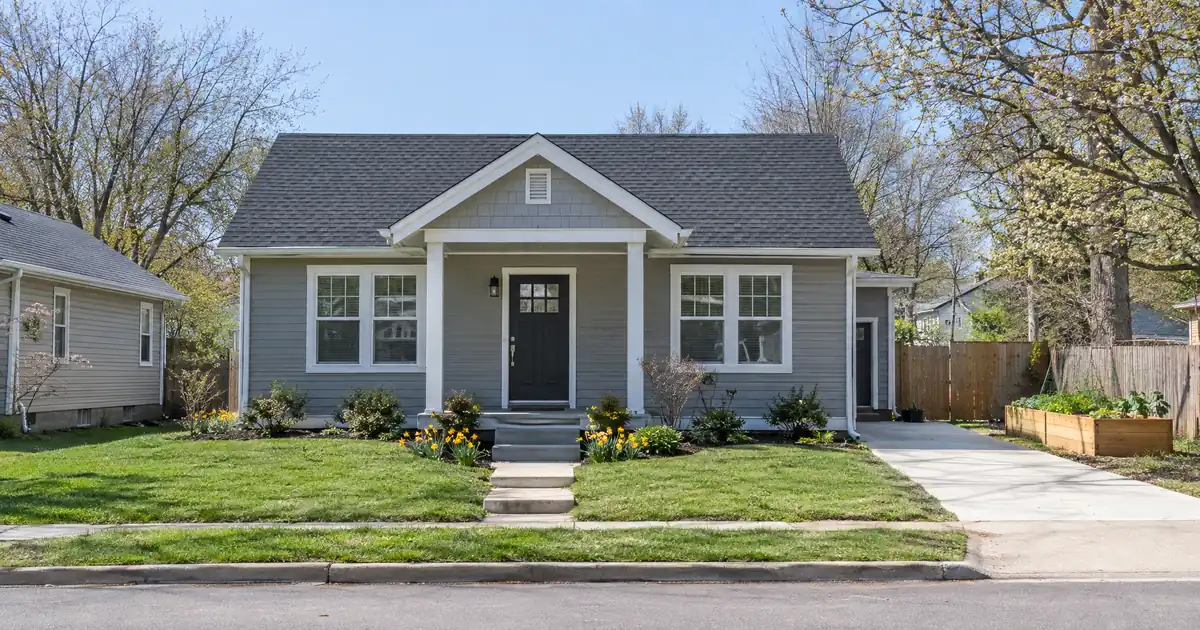
The Quick Read: It depends on the structure. A portfolio DSCR loan can put two rentals in different markets under one note, but each hard money payoff must still clear its own value, rent, and seasoning tests, and separate loans are often cleaner.
- One note, called a portfolio or blanket loan, can pay off several short-term loans at once. Whether the properties may sit in different markets is a program question the lender answers on your file.
- Coverage is measured on the pool: total rent against total payment. A strong rental can carry a weaker one.
- Every property in the pool secures the whole balance. One default can reach all of them.
- Two rentals on different timelines, or a planned sale of one, usually point toward two separate loans.
Key Terms Defined
Hard money loan: short-term, interest-only financing secured by the property, used to buy or rehab quickly. The lender looks at the property, the plan, and the exit.
DSCR (debt service coverage ratio): monthly rent divided by the full monthly housing payment. A result of 1.00 means rent equals the payment.
PITIA: principal, interest, taxes, insurance, and association dues. It is the payment side of the DSCR math.
Portfolio (blanket, cross-collateralized) loan: one note secured by several rentals. These three names describe the same thing.
Seasoning: how long you have owned a property. It limits how much a lender will advance on a recent purchase.
Release: a loan-document provision that lets one property leave the pool when you sell it.
How Do Hard Money and DSCR Loans Chain Together?
Hard money buys and fixes the property. A long-term DSCR loan replaces it once the rental is leased and stabilized. AirDNA’s BRRRR overview describes this same pattern. Short-term financing carries the purchase and rehab, then a long-term mortgage takes over.
Hard money programs on the network typically run 6 to 18 months, interest-only, with no prepayment penalty. Terms vary by lender, property, and experience. Many investors refinance out of hard money into long-term DSCR investor loans once the property is stabilized, and Lendmire arranges that path.
The same AirDNA piece warns about two common mistakes: underestimating rehab costs, and assuming the refinance will qualify. Both mistakes get more expensive with two properties.
How Does One Pooled Loan Work Across Two Markets?
Two program structures matter here. The first is the 30-year portfolio DSCR loan. It covers 2 to 20 properties under one note, with loan sizes typically from $300,000 to $5,000,000. Leverage runs up to 80% of value on a purchase or rate-and-term refinance, and up to 75% of pooled value on a cash-out. Eligible property types are single-family homes, 2-4 unit buildings, condos, and townhomes. Interest-only periods are available.
The second is the rental portfolio term loan. It needs five or more rental properties or units, with sizes typically from $500,000 to $50,000,000. Leverage runs up to 75% of value. Terms are fixed at 3, 5, 7, or 10 years with a balloon at maturity. Recourse and non-recourse versions exist. A non-recourse loan looks to the real estate, with recourse limited to carve-outs such as fraud and bankruptcy. This structure also allows small multifamily.
Only the rental portfolio term loan spells out multi-market cross-collateralization, where properties in several markets or states sit under one loan. With just two rentals, you are looking at the 30-year structure. Whether a given two-market pool fits is something the lender confirms on the file. Ask early. A pool that must stay in one region means two loans.
Size is a second filter. If your two payoffs together land under the program minimum, the pool may not fit at all.
Typical qualifying terms apply, subject to lender guidelines. The credit floor on portfolio programs is 640, and some portfolio structures want 680 or 720. A special-purpose entity, usually an LLC, is required on some structures, per lender program requirements. Recourse loans carry a personal guarantee. Every property still needs a lease or an appraiser-supported market rent.
Manufactured and mobile homes are not reviewable on these programs. Owner-occupied, co-op, mixed-use, and commercial property cannot go in the pool.
What Does Blended Coverage Look Like?
Run the numbers on two modeled rentals. These are assumptions, not market data. Rental A, in the stronger market, covers its payment at 1.30x. Rental B, in the softer market, covers at 0.90x. Assume the two payments are similar in size.
Pooled, the pair lands near 1.10x. That clears a 1.00 pool floor. A rental at 0.90 can sit in the pool when underwriting tests the pooled coverage, the leverage and the terms.
Now change one input. Say Rental B covers at 0.60x instead. The pool drops to roughly 0.95x and misses the 1.00 floor. Blending helps until the weak property is weak enough to sink the pool.
Separate loans run differently. Rental A stands alone at 1.30x. Rental B alone needs a single-property path. Programs below 1.00 coverage are available through select lenders in the network, with leverage and terms adjusted. Compare the pooled result against that tradeoff.
One caution on the math: clearing 1.00 is not the same as positive cash flow. DSCR compares rent to PITIA only. Repairs, vacancy, management, utilities, and capital expenses sit outside the calculation.
What If One Rental Is Ready Before the Other?
This is the most common snag with two hard money properties. One has a lease and a finished rehab. The other is still being renovated, or its note matures first.
You have three sequencing options:
1. Refinance both together. Both properties must be leased and ready. The wait for the slower property costs you extra months of interest-only carry on the faster one.
2. Refinance one now and one later. Each gets its own loan. This avoids tying a finished rental to an unfinished one.
3. Leave one on short-term debt. This works only if the hard money term has room left. With terms of 6 to 18 months, check the maturity dates on both notes before choosing.
Seasoning matters too. On a portfolio cash-out, the cost-basis cap applies inside the first twelve months of ownership. The loan is capped at 90% of total cost (purchase price plus documented improvements) in the first six months, and the leverage ceiling still applies, so the loan is the lower of the two. From six to twelve months, a cost-basis cap still applies under the same lower-of-two rule. After twelve months, appraised value alone is the basis. A rate-and-term refinance is not subject to the cost-basis cap.
The new lender sizes the loan on its own appraisal, not on your after-repair estimate. The payoff statement, lease or market rent, entity documents, and ownership history all have to line up for each property.
Separate Loans or One Pool?
Neither wins every time. This table shows the structural differences.
| Factor | One pooled loan | Separate loans |
|---|---|---|
| Coverage test | Pooled rent vs pooled payment | Each rental on its own |
| Weak rental | Can ride with a strong one | Must stand alone |
| Collateral | Each property secures the whole balance | Each secures only its own loan |
| Selling one | Depends on release terms | Sell without touching the other |
| Default exposure | One default can reach all | Contained to one property |
| Closings | One closing, one servicer | Two closings, two servicers |
Release terms deserve attention. Partial releases, substitutions, and the sale of one property follow the loan documents and the lender’s release terms. The release price runs above the property’s allocated balance, and the remaining portfolio must still cover its debt service. A release exists only if it is written into the note.
Pooling tends to make sense when both rentals will be held long term. Separate loans tend to win when equity is uneven, when partners or entities differ by property, or when you may sell one soon. Pooling also carries a cost: a stronger asset takes on the risk of a weaker one.
Which Per-Market Inputs Change the Answer?
Each market feeds the pool different numbers. Rents differ. So do taxes, insurance, and association dues. The payment side of each property’s coverage moves with them, so two similar homes can show very different coverage.
Run each property’s coverage on its own first. Then blend. If the blend is doing all the work, ask whether that weak rental belongs in the pool.
Logistics repeat in each location. You need an appraisal, title work, and a closing in each property’s jurisdiction. Ask your title agent and attorney whether the owning entity needs to register where each property sits. Short-term rental rules can vary by city, county, HOA, and property type, so confirm local rules before relying on projected rental income.
Does Business-Purpose Status Change Anything?
DSCR loans are designed for non-owner-occupied investment properties. Because they are business-purpose investor loans, they are reviewed differently from a standard owner-occupied mortgage. The Federal Register final rule on ability-to-repay standards places business-purpose credit, including investment-purpose loans, outside those consumer rules. The CFPB’s truth-in-lending exam procedures list business-purpose credit as exempt too. The test is the purpose of the loan, so the file must show a real business purpose.
Tax treatment varies; consult a qualified professional.
A Quick Decision Checklist
- Do both rentals have leases or supportable market rents?
- Does each property clear its own value, payoff, and seasoning tests?
- Would the pooled coverage clear the 1.00 floor with room to spare?
- Does the lender allow a pool across both markets?
- Will you hold both rentals long term, with the same owners and entity?
- Can you live with cross-default risk?
Answer no to any of these, especially the last two, and separate loans deserve a serious look. For the broader picture, see the complete DSCR loans guide.
Frequently Asked Questions
Can one DSCR loan really replace two hard money loans?
Yes, when the program allows a pool and both properties clear their own tests. The new lender appraises each property, verifies rent, and checks ownership history and payoff statements. Qualification rests primarily on property-level rental income covering the payment, subject to lender guidelines.
Does a two-property pool actually help?
Sometimes. It helps when one rental is strong and one is thin, because blended coverage can clear the floor. It also costs you cross-collateralization. If both rentals already cover their payments alone, the pool mostly adds shared risk and convenience.
What happens if I sell one property in the pool?
That follows the release terms in your note. The release price runs above the property’s allocated balance, and the remaining rental must still cover its debt service. If the note has no release provision, selling may mean refinancing the whole group.
What if my hard money loans mature at different times?
You sequence the exits. Refinance the ready property first on its own, or wait and pool both once the second is leased. The tradeoff is more months of interest-only carry on the first property. Check both maturity dates before choosing.
Can I add more rentals to the pool later?
That depends on the loan documents and lender. The 30-year structure holds 2 to 20 properties under one note, but substitutions and additions follow the lender’s release and substitution terms. Ask before you sign.
Next Step
If you are buying, rehabbing, or refinancing an investment property on a short timeline and want to see how the numbers work, Lendmire can help you compare hard money options based on the project, the exit plan, leverage, and your goals. As a broker, it arranges financing through select lenders in its wholesale network, across 41 markets including Washington, D.C. Program terms vary by lender, property, and experience, and nothing here is a commitment to lend.
About Lendmire
As a non-QM mortgage broker (NMLS# 2371349), Lendmire facilitates DSCR investor loans across 41 markets, including Washington, D.C. DSCR eligibility is generally reviewed around property-level rental income instead of personal income documentation, subject to lender guidelines, serving LLC-structured portfolios and self-employed borrowers who don’t fit conventional boxes. A two-time Scotsman Guide Top Mortgage Workplace (2025, 2026).
Get Started
Ready to find the right loan for you?
In about 30 seconds you can review financing options available for your investment property. No commitment required.
Informational only. Not a Loan Estimate, approval, or commitment to lend. Program availability and eligibility are subject to lender guidelines, credit approval, property review, and underwriting.
References
2. Federal Register – Ability-to-Repay and Qualified Mortgage Standards Final Rule
3. CFPB – Truth in Lending Act Exam Procedures
This article is part of Lendmire’s hard money loan program — full qualification details, guidelines, and scenarios live on the program page.
Related reading: How to Consolidate Single-Loan Rentals Into Two DSCR Portfolio Loans · How to Roll 5 to 20 Rentals Into One DSCR Loan or Use HELOCs · How a DSCR Blanket Loan Reads One or Two Weak Rentals
Brandon Miller
Founder & CEO, Mortgage Loan Originator, Lendmire LLC
- Mortgage Loan Originator · NMLS# 1129696 · Verify on NMLS Consumer Access
- North Carolina Real Estate Broker · License# 343312 · Verify on NCREC
- North Carolina Insurance Producer · License# 19053198 · Property, Casualty, Life, Health · Verify on NAIC SBS
- Lendmire LLC · Firm NMLS# 2371349 · Verify firm licensure
Compliance and disclosures. Lendmire (NMLS# 2371349) is a licensed mortgage broker and is not a direct lender, depository institution, financial advisor, or tax professional. Content in this article is general market analysis and educational information — not financial, legal, or tax advice for any specific situation. Lendmire does not guarantee loan approval; every transaction is subject to underwriting by the funding lender. Mortgage pricing and loan program guidelines are subject to change at any time without notice and vary by borrower characteristics, property type, and state regulations. Lendmire complies with Equal Housing Opportunity. Licensure verification: NMLS Consumer Access.