
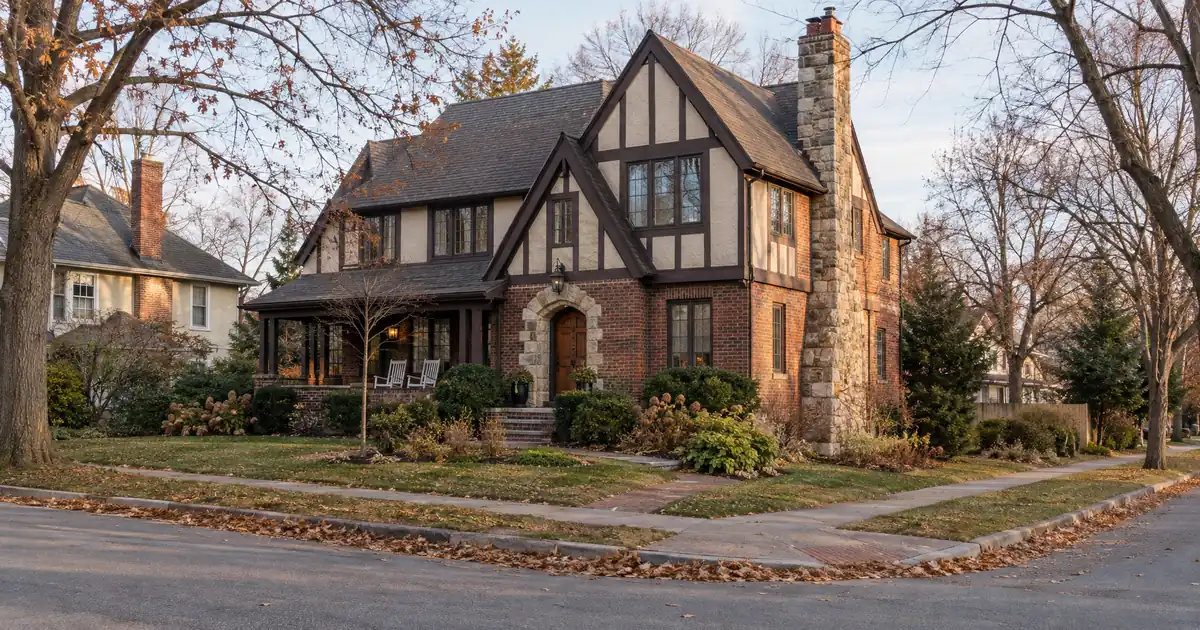
The Quick Read: A build-to-rent community moves into a portfolio DSCR loan when one long-term note secured by the finished, leased homes pays off the construction or bridge loan, and underwriting runs on the pool’s combined rent against its combined debt service rather than your personal income. DSCR means debt service coverage ratio: rent divided by the full monthly housing payment. The loan is reviewed primarily on property-level rental income covering the payment, subject to lender guidelines.
- Construction debt builds the homes. The portfolio DSCR loan replaces it once the homes are leased.
- Coverage is tested on the whole pool, so strong homes can carry weaker ones.
- Every home needs its own lien, its own legal description, and a lease or appraiser-supported market rent.
- The release terms decide how easily you can sell one home later. Read them before you sign.
- Very large communities usually need institutional financing instead.
Key Terms Defined
Portfolio DSCR loan: one note secured by liens on several rentals. “Blanket loan” and “cross-collateralized loan” name the same thing. A bank’s own portfolio loan, one it keeps on its books, is a different use of the word.
Pooled coverage: total rent across the pool divided by total debt service across the pool. Debt service here means principal, interest, taxes, insurance, and any HOA dues.
Stabilization: the point where the homes are leased and rent is proven. A construction lender and a permanent lender may each mean something different by it.
Allocated balance: the slice of the loan assigned to each home. It sets the price of releasing that home.
Release clause: contract language letting one home leave the pool when stated conditions are met. It exists only if the loan documents say so.
Seasoning: how long you have owned or held the asset before certain loan features open up.
Where Does a Portfolio DSCR Loan Sit in the Build-to-Rent Capital Stack?
It sits at the end. A DSCR loan underwrites existing rent, so it does not fund the build. Construction or bridge money does that, and the permanent note replaces it.
| Phase | What funds it | What the lender checks |
|---|---|---|
| Build | Construction loan | Budget, builder, milestones |
| Lease-up | Construction or bridge loan | Signed leases, rent levels |
| Takeout | Portfolio DSCR loan | Pooled coverage, collateral, entity |
| Hold | Same note | Payment history, release terms |
Demand for this product is real but cooling. NAHB’s Eye on Housing reports about 15,000 single-family built-for-rent starts in the latest second quarter, down from 18,000 a year earlier, with 63,000 over four quarters, a 16% drop. Construction Physics traces the segment’s climb from under 2% of single-family starts in the 1990s to over 7%.
This article starts where the build ends.
Which Structure Fits Your Community?
Two structures exist across our wholesale network, and homes count decides most of the choice. Both are program ceilings and floors, subject to lender guidelines, never quotes.
| Factor | 30-year portfolio DSCR loan | Rental portfolio term loan |
|---|---|---|
| Size of pool | 2 to 20 properties | Five or more properties or units |
| Loan size | $300,000 to $5,000,000 | $500,000 to $50,000,000 |
| Leverage | Up to 80% of value on a purchase or rate-and-term refinance | Up to 75% of value |
| Term | 30-year, fixed or adjustable | Fixed 3, 5, 7, or 10 years, balloon at maturity |
| Property types | SFR, 2-4 unit, condo, townhome | Adds small multifamily |
| Recourse | Personal guarantee typical | Recourse or non-recourse |
The 30-year portfolio DSCR loan suits a smaller community or one phase of a larger one. An interest-only period is available. The rental portfolio term loan suits bigger pools and investors comfortable with a balloon. It uses yield maintenance for prepayment, and it allows properties in several markets under one note. Non-recourse here means the lender looks to the real estate, with carve-outs for fraud and bankruptcy.
Eligible collateral is individual homes: single-family, 2-4 unit, condo, townhome. Small multifamily of five or more units qualifies only inside the rental portfolio term loan. Owner-occupied property, co-ops, mixed-use, and commercial property are ineligible.
Manufactured and mobile homes are not reviewable on these programs.
Scale matters too. A community of a hundred-plus homes generally belongs in institutional build-to-rent financing, not a DSCR pool. A community of a few dozen homes can often be split into pools that fit.
The Conversion, Step by Step
Think of the takeout as seven moves, done in order.
1. Inventory the homes and the debt. List every home, its status (leased, vacant, in lease-up), and what the construction loan has drawn against it.
2. Decide the pool. Choose which homes go in one note and which wait. A vacant home drags down pooled coverage. A phased community often works best as phase-by-phase pools.
3. Confirm the lots are separable. Each home needs its own legal description and lien. NAHB notes that some build-to-rent homes sit on a single plat and get counted as “horizontal multifamily”. A single-plat community may not fit 1-4 unit collateral and may need a commercial path.
4. Assemble the rent evidence. Gather signed leases and the rent roll. Every home needs a lease or an appraiser-supported market rent.
5. Order valuations. Each home gets an appraisal with a rent schedule. The forms are the 1007 for single-family and the 1025 for small residential income property.
6. Document the entity. Many structures require a special-purpose entity, typically an LLC, and recourse loans carry a personal guarantee. The portfolio programs set a credit floor of 640, with 680 or 720 on some structures.
7. Review the loan documents, then close and pay off. You get one note, a recorded security instrument against each home, an allocation schedule, and the release terms.
Seasoning on new-build leases varies by lender. Ask early how a lender treats leases that are only weeks old.
How Pooled Coverage Is Tested
Pooled coverage is total rent over total debt service for the whole pool, with a floor of 1.00 on the 30-year portfolio structure. The lender uses the lower of the signed lease or the appraiser’s market rent for each home.
Here is a modeled example, not market data. One home runs near 1.4x on its own. Another sits around 0.95x. With similar debt service on each, the pool lands near 1.2x. A home below 1.00 can sit in the pool, but underwriting tests the pooled coverage, the leverage, and the terms. Pooled coverage below the floor is a different conversation entirely.
HOA or association dues belong on the payment side. If your community carries master-association fees, include them for every home before you count the pool’s coverage.
One warning. Clearing 1.00 is not positive cash flow. DSCR compares rent to the housing payment only. Repairs, vacancy, management, utilities, and capital spending sit outside it.
What Happens If You Pull Cash Out?
If you take cash out at takeout, the ceiling is 75% of pooled value, and never above the structure’s own ceiling. Newly built or newly bought assets add a cost-basis check. Inside the first six months the loan is also capped at 90% of total cost (purchase price plus documented improvements), 100% of total cost from six to twelve months, and the leverage ceiling still applies, so the loan is the lower of the two. After twelve months the appraised value alone is the basis. A rate-and-term refinance is not subject to the cost-basis cap.
For a builder paying off construction debt, that distinction matters. A plain payoff is a rate-and-term refinance. Pulling out profit on top of it is cash-out.
Release Terms and Cross-Collateral Risk
Cross-collateralization means every home backs the whole loan. Nav explains that a blanket lien lets multiple properties secure a single loan, and it advises securing a release clause up front.
That clause is contract language, not an entitlement. Due-on-sale clauses are enforceable under federal statute, and that statute creates no right to release one property. Whatever right you have lives in your documents.
Before signing, get these in writing:
- Whether partial releases exist at all.
- The release price, which runs above the home’s allocated balance.
- Whether the remaining pool must still cover its debt service after each release.
- Whether substitutions are allowed.
- What a missed payment on one home does to the others.
Without a release clause, selling one home may force a payoff or refinance of the entire pool. Not ideal for an exit plan built on selling homes one at a time.
Also confirm the note count. A true blanket is one note.
What If the Pool Doesn’t Clear?
Three moves, in order of how often they work:
1. Drop the weakest homes. Removing vacant or under-rented homes lifts the pool.
2. Split into pools. A leased phase can close now while later phases season.
3. Finance qualifying homes separately. Single-property DSCR loans keep each home independent. A single-property loan is typically underwritten at 75%-80% LTV on a purchase.
A larger down payment lowers the payment and can lift coverage. It never erases leverage caps, credit floors, or property eligibility. The strongest files clear both tests: enough equity and enough rental coverage.
If the construction loan matures before the homes are leased, you may need bridge financing to cover the gap. Plan that before the maturity date, not after.
Pooled DSCR or Something Else?
| Option | Best fit | Main tradeoff |
|---|---|---|
| Single-property DSCR loans | Few homes, maximum exit flexibility | More closings, more servicers |
| 30-year portfolio DSCR loan | 2-20 homes, long hold | Cross-collateral exposure |
| Rental portfolio term loan | Five-plus units, bigger pools | Balloon at maturity, yield maintenance |
| Institutional financing | Very large stabilized communities | Scale and structure outside DSCR |
If you want one closing and one servicer, pool. If you plan to sell homes individually, favor separate loans or firm release terms.
The pooled test also stacks personal exposure. An LLC borrower plus a personal guarantee plus cross-collateral means one weak home can reach everything. Weigh that against the convenience.
For the basics behind all of this, see Lendmire’s complete DSCR loans guide.
Common Mistakes
- Reading pooled coverage as cash flow.
- Assuming a release clause exists.
- Pooling vacant homes and expecting the strong ones to cover everything.
- Skipping the lot-by-lot legal description check on a single-plat community.
- Leaving association dues out of the payment side.
- Counting seasoning from the wrong date.
Frequently Asked Questions
Can a DSCR loan fund construction?
Generally no. A DSCR loan underwrites rent that already exists. Construction or bridge debt funds the build, and the portfolio loan takes it out after leasing.
Does every home need its own appraisal?
Yes. Each home needs its own value and rent support, either a signed lease or an appraiser-supported market rent. The lender uses the lower figure.
Can I add homes after closing?
Substitutions and additions follow the loan documents and the lender’s release terms. Many investors close a leased phase first and finance later phases separately.
Can I sell one home out of the pool?
Only if the documents allow a partial release. The release price runs above that home’s allocated balance, and the remaining pool must still cover its debt service.
How many homes do I need?
The 30-year portfolio DSCR loan covers 2 to 20 properties. The rental portfolio term loan starts at five or more properties or units.
Next Step
If you are buying or refinancing a rental property and want to see how the numbers work, Lendmire can help you compare DSCR loan options based on the property income, credit profile, leverage, and investor goals. It arranges financing through select lenders in its wholesale network across 41 markets, including Washington, D.C.
Starts are slowing, which means fewer new communities are in the pipeline, but any sponsor finishing a community still has to prove pooled coverage on leased homes before a permanent note replaces the construction debt.
About Lendmire
Lendmire — NMLS# 2371349 — is a mortgage brokerage specializing in DSCR investor loans, helping arrange financing across 41 markets, including Washington, D.C., through wholesale and investor-lending channels. The model centers on property-level rental income reviewed by the lender rather than W-2 documentation, subject to lender guidelines, suiting entity-owned and multi-property investors. Lendmire holds Scotsman Guide Top Mortgage Workplace recognition for 2025 and 2026.
Get Started
Ready to find the right loan for you?
In about 30 seconds you can review financing options available for your investment property. No commitment required.
Informational only. Not a Loan Estimate, approval, or commitment to lend. Program availability and eligibility are subject to lender guidelines, credit approval, property review, and underwriting.
References
1. NAHB Eye on Housing: second-quarter declines for single-family built-to-rent
2. Construction Physics: the rise of build-to-rent housing
3. Nav: cross-collateralization
4. Cornell LII: 12 U.S.C. §1701j-3
This article is part of Lendmire’s DSCR loan program — full qualification details, guidelines, and scenarios live on the program page.
Related reading: How to Move Rentals From a Blanket Bridge Loan to a Portfolio DSCR Loan · How a Portfolio DSCR Loan Collects One Monthly Payment · How to Offset Concentration Risk on a Portfolio DSCR Loan
Brandon Miller
Founder & CEO, Mortgage Loan Originator, Lendmire LLC
- Mortgage Loan Originator · NMLS# 1129696 · Verify on NMLS Consumer Access
- North Carolina Real Estate Broker · License# 343312 · Verify on NCREC
- North Carolina Insurance Producer · License# 19053198 · Property, Casualty, Life, Health · Verify on NAIC SBS
- Lendmire LLC · Firm NMLS# 2371349 · Verify firm licensure
Legal disclosures. Lendmire (NMLS# 2371349) is a state-licensed mortgage brokerage that arranges financing through wholesale lender relationships. Lendmire is not a direct lender, depository institution, or registered financial advisor. The discussion above is general informational content about real estate financing — it is not financial, legal, or tax advice, and readers should consult licensed professionals for guidance on their individual circumstances. Loan inquiries are subject to lender underwriting; this article does not represent a commitment to lend. Loan terms, rates, and qualification standards vary by borrower, property, and state, and are subject to change at any time. Equal Housing Opportunity. NMLS Consumer Access: nmlsconsumeraccess.org.