
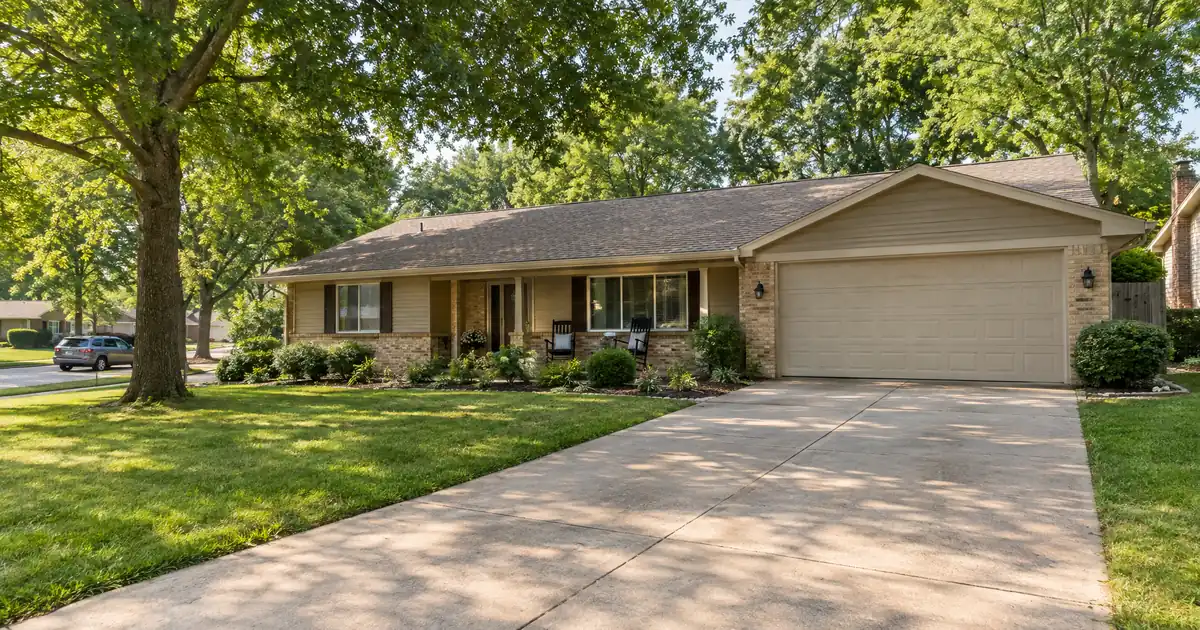
The Quick Read: Both fixes lower the monthly obligation your rent has to cover, but they work on different parts of it: interest-only removes the principal piece for a set period, while a larger down payment shrinks the loan permanently, and neither touches the insurance premium that caused the problem.
- Interest-only helps most when the program tests the interest-only payment and the investor has a credible plan for the step-up later.
- A larger down payment helps most when leverage, reserves, or long-hold stability are also part of the problem.
- Neither lever overrides credit floors, leverage caps, reserve rules, or property eligibility.
- Clearing 1.00 on coverage is not the same as positive cash flow.
- If neither lever closes the gap, the property or the structure may be the issue.
The honest answer comes down to what you want the money to do. A larger down payment suits the investor who is holding long term, has spare cash, and wants the coverage fix to be permanent. Interest-only suits the investor who wants to keep cash working elsewhere and has a clear exit or refinance plan. If you have neither the cash nor the plan, the property may be the problem. A lender can’t fix that with structure.
DSCR Calculator
Run the numbers in your market
Rate source: Freddie Mac 30-yr average via FRED® — Federal Reserve Bank of St. Louis · effective Oct 15, 2026
Prefilled with starting assumptions — enter your own rent or nightly figures, taxes, insurance, and HOA for a more accurate picture.
Program parameters update from Lendmire’s centralized guideline source. Taxes and insurance are editable estimates.
As of Oct 15, 2026 · General Freddie Mac market benchmark, not a Lendmire loan offer. Rent, nightly rate, occupancy, taxes, and insurance are editable estimates. Short-term rental figures are estimates only and vary significantly by season, property type, management approach, and local short-term-rental rules — confirm local regulations before relying on them. Qualifying income for short-term rentals varies by program — some use appraisal market rent, others use documented STR history or projections — and is confirmed in underwriting. Not a Loan Estimate, approval, or commitment to lend. Program availability and eligibility are subject to lender guidelines, credit approval, property review, and underwriting.
Why an Insurance Hike Breaks the Ratio
Debt service coverage on a residential rental is monthly rent divided by PITIA: principal, interest, taxes, insurance, and any association dues. Insurance enters that formula as the annual premium divided by 12. When a renewal jumps, the denominator rises and the rent stays put.
The pressure is broad. An analysis of insurance-regulator data from Crowdfunded Wealth reports that average homeowners premiums rose between 18.3% and 43.3% after inflation in every region since 2018. That source notes the figures come from owner-occupied series and that it found no official landlord-policy series. Treat it as direction, not a landlord-specific measurement.
Here is an illustrative case, in ratios only. A rental sits at 1.20x on the quote used for the original file. A renewal pushes the monthly obligation up enough to drop coverage to about 0.98x. The rent didn’t change and the tenant didn’t change. The file now sits below the 1.00 mark, which is where many select programs start.
Coverage below 1.00 is a separate path. A few select lenders in the network will look at it, with leverage and terms adjusted. That is a different program, not a softer version of the 1.00 one.
Side-by-Side
The table below compares how each lever behaves on a typical DSCR file. The column on the right reflects published industry norms for larger down payments and for interest-only periods. Lendmire’s wholesale network places both structures, and every file is underwritten individually.
| Factor | Interest-only period | Larger down payment |
|---|---|---|
| What it changes in the ratio | Removes principal for the IO period | Shrinks the loan balance for good |
| Cash needed up front | Little added cash | More cash to close |
| Equity building | None during the IO period | Starts higher, keeps building |
| After the lever ends | Obligation steps up at re-amortization | No step-up from this lever |
| Leverage cap | Unchanged | Lower LTV can help meet the cap |
| Reserves | Still required by the program | Cash used may reduce what is left over |
| Property types | Same eligibility rules apply | Same eligibility rules apply |
| Entity vesting | LLC vesting common, subject to lender program eligibility | LLC vesting common, subject to lender program eligibility |
| What it can’t fix | Credit floors, caps, thin coverage later | Credit floors, reserve rules, ineligible properties |
Two rows deserve emphasis. Property eligibility doesn’t change with either lever. Manufactured homes (single- and double-wide), log homes, and barndominiums are not offered in the network’s DSCR programs, so no structure unlocks them. And the “what it can’t fix” row matters most. Most files that stall have a second problem hiding behind the coverage number.
Key Terms Defined
DSCR (debt service coverage ratio): The property’s rent divided by its monthly PITIA, which shows how well rent covers the obligation.
PITIA: Principal, interest, taxes, insurance, and association dues, the full monthly housing obligation.
Interest-only period: A set stretch, commonly several years, when scheduled payments cover interest and not principal.
LTV (loan-to-value): The loan balance divided by the property’s value, tested separately from coverage.
Re-amortization: The point when principal payments begin and the balance pays down over the remaining term.
How Each Lever Works on the Math
A larger down payment trims the loan. Moving from 80% LTV to 75% LTV on a purchase cuts the balance by a little over 6%. That reduces the principal-and-interest piece by the same proportion. Taxes, insurance, and dues don’t move. Leverage, reserves, and pricing vary by lender and program; the final terms follow the full file review.
Suppose principal and interest make up about three-quarters of the monthly obligation. A 6% cut to that piece lowers total PITIA by roughly 4% to 5%. A file at 0.98x would land near 1.02x to 1.03x. That’s a modest lift. It’s also permanent, and it holds even if you refinance later on the same balance.
Interest-only works differently. For the IO period, the principal portion of the payment disappears. How much that is depends on the loan’s pricing and term, so the lift varies from file to file. On many files the lift from interest-only is larger than the lift from five points of extra down payment. That is the main reason investors reach for it.
The insurance hike changes how big either lever looks. The more of the monthly obligation that goes to taxes, insurance, and dues, the less any principal-and-interest fix can recover. A property with heavy insurance costs gets less from both levers than a property with light ones.
One more point on mechanics. Programs differ on which payment they test. Some test the interest-only payment, which flatters the ratio. Others test the later amortizing payment, so interest-only improves cash flow after closing but adds nothing to qualification. Ask which one applies before you plan around it. And expect the program to treat leverage, credit, and reserves the same either way.
When Interest-Only Is the Better Fit
Interest-only fits the investor who needs the lowest cash commitment today and has a believable plan for the future. Three profiles tend to fit.
The short-hold investor. Picture someone who plans to sell or refinance within the IO period. The step-up never arrives, and the cash they didn’t put down is available for the next acquisition. Building equity matters less to them than speed of redeployment.
The investor with a rent-growth thesis. If leases are below market and renewals will reset rents upward, the coverage dip from an insurance hike may be temporary. Interest-only bridges the gap while rents catch up. This works only if the rent growth is documented and realistic, not hoped for.
The investor with a better use for cash. Say you have a second deal in hand that clears coverage on its own. Putting extra cash into the first property to fix a ratio can cost you the second deal. Interest-only keeps the cash free.
The flip point is the step-up. Interest-only periods commonly run five to ten years, and the balance then amortizes over the remaining term. The obligation rises because the same balance is repaid over fewer years. If another insurance renewal lands in that same window, the two hit together. A file that clears at 1.05x on interest-only could slip well under 1.00x once amortization starts.
Interest-only is also not available on every program. Extended terms and interest-only periods are offered through select lenders in the network, so the structure narrows the field. If your file also needs the strongest pricing tier, that trade is worth weighing.
When a Larger Down Payment Is the Better Fit
A larger down payment fits the investor who wants a result that holds without conditions. It’s the cleaner choice in four situations.
The long-hold investor. If you plan to keep the property for years, equity building has value. You also avoid the step-up risk, because no payment change is scheduled.
The file with a leverage problem. On a purchase, most programs in the network land at 75% to 80% LTV, and some select programs go higher with a strong credit score. On a cash-out refinance, the ceiling is around 75% LTV. If the file is brushing against those caps, extra equity fixes coverage and leverage in one move. Interest-only fixes only the first.
The file with a credit or reserve squeeze. Most programs want a score around 660, with 620 available in parts of the network and 700 or better opening the strongest leverage tiers. Lower leverage can help a borderline file. Reserves, commonly around six months of PITIA and stepping up to about nine months on loans above $1,500,000, remain a separate test. Keep in mind that the cash you put down comes out of the cash you could show as reserves. Moving 5% more into the down payment can fix the ratio and thin the reserve line at once.
The investor who wants resilience. Insurance is the fastest-moving line in PITIA. If another jump is plausible, a smaller loan leaves more room to absorb it.
The flip point here is opportunity cost. If the extra cash would have funded a second acquisition that pencils on its own, tying it up in the first property is a real cost. A fix that works but strands capital is not automatically the better fix.
DSCR vs. conventional financing
There are two common ways to finance an investment property, and they qualify you differently — here’s how investors weigh them.
Why investors choose it
- Qualifies on the property’s rental income — no personal tax returns, W-2s, or pay stubs needed to document income.
- No personal debt-to-income ceiling to clear, so existing mortgages and obligations don’t cap your borrowing the same way.
- Can be closed in an LLC, keeping the property inside a business entity.
- Built for scaling — not held to the limit on number of financed properties that conventional financing applies.
- Underwriting centers on the deal: generally qualifies when the rent covers the payment, a 1.00x coverage ratio being a common baseline (confirmed in underwriting).
- Designed specifically for investment property, including long-term and, where the program allows, short-term rentals.
Where it’s strong
- Often the lowest ongoing financing cost for a buyer who fully qualifies on personal income — a fit for a first property or a cost-first purchase.
Trade-offs for investors
- Requires full personal income documentation and must fit within a debt-to-income limit — salary, existing debts, and other mortgages all count.
- Typically held in your personal name rather than a business entity.
- Caps how many financed properties you can carry, which can become a ceiling as a portfolio grows.
- Evaluates you as a borrower as much as the property, which usually means more paperwork.
How investors usually choose: a first or single property often optimizes for the lowest financing cost; portfolio builders often optimize for leverage, vesting in an LLC, and scaling past conventional caps. The right answer depends on your goals, the property, and current guidelines — both paths run through select lenders in Lendmire’s wholesale network, with eligibility and terms confirmed in underwriting.
Stacking the Two Levers
The two tools can be combined. A modest increase in down payment plus an interest-only period can close a larger gap than either alone. Sequencing matters, though.
Start with the lever that also fixes a second problem. If leverage or reserves are the weak spot, start with equity. If only the ratio is short and the program tests the interest-only payment, start with interest-only. Then check what is left after the gap closes.
Run the numbers against the renewal quote, not the old one. Get the insurance quote before you go under contract, or before you refinance, and use that figure for the coverage test. A quote from months ago is a common reason a clean file breaks late.
What Neither Lever Fixes
Some problems survive both fixes.
- Credit floors. Credit tiers don’t move with structure.
- Leverage caps. Interest-only doesn’t raise them. Equity helps only by lowering LTV.
- Reserve rules. They vary by lender, leverage, loan size, and transaction type. Conservative rate-and-term files at modest leverage under $1,500,000 can see reserves waived. Others can’t.
- Property eligibility. Ineligible property types stay ineligible.
- Policy requirements. A cheaper, thinner insurance policy does not help if it fails program rules. Raising deductibles or trimming coverage can lower the premium and raise your real exposure at the same time. Escrow treatment and flood or windstorm policies can also add separate premiums to PITIA, and how they’re counted depends on the program.
One more point: DSCR loans are designed for non-owner-occupied investment properties. Because they are business-purpose investor loans, they are reviewed differently from a standard owner-occupied mortgage. Federal rules treat credit for a business purpose as exempt from consumer-credit disclosure rules, and the full regulation text notes credit to entities that are not natural persons falls under the same exemption. That is why interest-only periods and LLC vesting show up routinely on investor files, subject to lender program eligibility.
DSCR also measures rent against PITIA only. Repairs, vacancy, management, utilities, and capital expenses sit outside the calculation. A property can clear 1.00x and still lose money in a bad month. Fixing the ratio is not the same as fixing the cash flow.
Tax treatment varies; consult a qualified professional.
A Short Decision Framework
Use if/then logic to sort your file.
- If the program tests the interest-only payment, you plan to sell or refinance within the IO period, and cash has a better use, interest-only is the stronger candidate.
- If the program tests the amortizing payment, interest-only adds nothing to qualification. Look at equity instead.
- If leverage, reserves, or credit are also tight, a larger down payment tends to address more of the file.
- If you plan a long hold and want predictability, more equity usually fits better.
- If the gap is too large for either lever, consider a lower-LTV structure, a different property, or a different submarket. If you are reaching for a structure because the numbers don’t work at any property you’re considering, that is a signal to revisit the property search, not the loan type.
The Balanced Verdict
Neither option wins on every file. Interest-only is a cash-preservation tool with a deadline attached. A larger down payment is a balance-sheet tool with no deadline but a bigger cash bill.
For an investor with a short horizon, strong liquidity needs, and a program that tests the interest-only payment, interest-only usually pencils better. For an investor with a long horizon, a tight leverage cap, or an exposed reserve line, more equity usually holds up better. Many files land in between, and a modest combination is reasonable.
The uncertain piece is insurance itself. If renewals keep climbing, a fix that looks adequate today may need to be repeated. That favors structures with more cushion built in. Model both paths against the renewal quote, then against a further jump, before you commit. For the full picture of how programs work across the network, Lendmire’s complete DSCR loans guide is the place to start.
Frequently Asked Questions
Does interest-only lower the coverage floor I need to meet?
No. The floor belongs to the program, not the structure. Many select programs start at 1.00, and a separate select-lender path looks at coverage below 1.00 with leverage and terms adjusted. Interest-only changes the payment being tested on some programs. It does not change the floor, and it does not relax credit, leverage, or reserve requirements. Terms vary by lender guidelines, property type, leverage, credit profile, and full file review.
Is a bigger down payment always the safer fix?
Not necessarily. It is permanent and removes step-up risk, but it uses cash that might otherwise be needed for reserves or the next deal. If the extra equity leaves the file short on reserves, the fix can create a new problem. The safer choice depends on the whole file, not the ratio alone.
Does a higher insurance premium change which payment gets tested?
No. The premium raises the insurance portion of PITIA, but the program decides whether it tests an interest-only or an amortizing payment. A premium increase also does not change the rest of the file. It does raise the cost of the step-up later if interest-only is used.
Can I use both levers on the same loan?
Often yes, subject to lender guidelines. A modest increase in down payment together with an interest-only period can close a larger gap. Start with whichever lever also repairs a second weak spot, such as leverage or credit, and confirm which payment the program tests.
What if the renewal quote arrives after I’ve started the file?
Tell the broker right away, because coverage is recalculated on the current figure. Use the renewal quote in your own modeling, and test the file against a further increase. A file that clears only at the old premium is not a safe plan.
Next Steps
If you are buying or refinancing a rental property and want to see how the numbers work, Lendmire can help you compare DSCR loan options based on the property income, credit profile, leverage, and investor goals. As a mortgage broker, Lendmire arranges DSCR investor financing through select lenders in its wholesale network, across 41 markets including Washington, D.C. Programs change and every file is underwritten individually. This is not a commitment to lend.
About Lendmire
Lendmire, NMLS# 2371349, is a non-QM mortgage broker serving real estate investors in 41 markets, including Washington, D.C., through DSCR investor loan programs. Qualification is generally reviewed around the subject property’s rental income, not the borrower’s W-2 history — a practical fit for LLC-titled portfolios and self-employed investors. All scenarios remain subject to lender review and program guidelines. Two consecutive Scotsman Guide Top Mortgage Workplace recognitions (2025, 2026).
Get Started
Ready to find the right loan for you?
In about 30 seconds you can review financing options available for your investment property. No commitment required.
Informational only. Not a Loan Estimate, approval, or commitment to lend. Program availability and eligibility are subject to lender guidelines, credit approval, property review, and underwriting.
References
1. Crowdfunded Wealth, landlord insurance analysis
This article is part of Lendmire’s DSCR loan program — full qualification details, guidelines, and scenarios live on the program page.
Related reading: How to Decide on One DSCR Loan for Rentals in Three or More Markets · Can You Rent a DSCR-Financed Property to a Family Member? · How Much a Lost Property Changes DSCR Down Payment and Reserves
Brandon Miller
Founder & CEO, Mortgage Loan Originator, Lendmire LLC
- Mortgage Loan Originator · NMLS# 1129696 · Verify on NMLS Consumer Access
- North Carolina Real Estate Broker · License# 343312 · Verify on NCREC
- North Carolina Insurance Producer · License# 19053198 · Property, Casualty, Life, Health · Verify on NAIC SBS
- Lendmire LLC · Firm NMLS# 2371349 · Verify firm licensure
Compliance and disclosures. Lendmire (NMLS# 2371349) is a licensed mortgage broker and is not a direct lender, depository institution, financial advisor, or tax professional. Content in this article is general market analysis and educational information — not financial, legal, or tax advice for any specific situation. Lendmire does not guarantee loan approval; every transaction is subject to underwriting by the funding lender. Mortgage pricing and loan program guidelines are subject to change at any time without notice and vary by borrower characteristics, property type, and state regulations. Lendmire complies with Equal Housing Opportunity. Licensure verification: NMLS Consumer Access.