
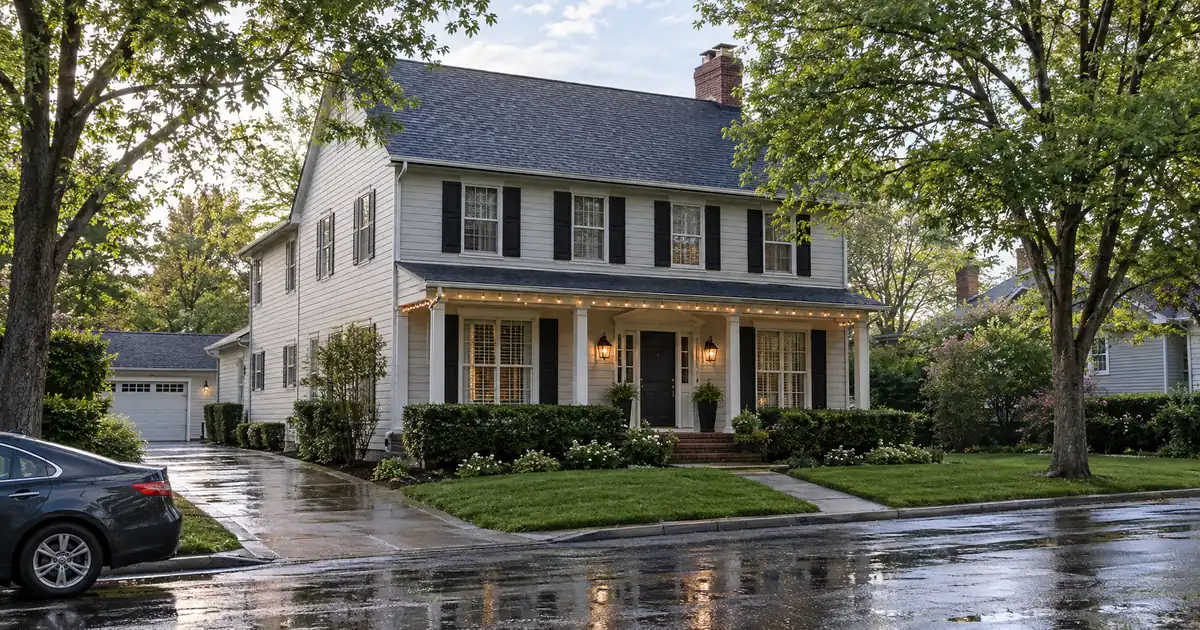
The Quick Read: It depends on whether the child lives in your household or in a separate one. An adult child who lives with you makes the property owner-occupied, which DSCR loans do not allow, while a child in a separate household who pays real rent is a related-party lease that some programs accept with extra documentation and others exclude. The household test comes first, and the program’s related-party rule comes second.
- A child living in your household is an owner-occupancy problem, and no lease fixes it.
- A child in a separate household is a gray zone that varies by program.
- Rent counted for coverage is typically the lower of the signed lease and the appraiser’s market rent, so a discount costs you coverage.
- Rent-free or heavily discounted use is the scenario that creates the most misrepresentation risk.
- On a vacant purchase, appraisal market rent can stand in for a lease, so skipping the family lease is often the cleaner file.
DSCR loans are designed for non-owner-occupied investment properties. Because they are business-purpose investor loans, they are reviewed differently from a standard owner-occupied mortgage. That one fact drives everything below. The loan only works if the property is a rental, and a rental that houses the borrower’s family blurs that line.
DSCR Calculator
Run the numbers in your market
Rate source: Freddie Mac 30-yr average via FRED® — Federal Reserve Bank of St. Louis · effective Oct 15, 2026
Prefilled with starting assumptions — enter your own rent or nightly figures, taxes, insurance, and HOA for a more accurate picture.
Program parameters update from Lendmire’s centralized guideline source. Taxes and insurance are editable estimates.
As of Oct 15, 2026 · General Freddie Mac market benchmark, not a Lendmire loan offer. Rent, nightly rate, occupancy, taxes, and insurance are editable estimates. Short-term rental figures are estimates only and vary significantly by season, property type, management approach, and local short-term-rental rules — confirm local regulations before relying on them. Qualifying income for short-term rentals varies by program — some use appraisal market rent, others use documented STR history or projections — and is confirmed in underwriting. Not a Loan Estimate, approval, or commitment to lend. Program availability and eligibility are subject to lender guidelines, credit approval, property review, and underwriting.
Key Terms Defined
Occupancy: Who actually lives in the property, as certified by the borrower at application.
Related party: A tenant connected to the borrower by family, ownership, or a shared business, which makes the lease harder to treat as arm’s-length.
Market rent: What an unrelated tenant would pay for the same unit, as estimated by the appraiser on a rent schedule.
PITIA: The monthly principal, interest, taxes, insurance, and any association dues on the loan.
DSCR: rent used for lender review divided by PITIA. A ratio above 1.00 means the rent covers the payment.
Household: The people who share a primary residence with the borrower, whether or not they are on the loan.
Why Occupancy Rules Exist on DSCR Loans
The loan is priced and approved as an investment property. The lender is relying on rent from a tenant who has no tie to the borrower, so that rent is a sound stand-in for the borrower’s own income. At application the borrower signs a business-purpose and occupancy statement saying the property will be a rental and the borrower will not live in it.
A child tenant raises a fair underwriting question. If the child misses rent, will the parent quietly cover it? Rent that depends on a family favor is weaker evidence than rent from a stranger under a fixed-term lease. That is why many programs treat family leases with caution even when the child lives elsewhere.
Across the wholesale network, the borrower’s household is the firm line. Related-party tenants outside the household are where programs differ.
Three Adult-Child Scenarios
| Scenario | Typical treatment | Risk |
|---|---|---|
| Child lives in your household | Owner occupancy; not eligible | High |
| Separate household, market rent, payment proof | Varies; some programs allow, some exclude | Moderate |
| Rent-free or discounted use | Lower rent counts, or treated as family occupancy | High |
The middle row is where most real questions land. A grown child with a separate home who pays full rent from their own bank account is a different file from a child who sleeps in the spare room. Programs that allow the middle case usually want a signed lease, a rent schedule from the appraiser, and a clean payment trail. Programs that exclude it will say so in their related-party language, and no lease changes that answer.
How a Lender Tests a Family Lease
Most programs count the lower of the signed lease and the appraiser’s market rent. The appraiser documents market rent on Form 1007 for a single-family home or Form 1025 for a two-to-four-unit property. Two things follow.
First, a below-market family lease lowers your coverage ratio. Say a file would show about 1.25x on market rent. If the child’s lease sits at 80% of market rent, the same file shows about 1.00x. That is the edge of a select-program floor, and it can change eligibility and pricing tier.
Second, an above-market lease earns nothing extra. The lender uses the lower number, so padding the rent on paper does not lift the ratio.
A rent-free arrangement counts as zero for coverage, or the lender treats the property as family-occupied. Neither outcome helps the file. For a sense of how much rent a property needs to reach a given coverage level, see Lendmire’s guide How Much Rent a Property Needs to Hit a 1.0 or 1.25 DSCR.
Clearing 1.00 also does not mean the property produces positive cash flow. DSCR compares rent to PITIA only. Repairs, vacancy, management, utilities, and capital expenses sit outside the calculation, and they matter more when the tenant is a relative who may be slower to complain about a repair or slower to pay.
Documentation Checklist for a Related-Party Lease
Where a program allows a separate-household child, these items keep the file clean:
1. A signed lease with a fixed term and a rent figure at or near the appraiser’s market rent.
2. Proof of payment from the tenant’s own funds, such as bank records showing rent leaving the child’s account.
3. A lease that matches the appraisal rent schedule in unit, term, and rent.
4. A written disclosure of the family relationship given to the lender early, not found later in review.
5. Proof the child has a separate primary residence, if the lender asks.
Payment trails matter more than they sound. Rent paid from money the parent just gifted to the child looks like the parent paying their own rent. Even a clean trail does not guarantee the rent counts as written. The program’s rule and the underwriter’s judgment still decide.
Who Counts as Family?
Lender definitions vary, and the program’s definition controls. Most programs start with the borrower, the spouse, and children. Many extend to parents and siblings. Some also reach in-laws, and some treat any LLC member or relative-owned business as a related party.
If the child owns an interest in the property, appears on the loan, or is a member of the borrowing entity, expect an occupancy or related-party question. LLC vesting is available on many files, subject to lender program eligibility, but putting the property in an entity does not change who lives there. Occupancy is a fact about the people, not the title.
A relative-owned business acting as a master tenant needs to look arm’s-length. It should have its own funds, a real lease, and rent in line with market.
DSCR vs. conventional financing
There are two common ways to finance an investment property, and they qualify you differently — here’s how investors weigh them.
Why investors choose it
- Qualifies on the property’s rental income — no personal tax returns, W-2s, or pay stubs needed to document income.
- No personal debt-to-income ceiling to clear, so existing mortgages and obligations don’t cap your borrowing the same way.
- Can be closed in an LLC, keeping the property inside a business entity.
- Built for scaling — not held to the limit on number of financed properties that conventional financing applies.
- Underwriting centers on the deal: generally qualifies when the rent covers the payment, a 1.00x coverage ratio being a common baseline (confirmed in underwriting).
- Designed specifically for investment property, including long-term and, where the program allows, short-term rentals.
Where it’s strong
- Often the lowest ongoing financing cost for a buyer who fully qualifies on personal income — a fit for a first property or a cost-first purchase.
Trade-offs for investors
- Requires full personal income documentation and must fit within a debt-to-income limit — salary, existing debts, and other mortgages all count.
- Typically held in your personal name rather than a business entity.
- Caps how many financed properties you can carry, which can become a ceiling as a portfolio grows.
- Evaluates you as a borrower as much as the property, which usually means more paperwork.
How investors usually choose: a first or single property often optimizes for the lowest financing cost; portfolio builders often optimize for leverage, vesting in an LLC, and scaling past conventional caps. The right answer depends on your goals, the property, and current guidelines — both paths run through select lenders in Lendmire’s wholesale network, with eligibility and terms confirmed in underwriting.
Why Lenders Are Wary of Family Leases on Collateral
One plausible reason is foreclosure law. Under the federal Protecting Tenants at Foreclosure Act, a successor owner must honor a bona fide tenant’s lease and give 90 days’ notice. The statute text, as reproduced in an FDIC letter, says a lease is bona fide only if the borrower or the borrower’s child, spouse, or parent is not the tenant. An OCC bulletin adds two more tests: the lease must be arm’s-length, and the rent must not be substantially below fair market rent.
An adult child of the borrower is therefore outside the statutory definition of a bona fide tenant. That does not mean the law bars loans to properties with family tenants. It defines which tenants keep their rights after a foreclosure. No source says it drives DSCR guideline design, so treat it as a likely rationale, not a rule. The practical lender concern is simpler: a family lease is less reliable evidence of independent rent.
What If It Doesn’t Fit?
If the program excludes your situation, you have other routes. Which one works depends on the child, the property, and the lender.
| Option | How it works | Trade-off |
|---|---|---|
| Unrelated tenant | Lease to a third party at market rent | Cleanest DSCR file |
| Close vacant | Appraisal market rent stands in for a lease | Tenant found after closing |
| Child buys the home | Child finances it as their own residence, with the parent’s role set by that lender | Not a DSCR loan; different rules |
| Program that allows related parties | Select lenders accept family leases with documentation | Fewer options; terms vary |
A vacant purchase is underrated here. Many programs let the appraiser’s rent estimate carry the file when no lease exists yet. You can then decide who lives there once the loan is in place, but the occupancy certification still binds you. If you intend a family member to live in the property, say so before you apply, because the loan was approved on the premise of an investor-owned rental.
Risks and Consequences
Choosing the wrong program, or describing the tenant inaccurately, can sink a file in review. It can also create misrepresentation exposure after funding, because the occupancy statement is something you sign. A lender that learns the facts were different can re-examine the loan.
Three practical issues sit alongside the lending question. Landlord insurance should match who actually lives there, so tell the insurer the real arrangement. Enforcing a lease against a relative is harder emotionally than against a stranger, and a lease that is never enforced is weak evidence. And below-market rent to family can change how the property is treated for tax purposes. Tax treatment can depend on how the funds are used and how the property is held; investors should keep clear records and speak with a qualified tax professional before relying on any deduction.
Questions to Ask Your Lender Before You Apply
- Do you restrict related-party tenants, and how do you define related party?
- Is a child in a separate household allowed with a lease and payment proof?
- Do you count the lower of the lease and market rent?
- What happens if the lease is below market?
- Does the child’s name on the entity or the loan change the answer?
- Can I close vacant and rely on appraisal rent?
A broker who places files with many lenders can ask these across several programs at once. That matters because a related-party rule that kills a file at one lender is a non-issue at another.
The Program Numbers Behind the Decision
Once the occupancy question is settled, the file runs on the usual levers. These are typical ranges from select lenders in Lendmire’s wholesale network, subject to lender guidelines and not a commitment to lend.
- Leverage: most investment-property purchases land at 75%–80% LTV. Cash-out refinances on standard rentals top out around 75% LTV.
- Coverage: 1.00 is where many select programs start. A separate select-lender path takes coverage below 1.00, with leverage and terms adjusted. A discounted family lease can push a file toward that line.
- Credit: a 620 floor exists in parts of the network, most programs want around 660, and 700 or higher opens the strongest leverage tiers.
- Reserves: commonly around 6 months of PITIA, stepping up to about 9 months on loans above $1,500,000.
- Loan size: up to $3,000,000 on standard programs.
A larger down payment can lift coverage by lowering the payment, but it does not erase a leverage cap, a credit floor, or an occupancy rule. The strongest files clear both tests: enough equity and enough rental coverage. For the full picture of how these pieces fit together, see the complete DSCR loans guide.
Frequently Asked Questions
Can my adult child live in the property if they pay me rent?
Only if they live in a separate household and the program allows related-party tenants. If the child is part of your household, the property is owner-occupied and not eligible. Where a program allows a separate-household child, expect a signed lease, market-level rent, and payment records from the child’s own account.
Does a signed lease fix a family occupancy problem?
No. If a program excludes related-party tenants, no lease changes that. Even where family leases are allowed, a lease is one piece of evidence, and the underwriter still decides whether the rent counts as written.
What if my child pays less than market rent?
The lower figure typically counts, so your coverage ratio drops in proportion. A lease at 80% of market rent turns a 1.25x file into roughly 1.00x. Because select programs start at 1.00, that cut can affect eligibility and pricing tier. Sub-1.00 coverage is available through select lenders in the network, with leverage and terms adjusted.
Is it safer to close vacant and decide on a tenant later?
Often yes. On a vacant purchase, appraisal market rent can stand in for a lease, so the file does not depend on a family lease at all. The occupancy certification still applies, so the property must be run as a rental.
Does putting the property in an LLC change the occupancy rule?
No. Entity title does not change who lives in the property. LLC vesting is available on many files, depending on program guidelines, but a related-party tenant or a child who is a member of the entity can still draw a related-party review.
If You’re Weighing a Family Tenant
If you are buying or refinancing a rental property and want to see how the numbers work, Lendmire can help you compare DSCR loan options based on the property income, credit profile, leverage, and investor goals. As a broker with DSCR investor programs across 41 markets, including Washington, D.C., Lendmire arranges financing through select lenders in its wholesale network, and lenders make the final eligibility decisions. Calling 828-256-2183 or requesting a quote lets you ask the related-party question across several programs before you commit to one.
About Lendmire
Lendmire (NMLS# 2371349) is a mortgage brokerage built around DSCR investor lending, with programs available in 41 markets, including Washington, D.C. DSCR lenders commonly evaluate rental-income coverage instead of personal income paperwork — a practical fit for LLC-owned and multi-property investors. Terms vary by lender, property, leverage, and program. Scotsman Guide named Lendmire a Top Mortgage Workplace in both 2025 and 2026.
Get Started
Ready to find the right loan for you?
In about 30 seconds you can review financing options available for your investment property. No commitment required.
Informational only. Not a Loan Estimate, approval, or commitment to lend. Program availability and eligibility are subject to lender guidelines, credit approval, property review, and underwriting.
References
1. FDIC – PTFA statute text (FIL-09-056)
This article is part of Lendmire’s DSCR loan program — full qualification details, guidelines, and scenarios live on the program page.
Related reading: Can a Rehabber Get a DSCR Loan at the New Value in Year One? · Above-Market Lease vs Appraiser Rent Schedule on a DSCR Loan · How to Choose a DSCR Loan or Bank Commercial Loan on a Rental
Brandon Miller
Founder & CEO, Mortgage Loan Originator, Lendmire LLC
- Mortgage Loan Originator · NMLS# 1129696 · Verify on NMLS Consumer Access
- North Carolina Real Estate Broker · License# 343312 · Verify on NCREC
- North Carolina Insurance Producer · License# 19053198 · Property, Casualty, Life, Health · Verify on NAIC SBS
- Lendmire LLC · Firm NMLS# 2371349 · Verify firm licensure
Compliance and disclosures. Lendmire (NMLS# 2371349) is a licensed mortgage broker and is not a direct lender, depository institution, financial advisor, or tax professional. Content in this article is general market analysis and educational information — not financial, legal, or tax advice for any specific situation. Lendmire does not guarantee loan approval; every transaction is subject to underwriting by the funding lender. Mortgage pricing and loan program guidelines are subject to change at any time without notice and vary by borrower characteristics, property type, and state regulations. Lendmire complies with Equal Housing Opportunity. Licensure verification: NMLS Consumer Access.