
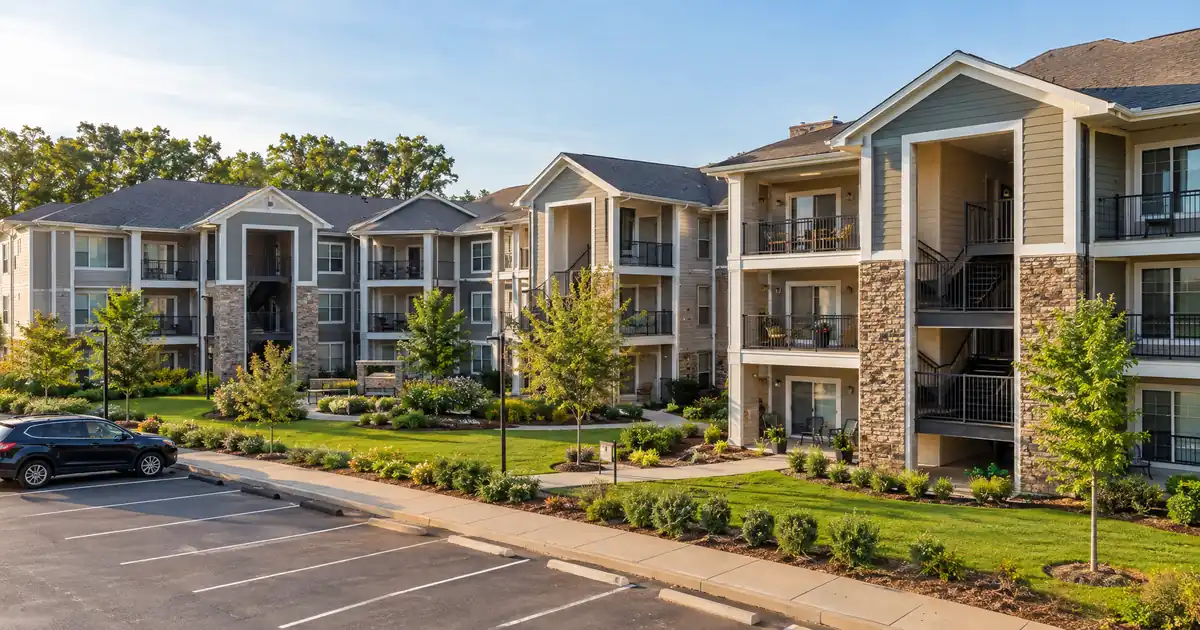
The Quick Read: It depends on the building’s unit count and on what the investor can document, because the two options underwrite different things. A DSCR loan is reviewed primarily on the property’s rental income covering its payment, subject to lender guidelines, while a bank looks hard at the borrower’s traditional personal-income documentation and financial strength. The right pick usually comes down to a few facts:
- A DSCR loan tends to fit investors whose traditional personal-income documentation understates their real capacity, who hold property in an LLC, or who are scaling past what personal debt-to-income allows.
- A bank can fit better when the borrower has strong documentable income, a real local relationship, and a comfort with shorter terms.
- At 5+ units, the method itself can change. Many lenders switch from rent-over-payment to net operating income, so ask each lender for its written formula.
- Purchase leverage on DSCR files typically runs 75%-80% LTV, and cash-out tops out around 75% LTV, subject to lender guidelines.
Here is the honest sorting. A DSCR loan is built for the investor whose story lives in the property. Neither is “better” in the abstract. Plenty of experienced investors use both, depending on the building and the moment.
DSCR Calculator
Run the numbers in your market
Rate source: Freddie Mac 30-yr average via FRED® — Federal Reserve Bank of St. Louis · effective Oct 15, 2026
Prefilled with starting assumptions — enter your own rent or nightly figures, taxes, insurance, and HOA for a more accurate picture.
Program parameters update from Lendmire’s centralized guideline source. Taxes and insurance are editable estimates.
As of Oct 15, 2026 · General Freddie Mac market benchmark, not a Lendmire loan offer. Rent, nightly rate, occupancy, taxes, and insurance are editable estimates. Short-term rental figures are estimates only and vary significantly by season, property type, management approach, and local short-term-rental rules — confirm local regulations before relying on them. Qualifying income for short-term rentals varies by program — some use appraisal market rent, others use documented STR history or projections — and is confirmed in underwriting. Not a Loan Estimate, approval, or commitment to lend. Program availability and eligibility are subject to lender guidelines, credit approval, property review, and underwriting.
Side-by-Side
The DSCR column reflects how programs in Lendmire’s wholesale network typically work. The bank column shows published industry norms for commercial and portfolio lending on small apartment buildings. Terms vary by lender, and no row here speaks to pricing, which lives in the calculator only.
| Factor | DSCR Loan | Typical Bank Loan |
|---|---|---|
| Review basis | Property rent vs. its payment | Building NOI plus borrower strength |
| Personal income docs | Generally not the focus | Traditional personal-income documentation, financial statement |
| Property types | Non-owner-occupied rentals | Investment and owner-user buildings |
| Entity vesting | LLC common, per program terms | LLC possible, guarantees common |
| Personal guarantee | Often expected despite LLC title | Often expected, frequently recourse |
| Term structure | 30-year fixed spine, other options | Commonly balloon with longer amortization |
| Reserves | Commonly about 6 months PITIA | Liquidity tests vary by bank |
| Scaling limits | Not tied to personal DTI | Tied to borrower financials |
Read the table as a map of tendencies, not a rulebook. Individual banks and individual DSCR programs break these patterns all the time.
What “Bank” Actually Means Here
For a 2-4 unit building, a bank often means a conventional owner-occupant-style mortgage. For a 5+ unit building, it means a commercial or portfolio loan. Those are different products, and mixing them up is how investors end up comparing the wrong things.
The line sits at four units. Rates are not quoted here. DSCR loans are not agency loans, and the agency rules don’t govern them.
DSCR loans are designed for non-owner-occupied investment properties. Because they are business-purpose investor loans, they are reviewed differently from a standard owner-occupied mortgage. The federal truth-in-lending rulebook text from the federal consumer-finance regulator treats credit for non-owner-occupied rentals as business purpose regardless of unit count, though a borrower who expects to occupy the property more than 14 days in the coming year falls outside that rule.
The Two Versions of “Coverage”
This is the trap that catches the most small-building buyers. On 1-4 units, DSCR programs generally divide monthly rent by PITIA: principal, interest, taxes, insurance, and association dues. At 5+ units, many programs and most banks use net operating income over debt service instead. Expenses come out of income before the ratio is computed.
Picture an investor who sizes a six-unit purchase using rent over PITIA, then meets a lender using NOI. Same building, lower coverage, smaller loan. The pro forma has to be rebuilt for each lender’s definition, and that costs nothing compared with discovering the gap late.
Some 5-10 unit programs keep rent-over-PITIA, so programs differ. Ask which formula applies before falling for a number.
One more clarification worth making. Clearing 1.00 on a DSCR test is not the same as positive cash flow. The calculation compares rent to PITIA only. Repairs, vacancy, management, utilities, and capital expenses sit outside it. Investors who treat coverage as profit get surprised.
When a DSCR Loan Is the Better Fit
A DSCR loan tends to win when the borrower’s paperwork undersells the deal, or when the plan involves many properties.
- Heavy write-offs. Self-employed investors and those with significant depreciation often show modest taxable income. A bank reads the return. A DSCR file reads the rent.
- Scaling. Qualification doesn’t hinge on a personal debt-to-income ratio, so a growing portfolio doesn’t run into the same wall.
- LLC ownership. Holding title in an entity is common on DSCR files, subject to lender program eligibility. Expect the guarantor question to come up anyway (more on that below).
- Avoiding a balloon. The spine of the network’s DSCR programs is the 30-year fixed. Extended terms such as 40-year and interest-only periods are available through select lenders, and ARM structures exist for investors who want them. A fully amortizing structure removes the maturity event.
- Leverage. Purchases typically run 75%-80% LTV, with select high-leverage programs reaching 85% LTV on roughly a 700+ score.
- Smaller or mid-size loans. Standard programs run to $3,000,000, and above $2,500,000 the network generally holds to 30-year fixed structures.
Credit matters on the DSCR side too. A 620 floor exists in parts of the network, most programs want around 660, and 700+ unlocks the strongest leverage tiers. A bigger down payment can lift the ratio, but it never erases leverage caps, credit floors, reserve rules, or property eligibility. Strong files clear both tests: enough equity and enough rental coverage.
Reserves vary by lender, leverage, loan size, and transaction type. Around 6 months of PITIA is common, conservative rate-and-term files at modest leverage under $1,500,000 can see reserves waived, and larger loans typically step up to about 9 months.
For investors working across property types, Lendmire’s piece Can Houses, Condos and a Small Apartment Building Share One DSCR Loan? covers the pooled structure. The complete DSCR loans guide walks through the program mechanics in full.
When a Bank Is the Better Fit
A bank wins more often than DSCR marketing admits. Four situations stand out.
Strong, documentable financials. An investor with clean traditional income documentation, solid personal liquidity, and a track record is the profile commercial lenders like. Practitioners on investor forums describe local banks as favoring exactly that package. If the paperwork is the strength, use it.
A real banking relationship. A community bank that knows the borrower, holds their deposits, and understands the submarket can structure around the building’s quirks. That flexibility is hard for a document-light program to match.
Owner-occupied small multifamily. DSCR is a non-owner-occupied product. An investor who plans to live in one unit of a 2-4 unit building is in a different lane, and owner-occupant financing is often the sensible route there. Once the occupancy period ends and the building becomes a pure rental, a move to DSCR on a later refinance becomes realistic.
Larger stabilized buildings with agency-style debt. At the 5-50 unit scale, agency multifamily financing exists with its own size minimums and liquidity tests. It is a different animal from DSCR, and a borrower with the net worth to meet those tests may prefer it.
The flip point is easy to state. If your documented income is strong and you plan to hold one or two buildings, a bank may cost less in friction. If your income is hard to document or your plans involve a string of acquisitions, DSCR usually pencils better.
The Costs Nobody Puts in the Table
Skip the rate comparison for a moment and look at structure, because structure shapes total cost over a hold.
The point is the refinance event. A balloon means that at maturity, the building has to qualify again, under whatever conditions exist then.
A DSCR loan with a long fully amortizing term avoids that event, but it brings its own tradeoffs: the guarantee question, the reserve requirement, and a ratio that must clear at the start. Exact terms depend on the lender’s guidelines, property type, leverage, and a full review of the borrower’s file.
Refinancing into a new DSCR loan is a new loan, not a conversion, and the new rent against the new payment decides the outcome.
Where Investors Get Tripped Up
Assuming no income docs means no liability. Qualifying on the property’s rent is not the same as being free of personal exposure. Investor-forum commentary and common program practice point the same way: lenders often expect a personal guarantee even when title sits in an LLC. Check the guarantor language on either loan type.
Treating DSCR as hard money. It is a long-term financing product, not a short bridge. Vacant or value-add buildings usually need stabilization first, because DSCR lenders generally want a leased or leasable property.
Ignoring experience requirements. Tiers for larger small-apartment buildings often ask about prior ownership. A first-time buyer may be steered toward a smaller building or a bank.
Pretending every investment property is exempt from consumer rules. Compliance Alliance notes that owner-occupied rentals follow different unit-count tests than non-owner-occupied ones. Occupancy decides the lane.
Counting on sub-1.00 coverage as a plan. Programs below 1.00 are available through select lenders in the network, with leverage and terms adjusted. Treat that as a structural option for a building with a clear appreciation or lease-up story, and not as a way around weak numbers.
Appraisal also shifts with size. On 1-4 units the forms are the 1007 rent schedule and the 1025 small residential income report. From 5 units, an income-approach commercial appraisal is typical.
DSCR vs. conventional financing
There are two common ways to finance an investment property, and they qualify you differently — here’s how investors weigh them.
Why investors choose it
- Qualifies on the property’s rental income — no personal tax returns, W-2s, or pay stubs needed to document income.
- No personal debt-to-income ceiling to clear, so existing mortgages and obligations don’t cap your borrowing the same way.
- Can be closed in an LLC, keeping the property inside a business entity.
- Built for scaling — not held to the limit on number of financed properties that conventional financing applies.
- Underwriting centers on the deal: generally qualifies when the rent covers the payment, a 1.00x coverage ratio being a common baseline (confirmed in underwriting).
- Designed specifically for investment property, including long-term and, where the program allows, short-term rentals.
Where it’s strong
- Often the lowest ongoing financing cost for a buyer who fully qualifies on personal income — a fit for a first property or a cost-first purchase.
Trade-offs for investors
- Requires full personal income documentation and must fit within a debt-to-income limit — salary, existing debts, and other mortgages all count.
- Typically held in your personal name rather than a business entity.
- Caps how many financed properties you can carry, which can become a ceiling as a portfolio grows.
- Evaluates you as a borrower as much as the property, which usually means more paperwork.
How investors usually choose: a first or single property often optimizes for the lowest financing cost; portfolio builders often optimize for leverage, vesting in an LLC, and scaling past conventional caps. The right answer depends on your goals, the property, and current guidelines — both paths run through select lenders in Lendmire’s wholesale network, with eligibility and terms confirmed in underwriting.
A Decision Checklist
Answer these honestly and the product usually sorts itself.
1. Does your tax return show the income a bank would need to see? If yes, a bank stays in play.
2. Is the building 1-4 units or 5+? At 5+, confirm the lender’s coverage formula in writing.
3. Will you hold title in an LLC? Confirm program eligibility and guarantor terms.
4. Does a balloon fit your plan, or would a refinance event at maturity create risk?
5. Do you plan to add buildings soon? Personal debt-to-income limits bite harder as the count grows.
6. Will you occupy a unit? If so, you are likely outside DSCR for now.
7. Is the building leased and stable? Vacant or value-add buildings often need bridge financing first.
Key Terms Defined
DSCR (debt service coverage ratio): A measure of whether a property’s income covers its debt payment.
PITIA: Principal, interest, taxes, insurance, and association dues, the full monthly obligation on the loan.
NOI (net operating income): Rental income minus operating expenses, before debt service and income taxes.
Balloon loan: A loan with a shorter term than its amortization, leaving a large balance due at maturity.
Recourse: A structure where the borrower is personally liable if the property doesn’t cover the debt.
Non-QM: A loan outside the standard qualified-mortgage box, underwritten on alternative documentation such as property income.
The Balanced Verdict
For a 2-4 unit building held by an investor who is scaling, self-employed, or heavily written-off on paper, a DSCR loan usually fits better than a bank. For an investor with strong conventional personal-income paperwork, a friendly local lender, or an owner-occupied plan, the bank can be the smarter call. At 5+ units, the question changes from “which product” to “which formula,” and that answer comes before anything else.
If you are buying or refinancing a rental property and want to see how the numbers work, Lendmire can help you compare DSCR loan options based on the property income, credit profile, leverage, and investor goals. Quotes are available at 828-256-2183 or through the quote request page.
Frequently Asked Questions
Can a DSCR loan finance a building with more than four units?
Sometimes, depending on the program. Many lenders switch to a net-operating-income test at 5+ units, and some 5-10 unit programs keep rent-over-payment. Experience requirements often apply, and eligibility is subject to lender guidelines.
Do I need to hold the building in an LLC?
No, though it is common. Entity vesting is accepted on many programs, subject to program terms, and lenders often still ask the members to guarantee personally. Title and liability are separate questions.
Does a DSCR loan mean positive cash flow?
No. The ratio compares rent to PITIA only. Repairs, vacancy, management, utilities, and capital expenses sit outside it, so a building can clear the ratio and still run thin once operating costs are counted.
What if my building rents below 1.00 coverage?
Whether that makes sense depends on the lease-up or appreciation story. If the numbers fail in every submarket you consider, rethink the property before the loan.
Can I pull cash out of a small apartment building later?
Cash-out refinances top out around 75% LTV across most of the network, with about 6 months of seasoning as the common expectation. Every figure here varies by lender and program — guidelines, property type, leverage, and credit profile all apply.
About Lendmire
As a non-QM mortgage broker (NMLS# 2371349), Lendmire facilitates DSCR investor loans across 41 markets, including Washington, D.C. DSCR eligibility is generally reviewed around property-level rental income instead of personal income documentation, subject to lender guidelines, serving LLC-structured portfolios and self-employed borrowers who don’t fit conventional boxes. A two-time Scotsman Guide Top Mortgage Workplace (2025, 2026).
Get Started
Ready to find the right loan for you?
In about 30 seconds you can review financing options available for your investment property. No commitment required.
Informational only. Not a Loan Estimate, approval, or commitment to lend. Program availability and eligibility are subject to lender guidelines, credit approval, property review, and underwriting.
References
2. Compliance Alliance: Regulation Z and Investment Properties
This article is part of Lendmire’s DSCR loan program — full qualification details, guidelines, and scenarios live on the program page.
Related reading: How to Shop and Document Rental Insurance Before a DSCR Loan · Can a Rehabber Get a DSCR Loan at the New Value in Year One? · How to Choose a DSCR Loan or Bank Commercial Loan on a Rental
Brandon Miller
Founder & CEO, Mortgage Loan Originator, Lendmire LLC
- Mortgage Loan Originator · NMLS# 1129696 · Verify on NMLS Consumer Access
- North Carolina Real Estate Broker · License# 343312 · Verify on NCREC
- North Carolina Insurance Producer · License# 19053198 · Property, Casualty, Life, Health · Verify on NAIC SBS
- Lendmire LLC · Firm NMLS# 2371349 · Verify firm licensure
Legal disclosures. Lendmire (NMLS# 2371349) is a state-licensed mortgage brokerage that arranges financing through wholesale lender relationships. Lendmire is not a direct lender, depository institution, or registered financial advisor. The discussion above is general informational content about real estate financing — it is not financial, legal, or tax advice, and readers should consult licensed professionals for guidance on their individual circumstances. Loan inquiries are subject to lender underwriting; this article does not represent a commitment to lend. Loan terms, rates, and qualification standards vary by borrower, property, and state, and are subject to change at any time. Equal Housing Opportunity. NMLS Consumer Access: nmlsconsumeraccess.org.