
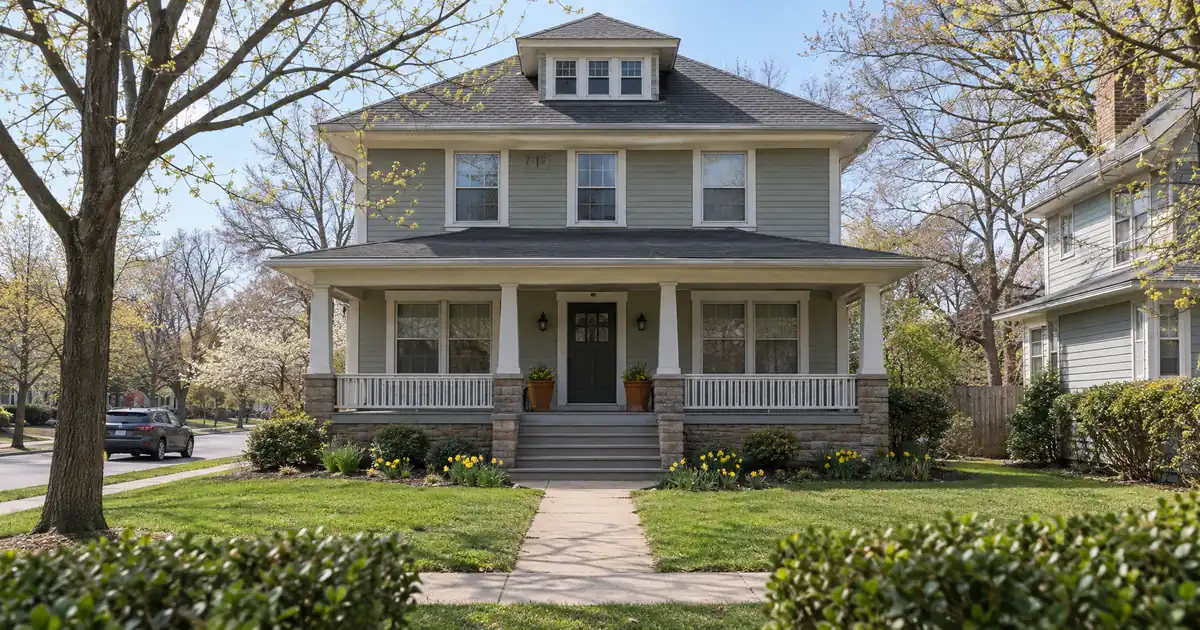
The Quick Read: When a DSCR lender declines a group home, the fix usually starts with matching the loan to how the property is actually used, because the denial typically comes from the licensed business use rather than the coverage ratio, and the right route differs for a landlord leasing to an operator, an owner-operator, or a buyer of a vacant home. A rental loan prices rent on a building. A care operation earns fees from services. That mismatch is what most lenders react to.
- The first question is who holds the license and who owns the real estate.
- A passive landlord, an owner-operator, and a vacant-home buyer each need a different product.
- Government-backed owner-occupant programs fit operators, not passive owners.
- A DSCR loan can still fit when the home is leased as a plain rental, subject to lender review.
Why Do DSCR Lenders Say No to Group Homes?
Most DSCR guidelines were written for homes leased to a household at a fixed rent. A licensed group home is a residential building running as a regulated business, so the guidelines often have no box for it.
DSCR Calculator
Run the numbers in your market
Rate source: Freddie Mac 30-yr average via FRED® — Federal Reserve Bank of St. Louis · effective Oct 15, 2026
Prefilled with starting assumptions — enter your own rent or nightly figures, taxes, insurance, and HOA for a more accurate picture.
Program parameters update from Lendmire’s centralized guideline source. Taxes and insurance are editable estimates.
As of Oct 15, 2026 · General Freddie Mac market benchmark, not a Lendmire loan offer. Rent, nightly rate, occupancy, taxes, and insurance are editable estimates. Short-term rental figures are estimates only and vary significantly by season, property type, management approach, and local short-term-rental rules — confirm local regulations before relying on them. Qualifying income for short-term rentals varies by program — some use appraisal market rent, others use documented STR history or projections — and is confirmed in underwriting. Not a Loan Estimate, approval, or commitment to lend. Program availability and eligibility are subject to lender guidelines, credit approval, property review, and underwriting.
The lender asks three things. Is the use licensed? Who is the operator? Who owns the real estate? The label on the home matters much less than those answers.
The label also shifts by place. BiggerPockets’ group home investing episode notes that the same business goes by several names and that the terminology varies by state and by licensing agency. A lender reading “group home” on an application may picture something quite different from what you own.
Here is how files tend to sort when they reach a lender.
| Property situation | How lenders tend to treat it |
|---|---|
| Home leased to a household at a set rent | Standard rental review |
| Unlicensed shared housing, vacant pre-license purchase | Lender-dependent, reviewed case by case |
| Licensed care facility run as a business | Generally outside standard DSCR guidelines |
The middle row is where most declined files live. A “no” there is often about one lender’s overlay, not a rule every lender shares.
Key Terms Defined
Group home: a shared residence for unrelated people, with no single legal meaning, so state and local definitions control.
Master lease: one lease between the property owner and an operator, who then houses the residents.
Owner-operator: the person who owns the building and also holds the license and runs the business.
DSCR (debt service coverage ratio): monthly rent divided by the full monthly housing obligation, meaning principal, interest, taxes, insurance, and any HOA dues.
PITIA: principal, interest, taxes, insurance, and association dues, the denominator in the DSCR calculation.
License transfer: moving a care license to a new owner, which generally does not happen automatically.
How Underwriting Treats a Group Home, Step by Step
Underwriting follows a sequence. Knowing it tells you where a file stalls.
1. Classify the use. The lender reads the application, the lease, and any license, then decides whether the file is a rental or a care business. This is where most declines happen.
2. Identify the income source. DSCR counts rent paid on the property. Per-resident care fees paid to an operator are business revenue, not lease rent. A master lease with a third-party operator is the closest fit to rent, but only if the lender accepts that lease as rental income.
3. Test coverage. The lender divides rent used for lender review by PITIA. For a vacant home, the rent figure usually comes from the appraiser’s market rent estimate, not from the planned care revenue.
4. Check the borrower and the collateral. Credit score, leverage, reserves, and property eligibility get reviewed, subject to lender guidelines.
5. Review documents. License status, operator experience, lease terms, insurance, and use approvals all come up on files like these.
One point trips up many investors. Clearing the coverage ratio is not the same as positive cash flow. DSCR compares rent to PITIA only. Repairs, vacancy, management, utilities, and capex sit outside the calculation. On a group home with staffing and turnover, that gap is wider than usual.
Does the Structure Change the Answer?
Yes. Three structures drive which financing fits, and a lender’s first question is usually which one you hold.
Investor-landlord leasing to a licensed operator. You own the building. A separate operator holds the license and pays rent under a master lease. This is the closest fit to a rental loan. The file lives or dies on whether a lender accepts that lease as rental income and on the operator’s track record.
Owner-operator. You hold the license and run the business. The income is business revenue, so most rental-loan guidelines do not fit. This borrower looks at owner-occupant business financing instead.
Acquisition of an existing licensed facility. You are buying a going concern as well as a building. The license, the occupancy, and the operator history are part of the value, which pushes the file out of rental-loan territory.
Operator quality is also a risk factor, not just a paperwork item. A tenant that is a business does not automatically have the money to pay on time. A master lease is only as strong as the operator behind it.
| Your situation | Likely fit |
|---|---|
| Landlord, master lease, stabilized operator | DSCR review, or portfolio lending |
| Owner-operator buying the building | SBA-type or commercial financing |
| Vacant home before licensing | Investment-property loan, then refinance |
| Licensed facility purchase | Commercial or SBA financing |
Fallback Paths When the DSCR Answer Is No
Start with the owner-operator routes, since they are the most common alternative.
SBA 504. This is a program for owner-occupied business real estate. A commercial real estate practitioner guide says a 504 loan cannot be used for speculation or for investment in rental real estate. It adds that the applicant must occupy 51% of the rentable space in an existing building and may lease up to 49% to others. A standard structure splits the project roughly 50% bank first lien, 40% from the program’s debenture, and 10% from the borrower, with more borrower money for special-purpose assets. Every owner of 20% or more files a personal financial statement. A passive landlord leasing to an operator does not fit. A DSCR loan from a non-QM lender qualifies primarily on property-level rental income covering the payment, subject to lender guidelines, which is a different structure from the 504’s owner-occupancy requirement. Confirm current program rules before you plan around any of this.
SBA 7(a). This is the broader SBA loan, which can fund a licensed operating business along with its real estate. It fits owner-operators acquiring or converting a facility. It is not built for passive ownership.
Bridge, then refinance. A short-term loan can fund the purchase and build-out. Once the home is licensed and occupied, the owner refinances into longer-term debt. The catch is carrying cost. The home earns nothing until residents arrive, so bridge files typically include an interest reserve sized to the licensing timeline.
Portfolio and community-bank lending. Some banks and credit unions hold investment-property loans on their own books. Terms vary by branch and by loan officer, so expect to shop several.
Private capital. Private lenders and seller financing can fill gaps. They cost more and are shorter, so treat them as a bridge, not a destination.
The Licensing Problem Nobody Plans For
Licensing is the timing trap on acquisitions. A BiggerPockets Rookie episode reports that a license generally does not transfer, so the facility closes and reopens once the new license is secured. The same source says that if the home is vacant at purchase, it can be financed as an investment property. Otherwise the buyer looks at SBA or private financing.
That sequence matters. A vacant, unlicensed purchase may go through standard investment-property review on the real estate before any conversion. Whether a specific DSCR lender will accept the planned use is a lender-level question, and it should be put to the lender plainly before an appraisal is paid for.
Brokers who see many lenders’ guidelines see the split clearly. Some programs decline anything tied to a care use. Others review a vacant purchase on the real estate alone. A few will look at a master lease to an established operator. The same property can get three different answers.
Where the General Rule Breaks
These are the edge cases where the usual answer shifts.
Unlicensed shared housing. A rented house with room-by-room leases may look like an ordinary rental. Whether a lender treats it as a rental or a care use depends on the arrangement. Expect a case-by-case, property-specific review.
Vacant purchase before licensing. As covered above, this may be reviewed as an investment-property purchase. The plan to convert has to be disclosed accurately.
Owner-occupancy versus operator. The SBA 504 occupancy test applies to the borrower’s business. A passive landlord does not meet it.
Different care models. A BiggerPockets guest, in a separate episode on assisted living rentals, separates residential care from supported living, where staff come to the home. Licensing and underwriting differ between them, so a lender’s answer on one does not carry to the other.
Stabilized refinance. After licensing and a seasoning period, some owners pursue a cash-out refinance on the real estate. Eligibility is lender-specific. Across most of the network, cash-out on an investment property tops out around 75% LTV, with about 6 months of seasoning as the common expectation. The exact numbers vary by lender and program and follow a full review of property, leverage, and credit.
Ineligible structures. DSCR programs in the network do not offer manufactured homes (single- and double-wide), log homes, or barndominiums. A group home in one of those structures is not offered, regardless of how it is used.
DSCR vs. conventional financing
There are two common ways to finance an investment property, and they qualify you differently — here’s how investors weigh them.
Why investors choose it
- Qualifies on the property’s rental income — no personal tax returns, W-2s, or pay stubs needed to document income.
- No personal debt-to-income ceiling to clear, so existing mortgages and obligations don’t cap your borrowing the same way.
- Can be closed in an LLC, keeping the property inside a business entity.
- Built for scaling — not held to the limit on number of financed properties that conventional financing applies.
- Underwriting centers on the deal: generally qualifies when the rent covers the payment, a 1.00x coverage ratio being a common baseline (confirmed in underwriting).
- Designed specifically for investment property, including long-term and, where the program allows, short-term rentals.
Where it’s strong
- Often the lowest ongoing financing cost for a buyer who fully qualifies on personal income — a fit for a first property or a cost-first purchase.
Trade-offs for investors
- Requires full personal income documentation and must fit within a debt-to-income limit — salary, existing debts, and other mortgages all count.
- Typically held in your personal name rather than a business entity.
- Caps how many financed properties you can carry, which can become a ceiling as a portfolio grows.
- Evaluates you as a borrower as much as the property, which usually means more paperwork.
How investors usually choose: a first or single property often optimizes for the lowest financing cost; portfolio builders often optimize for leverage, vesting in an LLC, and scaling past conventional caps. The right answer depends on your goals, the property, and current guidelines — both paths run through select lenders in Lendmire’s wholesale network, with eligibility and terms confirmed in underwriting.
Zoning Is a Separate Gate
A lender can approve a loan on a home the city will not let you operate. Zoning is a separate gate, and it is local.
The federal joint statement from the Department of Justice says land use and zoning are traditionally reserved to state and local governments, except where they conflict with the Fair Housing Act or other federal laws. That helps when a local rule singles out shared living. It does not help with underwriting. A lender can still decline on collateral or use grounds.
The same family of federal guidance notes that the term group home has no specific legal meaning. Pull the local zoning and use letter before you pull the loan application.
Why Disclosure Beats Workarounds
Some advice online tells borrowers to describe the home in neutral terms. Skip it.
A loan written for a rental that is actually run as a care business creates a mismatch between the application and the use. That can lead to a called loan or legal exposure, and it also breaks the lender relationship the next file depends on. State the use accurately. Then shop lenders whose guidelines accept it.
DSCR loans are designed for non-owner-occupied investment properties. Because they are business-purpose investor loans, they are reviewed differently from a standard owner-occupied mortgage.
When DSCR Is Still the Right Answer
If the home qualifies as a rental in a lender’s eyes, the network’s standard numbers apply. These are typical ranges from select wholesale-network guidelines, subject to lender review and not a commitment to lend.
- Purchase leverage: most files land at 75%–80% LTV on an investment property purchase. Select high-leverage programs reach 85% LTV with roughly a 700+ score.
- Credit: a 620 floor exists in parts of the network, most programs want around 660, and 700+ opens the strongest leverage tiers.
- Coverage: 1.00 is where many select programs start. A separate select-lender path takes coverage below 1.00, with leverage and terms adjusted. Stronger ratios open better pricing and leverage.
- Reserves: commonly around 6 months of PITIA, stepping up to about 9 months above $1,500,000. Conservative files at modest leverage can see reserves waived.
- Loan size: up to $3,000,000 on standard programs, with smaller balances routed through select lenders.
A larger down payment lowers the monthly obligation and can lift the DSCR. It does not erase leverage caps, credit floors, reserve rules, or property eligibility. The strongest files clear both tests: enough equity and enough rental coverage.
For the full set of mechanics, see Lendmire’s complete DSCR loans guide.
What the Decision Looks Like in Practice
Picture three investors who all heard no from a DSCR lender.
The first owns a house leased to an established operator under a master lease. Her best move is a lender that accepts the lease, so she shops several and brings the operator’s history, the license, and the lease together up front.
The second runs the care business himself. His denial was correct for his structure. He should look at owner-occupant business financing and treat DSCR as the wrong tool.
The third is buying a vacant house to convert. He can put the purchase through investment-property review, hold the plan to convert openly with the lender, and refinance once the home is licensed and occupied. Operator income can far exceed ordinary rent in some cases, but that is operator-specific. Underwrite the building on its rent, not on a best-case care revenue story.
Before reapplying, gather these:
1. The written reason for the denial, not a verbal summary.
2. License status or the licensing plan and timeline.
3. The lease with the operator, if there is one.
4. Operator experience and occupancy history.
5. The local zoning and use confirmation.
6. Insurance confirmation for the actual use.
7. Reserves documentation for the leverage you want.
Tax treatment varies by how the property is held and used; consult a qualified professional before relying on any deduction.
Frequently Asked Questions
Why was my group home declined by a DSCR lender?
Usually the use, not the numbers. Most guidelines assume rent from a household lease, and a licensed care operation runs as a business. A lender may also decline on one overlay that another lender does not share. Get the written reason first, then decide whether it is fixable or categorical.
Can SBA financing cover a group home I lease to an operator?
Generally not. The 504 program requires the borrower’s business to occupy the property and excludes rental investment. It fits owner-operators. Check current program rules before planning around it.
Does care revenue count as rent on a DSCR loan?
Typically no. DSCR looks at rent paid on the property, often supported by the appraiser’s market rent estimate. A master lease with a licensed operator may be reviewed as rent, subject to lender guidelines.
Do I need the license in place before I apply?
Not always. A vacant purchase can be reviewed as an investment property before licensing. A purchase of an operating facility needs the license and regulator standing documented, and licenses generally do not transfer automatically.
Is a different lender enough, or do I need a different product?
It depends on the denial. If it came from one lender’s overlay, a different lender in the network may review the same file differently. If the property is a licensed commercial-style facility, a different product is the realistic path.
Next Step
If you are buying or refinancing a rental property and want to see how the numbers work, Lendmire can help you compare DSCR loan options based on the property income, credit profile, leverage, and investor goals. Lendmire is a broker that arranges these loans through select lenders in its wholesale network, across 41 markets including Washington, D.C. Call 828-256-2183 or request a quote.
About Lendmire
A non-QM mortgage broker (NMLS# 2371349), Lendmire arranges DSCR financing for real estate investors in 41 markets — 40 states plus Washington, D.C. Because deals are underwritten primarily on property cash flow rather than personal income documentation, the structure suits self-employed buyers and entity-owned portfolios. Lendmire places loans through wholesale investor lenders; it is not a direct lender. Scotsman Guide named Lendmire a Top Mortgage Workplace in both 2025 and 2026.
Get Started
Ready to find the right loan for you?
In about 30 seconds you can review financing options available for your investment property. No commitment required.
Informational only. Not a Loan Estimate, approval, or commitment to lend. Program availability and eligibility are subject to lender guidelines, credit approval, property review, and underwriting.
References
1. BiggerPockets – Group Home Investing
2. Statementsready – SBA 504 Loan Requirements
3. BiggerPockets – Rookie episode on assisted living rentals
4. BiggerPockets – Assisted Living Rentals episode
5. DOJ – Joint Statement on State and Local Land Use Laws
6. HUD Exchange – HUD/DOJ Joint Statement and Q&A
This article is part of Lendmire’s DSCR loan program — full qualification details, guidelines, and scenarios live on the program page.
Related reading: How to Document a Lease to a Relative so a DSCR Lender Counts It · Can a New Rental Community Get a DSCR Loan Before Every Home Is Leased? · How to Shop and Document Rental Insurance Before a DSCR Loan
Brandon Miller
Founder & CEO, Mortgage Loan Originator, Lendmire LLC
- Mortgage Loan Originator · NMLS# 1129696 · Verify on NMLS Consumer Access
- North Carolina Real Estate Broker · License# 343312 · Verify on NCREC
- North Carolina Insurance Producer · License# 19053198 · Property, Casualty, Life, Health · Verify on NAIC SBS
- Lendmire LLC · Firm NMLS# 2371349 · Verify firm licensure
Required disclosures. Lendmire (NMLS# 2371349) operates as a licensed mortgage broker, not a direct lender or depository. The discussion in this article is general in nature and should not be relied upon as financial, legal, or tax advice — every investment scenario is unique and should be reviewed by a qualified professional. Any loan inquiry is subject to lender underwriting, and this article is not a commitment to lend or a guarantee of approval. Mortgage rates, loan terms, and program guidelines vary by borrower, property, and state, and may change without notice. Equal Housing Opportunity. Verify licensure at NMLS Consumer Access.