
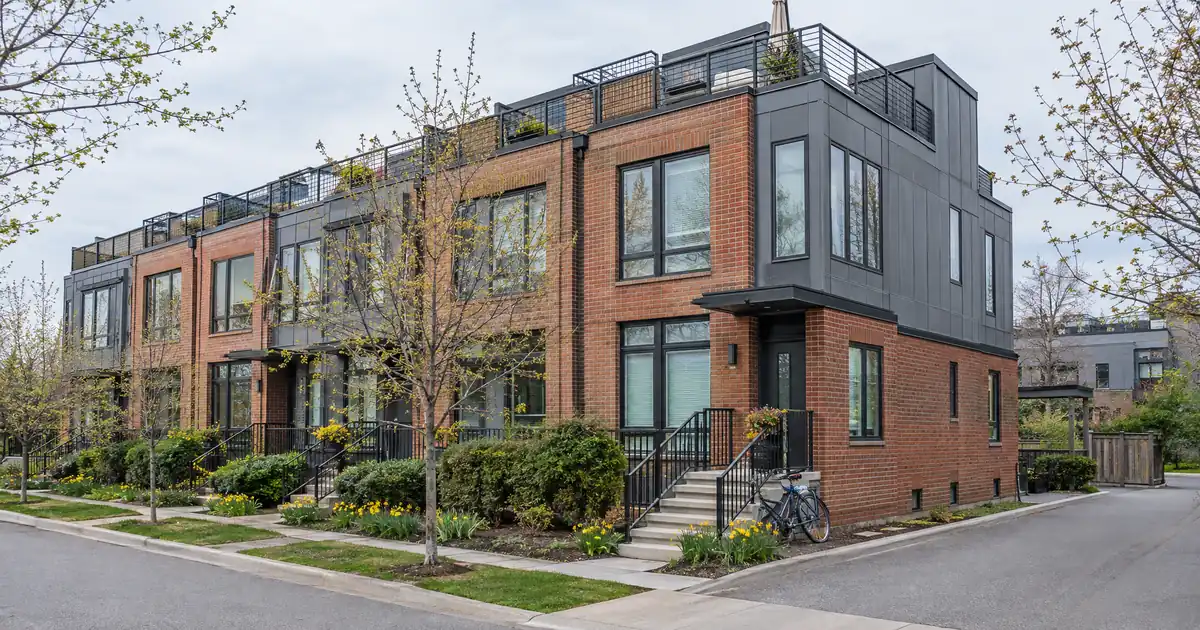
The Quick Read: A single-family rental usually gives you more usable DSCR leverage, because it carries no association dues in the monthly obligation and no building-level review. A high-dues non-warrantable condo can still work when rent is strong enough to absorb the dues and the building passes its own review.
- Dues sit on the payment side of the ratio, so higher dues lower coverage for the same rent.
- Non-warrantable status narrows the lender pool, but it is not an automatic denial.
- Coverage and leverage are two separate tests, and a condo can fail either one.
- Clearing 1.00 is not the same as positive cash flow.
- A rental ban in the association documents ends the condo plan, whatever the loan structure.
Here is the honest answer on who each option is for. The single-family home suits the investor who wants the simplest file and the most room on the coverage test. The high-dues non-warrantable condo suits the investor who has found a unit where the rent is high relative to the dues, the building is healthy, and the price advantage is real. It is a trade. You get a lower entry price or a better location, and you pay with dues, a building review, and a smaller pool of lenders.
DSCR Calculator
Run the numbers in your market
Rate source: Freddie Mac 30-yr average via FRED® — Federal Reserve Bank of St. Louis · effective Oct 15, 2026
Prefilled with starting assumptions — enter your own rent or nightly figures, taxes, insurance, and HOA for a more accurate picture.
Program parameters update from Lendmire’s centralized guideline source. Taxes and insurance are editable estimates.
As of Oct 15, 2026 · General Freddie Mac market benchmark, not a Lendmire loan offer. Rent, nightly rate, occupancy, taxes, and insurance are editable estimates. Short-term rental figures are estimates only and vary significantly by season, property type, management approach, and local short-term-rental rules — confirm local regulations before relying on them. Qualifying income for short-term rentals varies by program — some use appraisal market rent, others use documented STR history or projections — and is confirmed in underwriting. Not a Loan Estimate, approval, or commitment to lend. Program availability and eligibility are subject to lender guidelines, credit approval, property review, and underwriting.
Lendmire is a broker. It arranges these loans through a wholesale network of select DSCR lenders across 41 markets, including Washington, D.C. Lenders review and approve. Everything below is general guidance, subject to lender guidelines, and not a commitment to lend. For the full picture of how these loans work, see the complete DSCR loans guide.
Key Terms Defined
DSCR (debt service coverage ratio): The rent the lender uses, divided by the full monthly obligation on the property. Above 1.00 means the rent covers the obligation.
PITIA: Principal, interest, taxes, insurance, and association dues. This is the full monthly obligation in the DSCR formula.
Non-warrantable condo: A condo in a building that fails certain agency project tests, such as heavy investor concentration or pending litigation. The label describes the building, not just your unit.
Dues versus special assessment: Dues are the regular monthly charge. A special assessment is a one-time charge the association levies, usually for a big repair.
LTV (loan-to-value): The loan amount as a share of the property’s value. It sets how much you borrow, which is a different question from whether the rent covers the payment.
Side-by-Side
The column for each property type reflects how files typically run through the network. Specific terms vary by lender, and every file is underwritten individually.
| Factor | High-Dues Non-Warrantable Condo | Single-Family |
|---|---|---|
| Review basis | Rent vs. PITIA, plus building review | Rent vs. PITIA |
| Dues in the ratio | Yes, dollar for dollar | Only if in an HOA or planned community |
| Documentation | Property docs plus HOA financials, budget, insurance | Property docs and lease or rent schedule |
| Property review | Unit and the building | The property alone |
| Entity vesting | LLC title typically allowed, subject to program terms | LLC title typically allowed, subject to program terms |
| Timeline | Usually longer, because of the HOA package | Usually shorter, with fewer third parties |
| Reserve expectations | Commonly about 6 months of PITIA; more above $1,500,000 | Same ladder; terms vary by lender and loan size |
| Lender pool | Narrower | Broadest |
Two rows deserve a note. First, the reserve ladder is the same for both: most programs want about 6 months of PITIA, stepping up to roughly 9 months above $1,500,000. Second, the single-family column has fewer ways to fail. That does not make it the better investment. It makes it the easier file.
What “Non-Warrantable” Actually Means
Non-warrantable is a label borrowed from agency lending, and it is not a DSCR rule. Agencies publish lists of project features that make a building ineligible for their loans. Fannie Mae’s ineligible projects guidance includes hotel-style operation, single-entity ownership above set thresholds, and mandatory third-party memberships. Freddie Mac’s project eligibility guide has its own list, with a different single-investor limit for larger projects.
That is the one agency paragraph this article needs. A building that trips those tests is non-warrantable by exclusion. It still can be a normal DSCR file through the right lender, because a DSCR lender runs its own project review instead of requiring agency status.
Two practical points follow. The label hits the whole building, so a unit you love can be sidelined by something you cannot control. And the label can change: if the association fixes the failing item, a lender can reclassify the project after a new review.
Not every trigger is equal. Investor concentration and some litigation can be survivable with the right lender. A rental ban in the governing documents is not. Neither is mandatory rental pooling or a hotel-style structure. Some lenders treat these as hard stops, and that is a screening fact worth learning before you make an offer.
How Dues Enter the DSCR Math
Dues go into the denominator, dollar for dollar. They are never netted out of rent. Lenders compare the rent they use against the full PITIA, and mandatory association dues are part of PITIA.
Two units can illustrate the point without any payment figures. Take a condo and a single-family home with the same rent and the same loan amount. Add a high monthly assessment to the condo and the ratio drops, sometimes by enough to cross from comfortable to marginal.
The reverse math is what matters on a live deal. Maximum dues equal the rent used for review divided by your target coverage ratio, minus principal, interest, taxes, and insurance. Run that before you fall in love with a unit. If the dues already exceed that ceiling, no amount of enthusiasm fixes it.
One more rule. Pull the dues from the association’s own documents, not from the listing. Listings are often stale or incomplete.
When the High-Dues Non-Warrantable Condo Is the Better Fit
The condo wins in a narrower set of situations than its sales pitch suggests.
The rent is strong relative to the dues. Investors often use a rule of thumb that dues should be a modest share of gross rent. BiggerPockets suggests looking for HOAs at roughly 15% to 30% of gross rent. That is an educator’s heuristic, not a lender rule. Still, it gives you a fast screen.
The dues buy things you would pay for anyway. Master insurance, exterior maintenance, and reserves can replace costs a house owner carries separately. A condo owner is typically responsible only for the inside of the unit. If the dues cover a roof, structure, and insurance, the comparison to a house is closer than the ratio suggests.
The location is the point. Some rental demand sits in buildings, near transit, or in amenity-rich towers where single-family inventory does not exist. If that is your strategy, the question is not which property type is better. It is which building is healthy.
The building is clean. Strong financials, a funded reserve study, adequate master insurance, and no rental restrictions make the review manageable. Reserve-study commentary suggests a special assessment is likely when reserves are only 0% to 30% funded, so poorly funded reserves are a warning sign, not a footnote.
You have equity to bring. More down payment lowers the monthly obligation and can lift the coverage ratio. It does not erase leverage caps, credit floors, reserve rules, or property eligibility. The strongest files clear both tests: enough equity and enough rental coverage.
The cost is stacked friction. High dues and non-warrantable status often travel together, since rising dues, deferred maintenance, delinquency, and insurance problems can compound. The same building can fail on both counts. Investors also accept thinner resale and refinance buyer pools, a point that matters when you plan your exit.
When the Single-Family Home Is the Better Fit
The single-family home is the better fit when you want leverage and simplicity. The same rent against the same loan produces stronger coverage because the dues term is zero or small. Across most programs in the network, purchase leverage lands at roughly 75% to 80% LTV on an investment property, and select high-leverage programs reach 85% LTV with a score around 700 or higher. A condo can reach those tiers too, but a single-family file reaches them with fewer obstacles.
There is no project review, no HOA questionnaire, and no warrantability question. One owner, one roof, one insurance policy, one appraisal. The lender pool is the widest, so you have more programs to choose from and more room to find the right leverage tier for your credit score.
Single-family also gives you more control. Dues can rise at an association’s discretion, and investors on BiggerPockets forums note that HOA fees do not pay down your loan. A house puts expense decisions in your hands, though you also own every repair.
Honestly, this is a closer call than it looks. A house is easier to finance. A condo is sometimes the only way into the location you want. Neither is the weaker investment on its face.
If a thin ratio is the problem, consider the middle path: a townhome, a planned-unit development, or a small multifamily property. Dues in planned communities are treated much like condo dues in the ratio, so check the amount, not just the label.
DSCR vs. conventional financing
There are two common ways to finance an investment property, and they qualify you differently — here’s how investors weigh them.
Why investors choose it
- Qualifies on the property’s rental income — no personal tax returns, W-2s, or pay stubs needed to document income.
- No personal debt-to-income ceiling to clear, so existing mortgages and obligations don’t cap your borrowing the same way.
- Can be closed in an LLC, keeping the property inside a business entity.
- Built for scaling — not held to the limit on number of financed properties that conventional financing applies.
- Underwriting centers on the deal: generally qualifies when the rent covers the payment, a 1.00x coverage ratio being a common baseline (confirmed in underwriting).
- Designed specifically for investment property, including long-term and, where the program allows, short-term rentals.
Where it’s strong
- Often the lowest ongoing financing cost for a buyer who fully qualifies on personal income — a fit for a first property or a cost-first purchase.
Trade-offs for investors
- Requires full personal income documentation and must fit within a debt-to-income limit — salary, existing debts, and other mortgages all count.
- Typically held in your personal name rather than a business entity.
- Caps how many financed properties you can carry, which can become a ceiling as a portfolio grows.
- Evaluates you as a borrower as much as the property, which usually means more paperwork.
How investors usually choose: a first or single property often optimizes for the lowest financing cost; portfolio builders often optimize for leverage, vesting in an LLC, and scaling past conventional caps. The right answer depends on your goals, the property, and current guidelines — both paths run through select lenders in Lendmire’s wholesale network, with eligibility and terms confirmed in underwriting.
Leverage Versus Coverage: Two Tests, Not One
Leverage is how much you can borrow against the property’s value. Coverage is whether the rent carries the full monthly obligation. A property can pass one and fail the other.
A condo with a lower price may pass leverage easily and still fail coverage because dues eat the ratio. A house may pass coverage and still be capped by LTV or credit. Understanding which test is binding tells you the right fix. If coverage is thin, you need more rent, lower dues, a smaller loan, or a different unit. If leverage is the limit, you need more equity or a stronger credit tier.
For reference, 1.00 is where many select programs start. A separate select-lender path takes coverage below 1.00, with leverage and terms adjusted. Stronger ratios open better pricing and leverage, and pricing lives in the calculator, not here.
Here is the sensitivity logic without payment figures. Hold rent and loan constant and raise dues in steps. Coverage falls with each step, and there is a point where the condo drops below the coverage the house enjoys on the same rent. Where that point sits depends on your rent, your loan size, and your taxes and insurance. Run the reverse math with real documents.
Coverage Is Not Cash Flow
A passing ratio is not positive cash flow. DSCR compares rent to PITIA only. Vacancy, repairs, management, utilities, and capital expenses all sit outside the calculation. A heavy-dues condo can pass and still leave thin cash after one empty month.
Special assessments work the same way. They are generally not in PITIA unless recurring, though some lenders include known pending assessments spread over a period. Either way, an assessment hits your cash and reserves even when the ratio ignores it. That is why reserve funding in the association matters as much as the dues number.
One more caution. Dues tend to rise. BiggerPockets suggests modeling HOA creep of 3% to 5% a year in your projections. Treat that as a planning assumption, not a forecast.
What Brokers See on These Files
Across the wholesale network, condo files with high dues tend to stall at the HOA package, not the borrower. Financial statements, the budget, the reserve study, and master insurance deserve as much attention as the appraisal. Files move best when the investor requests those documents before making an offer. The cheap kill-tests come first: rental rules, litigation, dues, and reserves. Only then does the math matter.
Short-term rentals add a layer. If the governing documents prohibit short-term rental income, rent used for lender review has to come from a long-term lease. On the network, short-term rental purchases run up to 75% LTV with a 640+ score and about 12 months of hosting history, and hotel-style condotels are where terms tighten most. Final terms depend on the lender’s guidelines, the property type, and the borrower’s complete credit picture.
Other points that shape the file:
- Above $2,000,000, two separate appraisals may be required, and unit value can swing with floor level, view, and building comps.
- Title can typically be held in an LLC, subject to program terms. The real condo issue is concentration: owning several units in one building can raise single-entity flags.
- Appraisal forms differ. Fannie Mae’s forms list names Form 1073 for condo units and Form 1004 for single-family homes, with Form 1007 as the rent schedule. A DSCR program may use its own products.
For related reading, Lendmire’s piece Condo vs Single-Family Leverage on a Super Jumbo DSCR Loan covers the larger-loan version of this choice, and its guide to using a traditional jumbo versus a super jumbo on a non-warrantable luxury condo covers that sub-case.
A Balanced Verdict
Choose the single-family home if you want the widest lender pool, the simplest file, and the most coverage for the same rent. Choose the high-dues non-warrantable condo if the rent is strong against the dues, the building passes a hard look at its financials and rules, and the location or price gap justifies the extra friction.
Program basics hold for both. Purchase leverage typically runs 75% to 80% LTV, cash-out tops out near 75% LTV, credit starts around 620 in parts of the network with most programs wanting about 660, and loan sizes run up to $3,000,000 on standard programs. Reserves vary by lender, leverage, and loan size. Programs change, and every file is underwritten individually.
If you are buying or refinancing a rental property and want to see how the numbers work, Lendmire can help you compare DSCR loan options based on the property income, credit profile, leverage, and investor goals.
Frequently Asked Questions
Do HOA dues count in the DSCR calculation?
Yes. Mandatory association dues are part of PITIA, so they raise the denominator. They are never subtracted from rent. Optional amenity charges you can decline are sometimes treated differently, depending on the underwriter.
Can a non-warrantable condo qualify for a DSCR loan?
Often, yes, through the right lender. Non-warrantable status narrows the lender pool and can affect leverage, but it is not an automatic exclusion. Warrantability and the DSCR ratio are two separate hurdles, and eligibility depends on the building, the borrower, and lender guidelines.
Does a passing DSCR mean the loan is approved?
No. Clearing the coverage floor is one test among several. Credit, reserves, leverage, property review, and the building’s documents all matter. Coverage above 1.00 also does not mean positive cash flow.
Do special assessments count in the ratio?
Generally not, unless they recur, though some lenders include known pending assessments spread over a period. They still affect your cash and reserves, so budget for them separately.
Can I buy the condo in an LLC?
Title can typically be held in an LLC on DSCR loans, subject to program terms. The condo-specific issue is concentration, since owning multiple units in one building can raise single-entity questions.
About Lendmire
Lendmire, NMLS# 2371349, is a mortgage brokerage focused on investor financing, arranging DSCR loans in 40 states plus Washington, D.C. — 41 markets total. Qualification is based on the property’s income rather than personal income documentation, subject to lender guidelines, making it a fit for LLC-held rentals and scaling portfolios. Scotsman Guide named Lendmire a Top Mortgage Workplace in both 2025 and 2026.
Get Started
Ready to find the right loan for you?
In about 30 seconds you can review financing options available for your investment property. No commitment required.
Informational only. Not a Loan Estimate, approval, or commitment to lend. Program availability and eligibility are subject to lender guidelines, credit approval, property review, and underwriting.
References
1. Fannie Mae Selling Guide B4-2.1-03, Ineligible Projects
3. BiggerPockets, Condo Investing and Cash Flow Analysis
4. Green Builder Media, HOAs in the Red
5. BiggerPockets Forum, Is High HOA Fees a Good Idea for Rental Property
This article is part of Lendmire’s DSCR loan program — full qualification details, guidelines, and scenarios live on the program page.
Related reading: Current Carrier vs Re-Quoted Coverage Before a DSCR Refinance · How a Family Office Uses Super Jumbo DSCR in Five States · Super Jumbo DSCR vs Private Bank for a Family LLC With a Trustee
Brandon Miller
Founder & CEO, Mortgage Loan Originator, Lendmire LLC
- Mortgage Loan Originator · NMLS# 1129696 · Verify on NMLS Consumer Access
- North Carolina Real Estate Broker · License# 343312 · Verify on NCREC
- North Carolina Insurance Producer · License# 19053198 · Property, Casualty, Life, Health · Verify on NAIC SBS
- Lendmire LLC · Firm NMLS# 2371349 · Verify firm licensure
Legal disclosures. Lendmire (NMLS# 2371349) is a state-licensed mortgage brokerage that arranges financing through wholesale lender relationships. Lendmire is not a direct lender, depository institution, or registered financial advisor. The discussion above is general informational content about real estate financing — it is not financial, legal, or tax advice, and readers should consult licensed professionals for guidance on their individual circumstances. Loan inquiries are subject to lender underwriting; this article does not represent a commitment to lend. Loan terms, rates, and qualification standards vary by borrower, property, and state, and are subject to change at any time. Equal Housing Opportunity. NMLS Consumer Access: nmlsconsumeraccess.org.