
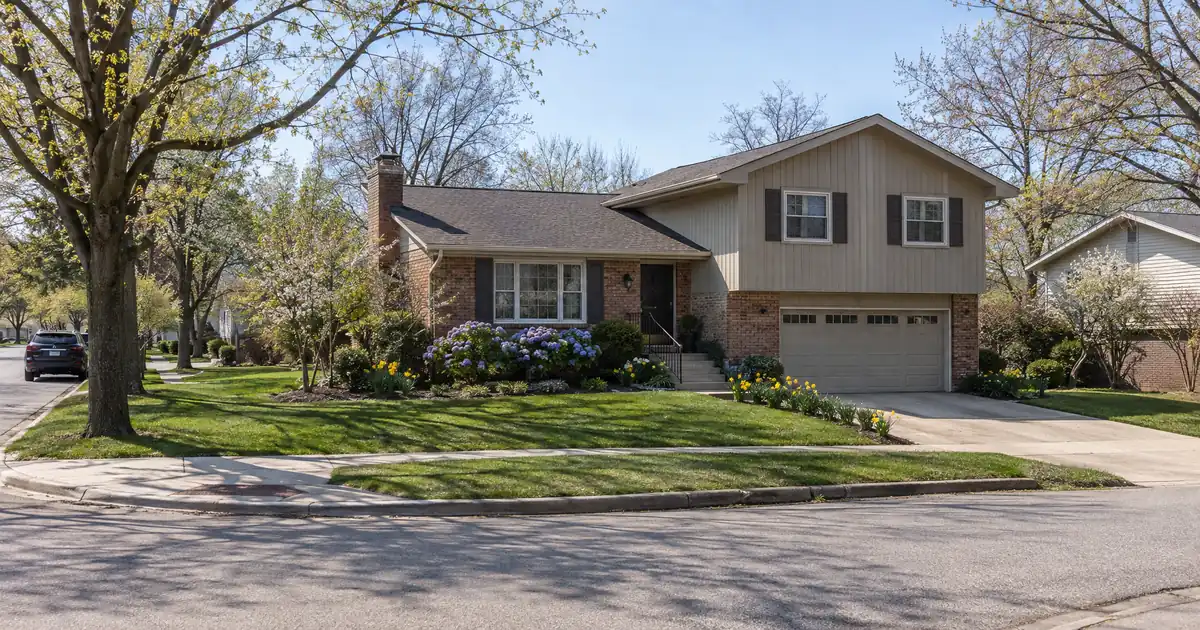
The Quick Read: Usually, a DSCR lender treats a boarding house as an ineligible property type, and a licensed care home only gets a look when a separate operator holds the license and leases the whole building. The lender first asks what the property is, and only then runs the coverage math. Eligibility is a program rule, not a law, and it varies by lender.
- Eligibility comes first. Many programs in the wholesale network rule out rent-by-the-room and boarding-style collateral before any appraisal is ordered.
- Rent is usually the appraiser’s whole-house market rent, not the sum of the room or bed leases.
- A care home’s value rests on the operator and the license, not just the building.
- Clearing 1.00 coverage is not positive cash flow, and a bigger down payment cannot fix an ineligible property.
Picture an investor with a ten-bedroom house, each room leased separately, and a spreadsheet showing strong income per bed. That spreadsheet is not the file a lender reads. The lender reads the property type first, the legal use second, and the rent opinion third. This explainer walks through that order, the structures that exist, and where the general rule breaks. The wider mechanics sit in Lendmire’s complete DSCR loans guide.
DSCR Calculator
Run the numbers in your market
Rate source: Freddie Mac 30-yr average via FRED® — Federal Reserve Bank of St. Louis · effective Oct 15, 2026
Prefilled with starting assumptions — enter your own rent or nightly figures, taxes, insurance, and HOA for a more accurate picture.
Program parameters update from Lendmire’s centralized guideline source. Taxes and insurance are editable estimates.
As of Oct 15, 2026 · General Freddie Mac market benchmark, not a Lendmire loan offer. Rent, nightly rate, occupancy, taxes, and insurance are editable estimates. Short-term rental figures are estimates only and vary significantly by season, property type, management approach, and local short-term-rental rules — confirm local regulations before relying on them. Qualifying income for short-term rentals varies by program — some use appraisal market rent, others use documented STR history or projections — and is confirmed in underwriting. Not a Loan Estimate, approval, or commitment to lend. Program availability and eligibility are subject to lender guidelines, credit approval, property review, and underwriting.
Key Terms Defined
Boarding house: A home where several unrelated people rent individual rooms, often with shared kitchens and baths.
Care home: A small residential facility where residents receive some level of care, usually under a state license held by an operator.
Master lease: One lease between the owner and a single operator, who then handles the residents.
Rent schedule: An appraiser’s comparable-rent analysis that estimates monthly market rent for the property.
PITIA: Principal, interest, taxes, insurance and association dues, the monthly obligation that rent is measured against.
Coverage ratio: Monthly rent used for lender review divided by PITIA. At 1.00, rent equals the full obligation.
Why Is This Property Type Different?
Because the income depends on how the building is run, not just on who lives in it. A standard rental produces a lease a new owner could step into. A boarding house or care home produces operating income, and a lender that had to foreclose would inherit a business it cannot run.
That is the core of the exclusion. Across the wholesale network, rent-by-room, boarding-style and single-room-occupancy collateral is a common reason a rental is ruled ineligible. A handful of lenders review these files case by case, and plenty will not look at them. Hotel-style buildings and anything with five or more units usually belong in commercial or multifamily financing instead.
No federal rule sets this. It is credit policy, written by each program. Select lenders in the network may see a file differently than the next one, which is why a broker comparing several guidelines matters more here than on an ordinary single-family purchase.
DSCR loans are designed for non-owner-occupied investment properties. Because they are business-purpose investor loans, they are reviewed differently from a standard owner-occupied mortgage.
Boarding House or Care Home: How the Lender Decides
The label on the file drives everything. A lender sorts the property by use, not by what the owner calls it.
| Factor | Boarding house | Licensed care home |
|---|---|---|
| Typical setup | Rooms leased one by one | Residents receive care on site |
| Who holds the license | Often none, or a local rooming permit | The operator, usually |
| Income source | Many small leases | Operator lease or operating revenue |
| Typical lender read | Often ineligible | Case by case, operator-dependent |
| What the file turns on | Legal use and lease structure | Operator, license, whole-building lease |
The two properties fail for related but different reasons. A boarding house runs into the by-the-room leasing rule. A care home runs into the question of whose business it is.
The Order a Lender Works Through the File
Lenders work in a fixed sequence, and a file can die at any step.
1. Program eligibility. Does the program accept this property type at all? Some programs exclude by-the-room leasing outright. This gate comes before any appraisal.
2. Occupancy. DSCR loans are for non-owner-occupied property, and the borrower typically certifies that neither they nor their family will live there. A house hack, where the owner lives in one room and rents the rest, is the wrong loan.
3. Legal use. Local rules often cap how many unrelated adults can share a home. Rooming houses may be allowed only in certain zones, with licensing. Unpermitted use can affect insurance, the appraisal and the exit.
4. Rent determination. The appraiser’s market-rent opinion for the whole house usually sets qualifying income.
5. Coverage math. That rent is divided by PITIA.
6. Collateral and exit. The lender asks what an ordinary buyer would pay if the loan went bad.
7. Borrower and reserves. Credit, liquidity and reserves are reviewed.
On the numbers: most programs in the network want credit around 660, a 620 floor exists in parts of the network, and 700 or higher opens the strongest leverage tiers. Purchases typically land at 75%-80% LTV, and a cash-out refinance on a standard rental tops out around 75% LTV. Reserves commonly run about 6 months of PITIA, stepping up to about 9 months on loans above $1,500,000. All of this is subject to lender guidelines, and none of it rescues a property the program will not accept.
Which Rent Counts?
Whole-house market rent counts, and the room-by-room total usually does not. For a single-family property, the appraiser completes a comparable-rent schedule, Fannie Mae’s Form 1007, which estimates monthly market rent. That is a form-name reference only. DSCR loans are not agency products. For two to four units, a different form covers the rent picture.
Room-level income above that appraised figure is upside, not qualifying income. Say the appraiser’s rent opinion clears the monthly obligation at roughly 1.1x, while the owner collects far more across individual beds. The lender still sizes on 1.1x. Investor chatter about multiples from renting by the bed is anecdote, not lender math.
This is also where coverage and cash flow part ways. DSCR compares rent to PITIA only. Repairs, vacancy, turnover, utilities, management and capex sit outside the calculation. A boarding house with churn and shared utilities can clear 1.00 and still lose money.
Care Homes and the Operator Lease
A licensed care home is a business sitting inside a building. The license attaches to the operator rather than the real estate, and a transfer or new application can take a long time, according to Janover’s assisted living financing guide. Value depends on the operator, the license and resident census, not just the structure.
For DSCR, the structure that gets a look is a master lease: one arm’s-length operator leasing the whole building, holding the license, and carrying the obligation. A lender reading that file asks about the operator’s track record, the lease term, whether owner and operator are related, and whether the lease looks like a workaround. A lease that appears to exist only to satisfy the program invites scrutiny. A master lease is read as one lease and underwritten differently from a stack of room leases. It is possible, but expect questions.
If the owner holds the license and runs the home, the picture changes. That is an operating business, and commercial or small-business financing is the more natural fit. Janover’s guide also names SBA, HUD and bridge financing as commonly discussed alternatives for licensed facilities.
Operator risk is the real credit story. Reporting from KFF Health News on property owners tied to care operators shows how the owner side can face scrutiny over what happens inside the building. It is context, not underwriting policy.
DSCR vs. conventional financing
There are two common ways to finance an investment property, and they qualify you differently — here’s how investors weigh them.
Why investors choose it
- Qualifies on the property’s rental income — no personal tax returns, W-2s, or pay stubs needed to document income.
- No personal debt-to-income ceiling to clear, so existing mortgages and obligations don’t cap your borrowing the same way.
- Can be closed in an LLC, keeping the property inside a business entity.
- Built for scaling — not held to the limit on number of financed properties that conventional financing applies.
- Underwriting centers on the deal: generally qualifies when the rent covers the payment, a 1.00x coverage ratio being a common baseline (confirmed in underwriting).
- Designed specifically for investment property, including long-term and, where the program allows, short-term rentals.
Where it’s strong
- Often the lowest ongoing financing cost for a buyer who fully qualifies on personal income — a fit for a first property or a cost-first purchase.
Trade-offs for investors
- Requires full personal income documentation and must fit within a debt-to-income limit — salary, existing debts, and other mortgages all count.
- Typically held in your personal name rather than a business entity.
- Caps how many financed properties you can carry, which can become a ceiling as a portfolio grows.
- Evaluates you as a borrower as much as the property, which usually means more paperwork.
How investors usually choose: a first or single property often optimizes for the lowest financing cost; portfolio builders often optimize for leverage, vesting in an LLC, and scaling past conventional caps. The right answer depends on your goals, the property, and current guidelines — both paths run through select lenders in Lendmire’s wholesale network, with eligibility and terms confirmed in underwriting.
Where the General Rule Breaks
Recovery and sober housing. Federal fair housing guidance limits how local governments can use zoning against group homes. The HUD/DOJ Joint Statement says land use and zoning are traditionally local, except where they conflict with the Fair Housing Act. That protects residents from discriminatory zoning. It does not make a property eligible for a given loan program, and lenders still decide what collateral their programs accept.
Bed-and-breakfast and boutique-hotel uses. These are generally treated as commercial, not residential rental.
Master lease to a single operator. Covered above: workable on some files, never automatic, and the operator relationship has to look real.
Condition and construction exclusions. Manufactured homes (single- and double-wide), log homes and barndominiums are not offered in the network’s DSCR programs at all, however they are rented. An LLC does not change the property-type rules.
Converting to an ordinary rental. A boarding house leased to unrelated tenants as a standard single-family rental, with a whole-house lease, can move into the normal lane, subject to lender guidelines and property review.
What the Investor Decision Looks Like
Check eligibility before going under contract. Declined files are expensive, and a property rented by the room can be turned away before an appraisal is ordered.
Then sort the property into one of four paths:
| Situation | Likely path |
|---|---|
| Rooms leased individually, no operator | Restructure or use other financing |
| Whole house leased to a professional operator | Possible DSCR review, case by case |
| Owner-run licensed facility | Commercial or small-business route |
| Ordinary tenants, whole-house lease | Standard DSCR review |
If the answer is no, there are real options: lease the whole house to a professional operator, use commercial or small-business financing, or hold it as an ordinary rental. Coverage below 1.00 is available through select lenders in the network with leverage and terms adjusted, but it solves a thin ratio, not an ineligible property type. A larger down payment can lift coverage, yet it never erases property eligibility.
Documents commonly gathered include current leases (room, joint or master), rent history, house rules, any management agreement, entity documents, insurance matching the real use, and proof of reserves. Tax treatment varies; consult a qualified professional.
Sometimes the better investment is the plainer one. Related reading: Lendmire’s piece How a DSCR Lender Values an Upgrade From a Low-Value House covers a similar question of what the lender counts versus what the owner hopes for.
If you are buying or refinancing a rental property and want to see how the numbers work, Lendmire can help you compare DSCR loan options based on the property income, credit profile, leverage, and investor goals, through select lenders in its wholesale network across 41 markets, including Washington, D.C.
Frequently Asked Questions
Can I live in one room and use a DSCR loan?
No. DSCR loans are for non-owner-occupied investment property, and the borrower typically certifies they will not occupy it. A house hack is a different loan.
Do the room rents count toward qualifying?
Usually not. The appraiser’s market rent for the whole house typically sets qualifying income. Room or bed income above that figure is upside the lender does not count.
Does a care license help or hurt the file?
It depends on who holds it. A license held by an arm’s-length operator leasing the whole building is easier to review than an owner-operated facility, where the business, not the lease, produces the income. Either way, approval is subject to lender guidelines.
Does fair housing law force a lender to finance a group home?
No. The Fair Housing Act addresses discriminatory zoning and land use by state and local governments. Lender program eligibility is separate credit policy.
What should I ask before ordering an appraisal?
Ask whether the program accepts the property type, whether by-the-room leasing is excluded, and whether a master lease to an operator is reviewed. Confirm legal use locally, since occupancy limits and licensing vary.
About Lendmire
Lendmire, NMLS# 2371349, is a mortgage brokerage focused on investor financing, arranging DSCR loans in 40 states plus Washington, D.C. — 41 markets total. Qualification is based on the property’s income rather than personal income documentation, subject to lender guidelines, making it a fit for LLC-held rentals and scaling portfolios. Scotsman Guide named Lendmire a Top Mortgage Workplace in both 2025 and 2026.
Get Started
Ready to find the right loan for you?
In about 30 seconds you can review financing options available for your investment property. No commitment required.
Informational only. Not a Loan Estimate, approval, or commitment to lend. Program availability and eligibility are subject to lender guidelines, credit approval, property review, and underwriting.
References
1. Fannie Mae Appraiser Update, June 2024
2. Janover assisted living financing guide
3. KFF Health News on senior housing and REITs
4. HUD/DOJ Joint Statement on Group Homes
This article is part of Lendmire’s DSCR loan program — full qualification details, guidelines, and scenarios live on the program page.
Related reading: How a DSCR Lender Adds a Rental to an Existing Portfolio Loan · How a DSCR Lender Funds an Auction Package Without a Bridge · Can a New Rental Community Get a DSCR Loan Before Every Home Is Leased?
Brandon Miller
Founder & CEO, Mortgage Loan Originator, Lendmire LLC
- Mortgage Loan Originator · NMLS# 1129696 · Verify on NMLS Consumer Access
- North Carolina Real Estate Broker · License# 343312 · Verify on NCREC
- North Carolina Insurance Producer · License# 19053198 · Property, Casualty, Life, Health · Verify on NAIC SBS
- Lendmire LLC · Firm NMLS# 2371349 · Verify firm licensure
Compliance and disclosures. Lendmire (NMLS# 2371349) is a licensed mortgage broker and is not a direct lender, depository institution, financial advisor, or tax professional. Content in this article is general market analysis and educational information — not financial, legal, or tax advice for any specific situation. Lendmire does not guarantee loan approval; every transaction is subject to underwriting by the funding lender. Mortgage pricing and loan program guidelines are subject to change at any time without notice and vary by borrower characteristics, property type, and state regulations. Lendmire complies with Equal Housing Opportunity. Licensure verification: NMLS Consumer Access.