
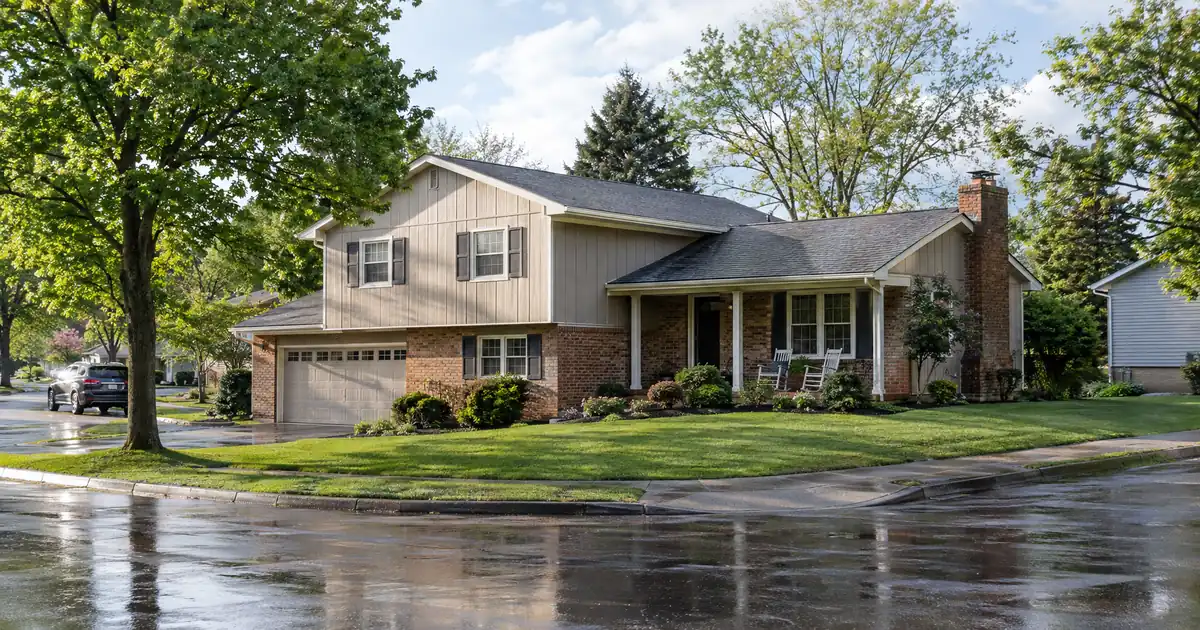
The Quick Read: Usually yes for a well-and-septic rental, and case by case at best for a fully off-grid one. A private well or septic system is not an automatic disqualifier, because the rent still drives the coverage test while the systems are judged as part of the property’s condition and marketability. Off-grid properties run into a different wall: the appraiser needs comparable sales, and those are scarce.
- Well and septic with grid power is common and generally workable when the systems are documented and functioning.
- A failed septic, failed water test, or missing legal access is what stalls a file, not the rent.
- Fully off-grid (solar, cistern, composting toilet) narrows the lender pool and depends on appraisal comps.
- Clearing 1.00 coverage is not the same as positive cash flow, and private-system upkeep sits outside the ratio.
- Order inspections early so conditions clear before the appraisal timeline tightens.
What Counts as Off-Grid Versus Well and Septic?
The two are not the same thing, and lenders treat them differently. Well and septic is a standard rural setup. Off-grid is a marketability problem.
DSCR Calculator
Run the numbers in your market
Rate source: Freddie Mac 30-yr average via FRED® — Federal Reserve Bank of St. Louis · effective Oct 15, 2026
Prefilled with starting assumptions — enter your own rent or nightly figures, taxes, insurance, and HOA for a more accurate picture.
Program parameters update from Lendmire’s centralized guideline source. Taxes and insurance are editable estimates.
As of Oct 15, 2026 · General Freddie Mac market benchmark, not a Lendmire loan offer. Rent, nightly rate, occupancy, taxes, and insurance are editable estimates. Short-term rental figures are estimates only and vary significantly by season, property type, management approach, and local short-term-rental rules — confirm local regulations before relying on them. Qualifying income for short-term rentals varies by program — some use appraisal market rent, others use documented STR history or projections — and is confirmed in underwriting. Not a Loan Estimate, approval, or commitment to lend. Program availability and eligibility are subject to lender guidelines, credit approval, property review, and underwriting.
| Tier | Typical posture | Main risk | What to prepare |
|---|---|---|---|
| Grid power, well and septic | Generally workable | System condition | Inspections, lab report |
| Partial off-grid (own power or water source) | Case by case | Thin comps | System records, comps |
| Fully off-grid | Limited lender pool | Value support | Appraisal-comp research first |
Listings use “off-grid” loosely. A cabin with solar panels and a well but a utility hookup available is a very different file from a parcel with no utility connection at all. Pin down which one you own before you talk to anyone.
Why Private Systems Change the Review
Rent is only half of the file. DSCR compares the property’s rent to its full monthly obligation (principal, interest, taxes, insurance, and any HOA dues). A well or septic system does not change that arithmetic. It changes the collateral risk.
Here is how that plays out. The lender wants a property that is usable, safe, and sellable, not just one that produces income on paper. Supported rent does not help if the septic is failing. That is why the system sits on the property-risk side of the file.
Private wells are also common. Familiarity helps. It does not waive condition review.
Across the wholesale network, program rules differ by lender. Some want a septic inspection on every private-system file. Others order one only when the appraisal flags a concern or the house has sat vacant. The strictest overlays ask for both a septic report and a water-quality test regardless. Because this is a non-QM product, no public rulebook sets one standard, which is why a broker comparing several lenders’ guidelines earns its keep here.
What Lenders Actually Look For
The deciding factors are the same few things on almost every file:
- Functioning systems. Documented condition, not just “it worked when we toured.”
- Legal and physical separation. The system should sit on the subject property, or a binding access and maintenance agreement should cover a shared one.
- Appraisal support. The appraiser has to support value, and on rental files the market rent too, using the standard rent-schedule form for a single-family home or the operating income form for small multifamily.
- Marketability. Could this property be sold to a typical buyer if the loan went bad?
Rural comps can run older or sit farther away, which widens the value range. That can move the loan amount you qualify for, because leverage is applied to appraised value, not your contract price.
The Documents to Assemble
Gather these before you apply. Missing records are a common reason a private-system file drags.
- Septic inspection and pump-out receipts, plus the permit or as-built drawing if one exists.
- A water-quality report from a state-certified lab. The CDC recommends a certified lab and an annual test for total coliform, nitrates, total dissolved solids, and pH.
- A flow or pressure test on the well.
- Documentation for any treatment equipment.
- A written agreement for any shared well or septic.
Why does the water test matter so much? Because nobody checks it for you. Federal rules protecting public drinking water do not cover private wells, and officials generally do not monitor private-well tap water. The owner carries that responsibility, a point OSU Extension also makes. For a landlord, that responsibility extends to tenants who have no municipal water report to read.
Deal-Killers Versus Fixable Issues
| Issue | Usually fixable? | Typical path |
|---|---|---|
| Aging tank, no records | Often | Inspection, pump-out |
| Cracked tank or failed field | Sometimes | Repair before funding |
| Failed water test | Sometimes | Treatment, retest |
| Shared system, no agreement | Sometimes | Written agreement |
| No legal access to system | Rarely | Restructure or pass |
| Fully off-grid, no comps | Rarely | Different lender or product |
Repairs matter because the cost range is wide. Investors describe replacements running from thousands to tens of thousands of dollars, and a mound system in heavy clay sits at the high end. Whether a repair can be cleared by an escrow holdback instead of finishing before the loan funds depends on the lender’s program. Ask early.
Run the Coverage Math Honestly
Picture an investor buying a rural three-bedroom on well and septic at 75% LTV on a purchase. The supported rent covers the full monthly obligation at roughly 1.2x. On paper the file clears comfortably, since 1.00 is where many select programs start, with stronger ratios opening better pricing and leverage. Final terms depend on the lender’s guidelines, the property type, and the borrower’s complete credit picture.
Now add what the ratio ignores: septic pumping, water testing, filtration upkeep, vacancy, repairs, and a reserve for a system failure. None of that appears in the coverage number. Clearing 1.00 is not positive cash flow. A property can pass the lender’s test and still run thin once private-utility upkeep is real money. Model those costs yourself before you buy.
Credit and leverage also still apply as usual. Most programs want a score around 660, with a 620 floor in parts of the network and 700+ unlocking the strongest leverage tiers. Purchases typically run 75%-80% LTV, and reserves are commonly around 6 months of PITIA, stepping up to about 9 months on loans above $1,500,000. All of it is subject to lender guidelines, and a larger down payment never erases a property-eligibility problem.
DSCR loans are designed for non-owner-occupied investment properties. Because they are business-purpose investor loans, they are reviewed differently from a standard owner-occupied mortgage. For the full picture of how the product works, see Lendmire’s complete DSCR loans guide.
Sequencing the File
Order matters more than speed here.
1. Before the offer: ask for system records and the last pump-out date. Walk the property looking for ponding, odors, or a house that has sat empty.
2. During the contingency period: hire a dedicated septic inspector and a well professional. A general home inspection often only confirms that a system exists. It does not test it.
3. With the appraisal order: hand over the reports so conditions clear alongside it.
4. If conditions come back: decide between repair, treatment, escrow if allowed, or renegotiating the price.
5. Before the lease starts: disclose the systems, set maintenance responsibilities, and consider a lease clause on what tenants may flush.
Local rules vary widely. Some places require septic upgrades or inspections at sale, and some regulate private wells while most do not. One state’s rule on cesspools, for example, can be unrelated to the next state’s. Call the county health department where the property sits.
Power Off-Grid: Where the Lender Pool Narrows
Solar, batteries, generators, cisterns, and composting toilets make the appraiser’s job harder. The question is not whether the setup works. It is whether the appraiser can find recent sales of similar properties nearby. Consumer coverage of off-grid appraisals, including a green-building lender Q&A, describes lenders walking away when comps are missing.
Practically, that means a few things. Fewer lenders will entertain the file, and those that do may lower leverage. Insurance availability and private road access become gating items too. And if the property is run as a short-term rental, the stricter short-term-rental parameters apply: purchase to 75% LTV, a 640+ score, and about 12 months of hosting history. Short-term rental rules can vary by city, county, HOA, and property type, so investors should confirm local rules before relying on projected rental income. Each figure is subject to lender guidelines and a complete review of property type, leverage, and credit.
Three property types are a flat no. Manufactured homes, log homes, and barndominiums are not offered through the network’s DSCR programs, and a lot of rural and off-grid housing falls into those categories. Check the construction type before anything else.
DSCR vs. conventional financing
There are two common ways to finance an investment property, and they qualify you differently — here’s how investors weigh them.
Why investors choose it
- Qualifies on the property’s rental income — no personal tax returns, W-2s, or pay stubs needed to document income.
- No personal debt-to-income ceiling to clear, so existing mortgages and obligations don’t cap your borrowing the same way.
- Can be closed in an LLC, keeping the property inside a business entity.
- Built for scaling — not held to the limit on number of financed properties that conventional financing applies.
- Underwriting centers on the deal: generally qualifies when the rent covers the payment, a 1.00x coverage ratio being a common baseline (confirmed in underwriting).
- Designed specifically for investment property, including long-term and, where the program allows, short-term rentals.
Where it’s strong
- Often the lowest ongoing financing cost for a buyer who fully qualifies on personal income — a fit for a first property or a cost-first purchase.
Trade-offs for investors
- Requires full personal income documentation and must fit within a debt-to-income limit — salary, existing debts, and other mortgages all count.
- Typically held in your personal name rather than a business entity.
- Caps how many financed properties you can carry, which can become a ceiling as a portfolio grows.
- Evaluates you as a borrower as much as the property, which usually means more paperwork.
How investors usually choose: a first or single property often optimizes for the lowest financing cost; portfolio builders often optimize for leverage, vesting in an LLC, and scaling past conventional caps. The right answer depends on your goals, the property, and current guidelines — both paths run through select lenders in Lendmire’s wholesale network, with eligibility and terms confirmed in underwriting.
When the File Doesn’t Fit
If the property fails on condition, the cleanest fix is often sequencing: repair first, then finance. A property that cannot qualify today may qualify after the septic is replaced and documented. For a property that comes up short on rent, coverage below 1.00 is available through select lenders in the network, with leverage and terms adjusted. That is a structural choice, not a rescue, and worth weighing against a lower price or a different property.
Investors with an existing rental can also look at how a refinance interacts with their other obligations. Lendmire’s piece Does a DSCR Refinance Take a Rental Off Your Debt-to-Income? covers that angle.
Key Terms Defined
DSCR (debt service coverage ratio): The property’s rent divided by its monthly principal, interest, taxes, insurance, and any HOA dues.
PITIA: The full monthly obligation on a loan: principal, interest, taxes, insurance, and association dues.
Comparable sales (comps): Recent nearby sales of similar properties that an appraiser uses to support value.
Leach field: The buried drainage area that treats wastewater leaving a septic tank.
Escrow holdback: Funds set aside at funding to cover a repair finished afterward, allowed only under some programs.
Frequently Asked Questions
Will a DSCR lender turn down a house just because it has a septic tank?
No. Septic and well are common, and the file is judged on the system’s documented condition alongside the rent. A failed or undocumented system is the problem, not the existence of one. Program rules differ by lender, and qualification is subject to lender guidelines.
Can a fully off-grid cabin qualify?
Sometimes, but expect a narrower lender pool. The sticking point is usually appraisal comps, not the rent. Fewer lenders will review it, and leverage and terms may be adjusted. Talk to a broker before you make an offer.
Does a failed septic inspection kill the deal?
Not always. Many failures can be repaired and re-inspected, and some programs allow an escrow holdback instead. Replacement can cost thousands to tens of thousands of dollars, so renegotiating the price is often part of the answer.
Do I still need inspections if the loan runs on rental income?
Yes. The income test is the property’s rent, but the property still has to pass condition review. A targeted septic inspection and a certified-lab water test are the usual starting points.
Do well and septic costs count in the DSCR calculation?
No. The ratio compares rent to PITIA only. Pumping, testing, filtration, and repairs sit outside it, which is why clearing 1.00 does not mean the property cash flows.
If you are buying or refinancing a rental property and want to see how the numbers work, Lendmire can help you compare DSCR loan options based on the property income, credit profile, leverage, and investor goals. Reach the team at 828-256-2183, and remember that a rural property with failing systems is a repair project first and a financing question second.
About Lendmire
Lendmire — NMLS# 2371349 — is a mortgage brokerage specializing in DSCR investor loans, helping arrange financing across 41 markets, including Washington, D.C., through wholesale and investor-lending channels. The model centers on property-level rental income reviewed by the lender rather than W-2 documentation, subject to lender guidelines, suiting entity-owned and multi-property investors. Lendmire holds Scotsman Guide Top Mortgage Workplace recognition for 2025 and 2026.
Get Started
Ready to find the right loan for you?
In about 30 seconds you can review financing options available for your investment property. No commitment required.
Informational only. Not a Loan Estimate, approval, or commitment to lend. Program availability and eligibility are subject to lender guidelines, credit approval, property review, and underwriting.
References
1. CDC – Guidelines for Testing Well Water
2. OSU Extension – Household Well Water Testing
3. Green Home Building – Appraising Green Homes Q&A
This article is part of Lendmire’s DSCR loan program — full qualification details, guidelines, and scenarios live on the program page.
Related reading: How to Choose a DSCR Loan or Bank Commercial Loan on a Rental · Can a New Rental Community Get a DSCR Loan Before Every Home Is Leased? · Hard Money vs Portfolio DSCR Loan for a Rental Package With Repairs
Brandon Miller
Founder & CEO, Mortgage Loan Originator, Lendmire LLC
- Mortgage Loan Originator · NMLS# 1129696 · Verify on NMLS Consumer Access
- North Carolina Real Estate Broker · License# 343312 · Verify on NCREC
- North Carolina Insurance Producer · License# 19053198 · Property, Casualty, Life, Health · Verify on NAIC SBS
- Lendmire LLC · Firm NMLS# 2371349 · Verify firm licensure
Disclosures. The information presented in this article is general market commentary, not financial, legal, or tax advice. Lendmire is a mortgage brokerage (NMLS# 2371349) — not a direct lender or depository institution — and loan placement is subject to lender underwriting. Nothing in this content represents a commitment to lend. Loan terms, pricing, and program availability vary based on borrower qualifications, property characteristics, and state of subject property, and are subject to change at any time. Lendmire complies with Equal Housing Opportunity requirements. Consumer access: nmlsconsumeraccess.org.