
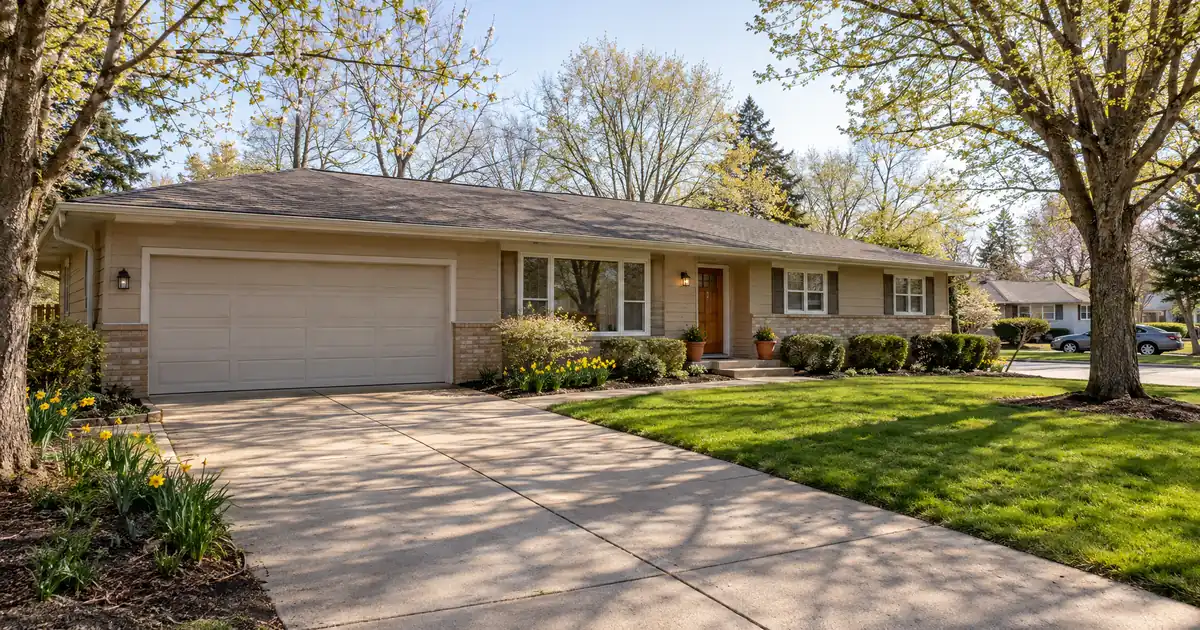
The Quick Read: Yes, friends can usually buy a first rental together on a DSCR loan, most often by forming a shared LLC that borrows and holds title while the members who own enough of it sign personal guaranties. The loan is reviewed primarily on property-level rental income covering the payment, subject to lender guidelines, so friends do not pool their paychecks to qualify.
- The LLC is the borrower; guarantors are personally liable.
- Each guarantor’s credit, reserves, and experience are still reviewed.
- The weakest partner’s score can shape pricing for the whole file.
- No partner can live in the property, because occupancy by an owner would make it an owner-occupied loan rather than a DSCR investment loan.
- A written partner agreement matters as much as the loan.
Pooling money is the easy part. The harder part is deciding who signs, who owns what, and what happens when someone wants out. This guide covers the mechanics, the edge cases, and the point where a friends-and-money deal is better left undone.
DSCR Calculator
Run the numbers in your market
Rate source: Freddie Mac 30-yr average via FRED® — Federal Reserve Bank of St. Louis · effective Oct 15, 2026
Prefilled with starting assumptions — enter your own rent or nightly figures, taxes, insurance, and HOA for a more accurate picture.
Program parameters update from Lendmire’s centralized guideline source. Taxes and insurance are editable estimates.
As of Oct 15, 2026 · General Freddie Mac market benchmark, not a Lendmire loan offer. Rent, nightly rate, occupancy, taxes, and insurance are editable estimates. Short-term rental figures are estimates only and vary significantly by season, property type, management approach, and local short-term-rental rules — confirm local regulations before relying on them. Qualifying income for short-term rentals varies by program — some use appraisal market rent, others use documented STR history or projections — and is confirmed in underwriting. Not a Loan Estimate, approval, or commitment to lend. Program availability and eligibility are subject to lender guidelines, credit approval, property review, and underwriting.
How Does the Lender Look at a Friends-Owned Rental?
The lender looks at the property first. A DSCR loan compares the rent to the full monthly obligation: principal, interest, taxes, insurance, and any HOA dues. Across the wholesale network Lendmire works with, select programs start at a DSCR of 1.00, meaning the rent roughly equals that full obligation. Stronger coverage opens better pricing and leverage.
That is different from a conventional mortgage. Nobody’s pay stubs or traditional personal-income documentation set the loan size. Four friends with four jobs do not stack their incomes. A silent partner and an active partner do not have to blend personal finances either. The question is whether the rent covers the payment.
Here is how the test works in practice. Take a duplex where the rent schedule supports the payment with room to spare, say coverage near 1.2x. That file reads well on its own. Now take a house where the rent lands just under the payment. That file may still be possible through select lenders in the network, with leverage and terms adjusted. But the group should ask whether the deal works or whether they are stretching.
One caution. Clearing 1.00 is not the same as positive cash flow. The ratio leaves out repairs, vacancy, management, utilities, and capital expenses. A first-time landlord group should budget for those separately.
Rent comes from a signed lease or from the appraiser’s market-rent schedule. The appraisal forms for this are the 1007 for single-family homes and the 1025 for small multifamily.
For the full background on how these loans work, see Lendmire’s complete DSCR loans guide.
Why a Shared LLC Is the Usual Route
The LLC is usually the cleanest container. It holds title, signs the note and mortgage, and carries the lease. The members who meet the program’s ownership threshold then sign a separate personal guaranty. No federal rule sets that threshold. Each program sets its own, so one lender may ask for a guaranty from anyone with a modest stake while another draws the line higher.
An LLC borrower is typically accepted subject to lender program eligibility. The file usually needs the operating agreement, the articles of organization, and a good-standing certificate. The managing member supplies ID and a credit authorization. The vesting name must match across title, the loan documents, and the insurance policy. Small mismatches here cause real delays at the closing table.
There is a legal bonus as well. Rocket Lawyer describes an LLC as a common way for friends to hold a rental. It also lays out the basics of joint tenancy and tenancy in common, which matter if you skip the entity.
DSCR loans are designed for non-owner-occupied investment properties. Because they are business-purpose investor loans, they are reviewed differently from a standard owner-occupied mortgage. The FDIC’s interagency exam manual treats credit to acquire non-owner-occupied rental property as business-purpose credit, and lending to an entity is also treated as exempt from consumer-credit rules. Business purpose still does not mean no rules. Lenders document it carefully, and so should you.
Title Options Compared
Personal names on title are possible in some programs, but they are not the default. Whether a given DSCR program accepts individual co-borrowers is program-specific, so ask early. Here is how the three common structures compare.
| Factor | LLC | Tenancy in Common | Joint Tenancy |
|---|---|---|---|
| Shares | Any split by agreement | Unequal shares allowed | Equal shares |
| Survivorship | Set by operating agreement | Share passes to heirs | Passes to co-owner |
| Selling a share | Per operating agreement | Free to sell own share | Needs co-owner consent |
| Fit for a rental | Strong | Possible | Weak for groups |
| Lender friendliness | Most common | Program-specific | Program-specific |
Rocket Lawyer’s comparison covers the heirs and survivorship differences. Nasdaq notes tenancy in common is a popular arrangement among friends and business partners.
Here’s the catch. An LLC is not a partner agreement by itself. Without an operating agreement that addresses exits, death, and default, the entity protects the property from outsiders but not the friends from each other.
A true general or limited partnership is rarer on these files. Some programs prefer an LLC, so ask the lender early whether the structure needs to be re-papered.
Who Signs, and What Gets Underwritten
Think of three separate roles: who owns the LLC, who guarantees the loan, and who manages the property. They overlap, but they do not have to match.
Each guarantor’s credit, liquidity, and experience are reviewed even though the entity holds the property. Across the programs Lendmire places files with, a few points come up repeatedly:
- Credit. A 620 floor exists in parts of the network. Most programs want around 660, and 700+ unlocks the strongest leverage tiers. With two guarantors, some programs use the lower of the two scores, while with three, some use the middle score. The friend with the weaker credit can set pricing for everyone.
- Reserves. They vary by lender, leverage, loan size, and transaction type. About 6 months of PITIA is common, and loans above $1,500,000 typically step up to about 9 months. Whether partners can combine their funds for reserves is the lender’s call.
- Leverage. Most purchase files land at 75% to 80% LTV on an investment property. Select high-leverage programs reach 85% LTV with a score around 700+.
- Loan size. Standard programs run up to $3,000,000. Smaller balances route through select lenders in the network.
- Property type. Manufactured homes, log homes, and barndominiums are not offered.
These are typical ranges, not promises. Every file is underwritten individually and program details change.
A larger down payment can lower the payment and lift the coverage number, but it never erases credit floors, reserve rules, or property eligibility. The strongest files clear both tests: enough equity and enough rental coverage.
What Happens With Unequal Contributions?
This is where friend groups get quiet. One friend has more cash. Another has the better credit. A third will manage the place. None of that has to be split evenly, but it has to be written down.
Consider a group of three. Friend A puts in most of the down payment. Friend B has the strongest score, and the file leans on it. Friend C handles tenants and repairs. A fair split might credit cash, credit support, and labor differently. The lender cares who signs the guaranty. The operating agreement decides who gets what.
Two points to keep straight. Ownership percentage affects whether a partner must guarantee. A silent partner with a small stake may or may not need to, depending on the program’s threshold. And an unwilling or weak-credit partner can slow or reshape the whole file. Better to learn that before the contract than after.
What the Partner Agreement Must Say
A short list, because this is where friendships are saved or lost:
1. Each partner’s percentage and what each contributes.
2. Who pays for repairs, and how reserves get funded.
3. Who manages the property and whether that person is paid.
4. How decisions get made, and what needs a unanimous vote.
5. Buy-out terms, including how the property gets valued.
6. What happens if a partner stops paying their share.
7. What happens on death, divorce, or bankruptcy.
8. Triggers for selling the property.
Investors on BiggerPockets repeatedly urge a written LLC agreement with partners. A separate BiggerPockets thread carries a blunt warning about mixing friendship and money. It is anecdotal, but the pattern is common: the friendships that suffer usually had nothing in writing.
The Edge Case: One Friend Wants to Live There
A DSCR loan is not the right fit for this setup. If a partner or the partner’s household occupies the property, that is owner occupancy, and it is not allowed on any DSCR program. A house where one co-owner lives and covers the mortgage is a primary-residence deal, not a rental. It belongs in a different loan lane entirely, and it usually will not produce the rent the DSCR test depends on.
If the group wants a friend to rent as a tenant, the terms should be arm’s length, documented, and reviewed by the lender. That is a separate question from co-ownership.
DSCR vs. conventional financing
There are two common ways to finance an investment property, and they qualify you differently — here’s how investors weigh them.
Why investors choose it
- Qualifies on the property’s rental income — no personal tax returns, W-2s, or pay stubs needed to document income.
- No personal debt-to-income ceiling to clear, so existing mortgages and obligations don’t cap your borrowing the same way.
- Can be closed in an LLC, keeping the property inside a business entity.
- Built for scaling — not held to the limit on number of financed properties that conventional financing applies.
- Underwriting centers on the deal: generally qualifies when the rent covers the payment, a 1.00x coverage ratio being a common baseline (confirmed in underwriting).
- Designed specifically for investment property, including long-term and, where the program allows, short-term rentals.
Where it’s strong
- Often the lowest ongoing financing cost for a buyer who fully qualifies on personal income — a fit for a first property or a cost-first purchase.
Trade-offs for investors
- Requires full personal income documentation and must fit within a debt-to-income limit — salary, existing debts, and other mortgages all count.
- Typically held in your personal name rather than a business entity.
- Caps how many financed properties you can carry, which can become a ceiling as a portfolio grows.
- Evaluates you as a borrower as much as the property, which usually means more paperwork.
How investors usually choose: a first or single property often optimizes for the lowest financing cost; portfolio builders often optimize for leverage, vesting in an LLC, and scaling past conventional caps. The right answer depends on your goals, the property, and current guidelines — both paths run through select lenders in Lendmire’s wholesale network, with eligibility and terms confirmed in underwriting.
Is This Right for Your Group?
Pooled ownership makes sense for friends who:
- Share the same goals, time horizon, and tolerance for risk.
- Can each contribute reserves, not only a down payment.
- Agree on who guarantees and accept the personal exposure.
- Will sign a real operating agreement before signing a contract.
It is the wrong move if one partner needs the property to cash flow immediately while another is willing to wait on appreciation. It is also wrong if one friend is shaky on credit or cash and the group is hoping the others will cover. Each guarantor is personally exposed. One missed payment reaches everyone.
If the group cannot agree on exit terms in a calm conversation, they will not agree under stress. A passive-investor arrangement, or a solo purchase by the strongest borrower, may be the better structure.
A first-time landlord should also size the cash needs honestly before committing to any ownership structure, including reserves for vacancy and repairs alongside the down payment and closing costs.
Key Terms Defined
Guarantor: A person who personally promises to repay the loan if the LLC does not.
Operating agreement: The written contract among LLC members that sets ownership, duties, and exit rules.
Tenancy in common: A way to co-own property where each owner holds a separate share that can be sold or inherited.
Joint tenancy: A way to co-own property in equal shares with survivorship rights.
PITIA: Principal, interest, taxes, insurance, and association dues, the full monthly obligation.
Vesting: The exact name in which title to the property is held.
From Conversation to Closing
1. Agree on deal terms, roles, and exits in writing.
2. Form the LLC, or confirm the lender will accept one still being formed.
3. Review the property’s rent against its full payment before making an offer.
4. Gather each guarantor’s credit authorization, ID, and reserve statements.
5. Match the vesting name across title, loan, and insurance.
6. Close with the LLC signing the note and mortgage, and guarantors signing a separate guaranty.
Tax treatment varies by structure and how the property is held; consult a qualified professional before relying on any deduction.
Frequently Asked Questions
How many friends can be on the deal?
It depends on the program. Many programs accept several LLC members, but guarantor rules differ. Some set an ownership threshold for who must sign, and some cap the number of guarantors. Ask early, because a partner with a small stake may not need to guarantee.
Does one friend’s weak credit hurt everyone?
Depending on the program, it can. With multiple guarantors, some programs use the lower of two scores or the middle of three. A 620 floor exists in parts of the network, most programs want around 660, and 700+ opens the strongest leverage. The group may do better with the stronger-credit friends carrying the guaranty.
Can one of us live in the property?
No. Occupancy by a borrower or the borrower’s household is owner occupancy, and it is not allowed on any DSCR program. The loan is for a non-owner-occupied rental.
Do we need an LLC?
Not always, but it is the common structure. Some programs may consider individual co-borrowers, depending on guidelines. An LLC also makes exits easier, since a member’s interest can be bought out without retitling the property.
Can a first rental qualify?
Often yes. A first-time investor can qualify, though leverage, credit, and reserve expectations may be tighter. Most purchase files land at 75% to 80% LTV on an investment property, with select high-leverage programs reaching 85% at around a 700+ score, subject to lender guidelines.
If you are buying a rental property with partners and want to see how the numbers work, Lendmire can help you compare DSCR loan options based on property income, credit profile, leverage, and investor goals.
A group of friends that writes the exit terms before the offer goes in usually finds the loan is the easy part.
About Lendmire
Lendmire (NMLS# 2371349) is a mortgage brokerage built around DSCR investor lending, with programs available in 41 markets, including Washington, D.C. DSCR lenders commonly evaluate rental-income coverage instead of personal income paperwork — a practical fit for LLC-owned and multi-property investors. Terms vary by lender, property, leverage, and program. Scotsman Guide named Lendmire a Top Mortgage Workplace in both 2025 and 2026.
Get Started
Ready to find the right loan for you?
In about 30 seconds you can review financing options available for your investment property. No commitment required.
Informational only. Not a Loan Estimate, approval, or commitment to lend. Program availability and eligibility are subject to lender guidelines, credit approval, property review, and underwriting.
References
1. Rocket Lawyer: legal considerations when buying property with friends
2. FDIC interagency TILA exam manual
3. Rocket Lawyer: tenants in common vs. joint tenants
4. Nasdaq: what is tenancy in common
5. BiggerPockets: LLC or own name
This article is part of Lendmire’s DSCR loan program — full qualification details, guidelines, and scenarios live on the program page.
Related reading: Short Sale vs Lost Rental for a DSCR Loan Waiting Period · Can You Get a DSCR Loan After a Short Sale or a Lost Rental? · How to Add a HELOC Behind a DSCR First Mortgage on a Rental
Brandon Miller
Founder & CEO, Mortgage Loan Originator, Lendmire LLC
- Mortgage Loan Originator · NMLS# 1129696 · Verify on NMLS Consumer Access
- North Carolina Real Estate Broker · License# 343312 · Verify on NCREC
- North Carolina Insurance Producer · License# 19053198 · Property, Casualty, Life, Health · Verify on NAIC SBS
- Lendmire LLC · Firm NMLS# 2371349 · Verify firm licensure
Legal disclosures. Lendmire (NMLS# 2371349) is a state-licensed mortgage brokerage that arranges financing through wholesale lender relationships. Lendmire is not a direct lender, depository institution, or registered financial advisor. The discussion above is general informational content about real estate financing — it is not financial, legal, or tax advice, and readers should consult licensed professionals for guidance on their individual circumstances. Loan inquiries are subject to lender underwriting; this article does not represent a commitment to lend. Loan terms, rates, and qualification standards vary by borrower, property, and state, and are subject to change at any time. Equal Housing Opportunity. NMLS Consumer Access: nmlsconsumeraccess.org.