
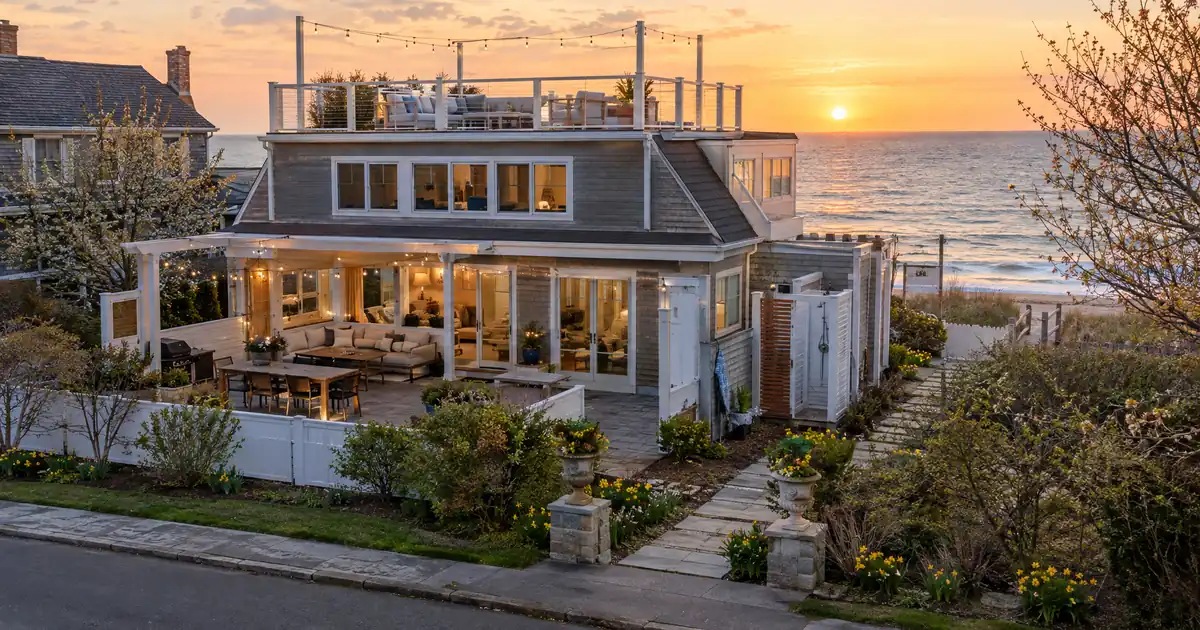
The Quick Read: It depends on the flood map, not the coastline: a coastal rental needs flood insurance when the building itself sits in a high-risk flood zone, which covers most waterfront and near-water properties, and a lender can require coverage outside those zones on its own. When coverage is required, the premium becomes part of the monthly obligation your rent is tested against.
- A high-risk zone designation on the building triggers the requirement. Distance from the water does not.
- Lenders in the wholesale network commonly require flood coverage in those zones and may add their own rules elsewhere.
- Standard landlord insurance normally excludes flood, so coverage means a separate policy.
- The premium raises the payment in your debt coverage calculation and lowers the ratio.
- Get a real flood quote before your contract deadline, not at closing.
The Three Kinds of “Need”
Three different forces can make a coastal rental “need” flood insurance, and each has a different source. One is a legal mandate. One is the lender’s own policy. The third is plain self-protection. Investors tend to blur them, which is how surprises happen late in a deal.
DSCR Calculator
Run the numbers in your market
Rate source: Freddie Mac 30-yr average via FRED® — Federal Reserve Bank of St. Louis · effective Oct 15, 2026
Prefilled with starting assumptions — enter your own rent or nightly figures, taxes, insurance, and HOA for a more accurate picture.
Program parameters update from Lendmire’s centralized guideline source. Taxes and insurance are editable estimates.
As of Oct 15, 2026 · General Freddie Mac market benchmark, not a Lendmire loan offer. Rent, nightly rate, occupancy, taxes, and insurance are editable estimates. Short-term rental figures are estimates only and vary significantly by season, property type, management approach, and local short-term-rental rules — confirm local regulations before relying on them. Qualifying income for short-term rentals varies by program — some use appraisal market rent, others use documented STR history or projections — and is confirmed in underwriting. Not a Loan Estimate, approval, or commitment to lend. Program availability and eligibility are subject to lender guidelines, credit approval, property review, and underwriting.
| Kind of need | Who imposes it | What triggers it | What you can do |
|---|---|---|---|
| Legal mandate | Federal law, on regulated lenders | Building in a high-risk zone | Verify the zone; challenge a wrong mapping |
| Lender overlay | The lender or its loan buyer | Zone, location, or file risk | Ask for the lender’s flood rule up front |
| Prudent coverage | You | Real exposure, any zone | Buy coverage that matches rebuild cost |
The federal rule binds federally regulated lenders. Many DSCR lenders are not banks, so the legal mandate may not reach them directly. In practice that rarely helps you. Across the lenders we place files with, flood coverage on a high-risk-zone building is the expected condition, because the investors who buy these loans expect it.
The lender-overlay column is where programs differ. Some lenders ask for flood coverage only where the map requires it. A few apply broader rules in coastal areas. The OCC’s consumer guidance confirms that a lender may require flood insurance outside a high-risk zone as a matter of its contract with the borrower. Ask early which version your lender uses.
Why the Coast Alone Isn’t the Trigger
The flood zone on the building decides the question. A rental two blocks from the beach can sit outside a high-risk zone. A rental on a tidal creek can sit inside one. Proximity matters to risk, but the map zone is what produces the requirement.
Here is how the zone groups generally work, according to Coverage Classroom’s mandatory flood insurance guide:
| Zone group | General meaning | Typical outcome |
|---|---|---|
| A, AE, AH, AO, AR, A99 | High-risk flood area | Coverage required |
| V, VE | High-risk coastal, wave action | Coverage required; hardest to price |
| B, C, X | Moderate to minimal risk | No federal mandate; lender may still ask |
Two details trip up buyers. First, the requirement attaches to the building. A lot that is only partly in a high-risk zone does not trigger the rule if the structure itself sits outside it. Second, a low-risk zone is not a safe zone. A meaningful share of flood losses happen outside high-risk areas, so some investors carry coverage in zone X by choice.
How a DSCR Lender Decides
The process follows a predictable order. Knowing it lets you get ahead of each step.
1. Flood determination. The lender orders a flood zone determination, which checks the building’s location against the current flood map.
2. Zone outcome. A high-risk result means coverage is required. A low-risk result means the lender’s own policy takes over.
3. Coverage evidence. You provide a policy declarations page or binder. The named insured, property address, and lender clause need to match the loan file.
4. Premium into the payment. The underwriter adds the flood premium to the monthly obligation used in the coverage ratio.
5. Escrow review. Many lenders collect insurance premiums through an escrow account, which keeps the premium in the monthly payment for the life of the loan.
Step four deserves attention. DSCR compares rent to PITIA only, which stands for principal, interest, taxes, insurance, and association dues. Flood premium is insurance, so it sits in the denominator. More premium means a lower ratio on the same rent. You can read the full mechanics in the complete DSCR loans guide.
What Flood Insurance Does to Your Coverage Ratio
A required flood premium lowers your coverage ratio dollar for dollar, because rent stays fixed while the payment grows. These numbers are modeled assumptions, not market data. Picture a coastal duplex whose rent covers the full payment at about 1.25x before flood insurance. Add a mid-sized flood premium and the same rent might cover it at about 1.10x. Add a larger premium, as a high-risk coastal zone can produce, and the ratio can fall to roughly 0.95x.
| Modeled scenario | Coverage ratio | What it may mean |
|---|---|---|
| No flood premium | About 1.25x | Clears most program floors |
| Moderate premium | About 1.10x | Often still workable |
| High premium | About 0.95x | Below 1.00; needs a different path |
Here is how that plays out. Many select programs start at 1.00. A separate select-lender path takes coverage below 1.00, with leverage and terms adjusted. So a deal that slips under 1.00 because of flood cost is not automatically dead, but it moves to a narrower set of lenders and usually a lower leverage tier. Qualification stays subject to lender guidelines, credit review, and property review.
Reserves feel it too. Lenders commonly ask for about six months of PITIA in reserves, and about nine months on loans above $1,500,000, with some conservative files seeing lower or waived reserves. Because the flood premium is inside PITIA, a bigger premium means a bigger reserve requirement.
A larger down payment can help. It shrinks the loan, lowers the payment, and can lift the ratio. It does not erase the flood requirement, leverage caps, credit floors, or property eligibility. Purchase files on investment properties commonly sit at 75%–80% LTV. The strongest files clear both tests: enough equity and enough rental coverage.
One more caution. Clearing 1.00 does not mean the property produces positive cash flow. Repairs, vacancy, management, and utilities sit outside the calculation. A thin ratio on a coastal property leaves little room for those costs.
The Coastal Insurance Stack
Flood is only one layer of coastal insurance. Investors who price flood alone tend to underestimate the total load, because wind and named-storm coverage often sit beside it.
| Coverage | What it generally covers | Who typically requires it | Deductible behavior |
|---|---|---|---|
| Landlord or hazard policy | Fire, theft, liability, many wind losses | Lender, always | Often a flat amount |
| Wind or named-storm | Storm wind damage, where excluded above | Lender or carrier, by location | Often a percentage of coverage |
| Flood | Rising-water damage to the building | Law or lender, by zone | Set by the flood policy |
Wind coverage never substitutes for flood coverage. A hurricane can cause both kinds of damage, and each policy pays only for its own cause of loss. A percentage deductible is calculated from the insured value, so it can be a large number on a high-value coastal building. Read that clause before you rely on the policy.
Flood policies also leave gaps. They are generally built around the building and, in some cases, contents. They typically do not replace lost rent. If a storm empties your rental for months, flood coverage does not pay the vacancy. Ask your insurance agent about loss-of-rents coverage separately.
Insurance costs are one line in the payment, not the whole story. Whether premiums are deductible is a tax question. Tax treatment varies; consult a qualified professional.
Where the Federal Minimum Falls Short
The required amount is the lesser of the loan balance or the maximum available under the national flood program. The OCC explains that the maximum building coverage for a 1–4 family residential building is $250,000, and $500,000 for other residential and non-residential buildings.
Now compare that to coastal replacement cost. A rental can cost far more than $250,000 to rebuild. The federal minimum protects the lender’s position. It does not necessarily protect yours. Coverage also applies to the building, not the land, which matters when the land is the most expensive part of a coastal property.
Loan sizes in the network run up to $3,000,000 on standard programs, so many files exceed the federal cap. Private or excess flood policies can fill the gap above it. Some carriers decline properties with prior flood claims, and whether a given DSCR program accepts private flood is that lender’s rule. Confirm acceptance before you bind a policy.
The federal program is large and coastal-heavy. The Peterson Foundation reports it covers about 5 million homes and businesses, concentrated in coastal counties. That concentration is why coastal investors meet this requirement so often.
Special Cases
Short-term rentals. A vacation rental on the coast faces the same flood-zone rule. The difference is the loan. Short-term rental purchases run up to 75% LTV, with refinances around 70% and cash-out at 70% on short-term-rental collateral, versus 75% on standard rentals. These files typically expect about 12 months of hosting history. Short-term rental rules can vary by city, county, HOA, and property type, so investors should confirm local rules before relying on projected rental income.
Condos and multifamily. Condo buildings usually carry a master flood policy, and a unit owner’s obligation depends on what that policy covers. Lender guidelines differ here, so ask before you contract. For 5+ unit buildings, the national program’s building limit is higher, as noted above.
Coastal barrier areas. Some protected coastal areas have no access to the national flood program at all. Private flood is typically the only route there, so confirm the lender accepts it.
Inland but low-lying. A property far from the beach can sit in a high-risk zone near a river or drainage area. The rule follows the map, so inland investors are not exempt.
Prior claims. A building with a flood claim history may price higher or be declined by private carriers. Ask for the claim history before you make an offer.
“DSCR Loans Are Exempt Because They’re Business-Purpose”
DSCR loans are designed for non-owner-occupied investment properties. Because they are business-purpose investor loans, they are reviewed differently from a standard owner-occupied mortgage. That difference does not remove flood requirements. The flood rule is not tied to owner-occupancy. It follows the building’s location, and lender policy usually supplies the requirement either way.
Another common mistake is assuming a landlord policy covers flood. It normally excludes it. Flood needs its own policy.
Can You Remove or Reduce the Requirement?
Sometimes. If a property was mapped into a high-risk zone by mistake, a Letter of Map Amendment can remove the designation. Elevation documentation can also help a premium, because a building raised above the expected flood level is lower risk.
The limits are real. Coverage Classroom notes that even after a successful map challenge, a lender may still require coverage. So treat a map change as a possible premium reduction, not a guaranteed exit. Ask the lender in advance whether it would drop the requirement if the zone changed.
This one is a toss-up for some investors. Pursuing a map amendment can cost time and fees, while buying coverage is certain. On a thin deal, the amendment may be worth chasing. On a deal with room, many investors just buy the policy.
DSCR vs. conventional financing
There are two common ways to finance an investment property, and they qualify you differently — here’s how investors weigh them.
Why investors choose it
- Qualifies on the property’s rental income — no personal tax returns, W-2s, or pay stubs needed to document income.
- No personal debt-to-income ceiling to clear, so existing mortgages and obligations don’t cap your borrowing the same way.
- Can be closed in an LLC, keeping the property inside a business entity.
- Built for scaling — not held to the limit on number of financed properties that conventional financing applies.
- Underwriting centers on the deal: generally qualifies when the rent covers the payment, a 1.00x coverage ratio being a common baseline (confirmed in underwriting).
- Designed specifically for investment property, including long-term and, where the program allows, short-term rentals.
Where it’s strong
- Often the lowest ongoing financing cost for a buyer who fully qualifies on personal income — a fit for a first property or a cost-first purchase.
Trade-offs for investors
- Requires full personal income documentation and must fit within a debt-to-income limit — salary, existing debts, and other mortgages all count.
- Typically held in your personal name rather than a business entity.
- Caps how many financed properties you can carry, which can become a ceiling as a portfolio grows.
- Evaluates you as a borrower as much as the property, which usually means more paperwork.
How investors usually choose: a first or single property often optimizes for the lowest financing cost; portfolio builders often optimize for leverage, vesting in an LLC, and scaling past conventional caps. The right answer depends on your goals, the property, and current guidelines — both paths run through select lenders in Lendmire’s wholesale network, with eligibility and terms confirmed in underwriting.
After Closing
The requirement lasts for the loan term. If you let the policy lapse, the lender can buy coverage on your behalf and add the cost to your payment. That force-placed coverage typically costs more and protects the lender, not you.
Maps also change. If a property is remapped into a high-risk zone mid-loan, the servicer can require coverage that was not needed at closing. That matters at refinance, too. A property that was outside a high-risk zone at purchase may be inside one when you refinance. Cash-out refinances on standard rentals top out around 75% LTV, with about six months of seasoning commonly expected. A new flood determination will be part of that file.
Pre-Offer Checklist
Coastal DSCR deals go wrong when flood gets checked late. Work through these in order:
1. Look up the property’s flood zone before you write an offer.
2. Get a real quote for flood coverage, not an estimate. Include wind if the area requires it.
3. Run your coverage ratio with the full premium in the payment.
4. Test the ratio with a higher premium, because renewals can move.
5. Ask the lender about private flood acceptance and its rule for low-risk zones.
6. Compare the federal minimum to rebuild cost, and decide whether to carry more.
7. Plan for a waiting period before a new flood policy takes effect, so do not leave binding to the last day.
Across the DSCR files in markets like these, the insurance line moves more than almost any other input. A ratio that clears on last season’s quote sometimes does not clear on this season’s. Getting the real quote into the file early prevents most of the surprises.
Key Terms Defined
DSCR (debt service coverage ratio): The property’s monthly rent divided by its monthly debt obligation, which shows whether rent covers the payment.
PITIA: Principal, interest, taxes, insurance, and association dues, the full monthly obligation used in the ratio.
Special Flood Hazard Area: The high-risk flood zones on the federal flood map, including the A and V zones, where flood coverage is mandatory on regulated loans.
Flood determination: A lender’s check of a building’s location against the current flood map.
Letter of Map Amendment: A federal document that removes a high-risk designation when a property was mapped in by mistake.
Escrow: A lender-held account that collects insurance premiums as part of the monthly payment.
Frequently Asked Questions
Is flood insurance required on a DSCR loan?
It is required when the building sits in a high-risk flood zone, and that is the standard across the lenders in the network. The federal mandate binds regulated lenders, and many DSCR lenders are not banks, but the same expectation shows up through lender and investor policy. Individual lenders may add their own rules.
Do I need flood insurance outside a flood zone?
Not by federal mandate, but a lender can require it by contract. Even when no one requires it, many coastal investors buy it anyway, because a meaningful share of flood losses happen outside high-risk zones and landlord policies exclude flood.
Does the flood premium count in my DSCR?
Yes. The premium is part of the insurance line in PITIA, so it raises the payment and lowers the ratio on the same rent. Because reserves are measured in months of PITIA, it can raise reserve requirements as well. Final terms depend on the lender’s guidelines, the property type, and the borrower’s complete credit picture.
Does wind coverage replace flood coverage?
No. Wind and named-storm policies cover wind damage, and flood policies cover rising water. A hurricane can cause both, and each policy pays only for its own cause of loss, so a coastal rental often carries both.
Can I get the requirement removed?
Possibly, if the property was mapped into a high-risk zone by mistake. A map amendment can remove the designation, but a lender may still require coverage afterward. Ask the lender before you spend money on the challenge.
If You’re Weighing a Coastal Rental
If you are buying or refinancing a rental property and want to see how the numbers work, Lendmire can help you compare DSCR loan options based on the property income, credit profile, leverage, and investor goals. As a broker, Lendmire arranges financing through select lenders in its wholesale network, across 41 markets including Washington, D.C. Programs and terms are subject to lender guidelines, and nothing here is a commitment to lend.
On a coastal property, the flood map is the first number to check, and the full insurance stack is the second.
About Lendmire
Lendmire is a DSCR-focused mortgage brokerage, NMLS# 2371349, placing investor loans across 41 markets, including Washington, D.C. DSCR eligibility is generally reviewed by the lender around a property’s rental income rather than personal income documentation, which fits LLC-held rentals, self-employed investors, and portfolios scaling past conventional financed-property limits. Scotsman Guide named Lendmire a Top Mortgage Workplace in both 2025 and 2026.
Get Started
Ready to find the right loan for you?
In about 30 seconds you can review financing options available for your investment property. No commitment required.
Informational only. Not a Loan Estimate, approval, or commitment to lend. Program availability and eligibility are subject to lender guidelines, credit approval, property review, and underwriting.
References
1. OCC HelpWithMyBank – when flood insurance is required
2. Coverage Classroom – Mandatory flood insurance and mortgages
3. OCC HelpWithMyBank – how much flood insurance
4. Peterson Foundation – The National Flood Insurance Program
This article is part of Lendmire’s DSCR loan program — full qualification details, guidelines, and scenarios live on the program page.
Related reading: How to Fix a DSCR That Dropped Below the Floor After Insurance Renewal · Does a Beach Rental Need a Dedicated Policy for a DSCR Loan? · How to Get a DSCR Loan on Your First Rental After a Bank Said No
Brandon Miller
Founder & CEO, Mortgage Loan Originator, Lendmire LLC
- Mortgage Loan Originator · NMLS# 1129696 · Verify on NMLS Consumer Access
- North Carolina Real Estate Broker · License# 343312 · Verify on NCREC
- North Carolina Insurance Producer · License# 19053198 · Property, Casualty, Life, Health · Verify on NAIC SBS
- Lendmire LLC · Firm NMLS# 2371349 · Verify firm licensure
Disclosure information. Lendmire is a state-licensed mortgage brokerage under NMLS# 2371349. Lendmire is not a depository institution, direct lender, or financial advisor — all loans referenced are placed through wholesale lender partners and are subject to each lender's underwriting standards. This article is provided for general informational purposes and is not a commitment to lend, nor does it constitute financial, legal, or tax advice. Loan programs, terms, rates, and qualification standards change without notice and depend on borrower profile, property type, and the state in which the subject property is located. Equal Housing Opportunity provider. NMLS Consumer Access: nmlsconsumeraccess.org.