
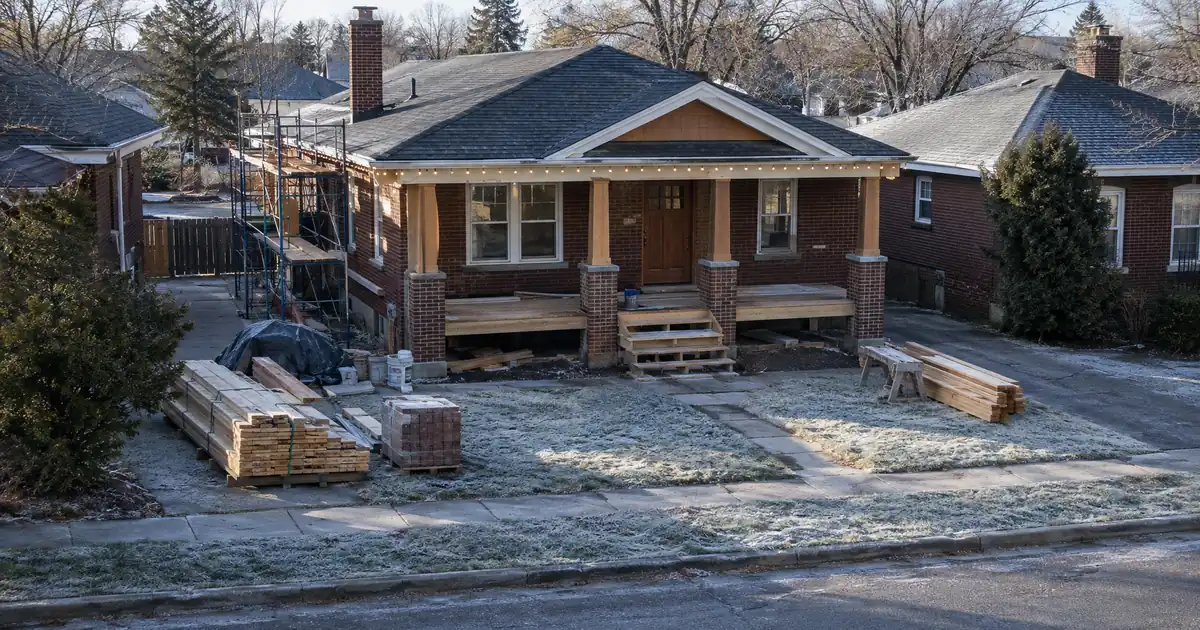
The Quick Read: A DSCR refinance fits when the finished flip has a value and a rent figure that can carry its own long-term loan, because the new loan is reviewed primarily on property-level rental income covering the payment, subject to lender guidelines. Cash-out elsewhere fits when the flip cannot carry that loan yet and the investor has clean equity in another asset.
- A DSCR refinance is judged on the flip: appraised value, market rent, credit, and reserves.
- Cash-out elsewhere is judged on a different property and, often, on personal income.
- Rent coverage clearing 1.00 is a select-program floor, not a promise of positive cash flow.
- Seasoning, a low appraisal, and an unfinished rehab are what usually break the first route.
- Selling the flip is a legitimate third branch when neither route pencils.
The honest answer is that the two options solve different problems. Paying off hard money from the flip itself is a property question. Paying it off from somewhere else is an equity-and-personal-credit question. Most flippers who plan to hold the property as a rental belong in the first group. Investors who are short on rent coverage or appraised value, but long on equity elsewhere, belong in the second. This piece referees both and does not push one.
DSCR Cash-Out Calculator
Run the cash-out numbers in your market
Rate source: Freddie Mac 30-yr average via FRED® — Federal Reserve Bank of St. Louis · effective Oct 15, 2026
Prefilled with starting assumptions — enter your property’s value, balance, taxes, and insurance for a more accurate picture.
Program parameters update from Lendmire’s centralized guideline source. Taxes and insurance are editable estimates.
As of Oct 15, 2026 · General Freddie Mac market benchmark, not a Lendmire loan offer. Property value, balance, taxes, and insurance are editable estimates. Maximum loan-to-value varies by lender, program, property type, and seasoning. Not a Loan Estimate, approval, or commitment to lend. Program availability and eligibility are subject to lender guidelines, credit approval, property review, and underwriting.
Side-by-Side
The DSCR column reflects what Lendmire’s wholesale network places. The cash-out-elsewhere column shows published industry norms, which vary by lender and collateral.
| Factor | DSCR refinance on the flip | Cash-out elsewhere |
|---|---|---|
| Review basis | Property rent against its full payment | Other asset’s equity, often personal income |
| Documentation | Appraisal with rent schedule, lease, credit | Typically income and debt documentation |
| Property types | 1-4 unit non-owner-occupied rentals | Depends on the other asset |
| Entity vesting | LLC vesting often available, per program terms | Many lenders want individual title |
| Reserves | Commonly around 6 months of PITIA | Varies by lender |
| Risk placement | New debt sits on the flip | New debt sits on another property |
| Timeline | Tied to appraisal and seasoning | Tied to the lender’s process |
Rows on rates, pricing, and payments are left out on purpose. Those live in the calculator, not in a comparison.
Key Terms Defined
DSCR: the property’s monthly rent divided by its full monthly obligation, meaning principal, interest, taxes, insurance, and any HOA dues.
Payoff-only refinance: a rate-and-term refinance that retires the old loan and returns no cash at closing.
Cash-out refinance: a refinance that returns cash after the old loan and closing costs are paid.
Seasoning: the ownership period a lender wants before it will allow a cash-out refinance.
Cross-collateralization: one lender holding liens on more than one property to secure a single loan.
Payoff statement: the hard money lender’s letter showing principal, accrued interest, fees, and per-diem interest.
How the DSCR Refinance Route Works
The exit is a long-term DSCR loan on the finished flip. Hard money terms run 6 to 18 months, interest-only, so the maturity date drives everything. Many investors refinance out of hard money into long-term DSCR financing once the property is stabilized, and Lendmire brokers that path through its hard money exit refinance program.
Two tests decide the file.
1. The value gate. The refinance lender orders its own appraisal. The flip budget’s after-repair value is only a planning number. The new DSCR loan must fit under the leverage cap on the appraised value and cover the payoff plus closing costs. On a DSCR rate-and-term refinance, the program allows up to 85% LTV with no cash back. On a DSCR cash-out refinance, the ceiling is 75% LTV. These specifics are subject to lender guidelines and a full review of property, leverage, and credit.
2. The rent gate. Rent divided by the full payment must meet the program’s coverage floor. For the DSCR loan, 1.00 is where select programs start. Stronger ratios open better terms. Programs below 1.00 are available through select lenders in the network, with leverage and terms adjusted. The appraisal’s rent schedule (the 1007 form, or the 1025 on small multifamily) supports the rent figure.
Then the choice between payoff-only and cash-out matters. A DSCR payoff-only refinance returns nothing. A DSCR cash-out refinance returns what is left, but it usually carries about 6 months of seasoning from title recording and the lower 75% cap. A flipper who closes the rehab at month five may find the cash-out door still shut while the bridge keeps accruing.
Typical file documents: the appraisal with rent schedule, a lease if the unit is tenanted, entity documents if the flip sits in an LLC (subject to lender program eligibility), the credit report, the payoff statement, proof of reserves, insurance, and often the rehab scope or draw history. Credit tiers on DSCR files run 620, 660, 680, and 700, with 620 as the floor. Reserves commonly run about 6 months of PITIA, stepping up to about 9 months above $1,500,000. Standard programs go up to $3,000,000. Manufactured homes, log homes, and barndominiums are not offered in these programs.
Know what the number does and doesn’t say. A coverage ratio compares rent to PITIA only. Vacancy, repairs, management, and capex sit outside it. Clearing 1.00 is not the same as the property cash flowing.
When a DSCR Refinance Is the Better Fit
The DSCR refinance wins when the finished flip can stand on its own. That usually means the rehab is complete, the unit is leased or has supportable market rent, and the appraised value clears the payoff with room under the leverage cap.
It also fits investors who want the new debt contained on the flip. Nothing else gets pledged. If the refinance stalls, no second property is at risk. Qualification runs primarily on rent covering the payment, so a self-employed or heavily leveraged investor avoids a personal-income test on this route, subject to lender guidelines.
Picture a flipper holding a finished fourplex at the rate-and-term ceiling on a strong appraisal, with leases in place and coverage comfortably above 1.00. The payoff clears and the bridge is gone. The same flipper wanting cash back would sit under the 75% cap and wait out seasoning. Test the ratio at the cash-out amount first, because a larger loan lowers coverage.
Business-purpose treatment also matters here. DSCR loans on non-owner-occupied rentals are business-purpose investor loans, reviewed differently from a standard owner-occupied mortgage. The CFPB’s Regulation Z text exempts credit extended primarily for a business purpose, and the Cornell LII copy of 12 CFR 1026.3 shows a separate exemption for credit to non-natural persons such as an LLC. The creditor decides purpose case by case.
When Cash-Out Elsewhere Is the Better Fit
Cash-out elsewhere wins when the flip cannot qualify yet. A vacant, unfinished, or low-appraising property may fail the rent or value gate. If there is no lease and no supportable market rent, the coverage test may not pass. Equity on a different asset can retire the bridge without asking the flip to prove anything.
Typical vehicles include a cash-out refinance or equity line on a primary residence or another rental, and cross-collateral or blanket structures. Industry norms differ by lender, so confirm the specifics with that lender.
The trade-offs are real, and they land elsewhere:
- Consumer treatment. A loan secured by a primary residence is consumer-purpose credit even when the money goes into a flip. Expect personal-income and DTI documentation.
- New debt on another asset. That property’s obligation rises, and so does the investor’s personal DTI.
- Revolving lines can change. A line of credit can be frozen or reduced, while cash already in the bank cannot be pulled back.
- Cross-collateral risk. Each pledged property can back the full obligation, so release terms need planning before closing. Selling or refinancing one pledged asset may depend on them.
- Vesting mismatch. Many lenders want individual title, while the flip may sit in an LLC.
Run the numbers on an investor with a free-and-clear rental and a thin-equity flip. The other property’s equity pays the bridge. The flip is then unencumbered and can be financed later in its own transaction, including with a DSCR loan once rent and value support it. That two-step sequence costs a second closing, so it only pays off when the first route is truly blocked.
DSCR vs. conventional financing
There are two common ways to finance an investment property, and they qualify you differently — here’s how investors weigh them.
Why investors choose it
- Qualifies on the property’s rental income — no personal tax returns, W-2s, or pay stubs needed to document income.
- No personal debt-to-income ceiling to clear, so existing mortgages and obligations don’t cap your borrowing the same way.
- Can be closed in an LLC, keeping the property inside a business entity.
- Built for scaling — not held to the limit on number of financed properties that conventional financing applies.
- Underwriting centers on the deal: generally qualifies when the rent covers the payment, a 1.00x coverage ratio being a common baseline (confirmed in underwriting).
- Designed specifically for investment property, including long-term and, where the program allows, short-term rentals.
Where it’s strong
- Often the lowest ongoing financing cost for a buyer who fully qualifies on personal income — a fit for a first property or a cost-first purchase.
Trade-offs for investors
- Requires full personal income documentation and must fit within a debt-to-income limit — salary, existing debts, and other mortgages all count.
- Typically held in your personal name rather than a business entity.
- Caps how many financed properties you can carry, which can become a ceiling as a portfolio grows.
- Evaluates you as a borrower as much as the property, which usually means more paperwork.
How investors usually choose: a first or single property often optimizes for the lowest financing cost; portfolio builders often optimize for leverage, vesting in an LLC, and scaling past conventional caps. The right answer depends on your goals, the property, and current guidelines — both paths run through select lenders in Lendmire’s wholesale network, with eligibility and terms confirmed in underwriting.
Where Files Break
Seasoning mismatch: the maturity date lands before the cash-out clock runs out. A payoff-only DSCR refinance generally avoids that clock, so ask the lender which structure applies.
Low appraisal: the new value comes in under the flip budget’s after-repair figure, the leverage cap shrinks the loan, and the borrower brings cash to close the gap. Appraisal reconsideration with recent in-neighborhood sales and condition adjustments is a routine step, not a last resort.
Thin equity: if the new loan lands near the payoff, closing costs and per-diem interest come from the borrower’s pocket. Cash-out elsewhere avoids this.
Delayed financing is not the escape hatch. It is built for all-cash purchases, and a flip bought with a hard money loan generally falls outside it. Don’t plan around it.
Unfinished rehab: hard money interest keeps running while the work drags. The exit should be known before the maturity date, not after.
Hard money leverage itself matters for planning. Fix-and-flip hard money runs up to 93% of project cost at 5+ completed projects, 90% at 2+, and 85% below that, all capped at 75% of after-repair value, varying by lender, property, and experience. Those loan-to-cost tiers are not what the exit loan allows, and a flipper at the top tier may find the exit loan’s leverage smaller than the bridge it replaces.
Verdict
Neither option is better in the abstract. Refinance the flip when the appraisal clears the payoff, rent supports the coverage floor, and timing beats the maturity date. Pay from elsewhere when one of those fails and clean equity sits in another asset. If both fail, selling the flip is a valid exit and the cleanest way to avoid pledging a second property. Anyone building the exit plan can start with the complete DSCR loans guide, and Lendmire’s piece Paying Off a Hard Money Loan With a DSCR Cash-Out Refinance: Getting the Rehab Money Back covers the rehab-money-back angle in detail. Tax treatment varies; consult a qualified professional.
Frequently Asked Questions
Does paying off hard money count as cash-out?
A straight payoff with no cash back is a rate-and-term refinance. If cash is returned after the payoff and costs, it falls into the cash-out category, with its lower 75% LTV ceiling and seasoning expectation. Ask the lender how it classifies the file before choosing a loan amount. Terms depend on the lender’s guidelines, the property type, the leverage, and a full review of the credit profile.
Does the hard money lender’s after-repair value set my refinance?
No. The new lender’s own appraisal controls loan size. The after-repair figure in the flip budget is a planning number only.
Can I use a DSCR loan if the flip is vacant?
It is harder. Without a lease or supportable market rent, the coverage test may not pass. Rent schedules from the appraisal can still support the figure, so confirm with the lender. Otherwise, cash-out elsewhere or a second bridge may be the better path.
What reserves should I expect on the DSCR route?
Commonly about 6 months of PITIA, and about 9 months above $1,500,000. This varies by lender, leverage, loan size, and transaction type, and it is not a universal number.
Does a larger down payment fix a weak file?
It can lift coverage by reducing the payment. It does not erase leverage caps, credit floors, reserve rules, or property eligibility. The strongest files clear both the equity test and the rent test.
If you are buying or refinancing a rental property and want to see how the numbers work, Lendmire can help you compare DSCR loan options based on the property income, credit profile, leverage, and investor goals.
About Lendmire
As a non-QM mortgage broker (NMLS# 2371349), Lendmire facilitates DSCR investor loans across 41 markets, including Washington, D.C. DSCR eligibility is generally reviewed around property-level rental income instead of personal income documentation, subject to lender guidelines, serving LLC-structured portfolios and self-employed borrowers who don’t fit conventional boxes. A two-time Scotsman Guide Top Mortgage Workplace (2025, 2026).
Get Started
Ready to find the right loan for you?
In about 30 seconds you can review financing options available for your investment property. No commitment required.
Informational only. Not a Loan Estimate, approval, or commitment to lend. Program availability and eligibility are subject to lender guidelines, credit approval, property review, and underwriting.
References
1. CFPB Regulation Z, 12 CFR 1026.3
This article is part of Lendmire’s hard money loan program — full qualification details, guidelines, and scenarios live on the program page.
Related reading: How Much Rehab Money a DSCR Takeout Returns From Hard Money · How Much a DSCR Cash-Out Pays Toward a Divorce Buyout · Can a Cash Buyer Get a Second Appraisal Before a DSCR Cash-Out?
Brandon Miller
Founder & CEO, Mortgage Loan Originator, Lendmire LLC
- Mortgage Loan Originator · NMLS# 1129696 · Verify on NMLS Consumer Access
- North Carolina Real Estate Broker · License# 343312 · Verify on NCREC
- North Carolina Insurance Producer · License# 19053198 · Property, Casualty, Life, Health · Verify on NAIC SBS
- Lendmire LLC · Firm NMLS# 2371349 · Verify firm licensure
Important disclosures. Lendmire (NMLS# 2371349) is a licensed mortgage brokerage. Lendmire is not a direct lender, depository institution, or financial advisor. All loan inquiries are subject to lender underwriting; this article does not constitute a commitment to lend. Rates, terms, and program guidelines are subject to change without notice and vary by borrower profile, property type, and state. Information in this article is general in nature and is not financial, legal, or tax advice. Equal Housing Opportunity. NMLS Consumer Access: nmlsconsumeraccess.org.