
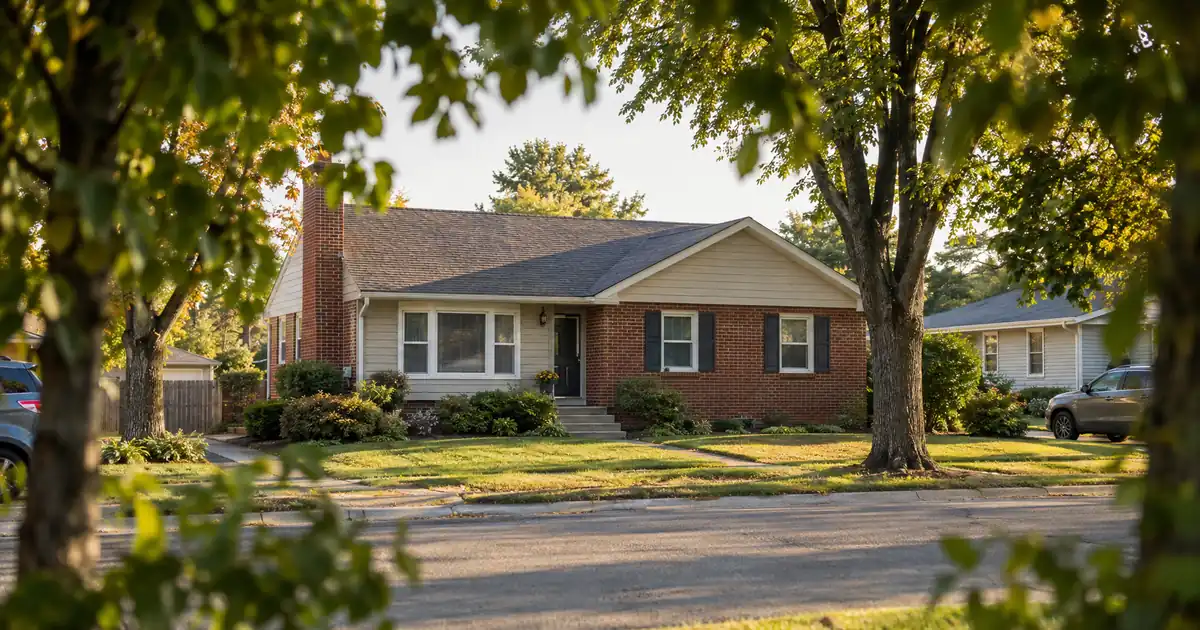
The Quick Read: Paying cash for hail repairs leaves your existing loan and coverage ratio untouched, while a DSCR cash-out refinance makes sense only when the property has enough equity and rent coverage and the roof is already repaired or sound enough to appraise as rent-ready. Both options sit behind the insurance claim, which usually pays first.
- A DSCR loan is reviewed primarily on property-level rental income covering the payment, subject to lender guidelines.
- A cash-out on a standard rental tops out around 75% LTV, with about 6 months of ownership measured from title recording.
- Most programs want the roof fixed before closing, so a cash-out rarely pays for a damaged roof after the fact.
- A bigger loan raises the payment, which can lower your coverage ratio on the same rent.
- Clearing the coverage test is not the same as positive cash flow.
Here is the honest answer on who each option fits. Paying cash suits the investor with real liquidity who wants the repair done now and the loan left alone. A cash-out suits the investor who has equity, strong rent coverage, and a property that is already in lendable condition, and who would rather keep savings working elsewhere. The two are not interchangeable, because one is a spending decision and the other is a financing decision. The complete DSCR loans guide covers the basics if the loan side is new to you.
DSCR Cash-Out Calculator
Run the cash-out numbers in Kansas
Rate source: Freddie Mac 30-yr average via FRED® — Federal Reserve Bank of St. Louis · effective Oct 15, 2026
Prefilled with starting assumptions — enter your property’s value, balance, taxes, and insurance for a more accurate picture.
Program parameters update from Lendmire’s centralized guideline source. Taxes and insurance are editable estimates.
As of Oct 15, 2026 · General Freddie Mac market benchmark, not a Lendmire loan offer. Property value, balance, taxes, and insurance are editable estimates. Maximum loan-to-value varies by lender, program, property type, and seasoning. Not a Loan Estimate, approval, or commitment to lend. Program availability and eligibility are subject to lender guidelines, credit approval, property review, and underwriting.
Side-by-Side
The cash-out column reflects what Lendmire sees across the wholesale network it places files with. The cash column describes what paying out of pocket involves. Programs change, and every file is underwritten individually.
| Factor | Paying Cash | DSCR Cash-Out |
|---|---|---|
| Review basis | None; you spend savings | Rent vs. PITIA, plus equity and credit |
| Documentation | Bids, invoices, claim file | Lease or rent opinion, insurance, title, entity papers |
| Credit | Not reviewed | 620 floor in parts of the network; most want about 660; 700+ for top tiers |
| Leverage | Not applicable | Up to 75% LTV on a standard-rental cash-out |
| Property types | Any rental you own | Eligible rentals; manufactured, log, and barndominium not offered |
| Entity vesting | No change | LLC vesting depends on program |
| Process | Follows your contractor’s schedule | Appraisal, underwriting, title, payoff |
| Reserves | Your own liquidity drops | About 6 months PITIA typical; about 9 above $1,500,000 |
| Effect on current loan | Stays in place | Replaced by a larger new loan |
| Effect on coverage | None | Larger balance can lower the ratio |
When Paying Cash Is the Better Fit
Cash wins when the repair is urgent and the roof is the problem. A damaged roof that lets water in cannot wait for a loan process, and most programs want the property rent-ready at appraisal anyway. If you refinance first, you will likely repair first regardless.
Cash also wins when the true out-of-pocket amount is smaller than the headline bill. Insurance often pays a large share of a covered hail loss. What you fund is the deductible plus any gap between the payout and the contractor’s price. Many Kansas policies carry a separate wind and hail deductible, so read the declarations page before assuming the number.
Other situations where cash is the cleaner path:
- Your existing loan has terms you like, and a replacement loan would reset them.
- Coverage is already thin, so a larger balance could push the ratio toward the edge of a program’s minimum.
- You bought recently and have not reached the seasoning point. Seasoning is the waiting period between purchase and cash-out, and across the network it runs about 6 months from the recorded deed.
- Your credit sits near a program floor, which narrows your options and leverage.
- You have enough reserves that spending on the roof will not leave you short if a tenant leaves.
Cash is also reversible in a way a loan is not. You can rebuild savings over time. A new loan carries its balance, terms, and any prepayment period until you refinance or sell.
When a DSCR Cash-Out Is the Better Fit
A cash-out wins when you have equity, the property earns well, and the repair is not the thing blocking the loan. Picture an investor with a stabilized duplex, a modest balance, and steady rent coverage well above 1.00. A hail claim on one building is a minor event. Pulling cash at up to 75% LTV can fund the work and still leave savings intact for the next purchase or a vacancy. Each figure is subject to lender guidelines and a complete review of property type, leverage, and credit.
It also fits when the repair is large relative to your liquid cash. Insurance on an older roof may settle on an actual-cash-value basis, meaning depreciation is subtracted. The trade publication Rough Notes reports that carriers often add that endorsement at new business when a roof is too old to qualify for replacement cost. In that case the gap between the payout and the bill can be significant, and you are funding it.
The sequence matters. A cash-out can reimburse you for completed repairs, but it generally cannot pay for a roof you have not yet fixed. Most programs in the network want the property rent-ready at appraisal. A roof with active leaks or interior water damage can hold up the file or push it out of eligibility until the work is done and documented.
Qualification runs on two separate tests. Value sets the leverage cap, and rent sets the coverage ratio. The lower result controls how much you can borrow. Equity is not the same as cash, because payoff of the old loan, closing costs, escrows, and reserves all reduce the net.
Here is where the standards stand. A coverage ratio of 1.00 is where many select programs start, and a separate select-lender path takes coverage below 1.00 with leverage and terms adjusted. Loan amounts run up to $3,000,000 on standard programs, and above $2,500,000 the network generally holds to 30-year fixed structures. Vesting in an LLC is possible, subject to lender program eligibility.
What Insurance Pays First
Insurance is the first source of repair money, so it shapes both options. Hail is usually a covered peril, but the payout formula varies by policy.
Three settlement types come up most often:
- Replacement cost. The insurer typically pays actual cash value first, then releases withheld depreciation after repairs are complete and documented.
- Actual cash value. Depreciation is subtracted and stays subtracted, so you carry the difference.
- Roof payment schedule or surfacing endorsement. Payment steps down with roof age.
If the property still has a mortgage, the claim check may be made out to both you and the lender. HSH describes the common loss-draft process, in which larger claims are held and released in stages as repairs progress. How a particular servicer applies this to an investor loan varies. Plan for the funds to arrive in stages, which affects how much cash you front.
Metal roofs add one more wrinkle. Some policies exclude cosmetic-only hail damage, which can leave you paying cash with no recovery. Check your endorsements before the storm season, not after.
That gap between what insurance pays and what the work costs is the real question. Rarely is it the full price of a roof.
Timing: The Roof Does Not Wait
Hail repairs often need to start soon to keep water out. A cash-out involves an appraisal, underwriting, title work, and a payoff, and the condition requirement means the roof may need fixing first anyway. That makes the two options sequential more often than competing.
The practical order looks like this:
1. Document the damage with photos and a contractor inspection, and file the claim.
2. Fix the roof with insurance money plus your own cash.
3. Keep invoices, permits, and a contractor sign-off.
4. If you still want to pull equity afterward, refinance once the property is stable and the file shows the work is complete.
An open claim at the time of the loan can also complicate things. Lenders may want the repairs finished or the claim resolved or documented, and this varies by program. If the appraiser flags repair items, a re-inspection or photo evidence may be required, depending on severity.
A recent purchase adds another layer. Seasoning varies by lender, as practitioners on the BiggerPockets seasoning thread discuss. Across the network Lendmire works with, the common expectation is about 6 months, measured from title recording rather than from the day your rehab ends.
A Modeled Example, Both Ways
Treat this as an illustration with assumed inputs, not a market statistic. Say a Kansas duplex is financed at modest leverage and covers its payment at a ratio around 1.35. A hail claim pays most of a roof replacement on a replacement-cost policy. You owe the deductible and a gap from price changes.
Path one, pay cash. You cover the deductible and gap from savings. The loan, the payment, and the ratio stay where they were. Your liquidity drops by a modest amount.
Path two, cash-out. You refinance to a higher balance, still within the 75% LTV ceiling for a standard-rental cash-out. The payment rises. If rent stays flat, the ratio might drift toward the low 1.2s or lower, depending on balance and terms. You also pay closing costs and keep reserves of about 6 months of PITIA. PITIA means principal, interest, taxes, insurance, and association dues. Leverage, reserves, and pricing vary by lender and program; the final terms follow the full file review.
For a small gap, path one is usually simpler. For a large gap or a thin savings account, path two deserves a hard look, provided the roof is repaired first and the ratio still clears the program minimum with room to spare.
DSCR vs. conventional financing
There are two common ways to finance an investment property, and they qualify you differently — here’s how investors weigh them.
Why investors choose it
- Qualifies on the property’s rental income — no personal tax returns, W-2s, or pay stubs needed to document income.
- No personal debt-to-income ceiling to clear, so existing mortgages and obligations don’t cap your borrowing the same way.
- Can be closed in an LLC, keeping the property inside a business entity.
- Built for scaling — not held to the limit on number of financed properties that conventional financing applies.
- Underwriting centers on the deal: generally qualifies when the rent covers the payment, a 1.00x coverage ratio being a common baseline (confirmed in underwriting).
- Designed specifically for investment property, including long-term and, where the program allows, short-term rentals.
Where it’s strong
- Often the lowest ongoing financing cost for a buyer who fully qualifies on personal income — a fit for a first property or a cost-first purchase.
Trade-offs for investors
- Requires full personal income documentation and must fit within a debt-to-income limit — salary, existing debts, and other mortgages all count.
- Typically held in your personal name rather than a business entity.
- Caps how many financed properties you can carry, which can become a ceiling as a portfolio grows.
- Evaluates you as a borrower as much as the property, which usually means more paperwork.
How investors usually choose: a first or single property often optimizes for the lowest financing cost; portfolio builders often optimize for leverage, vesting in an LLC, and scaling past conventional caps. The right answer depends on your goals, the property, and current guidelines — both paths run through select lenders in Lendmire’s wholesale network, with eligibility and terms confirmed in underwriting.
Passing the Test Is Not Profit
DSCR compares rent to PITIA and nothing else. Repairs, vacancy, management, utilities, and capital reserves sit outside the calculation. A property can clear 1.00 and still lose money in a month with a vacancy and a plumbing call.
That matters here. A cash-out raises the payment, and a hail claim can later raise your insurance premium, which sits inside PITIA. Both push the ratio down on the same rent. Run the ratio after the loan, then add your own real expenses before deciding the deal still works.
Hybrid Plays Worth Considering
The choice is rarely all or nothing. A few combinations work:
- Pay the deductible in cash, finance only the shortfall. You keep the pulled amount small, which protects the ratio.
- Phase the work. Fix the roof now and defer cosmetic items until the next refinance.
- Repair now, refinance later. Let the roof be done, rents hold, and seasoning pass, then revisit a cash-out if you still need liquidity.
- Negotiate the claim first. If the insurer’s estimate is far from your contractor’s, resolving that gap may shrink the cash you need.
Tax treatment varies, and a casualty-loss deduction depends on filing a timely insurance claim per IRS Publication 547, so consult a qualified professional before relying on any deduction.
Key Terms Defined
DSCR (debt service coverage ratio): Monthly rent divided by the full monthly housing payment on the property.
PITIA: Principal, interest, taxes, insurance, and association dues, the full payment the rent must cover.
Cash-out refinance: A new, larger loan that pays off the old one and gives you the difference as cash after costs.
Seasoning: The waiting period a lender requires after you buy before it allows a cash-out.
Actual cash value (ACV): An insurance payout that subtracts depreciation from the cost to repair or replace.
Replacement cost (RCV): An insurance payout that covers the full cost to replace, often paid in two steps.
Rent-ready: A property in good enough condition to be leased as it stands.
The Verdict
Pay cash when the true out-of-pocket gap is modest, the existing loan is working, and you want the roof repaired without adding debt. Choose a DSCR cash-out when the gap is large, the property has strong equity and rent coverage, and the roof is repaired or sound enough to appraise as rent-ready. Most investors end up doing both in sequence: repair with insurance money plus savings, then refinance later if liquidity is still the goal.
If the number only works when the ratio barely clears the program minimum, that is a signal to pay cash or shrink the pull. A smaller loan with room to spare is often the better file than a larger one that clears by a hair.
Frequently Asked Questions
Can a DSCR cash-out pay for hail repairs after closing?
Generally not. Most programs in the network want the property rent-ready at appraisal, so repairs come before the loan. If the roof is damaged but sound, the file may still work. A roof with active leaks usually needs to be fixed first.
Does an insurance claim hurt my chance of getting a cash-out?
An open claim can complicate the file, because lenders may want repairs finished or the claim resolved. A closed claim with documented repairs is easier to review. Insurance cost is also part of PITIA, so any later premium change affects your coverage ratio directly.
Will a cash-out lower my coverage ratio?
Often it does. A larger balance raises the payment, and if rent stays flat the ratio falls. The new loan still has to clear the program minimum, and 1.00 is where many select programs start. Lower coverage is available through select lenders in the network, with leverage and terms adjusted.
How much equity can I pull from a rental after hail damage?
On a standard rental, cash-out generally tops out around 75% LTV. The actual amount depends on appraised value, rent used for lender review, PITIA, reserves, and payoff of the current loan, so it is never a guaranteed figure. The lower of the value test and the rent test controls the size.
What if I bought the property recently?
Across the network, about 6 months of ownership from the recorded deed is the common expectation. Inside that window, the loan may be sized differently, and delayed financing for cash buyers waives the wait but not the coverage test.
Next Steps
If you are buying or refinancing a rental property and want to see how the numbers work, Lendmire can help you compare DSCR loan options based on the property income, credit profile, leverage, and investor goals. Lendmire is a broker that arranges financing through select lenders in its wholesale network, covering 41 markets including Washington, D.C. Qualification is subject to lender guidelines. This is not a commitment to lend.
For how equity extraction works on an investment property, see Lendmire’s guide to cash-out refinance on an investment property.
About Lendmire
As a DSCR and non-QM mortgage broker, Lendmire — NMLS# 2371349 — connects investors with wholesale lending channels across 41 markets, including Washington, D.C. The property’s rental income, not the borrower’s tax returns, is central to lender review, which works for self-employed operators and portfolios beyond four financed properties. Scotsman Guide named Lendmire a Top Mortgage Workplace in both 2025 and 2026.
Get Started
Ready to find the right loan for you?
In about 30 seconds you can review financing options available for your investment property. No commitment required.
Informational only. Not a Loan Estimate, approval, or commitment to lend. Program availability and eligibility are subject to lender guidelines, credit approval, property review, and underwriting.
References
1. roughnotes.com: Homeowners Roof Surfacing Coverage Considerations
2. HSH, how a mortgage lender releases an insurance check
3. BiggerPockets seasoning thread
This article is part of Lendmire’s investment property cash-out refinance program — full qualification details, guidelines, and scenarios live on the program page.
Related reading: Should a Condo Owner Use a Second Lien Instead of DSCR Cash-Out? · How to Run a Cash-Out Refinance Across a Whole Rental Portfolio · How to Re-Quote Rental Insurance When a Renewal Sinks Your DSCR
Guides: Investment Property Cash-Out Refinance in Kansas
Brandon Miller
Founder & CEO, Mortgage Loan Originator, Lendmire LLC
- Mortgage Loan Originator · NMLS# 1129696 · Verify on NMLS Consumer Access
- North Carolina Real Estate Broker · License# 343312 · Verify on NCREC
- North Carolina Insurance Producer · License# 19053198 · Property, Casualty, Life, Health · Verify on NAIC SBS
- Lendmire LLC · Firm NMLS# 2371349 · Verify firm licensure
Required disclosures. Lendmire (NMLS# 2371349) operates as a licensed mortgage broker, not a direct lender or depository. The discussion in this article is general in nature and should not be relied upon as financial, legal, or tax advice — every investment scenario is unique and should be reviewed by a qualified professional. Any loan inquiry is subject to lender underwriting, and this article is not a commitment to lend or a guarantee of approval. Mortgage rates, loan terms, and program guidelines vary by borrower, property, and state, and may change without notice. Equal Housing Opportunity. Verify licensure at NMLS Consumer Access.