
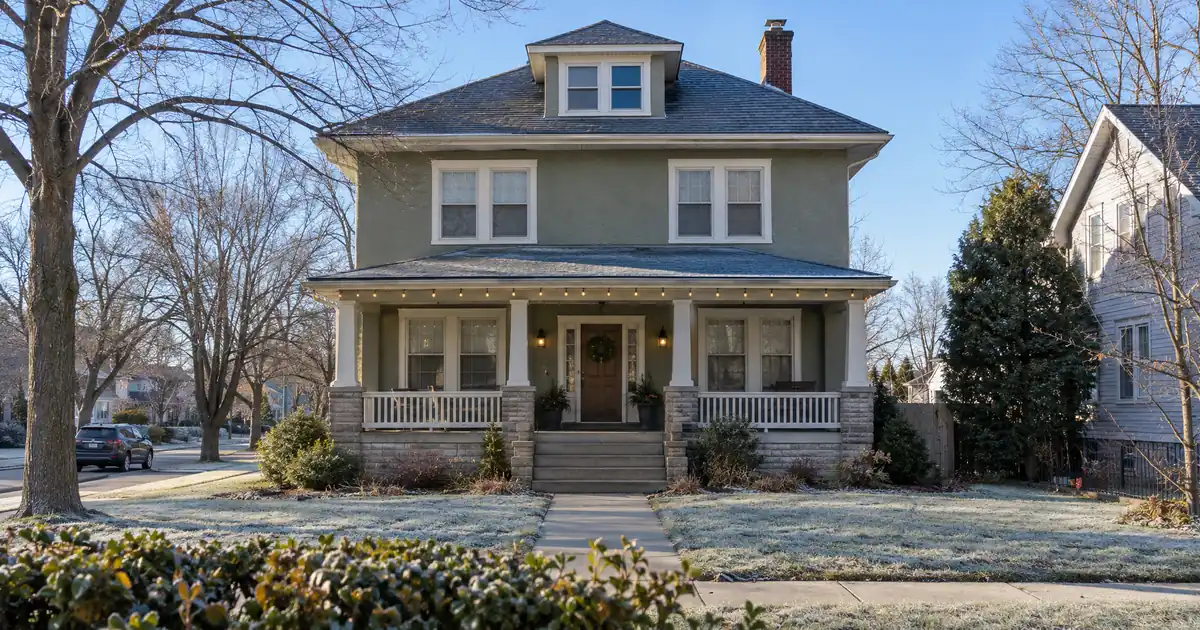
The Quick Read: Usually not by itself: an open roof claim does not automatically stop a DSCR cash-out, but it becomes a problem when the roof is leaking, the repair is unfunded, or the insurer will not cover the property going forward, because the lender reviews condition, insurance, and who controls the claim money.
- DSCR means debt service coverage ratio: the rent compared with the full monthly housing obligation. The loan is reviewed primarily on property-level rental income covering the payment, subject to lender guidelines.
- The claim matters only through what it does to condition, insurability, and rent.
- A repaired roof with a claim still technically open is usually the most workable version.
- A tarped or leaking roof usually means repair first, then refinance.
- Never treat the claim check as your cash-out. It is usually tied to the repair.
Key Terms Defined
You will see these terms in every conversation about this topic.
Open claim: An insurance claim that has been filed but not fully paid, supplemented, or closed.
Claim proceeds: The money the insurer pays on the claim, often in more than one check.
Mortgagee (loss payee): The lender named on your policy. Claim checks are typically payable to both the owner and this lender.
Actual cash value (ACV): The depreciated value of the damaged item. A roof with years of wear is worth less on this basis.
Replacement cost (RCV): The cost to replace the item with a new one. Policies with this coverage often release the difference after the repair is done.
CLUE report: More on it below.
PITIA: Principal, interest, taxes, insurance, and any association dues. It is the payment that your rent is measured against.
Seasoning: The ownership period a lender wants before it allows a cash-out. Across the wholesale network Lendmire places files with, about 6 months from title recording is the usual expectation.
Rent-ready: A property that is safe, weather-tight, and fit to be leased today.
DSCR Cash-Out Calculator
Run the cash-out numbers in your market
Rate source: Freddie Mac 30-yr average via FRED® — Federal Reserve Bank of St. Louis · effective Oct 15, 2026
Prefilled with starting assumptions — enter your property’s value, balance, taxes, and insurance for a more accurate picture.
Program parameters update from Lendmire’s centralized guideline source. Taxes and insurance are editable estimates.
As of Oct 15, 2026 · General Freddie Mac market benchmark, not a Lendmire loan offer. Property value, balance, taxes, and insurance are editable estimates. Maximum loan-to-value varies by lender, program, property type, and seasoning. Not a Loan Estimate, approval, or commitment to lend. Program availability and eligibility are subject to lender guidelines, credit approval, property review, and underwriting.
Why Does a Lender Care About an Open Claim?
A DSCR cash-out lender is buying into the property as collateral. It wants three things: a building worth what the appraisal says, a hazard policy that is in force, and a clean path for any insurance money. An open claim touches all three.
The claim itself is just paperwork. The question behind it is physical. Is the roof doing its job right now? Most programs in the network want a rent-ready property at closing. A roof with life left is often reviewed case by case. An active leak generally has to be repaired before the deal works.
Here is the pattern that plays out in practice. The claim opens, the appraiser sees the roof, and the appraiser rates condition. The lender then decides whether to proceed, require repairs, or wait. The underwriter is not scoring you for filing a claim. It is scoring what the claim says about the house.
Three Claim States, Three Different Files
Lenders see three different situations that all get called “an open claim.” Separating them tells you where you stand.
| Claim state | What the lender and appraiser see | Likely effect on cash-out | Your next move |
|---|---|---|---|
| Filed, nothing paid, roof damaged | Visible damage, no repair funds | Often blocked or conditional | Repair or fund the work first |
| Paid, but repair not done | Money received, roof still open | Tight scrutiny, repair condition | Finish the work and document it |
| Repaired, claim closing out | Sound roof, final paperwork pending | Usually the most workable | Send proof of completion |
The middle row is where files stall. The insurer paid, the owner is holding or splitting the check, and the roof is still tarped. A lender reads that as damaged collateral with no plan.
How the Roof Shows Up in the Appraisal
The appraiser is not a roof inspector. The appraisal is a value-and-rent opinion, and it does not certify the roof or the plumbing. Still, visible problems get noted. Missing shingles, staining, a tarp, or interior water marks can trigger a lower condition rating or a report written subject to completion of repairs.
Appraisers rate condition on a C1 to C6 scale. Each lender sets its own cutoff for what it will accept on a cash-out, and it varies across the network. The same roof can pass with one lender and need a fix with another.
Two forms matter on a rental file. The 1007 is the rent schedule, which supports the market rent. The 1004 (single-family) or 1025 (small multifamily) carries the value and condition opinion. Leases and rent rolls help support the rent. They do not support the condition.
If the report comes back subject to repairs, expect a short list of conditions. Typical ones are a contractor invoice, photos, a roofer’s sign-off, or a re-inspection. Cash-out also gets closer condition scrutiny than a payoff-only refinance, and it sits at lower leverage. In the network, cash-out on an investment property tops out around 75% LTV, which is loan-to-value, the loan as a share of appraised value. Final terms depend on the lender’s guidelines, the property type, and the borrower’s complete credit picture.
Where the Claim Shows Up
Disclose it. Do not count on it staying hidden.
Claim data lives in a database called CLUE. The Washington Office of the Insurance Commissioner explains that CLUE is a report of up to seven years of personal property claims, generated when an insurer starts, denies, or pays a claim. Yahoo Finance’s CLUE explainer adds that the report shows the loss type, whether the claim is open or resolved, and the payout where applicable.
Insure.com notes that the claim stays on the property’s record. A new insurer will price the policy as if you filed it. That matters here because a cash-out needs a policy that can be bound at closing.
A denied claim can still appear. A damaged roof that was never repaired is still a condition issue, whatever the claim status says.
What an Open Claim Does to the Numbers
The claim does not change the rent. It can change the denominator. Insurance is part of PITIA, so a higher premium after a claim lowers coverage.
Run it as a modeled illustration, not a market fact. Say a rental clears about 1.15x before the claim. After the claim, the carrier reprices the policy and coverage slips to about 1.05x. That is still above the 1.00 where many select programs start, but the cushion is thin. A separate select-lender path takes coverage below 1.00 with leverage and terms adjusted. A thinner ratio can also mean less room on pricing and leverage tiers, because stronger coverage opens better terms.
Now add the roof. If the appraisal is subject to repairs, the loan waits on the repair. If the policy is non-renewed or excluded for the roof, the file may not clear insurance at all. The ratio can look fine while the insurance condition stops the deal.
One more point on the math. Clearing 1.00 is not the same as positive cash flow. DSCR compares rent to PITIA only. Repairs, vacancy, management, utilities, and capex sit outside the calculation, and a roof is a capex item.
Across the network, other file basics still apply. Credit floors start at 620 in parts of the network, most programs want around 660, and 700 or more opens the strongest leverage tiers. Reserves commonly run about 6 months of PITIA, stepping up to about 9 months above $1,500,000. Loan sizes reach up to $3,000,000 on standard programs. All of this is subject to lender guidelines, and each file is underwritten individually.
Who Controls the Claim Check?
Usually not you, alone. With a mortgage on the property, claim checks are typically made out to both the owner and the lender. The lender then runs its own endorsement or release process. Many lenders hold the funds and release them as repairs are verified. Confirm the exact handling in your loan documents.
The California Department of Insurance claims guide points out that the first check is often an advance, not the final payment. Staged payment is common. The insurer pays actual cash value less the deductible first. The rest of the replacement cost comes after the repair is done or a contract is signed. A cash-value-only policy pays only the depreciated amount, which can leave a funding gap.
That is why the claim check cannot be your cash-out. It is earmarked for the repair. A refinance that tries to pull equity while the claim money is unspent invites a hard look from the lender.
Debt.com’s expert Q&A on refinancing with an open claim addresses owner-occupied loans, so treat it as an analogy only. Its logic carries over. Refinancing is straightforward when the claim check has been signed off by the current lender. It gets harder when the check is unpaid and the damage is unrepaired, because value can be conditional on completion and the new lender may refuse cash-out until the damage is fixed.
DSCR vs. conventional financing
There are two common ways to finance an investment property, and they qualify you differently — here’s how investors weigh them.
Why investors choose it
- Qualifies on the property’s rental income — no personal tax returns, W-2s, or pay stubs needed to document income.
- No personal debt-to-income ceiling to clear, so existing mortgages and obligations don’t cap your borrowing the same way.
- Can be closed in an LLC, keeping the property inside a business entity.
- Built for scaling — not held to the limit on number of financed properties that conventional financing applies.
- Underwriting centers on the deal: generally qualifies when the rent covers the payment, a 1.00x coverage ratio being a common baseline (confirmed in underwriting).
- Designed specifically for investment property, including long-term and, where the program allows, short-term rentals.
Where it’s strong
- Often the lowest ongoing financing cost for a buyer who fully qualifies on personal income — a fit for a first property or a cost-first purchase.
Trade-offs for investors
- Requires full personal income documentation and must fit within a debt-to-income limit — salary, existing debts, and other mortgages all count.
- Typically held in your personal name rather than a business entity.
- Caps how many financed properties you can carry, which can become a ceiling as a portfolio grows.
- Evaluates you as a borrower as much as the property, which usually means more paperwork.
How investors usually choose: a first or single property often optimizes for the lowest financing cost; portfolio builders often optimize for leverage, vesting in an LLC, and scaling past conventional caps. The right answer depends on your goals, the property, and current guidelines — both paths run through select lenders in Lendmire’s wholesale network, with eligibility and terms confirmed in underwriting.
Edge Cases Worth Knowing
Repaired roof, claim still technically open. Supplements or a depreciation holdback may be pending, but the roof is sound. This is usually the most workable situation. Document the completed work.
Tarped or leaking roof with interior damage. The unit is likely not rent-ready. Repair first, then cash out. Some investors bridge the repair period and move to the DSCR loan afterward.
Claim denied, or closed without payment. The roof is still your problem. Carriers often deny claims for wear and tear, and a plain leak without storm damage may pay little or nothing after the deductible.
Tenant in place. An active leak, a habitability complaint, or an uninhabitable unit adds risk. A lease supports the rent but cannot offset a condition problem.
Seasoning not met. If you are inside the roughly 6-month window from title recording, the claim is a second hurdle on top of a first one.
Heavy depreciation. If the insurer’s payout falls short of the roof cost, you fund the gap before refinancing.
Repair First, Refinance First, or Wait?
Sequence is the decision. Here is how the options compare.
| Situation | Best move | Cost or risk |
|---|---|---|
| Roof repaired, proof in hand | Apply now | Low; keep invoice and photos ready |
| Roof tarped, funds received | Finish repair, then apply | Carry cost while you wait |
| Roof damaged, claim unpaid | Fund repair or wait for payout | Appraisal can come back conditional |
| Cash-out blocked | Consider a payoff-only refinance | No cash back; same condition review |
If you are tempted to apply now and sort the roof out later, think about the appraisal fee. An appraisal on a damaged property can come back subject to completion, and you pay for it either way. Fixing the roof first often costs less than redoing the process.
Claim or Pay Out of Pocket?
Not every roof problem deserves a claim. Insure.com says two small claims in three years can raise your premium more than one large one. It adds that a claim is usually worth filing only when damage is well above your deductible.
For a DSCR investor, a higher premium also lowers coverage. A new roof can lower insurance cost at renewal, so paying out of pocket for a small repair can protect the ratio. A storm-damaged roof with a payout far above the deductible is a different case. File it, finish the repair, and document it.
Do not pocket claim money without doing the work. That leaves a damaged roof, a claim on the record, and a lender who sees both. Roof replacement tied to insurance proceeds also raises basis and depreciation questions. Tax treatment can depend on how the funds are used and how the property is held; investors should keep clear records and speak with a qualified tax professional before relying on any deduction.
For the wider choice of how to pull equity from a rental, see Lendmire’s piece Should an Investor Cash Out a Rental, Open a HELOC or Bundle?.
Documents to Have Ready
A lender wants proof that the problem is solved. Assemble this early:
- The claim number, adjuster’s report, and payment letters
- The roofer’s contract, final invoice, and completion certificate
- Photos of the finished roof and any interior repairs
- A permit sign-off where one was required
- Current insurance declarations showing the right named insured and address
- A closure letter from the insurer, if the claim is wrapping up
- The lease and rent roll, so the rent schedule is supported
Common Mistakes
- Applying with the roof still open. The appraisal can come back conditional and cost you a fee.
- Relying on a stale insurance estimate. A premium that jumps late in the file changes the coverage ratio.
- A named-insured mismatch. If the property is titled in an LLC, the policy and loan documents have to match, subject to lender program eligibility.
- Starting repairs before the adjuster inspects. It can complicate the claim.
- Assuming no claim shows on CLUE means no damage. Not every insurer reports, so a blank report does not prove nothing happened.
- Asking the insurer a question and assuming it opened a claim. The Washington OIC notes that insurers are advised not to report mere coverage or deductible questions, but Insure.com cautions that inquiries can sometimes get logged anyway. Ask carefully.
Frequently Asked Questions
Can I apply while the claim is open?
Yes, if the roof is sound and the repair is documented. Disclose the claim up front. If the roof is still damaged, expect a repair condition or a decision to wait.
Does the claim raise my insurance premium?
Often, yes. The claim stays on the property record, and a new insurer prices as if you filed it. A higher premium lowers DSCR because insurance sits inside PITIA.
What if the roof is leaking right now?
Repair first. Most programs in the network want a rent-ready property, and an active leak generally is not eligible until it is fixed. Once repaired and documented, you can apply.
Can I use the cash-out to pay for the roof?
That is the wrong order. The property must meet condition standards before the loan, and the roof is part of that. Fund the repair first, then cash out, up to about 75% LTV on an investment property, subject to lender guidelines.
How long will I wait?
It depends on the repair, the insurer’s schedule, and how fast you assemble the documents. The 6-month seasoning requirement from title recording is separate and runs on its own clock.
Next Step
If you are buying or refinancing a rental property and want to see how the numbers work, Lendmire can help you compare DSCR loan options based on the property income, credit profile, leverage, and investor goals. Lendmire is a mortgage broker arranging financing through select lenders in its wholesale network across 41 markets, including Washington, D.C. Call 828-256-2183 to talk through your roof situation. For the full picture of how these loans work, see the complete DSCR loans guide. Treatment varies by lender, so ask yours how it handles open claims and repair proof before you pay for an appraisal. Programs change, and each file is underwritten individually. This is not a commitment to lend.
Roof claims close out on paperwork as much as shingles. The investor who documents the repair before applying turns an open claim into a closed question.
For how equity extraction works on an investment property, see Lendmire’s guide to cash-out refinance on an investment property.
For current guidelines and terms, see Lendmire’s DSCR loan programs page.
About Lendmire
As a DSCR and non-QM mortgage broker, Lendmire — NMLS# 2371349 — connects investors with wholesale lending channels across 41 markets, including Washington, D.C. The property’s rental income, not the borrower’s tax returns, is central to lender review, which works for self-employed operators and portfolios beyond four financed properties. Scotsman Guide named Lendmire a Top Mortgage Workplace in both 2025 and 2026.
Get Started
Ready to find the right loan for you?
In about 30 seconds you can review financing options available for your investment property. No commitment required.
Informational only. Not a Loan Estimate, approval, or commitment to lend. Program availability and eligibility are subject to lender guidelines, credit approval, property review, and underwriting.
References
1. Washington Office of the Insurance Commissioner: CLUE
2. Yahoo Finance’s CLUE explainer
3. Insure.com: CLUE and Past Claims Guide
4. California Department of Insurance: Residential Property Claims Guide
5. Debt.com: Refinancing With an Open Insurance Claim
This article is part of Lendmire’s investment property cash-out refinance program — full qualification details, guidelines, and scenarios live on the program page.
Related reading: How to Choose a DSCR Cash-Out or HELOCs on Paid-Off Rentals · How to Refinance a Newly Leased Rental With a DSCR Loan · Should a Condo Owner Use a Second Lien Instead of DSCR Cash-Out?
Brandon Miller
Founder & CEO, Mortgage Loan Originator, Lendmire LLC
- Mortgage Loan Originator · NMLS# 1129696 · Verify on NMLS Consumer Access
- North Carolina Real Estate Broker · License# 343312 · Verify on NCREC
- North Carolina Insurance Producer · License# 19053198 · Property, Casualty, Life, Health · Verify on NAIC SBS
- Lendmire LLC · Firm NMLS# 2371349 · Verify firm licensure
Important disclosures. Lendmire (NMLS# 2371349) is a licensed mortgage brokerage. Lendmire is not a direct lender, depository institution, or financial advisor. All loan inquiries are subject to lender underwriting; this article does not constitute a commitment to lend. Rates, terms, and program guidelines are subject to change without notice and vary by borrower profile, property type, and state. Information in this article is general in nature and is not financial, legal, or tax advice. Equal Housing Opportunity. NMLS Consumer Access: nmlsconsumeraccess.org.