
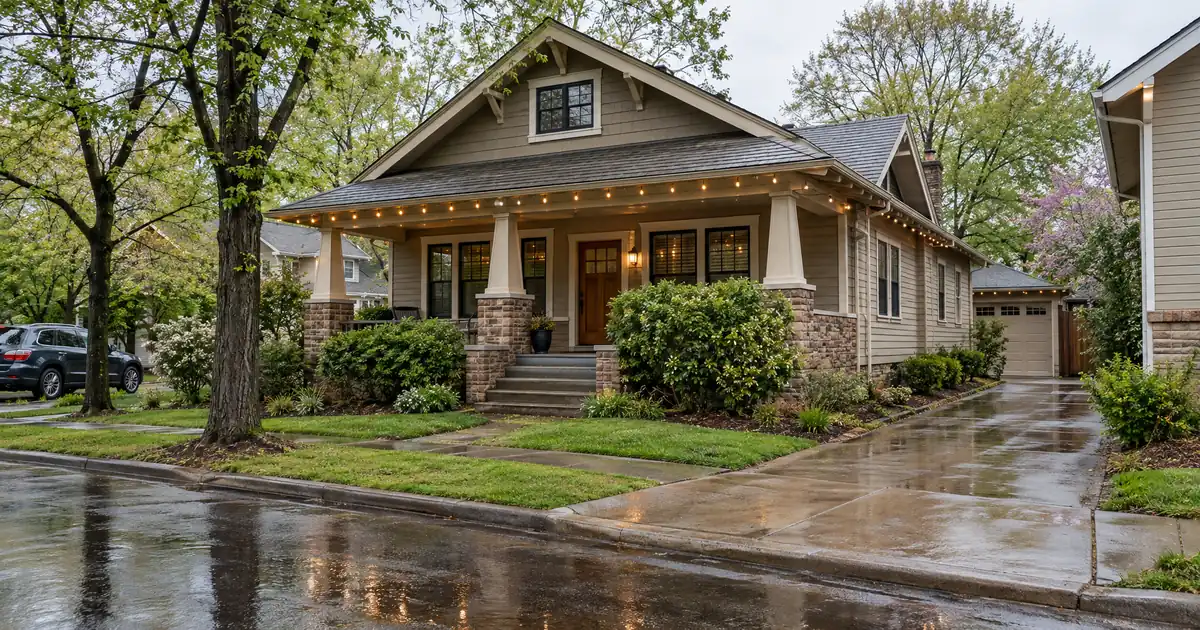
The Quick Read: For storm repairs, cash reserves are usually the first source of money, because a DSCR cash-out refinance generally works only on a property that is rent-ready, and storm damage often keeps a unit from meeting that test, so cash-out fits better after repairs are finished, when you want to rebuild liquidity or pull equity. Neither option is automatically right. Each answers a different question.
- Reserves pay for repairs now, with no new loan, but they shrink the cushion lenders want to see later.
- A DSCR cash-out is a new first-lien loan. It qualifies primarily on property-level rental income covering the payment, subject to lender guidelines.
- Cash-out on an investment property tops out at 75% LTV across most of our network, with about 6 months of ownership expected first.
- Passing the coverage test does not mean the property makes money after repairs, vacancy, and capital costs.
- Insurance claim money on a mortgaged property is often released in stages, which is another reason to hold your own cash.
DSCR means debt service coverage ratio. It compares monthly rent to the full monthly housing payment. This article is for owners deciding between spending savings and borrowing against equity after a storm. The honest answer depends on three things: whether the unit can earn rent today, how much liquidity you would keep, and how much equity the loan would actually release.
DSCR Cash-Out Calculator
Run the cash-out numbers in your market
Rate source: Freddie Mac 30-yr average via FRED® — Federal Reserve Bank of St. Louis · effective Oct 15, 2026
Prefilled with starting assumptions — enter your property’s value, balance, taxes, and insurance for a more accurate picture.
Program parameters update from Lendmire’s centralized guideline source. Taxes and insurance are editable estimates.
As of Oct 15, 2026 · General Freddie Mac market benchmark, not a Lendmire loan offer. Property value, balance, taxes, and insurance are editable estimates. Maximum loan-to-value varies by lender, program, property type, and seasoning. Not a Loan Estimate, approval, or commitment to lend. Program availability and eligibility are subject to lender guidelines, credit approval, property review, and underwriting.
Side-by-Side
The table shows how the two paths compare. The DSCR column reflects published industry norms for how these files typically work. The reserves column describes plain self-funding with no new debt.
| Factor | DSCR Cash-Out | Cash Reserves |
|---|---|---|
| Review basis | Property rent vs. full payment | None; it’s your money |
| Documentation | Lease or market-rent appraisal, insurance, title | Receipts and contractor bids |
| Property condition | Typically must be rent-ready at closing | Any condition |
| Property types | Standard rentals; some types not offered | Any property you own |
| Entity vesting | Individual or LLC, per program terms | Title unchanged |
| Sequence | Repairs usually come first, then the refinance | Repairs can start when you decide |
| Reserve effect | Lender wants post-closing liquidity | Spending lowers your cushion |
| Coverage effect | Larger balance lowers the coverage ratio | Existing coverage unchanged |
Two rows deserve a second look. The first is property condition. The second is reserve effect, because the two options pull in opposite directions there. One adds debt and keeps cash. The other keeps the loan as it is and spends cash.
Key Terms Defined
PITIA is principal, interest, taxes, insurance, and association dues. It is the full monthly housing payment a DSCR lender measures rent against.
Reserves are liquid funds a lender wants you to hold after closing. They are usually counted in months of PITIA.
Cash-out refinance replaces your current loan with a larger one and returns the difference to you.
Seasoning is the ownership period a lender expects before a cash-out. On most files in our network that is about 6 months, measured from title recording.
Loss draft is the process where a mortgage servicer holds an insurance check and releases it in stages as repairs progress.
Capex means capital expenses, the big-ticket items like roofs. DSCR does not count them.
When DSCR Cash-Out Is the Better Fit
A DSCR cash-out wins when the repairs are done, the unit is rented or ready to rent, and you want equity back in your hands. It is a rebuilding tool more than an emergency tool.
Picture an owner whose roof was replaced and whose tenant is back in place. The savings account took a hit. A cash-out can refill reserves, and it can fund the next purchase. That is a sound use. Any cash-out is subject to lender guidelines and a complete review of property type, leverage, and credit.
It also fits when the repair bill is larger than your liquid cash, but only when something else carries the project until the property can earn rent again. A short-term bridge or rehab loan is the usual stopgap. Once the work is finished and the unit is rent-ready, a DSCR refinance can replace the bridge. Those two loans do different jobs, and they work best in sequence.
Here is what the lender looks at for a cash-out on a storm-hit rental:
- Value and condition. The appraisal covers value, condition, and market rent. Material unrepaired damage can lead to a completion or re-inspection report, commonly on Form 1004D, whose name is published as the Appraisal Update and/or Completion Report.
- Rent. If the unit sat empty after the storm, the lender can use the appraiser’s market-rent opinion rather than the old lease. That opinion is typically on Form 1007, the Single-Family Comparable Rent Schedule.
- Coverage. 1.00 is where many select programs start. A separate select-lender path takes coverage below 1.00, with leverage and terms adjusted.
- Credit. A 620 floor exists in parts of the network. Most programs want around 660, and 700 or higher unlocks the strongest leverage tiers.
- Insurance and file items. Adequate coverage, open appraisal conditions, and required repairs all matter to the file.
Loan sizes run up to $3,000,000 on standard programs. If the property is held in an LLC, the entity borrows and an individual typically guarantees, subject to lender program eligibility. Insurance claim checks need to name the right insured and mortgagee, so an entity mismatch can slow claim handling.
Not every property type qualifies. Manufactured homes, log homes, and barndominiums are not offered through these programs, so a storm-hit property of that type needs a different plan.
When Cash Reserves Are the Better Fit
Reserves win when the damage is real but manageable, when the property is not yet rent-ready, or when borrowing would cost more than the problem is worth. They are also the only source that moves when you do.
Start with the timing problem. A contractor wants a deposit. The claim check may still be weeks from release. If the mortgage is held by a servicer, the insurer’s payment is often made out to both you and the servicer. DCSPIA, an insurance adjuster practitioner, describes a restricted-account process where an initial release is commonly around one-third of proceeds and later draws follow inspections. Practices differ by servicer, loss size, and program. The point is simple: claim money is not instantly spendable, and your own cash covers the gap.
The security instrument matters too. The standard Fannie Mae and Freddie Mac form generally sends proceeds to restoration when repair is economically feasible and the lender’s security is not lessened. That describes agency-form notes. A non-QM note may read differently, so check your own note and ask your servicer before assuming anything.
Reserves also make sense when the numbers on a cash-out do not work. Four situations point that way:
1. Thin coverage. A larger loan balance raises the payment and lowers the coverage ratio. If you are already near the floor, a bigger loan may push the file below it.
2. Damage that blocks the appraisal. If condition problems stop a clean report, cash-out may not be available until repairs are done.
3. A small repair bill. Refinancing carries its own closing costs, so borrowing against the property for a modest repair is often poor value.
4. A short horizon. If you plan to sell, a new loan may not be worth the setup.
The trade-off is liquidity. Reserves are not only for emergencies. Lenders look at them when they qualify you, and our network commonly expects about 6 months of PITIA after closing. Conservative rate-and-term files at modest leverage under $1,500,000 can see reserves waived, while loans above that size typically step up to about 9 months. These expectations vary by lender, leverage, loan size, and transaction type.
Investor opinion on reserve size varies. BiggerPockets argues that three months is too little, since it can take that long just to get a rental repaired and re-rented. Treat that as one investor’s view, not a rule. The practical lesson is to size your cushion for repair time plus lost rent, not just for the mortgage payment.
Do Cash-Out Proceeds Count as Reserves?
Generally no, not for the same loan. Reserves are measured after closing costs and payoff, so cash that comes out of the refinance cannot be double-counted as the cushion the same refinance requires. Lenders do differ on how they treat proceeds, so confirm the rule before you commit to a plan that depends on it.
This is the reserve paradox. If you spend savings on repairs and then refinance, you may arrive at the refinance with less liquidity than the program wants. If you borrow to restore savings, the new cash does not automatically rescue the file. The strongest files clear both tests: enough equity and enough rental coverage, plus real liquidity that is not borrowed from the transaction itself.
DSCR vs. conventional financing
There are two common ways to finance an investment property, and they qualify you differently — here’s how investors weigh them.
Why investors choose it
- Qualifies on the property’s rental income — no personal tax returns, W-2s, or pay stubs needed to document income.
- No personal debt-to-income ceiling to clear, so existing mortgages and obligations don’t cap your borrowing the same way.
- Can be closed in an LLC, keeping the property inside a business entity.
- Built for scaling — not held to the limit on number of financed properties that conventional financing applies.
- Underwriting centers on the deal: generally qualifies when the rent covers the payment, a 1.00x coverage ratio being a common baseline (confirmed in underwriting).
- Designed specifically for investment property, including long-term and, where the program allows, short-term rentals.
Where it’s strong
- Often the lowest ongoing financing cost for a buyer who fully qualifies on personal income — a fit for a first property or a cost-first purchase.
Trade-offs for investors
- Requires full personal income documentation and must fit within a debt-to-income limit — salary, existing debts, and other mortgages all count.
- Typically held in your personal name rather than a business entity.
- Caps how many financed properties you can carry, which can become a ceiling as a portfolio grows.
- Evaluates you as a borrower as much as the property, which usually means more paperwork.
How investors usually choose: a first or single property often optimizes for the lowest financing cost; portfolio builders often optimize for leverage, vesting in an LLC, and scaling past conventional caps. The right answer depends on your goals, the property, and current guidelines — both paths run through select lenders in Lendmire’s wholesale network, with eligibility and terms confirmed in underwriting.
Worked Example: One Repair Bill, Three Paths
Run a modeled scenario. These are illustrative assumptions, not market data. A rental clears roughly 1.25x coverage before a storm. A damaging storm leaves repairs that are meaningful but well below what the equity could support. Assume the property sits comfortably under the 75% cash-out LTV ceiling. Leverage, reserves, and pricing vary by lender and program; the final terms follow the full file review.
Path one: all cash. You pay contractors from savings. The loan stays as it is, so coverage stays near 1.25x once the unit re-rents. Your reserve cushion drops, and you need time to rebuild it. This path is simple and keeps your loan clean.
Path two: borrow after repairs. Repairs must be done first, so something else carries the project, either savings or a short-term bridge. After the unit is rent-ready, a DSCR cash-out replaces the bridge and returns equity. The balance rises, so coverage might slide to around 1.15x on the same rent. That still clears a 1.00 floor, but you have less room before it stops clearing. Your cash is restored, though the cash-out itself does not count as reserves on that same loan.
Path three: hybrid. You pay the first costs from savings, then pull a smaller cash-out sized to the actual remaining need. The coverage dip is smaller because the balance rises less. You carry a smaller loan than the full cash-out in path two, though you also keep less cash in reserve than if you had borrowed the whole amount.
Notice what the example leaves out. DSCR compares rent to PITIA only. Repairs, vacancy, management, utilities, and capex sit outside the calculation. A property can clear 1.00 and still lose money in the months a unit is empty. Never read the ratio as a cash-flow guarantee.
Vacancy deserves its own warning. While a unit is uninhabitable, the lender cannot count rent you are not collecting. The appraiser’s market-rent opinion carries the file instead, and that only helps once the property can truly be leased. Multi-property loans add a wrinkle. On a blanket note, a damaged house can drag the pooled coverage ratio down until it earns rent again.
Where the Agencies Fit
DSCR loans are not agency products, so agency rules do not govern them. The only reason to mention them is contrast. The agency selling guide says Form 1007 is required on a one-unit investment property when rental income is used to qualify. DSCR lenders borrow the same form names for the rent opinion and the re-inspection, and each program decides whether to accept them.
The Balanced Verdict
Use cash reserves when speed of action matters, when the property is not yet rent-ready, when the bill is modest, or when coverage is already tight. Use a DSCR cash-out when the work is done, the unit is earning, and you want to rebuild liquidity or fund the next deal. Use a hybrid when your cushion would otherwise fall below what a lender would want to see.
Put the questions in order. Is the property rent-ready? Does the loan size clear both the 75% LTV ceiling and the coverage floor? After the repairs, how many months of PITIA would you still hold? If the answers are no, tight, and thin, a cash-out is the wrong tool right now. Terms vary by lender guidelines, property type, leverage, credit profile, and full file review.
For the full picture of how these loans work, see Lendmire’s complete DSCR loans guide.
Frequently Asked Questions
Can a DSCR cash-out pay for storm repairs on a damaged rental?
Usually not directly. Programs in our network typically expect the property to be rent-ready at closing, so the loan generally cannot be the repair fund. Savings, claim proceeds, or a short-term bridge usually carry the work, and a DSCR refinance follows once the unit can earn rent.
Should I wait for the insurance check before refinancing?
It depends on where the claim stands. Money held by a servicer sits outside a new loan until the old lien is paid off, so payoff mechanics matter. If the claim is open and the damage is unrepaired, the appraisal may flag it. Settling the claim and finishing repairs first usually makes for a cleaner file.
Does spending reserves on repairs hurt a later refinance?
It can, because lenders measure liquidity after closing, and most files in our network look for around 6 months of PITIA, with variation by lender, leverage, and loan size. If repairs drain your cash, you may need to rebuild it before a cash-out lines up.
What happens to my coverage ratio if the unit sits empty?
The lender cannot count rent you are not collecting. The appraiser’s market-rent opinion can stand in once the unit is habitable, but a larger post-refinance balance still lowers the ratio. The ratio itself ignores repairs and vacancy.
What if my coverage falls below 1.00?
1.00 is where many select programs start. Eligibility still depends on credit, reserves, property review, and lender guidelines.
Next Step
If you are buying or refinancing a rental property and want to see how the numbers work, Lendmire can help you compare DSCR loan options based on the property income, credit profile, leverage, and investor goals. Lendmire is a broker that arranges financing through select lenders in its wholesale network across 41 markets, including Washington, D.C. Programs change, and every file is underwritten individually.
About Lendmire
Lendmire is a DSCR-focused mortgage brokerage, NMLS# 2371349, placing investor loans across 41 markets, including Washington, D.C. DSCR eligibility is generally reviewed by the lender around a property’s rental income rather than personal income documentation, which fits LLC-held rentals, self-employed investors, and portfolios scaling past conventional financed-property limits. Scotsman Guide named Lendmire a Top Mortgage Workplace in both 2025 and 2026.
For the mechanics of pulling equity out of a rental property, see Lendmire’s guide to cash-out refinance on an investment property.
Get Started
Ready to find the right loan for you?
In about 30 seconds you can review financing options available for your investment property. No commitment required.
Informational only. Not a Loan Estimate, approval, or commitment to lend. Program availability and eligibility are subject to lender guidelines, credit approval, property review, and underwriting.
References
1. Fannie Mae Selling & Servicing Guide Forms
2. DCSPIA, Insurance Claim Check and Mortgage Loss Draft
3. BiggerPockets, Alternative to the BRRRR Method
This article is part of Lendmire’s investment property cash-out refinance program — full qualification details, guidelines, and scenarios live on the program page.
Related reading: How to Get a DSCR Loan on Your First Rental After a Bank Said No · Should an Investor Close a Cash-Out Refinance That Appraises Low? · How to Decide Between a Cash-Out Refinance and Selling a Rental
Brandon Miller
Founder & CEO, Mortgage Loan Originator, Lendmire LLC
- Mortgage Loan Originator · NMLS# 1129696 · Verify on NMLS Consumer Access
- North Carolina Real Estate Broker · License# 343312 · Verify on NCREC
- North Carolina Insurance Producer · License# 19053198 · Property, Casualty, Life, Health · Verify on NAIC SBS
- Lendmire LLC · Firm NMLS# 2371349 · Verify firm licensure
Important disclosures. Lendmire (NMLS# 2371349) is a licensed mortgage brokerage. Lendmire is not a direct lender, depository institution, or financial advisor. All loan inquiries are subject to lender underwriting; this article does not constitute a commitment to lend. Rates, terms, and program guidelines are subject to change without notice and vary by borrower profile, property type, and state. Information in this article is general in nature and is not financial, legal, or tax advice. Equal Housing Opportunity. NMLS Consumer Access: nmlsconsumeraccess.org.