
The Quick Read: It depends on how the option is built and which lender reviews the file, because some programs accept a tenant with a purchase option and others turn the structure away. The coverage math does not care why the tenant is there; it compares the property’s rent to the full monthly payment.
- A lease with a separate option agreement is the structure lenders tolerate most often.
- Only the base lease rent or the appraiser’s market rent counts, whichever is lower. Rent premiums and credits do not.
- Option fees and rent credits are purchase-price items, not qualifying income.
- A binding lease-purchase or an installment contract looks like a pending sale and gets far tougher review.
- Eligibility varies by lender, so ask before you sign the option, not after.
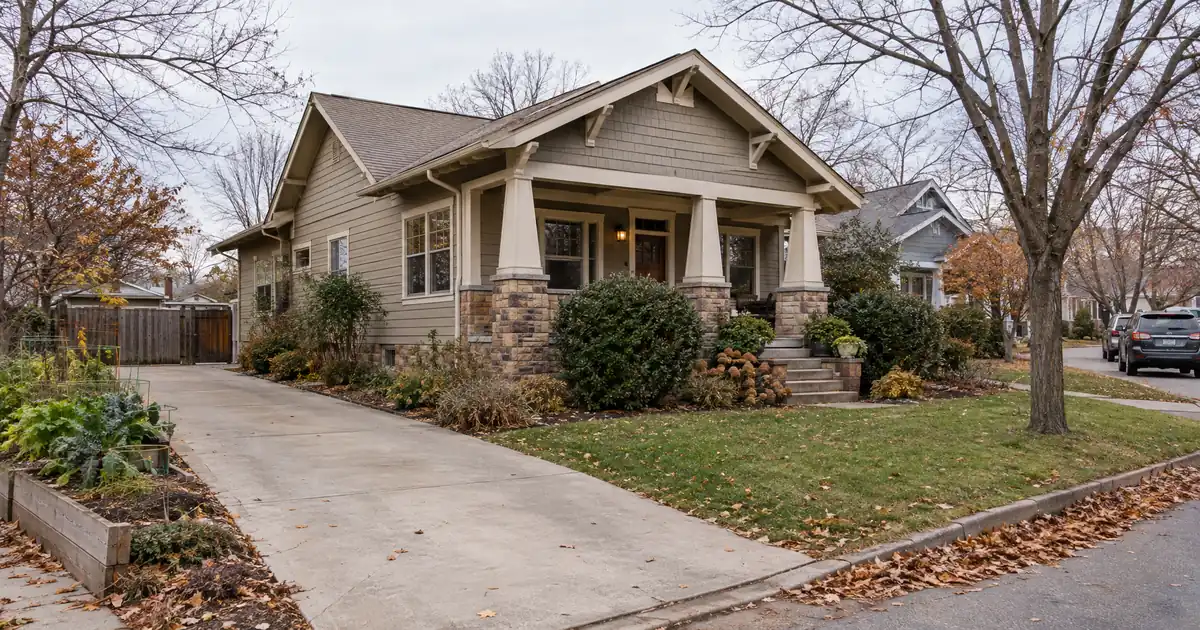
You own a rental. A tenant wants to buy it in a couple of years, and you would like to refinance or buy another one in the meantime. Rent-to-own sits in a gray area: it is not forbidden, but it is not automatic either. Lendmire, a DSCR-focused mortgage broker that arranges these loans through select lenders in its wholesale network across 41 markets, including Washington, D.C., sees the same pattern on these files again and again. The file works when the paperwork is clean and the lender is chosen up front.
DSCR Calculator
Run the numbers in your market
Rate source: Freddie Mac 30-yr average via FRED® — Federal Reserve Bank of St. Louis · effective Oct 15, 2026
Prefilled with starting assumptions — enter your own rent or nightly figures, taxes, insurance, and HOA for a more accurate picture.
Program parameters update from Lendmire’s centralized guideline source. Taxes and insurance are editable estimates.
As of Oct 15, 2026 · General Freddie Mac market benchmark, not a Lendmire loan offer. Rent, nightly rate, occupancy, taxes, and insurance are editable estimates. Short-term rental figures are estimates only and vary significantly by season, property type, management approach, and local short-term-rental rules — confirm local regulations before relying on them. Qualifying income for short-term rentals varies by program — some use appraisal market rent, others use documented STR history or projections — and is confirmed in underwriting. Not a Loan Estimate, approval, or commitment to lend. Program availability and eligibility are subject to lender guidelines, credit approval, property review, and underwriting.
For the basics of how these loans work, start with Lendmire’s complete DSCR loans guide.
Key Terms Defined
DSCR (debt service coverage ratio): monthly rent divided by the full monthly payment on the loan. A ratio above 1.00 means rent covers the payment on paper.
PITIA: principal, interest, taxes, insurance, and any association dues. It is the payment side of the DSCR math.
LTV (loan-to-value): the loan balance as a percentage of the property’s value.
Lease-option: a normal rental lease plus a separate option giving the tenant the right, but not the obligation, to buy. Wikipedia’s lease-option entry draws that line clearly.
Lease-purchase: a contract that obligates both sides to complete the sale. The tenant cannot walk away and the owner cannot refuse.
Option fee: an upfront payment from the tenant for the option. It is usually credited toward the purchase if the tenant buys. If the tenant walks, the landlord keeps it.
Rent credit: a slice of monthly rent set aside toward the tenant’s eventual down payment.
Seasoning: the waiting period a lender wants between buying a property and refinancing it. About 6 months is the common expectation on cash-out files.
Does a DSCR Lender Care That the Tenant Can Buy?
Yes, some do. The math is indifferent, but the lender’s risk review is not. A DSCR loan qualifies primarily on property-level rental income covering the payment, subject to lender guidelines. It does not use your traditional personal-income documentation or W-2s. So the question is not whether the rent is real. The question is whether the purchase option changes what the lender is financing.
Three concerns drive the reaction:
- Exit risk. A tenant exercising the option is a built-in sale. The lender is lending on a property that may be sold on a schedule you control only partly.
- Title and lien questions. An option to purchase is an interest tied to the property. Some programs want it kept off the title and out of the loan file entirely.
- Occupancy. DSCR loans are designed for non-owner-occupied investment properties. A tenant who is not related to you fits that condition. A tenant who is a relative gets closer review, with or without an option.
Across our wholesale network, programs do not treat this uniformly. Some accept a standard lease that happens to come with a separate option agreement. Others decline anything with purchase rights attached. Not every lender shows the same appetite, which is why the lender choice matters more than the loan terms.
How Different Structures Land With Lenders
The structure you used matters more than the label. This table shows the typical reaction pattern we see across programs, not a promise from any one lender.
| Structure | Typical lender reaction | What to fix |
|---|---|---|
| Plain lease, no option | Standard review | Nothing |
| Lease plus separate option agreement | Accepted by some programs | Keep contracts separate |
| Lease with option embedded in it | Mixed; many decline | Split into two documents |
| Binding lease-purchase | Often treated as a pending sale | Expect stricter review |
| Installment or contract for deed | Different animal; usually declined | Restructure or use other financing |
The installment contract is its own category. Under it, the buyer may hold equitable ownership while you hold legal title. That is no longer a rental in the lender’s eyes.
Why Two Contracts Beat One
Keep the lease and the option as two documents. A lease-option has two parts: a standard lease covering rent, tenant duties, and term, and an option agreement covering the purchase price, option fee, rent-credit structure, and exercise deadline, as the REI Prime glossary lays out.
Why does separation help? A lender reviewing the lease sees an ordinary tenancy. The option lives in its own agreement, which may or may not be requested. Whether a lender asks to see it varies, and if they ask, you disclose it. Never hide it.
Present the base lease as the rent document. Keep the option terms out of the lease itself.
Which Rent Counts? (Not the Premium)
Rent-to-own leases often carry rent above market, with the extra credited toward the purchase. That premium does not lift your coverage number.
Lenders generally count the lower of the lease rent and the appraiser’s market rent. The appraiser documents market rent on a rent schedule form, Form 1007 for single-family or Form 1025 for two-to-four units. If your lease says one thing and the appraisal says less, the lower figure wins. That is a lender convention, not a statute.
Picture a single-family rental where the tenant pays a lease rent noticeably above what the appraiser finds for comparable homes. Say the extra amount is what gets credited toward the purchase. The lender uses the appraiser’s lower market figure. If that figure covers the payment at roughly 1.1x, then 1.1x is your coverage, even though the lease looks stronger on paper. (Those inputs are modeled assumptions, not market data.)
The flip side hurts too. If your base rent sits below market, the lender uses the lower lease rent, and the ratio drops with it. Model your ratio on market rent, not on the premium rent.
Option fees and rent credits are not income. They are held for the tenant’s eventual purchase. If the tenant buys, the fee is credited toward the down payment. If the tenant doesn’t, the landlord keeps the fee and the rent. They help your cash flow. They do not help your DSCR.
Clearing 1.00 is also not the same as positive cash flow. The ratio compares rent to PITIA only. Repairs, vacancy, management, utilities, and capital expenses all sit outside the calculation.
How the Tenant’s Own Mortgage Will Treat Credits
A short contrast shows why premium rent gets ignored on your side. When a tenant eventually applies for an agency-backed mortgage, Fannie Mae’s selling guide section on rent credit for an option to purchase lets rent credits count toward the buyer’s down payment. The credit is limited to the gap between market rent and the rent actually paid, and the agreement needs an original term of at least 12 months.
That rule belongs to the tenant’s exit loan. It does not govern your DSCR loan. The useful takeaway: the tenant’s future lender will also count only above-market rent as credit. Set the premium with that in mind, so your tenant can actually use it.
What Happens When the Tenant Exercises the Option?
This is where owners get hurt. A DSCR loan often carries a prepayment penalty, which is a fee for paying the loan off early. If the tenant exercises the option before that period ends, the sale triggers a payoff, and the penalty comes out of your pocket.
The fix is straightforward. Line up the option window with the prepayment period, or build the penalty into the agreed sale price. Treat the option as a scheduled exit and price it that way.
Some lenders also see a recently exercised or imminent option as a short holding period. That is an eligibility question for the specific program, not a universal rule.
DSCR vs. conventional financing
There are two common ways to finance an investment property, and they qualify you differently — here’s how investors weigh them.
Why investors choose it
- Qualifies on the property’s rental income — no personal tax returns, W-2s, or pay stubs needed to document income.
- No personal debt-to-income ceiling to clear, so existing mortgages and obligations don’t cap your borrowing the same way.
- Can be closed in an LLC, keeping the property inside a business entity.
- Built for scaling — not held to the limit on number of financed properties that conventional financing applies.
- Underwriting centers on the deal: generally qualifies when the rent covers the payment, a 1.00x coverage ratio being a common baseline (confirmed in underwriting).
- Designed specifically for investment property, including long-term and, where the program allows, short-term rentals.
Where it’s strong
- Often the lowest ongoing financing cost for a buyer who fully qualifies on personal income — a fit for a first property or a cost-first purchase.
Trade-offs for investors
- Requires full personal income documentation and must fit within a debt-to-income limit — salary, existing debts, and other mortgages all count.
- Typically held in your personal name rather than a business entity.
- Caps how many financed properties you can carry, which can become a ceiling as a portfolio grows.
- Evaluates you as a borrower as much as the property, which usually means more paperwork.
How investors usually choose: a first or single property often optimizes for the lowest financing cost; portfolio builders often optimize for leverage, vesting in an LLC, and scaling past conventional caps. The right answer depends on your goals, the property, and current guidelines — both paths run through select lenders in Lendmire’s wholesale network, with eligibility and terms confirmed in underwriting.
Purchase, Refinance, or Cash-Out: Does It Change?
The structure matters in every case, but the stakes shift.
- Purchase. You are buying a property with a tenant who already holds an option. Most files land at 75%-80% LTV on a purchase of an investment property. The lender will want the lease, and may ask for the option agreement. If the tenant’s option was granted by the prior owner, you inherit it. Read it before you buy.
- Rate-and-term refinance. You already own it and want a new loan. The ceiling in the program parameters is 85% LTV, subject to lender guidelines and credit tier. Option language gets reviewed on the same terms.
- Cash-out refinance. Leverage tops out around 75% LTV on a standard rental, and about 6 months of seasoning is the common expectation. Pulling cash out of a property that may sell on a tenant’s schedule is the riskiest pairing, and lenders know it.
Typical credit expectations: a 620 floor exists in parts of the network, most programs want around 660, and 700 or higher unlocks the strongest leverage tiers. Reserves commonly run about 6 months of PITIA, stepping up to about 9 months on loans above $1,500,000. Standard programs go up to $3,000,000. All of this is subject to lender guidelines and individual underwriting.
One more tip from the broker’s chair: 1.00 coverage is where select programs start, a floor for specific programs rather than a universal standard. A separate select-lender path takes coverage below 1.00, with leverage and terms adjusted. Stronger ratios open better pricing and leverage.
Documents to Have Ready
Expect the lender to ask for some or all of these on an optioned property:
| Document | Why it is asked |
|---|---|
| Lease | Shows base rent and term |
| Option agreement | Shows purchase price and exercise deadline |
| Proof of rent payments | Shows the tenant actually pays |
| Appraisal rent schedule | Sets market rent |
| Entity documents | Verifies who holds title |
| Occupancy certification | Confirms investment use |
LLC ownership is workable on many files, subject to lender program eligibility. If an LLC holds title, expect the entity documents above.
Say It Out Loud: Disclosure Matters
Documents and statements have to match reality. If a lender asks about purchase rights, tell the truth. A loan built on an omitted option is a loan built on a misstatement, and that problem does not stay hidden once the tenant exercises.
Structure and substance beat labels. Calling an installment sale a lease does not change what it is. A lender looks at the facts.
When the Answer Is No
Not every lender will take the file. Some paths exist:
1. Restructure the paperwork. Split an embedded option into two documents. This alone changes the outcome with some programs.
2. Switch to a different lender. Eligibility varies across the network. A program that declines the file today may not be the one a broker places it with.
3. Wait out the option. If the tenant is close to exercising, you may be better off letting the sale happen.
4. Reconsider the structure. Subject-to or sandwich lease-option deals, where an existing mortgage with a due-on-sale clause is in place, create a separate financing problem. An option to purchase can trigger the lender’s right to call an encumbered loan.
Related-party tenants and those who occupy the property as their own home change the picture too. A relative with an option triggers related-party review. Owner occupancy takes the property out of DSCR territory altogether.
Rent-to-own contracts also carry a legal layer that sits outside the loan. State law is the main layer for residential rent-to-own, and how you handle option money, such as treating it as a deposit, can raise consumer-finance questions of its own. That is a question for a real estate attorney, not a lender.
A Quick Decision Path
- Plain lease, no option? Standard review.
- Lease and separate option? Ask whether the program accepts a tenant purchase option before paying for an appraisal.
- Embedded option? Split it first.
- Binding lease-purchase or installment contract? Expect heavy resistance; plan for other financing.
- Option close to being exercised? Expect a short-holding-period concern.
- Tenant is a relative? Expect closer review and market-rent treatment.
Tax treatment varies; consult a qualified professional.
Frequently Asked Questions
Does a rent-to-own tenant automatically disqualify a rental from a DSCR loan?
No. Some programs accept a standard lease alongside a separate option agreement. Eligibility varies by lender and by how the contracts are written. Ask about the option before you commit to a lender or an appraisal.
Do option fees and rent credits count as income for the DSCR ratio?
No. They are purchase-price items held for the tenant’s eventual buy, not rental income. The ratio runs on the base lease rent or the appraiser’s market rent, whichever is lower. Premium rent helps your cash flow without raising the coverage number.
Should I keep the lease and the option as separate documents?
Yes, in most cases. Separate contracts let a lender see an ordinary lease while the option sits in its own agreement. That structure is the one accepted most often across the network, though no structure is guaranteed to qualify. Disclose the option if the lender asks.
What happens if my tenant exercises the option during a prepayment penalty period?
The sale triggers a payoff, and the penalty can land on you. Match the option window to the prepayment period, or build the penalty into the sale price. Plan for the option as a scheduled exit.
Can the tenant finance the purchase later?
Usually, yes, through the tenant’s own mortgage. That loan has its own rules, including how rent credits are counted. Agency financing, for example, only credits rent above market. Set the premium and credit structure with that in mind.
If you are buying or refinancing a rental property and want to see how the numbers work, Lendmire can help you compare DSCR loan options based on the property income, credit profile, leverage, and investor goals. Call 828-256-2183 or request a quote. Programs, eligibility, and terms are subject to lender guidelines and individual underwriting. This is not a commitment to lend.
Short-term rental projections follow different rules, covered in Lendmire’s piece Can a Short-Term Rental Purchase Qualify on Projected Rent?.
About Lendmire
As a non-QM mortgage broker (NMLS# 2371349), Lendmire facilitates DSCR investor loans across 41 markets, including Washington, D.C. DSCR eligibility is generally reviewed around property-level rental income instead of personal income documentation, subject to lender guidelines, serving LLC-structured portfolios and self-employed borrowers who don’t fit conventional boxes. A two-time Scotsman Guide Top Mortgage Workplace (2025, 2026).
Get Started
Ready to find the right loan for you?
In about 30 seconds you can review financing options available for your investment property. No commitment required.
Informational only. Not a Loan Estimate, approval, or commitment to lend. Program availability and eligibility are subject to lender guidelines, credit approval, property review, and underwriting.
References
2. REI Prime glossary: lease-option
3. Fannie Mae Selling Guide B3-4.3-12: Rent Credit for Option to Purchase
This article is part of Lendmire’s DSCR loan program — full qualification details, guidelines, and scenarios live on the program page.
Related reading: How to Get a DSCR Loan on Your First Rental After a Bank Said No · Can a Five-Unit Short-Term Rental Building Get a DSCR Loan? · Interest-Only vs Down Payment for a Furnished Rental DSCR Loan
Brandon Miller
Founder & CEO, Mortgage Loan Originator, Lendmire LLC
- Mortgage Loan Originator · NMLS# 1129696 · Verify on NMLS Consumer Access
- North Carolina Real Estate Broker · License# 343312 · Verify on NCREC
- North Carolina Insurance Producer · License# 19053198 · Property, Casualty, Life, Health · Verify on NAIC SBS
- Lendmire LLC · Firm NMLS# 2371349 · Verify firm licensure
Required disclosures. Lendmire (NMLS# 2371349) operates as a licensed mortgage broker, not a direct lender or depository. The discussion in this article is general in nature and should not be relied upon as financial, legal, or tax advice — every investment scenario is unique and should be reviewed by a qualified professional. Any loan inquiry is subject to lender underwriting, and this article is not a commitment to lend or a guarantee of approval. Mortgage rates, loan terms, and program guidelines vary by borrower, property, and state, and may change without notice. Equal Housing Opportunity. Verify licensure at NMLS Consumer Access.