
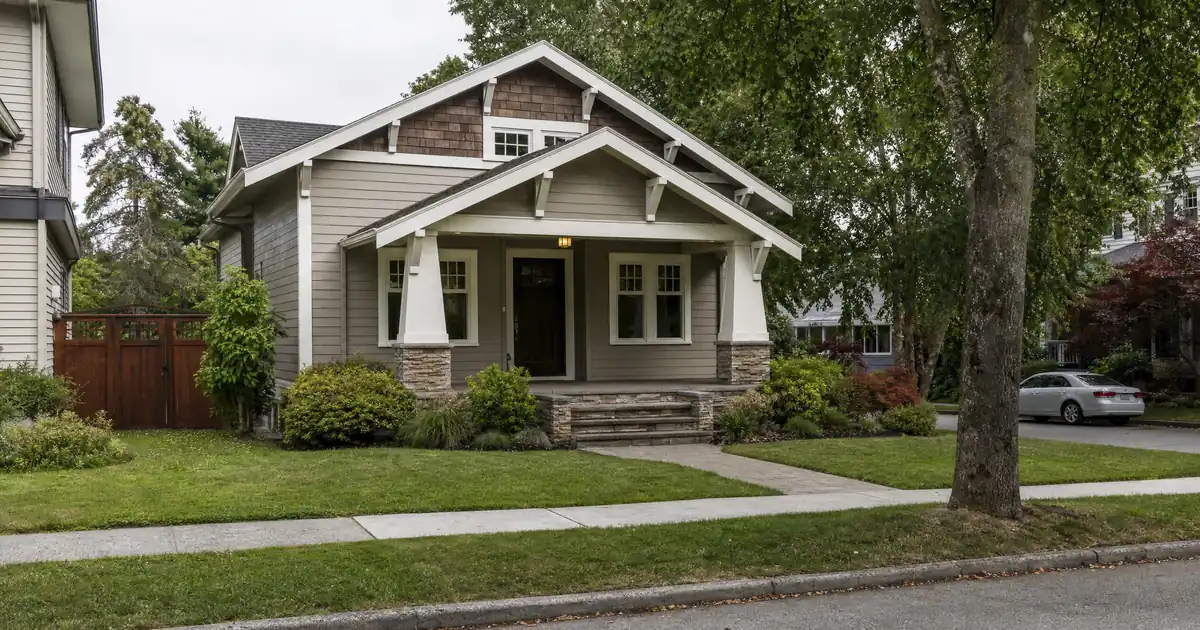
BRRRR Refinance Denied Because The Property Is Still Vacant — The Quick Read: A vacant property does not automatically kill a DSCR refinance. It just changes which number feeds the coverage ratio. With no lease in place, underwriting swaps in an appraiser’s market-rent opinion instead of real rental income. That figure can land lower than an investor’s rehab plan assumed. When it does, loan proceeds shrink. The file usually does not die outright. Select lenders in the network also work with coverage below 1.00 and no-ratio structures for exactly this situation. Leverage and terms shift when they do.
Here’s what matters most if a BRRRR refinance just stalled on a vacant unit:
DSCR Calculator
Run the numbers in your market
Rate source: Freddie Mac 30-yr average via FRED® — Federal Reserve Bank of St. Louis · effective Aug 27, 2026
Prefilled with local estimates — enter your own rent or nightly figures, taxes, insurance, and HOA for a more accurate picture.
Program parameters update from Lendmire’s centralized guideline source. Taxes and insurance are editable estimates.
As of Aug 27, 2026 · General Freddie Mac market benchmark, not a Lendmire loan offer. Rent, nightly rate, occupancy, taxes, and insurance are editable estimates. Short-term rental figures are estimates only and vary significantly by season, property type, management approach, and local short-term-rental rules — confirm local regulations before relying on them. Qualifying income for short-term rentals varies by program — some use appraisal market rent, others use documented STR history or projections — and is confirmed in underwriting. Not a Loan Estimate, approval, or commitment to lend. Program availability and eligibility are subject to lender guidelines, credit approval, property review, and underwriting.
- Vacancy swaps the lease for an appraiser’s market-rent opinion — Form 1007 for single-family, Form 1025 for two-to-four unit properties.
- A soft market-rent figure lowers the loan amount the deal supports. That is the real risk here, not an automatic denial.
- Vacancy at purchase gets treated more loosely than vacancy at refinance, because a BRRRR refi also verifies seasoning and payoff of the prior loan.
- Coverage below 1.00 and no-ratio paths both exist through select lenders in the network. Each carries its own leverage or eligibility trade-off.
- Short-term rental conversions face a separate gap. Without booking history, underwriting can fall back to long-term market rent, which sits well under real STR income.
Key Terms Defined
DSCR (debt-service coverage ratio) — monthly rental income divided by the full monthly housing payment. A ratio above 1.00 means the rent covers the payment. Below 1.00 means it doesn’t, on paper.
PITIA — principal, interest, taxes, insurance, and any association dues, rolled into one monthly housing obligation. This is the denominator in every DSCR calculation.
Market rent (Form 1007 / Form 1025) — an appraiser’s independent opinion of what a property should rent for, built from comparable rentals in the area. Lenders lean on this figure when no lease exists.
Seasoning — the minimum holding period, usually measured in months, a lender wants between the purchase date and a cash-out refinance based on the new, higher appraised value.
No-ratio loan — a qualification path that skips the rent-to-payment test entirely instead of requiring a minimum coverage number. It’s available only through select lenders and typically limited to specific borrower profiles.
Why Does a Vacant Property Break the DSCR Math?
It doesn’t break it. It changes the input. DSCR only needs one thing on the income side: a defensible number for what the property earns in rent. With a tenant in place, that number comes from the lease. With no tenant, there’s nothing for the underwriter to point to. So the file leans on the appraiser instead.
That’s the whole mechanism. Fannie Mae’s own appraisal rules — which the non-QM world borrowed wholesale even though these aren’t agency loans — require a rent schedule whenever rental income is used to qualify a file. For one-unit properties, that’s Fannie Mae’s Single-Family Comparable Rent Schedule, known industry-wide as Form 1007. For two-to-four unit properties, it’s the parallel Form 1025. The appraiser pulls comparable rentals nearby, adjusts for differences, and lands on a supported market-rent opinion. This is the same process whether the subject property is occupied or empty.
The appraisal training site Blueprint describes Form 1007 as “a vital document in the appraisal process for investment properties… Playing a critical role for both appraisers, who are responsible for its accurate completion, and lenders, who rely on it to evaluate a property’s income-generating potential.” On a vacant file, that opinion isn’t a backup. It’s the whole ballgame.
DSCR loans are built for non-owner-occupied investment properties. Because they’re business-purpose investor loans, lenders review them differently than a standard owner-occupied mortgage. Qualification runs mainly on whether the property’s rental income covers the payment, subject to lender guidelines — not on a borrower’s pay stubs.
How Underwriting Actually Treats a Vacant BRRRR Refinance
Step by step, here’s what happens once the file hits underwriting on a vacant BRRRR refinance:
1. The appraisal gets ordered. It does two jobs at once — it sets the after-repair value and produces the rent figure that feeds the DSCR calculation.
2. The appraiser builds a rent opinion from comparables, not from the investor’s pro forma or asking-rent target. The appraiser only adjusts for meaningful differences between the comps and the subject property.
3. With no lease to check against, that appraised number becomes the only input on the income side of the ratio. There’s no second source to average it against or double-check it with.
4. Underwriting runs the coverage ratio — appraised market rent against the monthly payment on the requested loan amount. Where that ratio lands decides how much cash-out the deal supports.
5. Seasoning and payoff verification get checked at the same time. Refinance underwriting confirms the investor has held the property long enough. It also confirms the investor is paying off whatever short-term financing funded the purchase and rehab.
6. The appraisal gets reviewed for condition red flags. An appraiser generally won’t back a confident market-rent opinion on a property that isn’t rentable yet. Unfinished rehab work can undercut the rent figure before vacancy even becomes the issue.
Notice what’s missing from that list. There’s no step where “vacant” alone triggers an automatic decline. The ratio still gets calculated. It just runs on a different number than a leased file would use.
What Happens When the Appraised Rent Comes In Lower Than Planned?
This is the real pain point behind most vacancy-related refinance frustration. It’s not denial — it’s a smaller check than expected. Say an investor modeled a rehab assuming rent would produce roughly 1.25x coverage on the new loan amount. But the appraiser’s comps only support a market rent that clears something closer to 0.95x. That gap doesn’t necessarily kill the file. It usually means the requested loan amount gets trimmed, or the deal shifts into one of the alternate structures covered below.
This is where BRRRR investors get caught off guard. The entire strategy depends on pulling a specific amount of capital back out to fund the next purchase. If the number that feeds the ratio comes from an appraiser’s opinion rather than a signed lease, that number carries some uncertainty going into the appraisal. The investor doesn’t fully control it.
Scotsman Guide’s coverage of non-QM underwriting confirms lenders use “the lower of two measurements: the 12-month average of short-term rental income, and the comparable market rent” from Form 1007 or 1025. That means even a property with some income history can still get pulled back to the more conservative appraised figure. The same piece notes that “some non-QM lenders will provide DSCR loans to investors whose ratio is less than 1.0, if they have other assets to compensate for a shortfall.” This confirms the sub-1.00 category exists broadly across the non-QM space, not just at any one shop.
How Vacancy Tolerance Compares Across Loan Types
| Loan Type | Vacancy at Refinance | Income Source Used | Typical Path Forward |
|---|---|---|---|
| Agency/conventional | Generally not designed for pure rental qualification without documented history | Borrower income + traditional personal-income documentation | Often not a fit for a vacant BRRRR exit |
| DSCR / non-QM | Reviewed case by case | Appraiser market rent (Form 1007/1025) or lease | Refinance proceeds sized to the appraised rent |
| Short-term bridge / hard money | Generally expected during rehab | Property value, not income | Common holding vehicle until stabilized |
A vacant BRRRR file often starts on a bridge loan during rehab. It then moves into a DSCR refinance once the unit is rent-ready or leased. That sequencing is worth planning before the rehab even starts.
Structures That Exist for Vacant or Under-Rented Files
Coverage below 1.00 is a real, available path through select lenders in the network. Leverage and terms adjust to match the lower ratio. This isn’t a workaround nobody offers. It’s a standard category for properties that don’t clear a full 1.00 on appraised rent alone. It usually comes with reduced leverage or pricing trade-offs compared to a file that clears comfortably above 1.00.
No-ratio structures sit in a narrower lane. They’re available only through select lenders, generally for borrowers who already own a primary residence. They skip the rent-to-payment test entirely instead of requiring any specific minimum. There’s no published coverage floor for this category. Eligibility runs on borrower profile and lender-specific guidelines instead.
Both paths exist because the industry treats vacancy and under-renting as routine, not exceptional. Investors weighing one of these routes should also look at how DSCR loans work as a full category. The same appraiser-driven rent framework that governs a vacant refinance also governs purchase-stage qualification, sub-1.00 files, and stabilized properties alike.
Where the General Rule Breaks: Named Edge Cases
The “Air BnBRRRR” gap. Investors converting a rehabbed property into a short-term rental face a documentation blind spot. Without twelve months of booking history, a lender without AirDNA-style projection tools can fall back to the long-term Form 1007 rent figure instead of realistic nightly-rate income. Appraisers are told not to simply multiply a nightly rate by thirty days, since that ignores vacancy, business expenses, and furnishing costs unique to short-term operations. The result: a property that would clearly cash flow as an active short-term rental can look thin on paper when the file runs on long-term comparable rent. Lendmire’s DSCR loan for Airbnb properties coverage speaks directly to how short-term rental income gets treated differently at qualification.
Purchase vacancy versus refinance vacancy. A vacant property closes routinely at purchase. Many lenders use appraiser market-rent comps with no lease required and no seasoning at all if the property is close to rent-ready. Refinance vacancy gets more scrutiny. A BRRRR refi is also verifying the seasoning period and confirming payoff of prior financing on a value the lender didn’t originally underwrite. This is the same friction covered in Lendmire’s piece on BRRRR refinances denied for insufficient seasoning. Vacancy and seasoning often show up on the same file together, and either one alone can slow a refinance down.
“Explain the vacancy” scrutiny. A vacant unit invites a different kind of question than a leased one. An unexplained vacancy — no recent renovation, no obvious tenant turnover story — raises a fair question about whether the property can actually perform at the claimed income level. Investors who document the reason (rehab timeline, recent turnover, active listing) generally move through this more smoothly than investors who show up with no explanation at all.
Partial vacancy on multifamily. A duplex or fourplex with one unit leased and one sitting empty doesn’t automatically get treated as fully vacant. But the empty unit typically still runs on appraised market rent rather than an aspirational number. That’s worth factoring into the coverage math before assuming full occupancy income.
For context on how common this situation actually is: national rental vacancy runs around 7.3 percent according to U.S. Census Bureau data. In plain terms, “the unit is between tenants” is a routine state for rental housing generally, not a rare edge case an underwriter is unfamiliar with.
What This Looks Like in Practice for a BRRRR Investor
Files that come through with a vacant unit at the refinance stage tend to fall into a pattern. The investor finished the rehab. The investor hasn’t placed a tenant yet. The investor wants to refinance based on the new after-repair value rather than the original purchase price. Across the network, the strongest version of that file pairs a rent-ready property condition with a documented reason for the vacancy — recent renovation completion, an active listing, or a lease starting within weeks. The weaker version shows up with deferred maintenance still visible in the appraisal photos. That makes it harder for the appraiser to support a confident rent opinion in the first place.
On leverage: purchase-stage DSCR loans in the network typically run 75%–80% loan-to-value. A handful of higher-leverage programs reach 85% for borrowers around a 700 credit score. Cash-out refinances top out lower — generally around 75% LTV. Most files should expect roughly six months of seasoning before the new appraised value can be used. Reserve requirements commonly run near six months of PITIA, stepping up toward nine months on larger loan balances above $1,500,000. Conservative rate-term files at modest leverage sometimes see reserves waived entirely. None of these are guarantees. They’re typical ranges from select wholesale-network guidelines, and every file gets underwritten on its own facts.
A larger down payment can help here, but it doesn’t erase the vacancy issue by itself. Putting more equity into the deal lowers the monthly payment and can lift the coverage ratio. But it doesn’t change what number the appraiser assigns to the rent, and it doesn’t waive seasoning or credit requirements. The strongest files clear both tests at once: enough equity in the deal, and rent — whether leased or appraised — that comfortably covers the payment.
Tax treatment on refinance proceeds and rehab costs can depend on how the funds get used and how the property is held. Investors should keep clear records and speak with a qualified tax professional before relying on any deduction.
If the vacancy issue turns out to be tied to broader hold-versus-sell decisions on a property that’s underperforming, it’s worth reviewing when refinancing makes more sense than selling a rental property outright before committing more capital to a stabilization timeline.
Investors carrying an investment-property HELOC into this same situation should note that vacancy creates a parallel problem there too. HELOC applications denied for vacant properties run into a similar income-documentation gap. It’s just under a different lien structure and a $500,000 total line cap rather than DSCR’s first-lien framework.
If the numbers on a vacant or recently-rehabbed property need a second look, Lendmire can help compare how a specific file’s appraised rent, leverage, and credit profile line up against what select lenders in the network are currently working with. Reach the team at 828-256-2183 or request a quote to walk through it.
Frequently Asked Questions
Does a vacant property automatically get a DSCR refinance denied?
No. Vacancy changes which number feeds the coverage ratio — from a lease to an appraiser’s market-rent opinion — rather than making the ratio impossible to calculate. Denial usually happens when the appraised rent comes in too low to support the requested loan amount even after adjustments, not simply because the unit is empty on closing day.
How does an appraiser estimate rent with no tenant in place?
The appraiser uses comparable rental properties nearby and adjusts for meaningful differences. This follows the same Form 1007 (single-family) or Form 1025 (two-to-four unit) process used on any DSCR file. It produces an independent, comp-supported rent figure rather than relying on the investor’s own rent projection.
Is purchase-stage vacancy treated the same as refinance-stage vacancy?
Generally, no. Vacant purchases close routinely on appraised market rent with little friction. Refinance-stage vacancy on a BRRRR exit gets more scrutiny because the file is also verifying seasoning and confirming payoff of the prior loan against a new, higher appraised value.
Can a property qualify if the DSCR comes in below 1.00 because of a soft appraised rent?
Coverage below 1.00 is available through select lenders in the network, with leverage and terms adjusted for the lower ratio. It’s a real category, not a guaranteed outcome. It typically comes with a reduced loan amount or pricing trade-off compared to a file clearing above 1.00.
Does converting a vacant property to a short-term rental solve the vacancy problem?
Not automatically. Without roughly twelve months of booking history, underwriting can fall back to the long-term market-rent figure from Form 1007 instead of projected nightly income. That figure may understate what the property would actually earn as an active short-term rental. Short-term rental rules can also vary by city, county, HOA, and property type, so investors should confirm local rules before relying on projected rental income.
About Lendmire
Lendmire (NMLS# 2371349) is a non-QM mortgage broker serving investors in 40 markets including Washington, D.C. Lendmire helps structure DSCR scenarios commonly evaluated around a property’s rental income rather than personal income paperwork, subject to lender guidelines. A Scotsman Guide Top Mortgage Workplace in 2025 and 2026, Lendmire places loans through wholesale investor lenders and is not a direct lender.
Lendmire’s Top Mortgage Workplace recognition is documented by Scotsman Guide 2025 Top Mortgage Workplace and Scotsman Guide 2026 Top Mortgage Workplace.
Get Started
Ready to find the right loan for you?
In about 30 seconds you can review financing options available for your home or investment property. No commitment required.
Informational only. Not a Loan Estimate, approval, or commitment to lend. Program availability and eligibility are subject to lender guidelines, credit approval, property review, and underwriting.
References
1. Fannie Mae Appraiser Update — Form 1007 Purpose
2. Blueprint — What Is Form 1007?
3. Scotsman Guide — Invest in Your Future
4. U.S. Census Bureau — Housing Vacancies and Homeownership
Brandon Miller
Founder & CEO, Mortgage Loan Originator, Lendmire LLC
- Mortgage Loan Originator · NMLS# 1129696 · Verify on NMLS Consumer Access
- North Carolina Real Estate Broker · License# 343312 · Verify on NCREC
- North Carolina Insurance Producer · License# 19053198 · Property, Casualty, Life, Health · Verify on NAIC SBS
- Lendmire LLC · Firm NMLS# 2371349 · Verify firm licensure
Disclosure information. Lendmire is a state-licensed mortgage brokerage under NMLS# 2371349. Lendmire is not a depository institution, direct lender, or financial advisor — all loans referenced are placed through wholesale lender partners and are subject to each lender's underwriting standards. This article is provided for general informational purposes and is not a commitment to lend, nor does it constitute financial, legal, or tax advice. Loan programs, terms, rates, and qualification standards change without notice and depend on borrower profile, property type, and the state in which the subject property is located. Equal Housing Opportunity provider. NMLS Consumer Access: nmlsconsumeraccess.org.


