
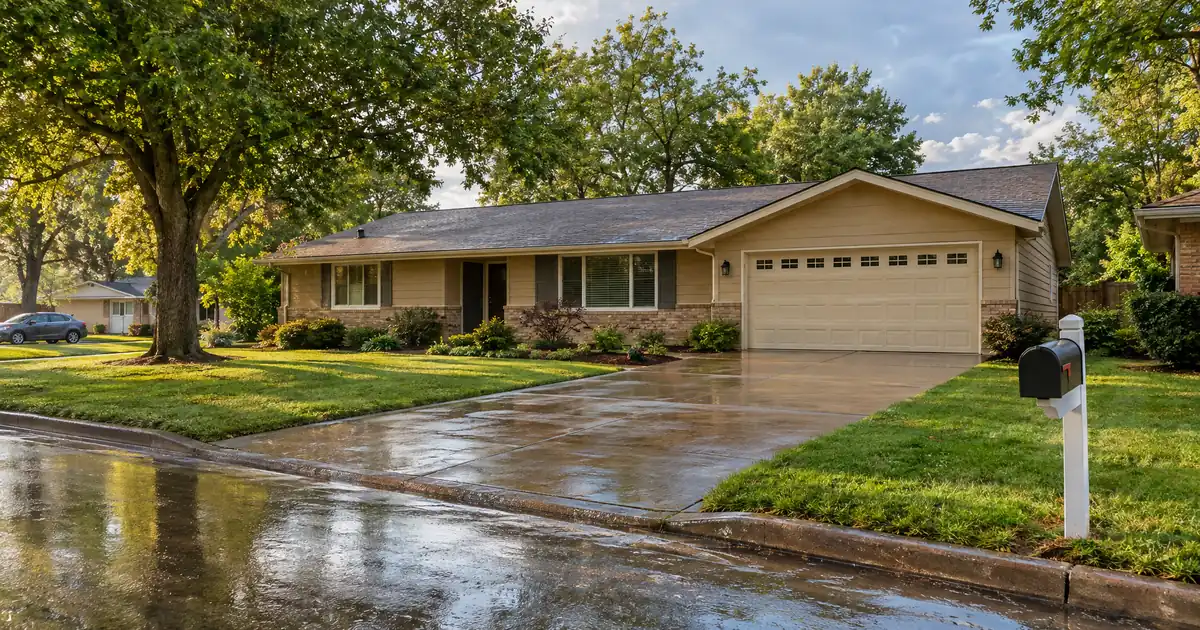
The Quick Read: A trust has no credit score, so the lender scores the property’s rent against the debt and scores the human trustee who signs the guaranty. The trust itself only gets a document review. That review confirms the trust exists, the property is titled in it, and the trustee has authority to borrow.
- The property is scored on rent versus the full monthly obligation (principal, interest, taxes, insurance, and any HOA dues).
- The guarantor is scored on credit, liquidity, and experience. Most programs want around a 660 score, and a 620 floor exists in parts of the network.
- The trust is scored on paperwork: a certification of trust, the deed, and trustee powers.
- Trust type changes the paperwork and the pre-clearance. It does not change the rent math.
- Qualification stays subject to lender guidelines. This is not a commitment to lend.
Picture an investor who holds a duplex in a family trust and wants to refinance. She expects the lender to ask about the trust’s income. It won’t. A trust has no paycheck, no tax return worth underwriting, and no credit history. The lender asks a different question: who is the real person standing behind this loan, and does that person actually control the trust?
DSCR Calculator
Run the numbers in your market
Rate source: Freddie Mac 30-yr average via FRED® — Federal Reserve Bank of St. Louis · effective Oct 15, 2026
Prefilled with starting assumptions — enter your own rent or nightly figures, taxes, insurance, and HOA for a more accurate picture.
Program parameters update from Lendmire’s centralized guideline source. Taxes and insurance are editable estimates.
As of Oct 15, 2026 · General Freddie Mac market benchmark, not a Lendmire loan offer. Rent, nightly rate, occupancy, taxes, and insurance are editable estimates. Short-term rental figures are estimates only and vary significantly by season, property type, management approach, and local short-term-rental rules — confirm local regulations before relying on them. Qualifying income for short-term rentals varies by program — some use appraisal market rent, others use documented STR history or projections — and is confirmed in underwriting. Not a Loan Estimate, approval, or commitment to lend. Program availability and eligibility are subject to lender guidelines, credit approval, property review, and underwriting.
That question is the whole subject here. This piece walks through how a file like this gets scored, step by step, then covers the structures, the edge cases, and the decision you face as the investor. For the basics of how these loans work, start with Lendmire’s complete DSCR loans guide.
Key Takeaways
- Three layers get reviewed separately: property, guarantor, trust.
- The guarantor is a person. Usually that is the trustee, or the grantor who also serves as trustee.
- A certification of trust usually replaces the full trust agreement.
- Pre-clear irrevocable and layered structures before you retitle anything.
- Clearing 1.00 coverage does not mean the property cash flows.
What Does a Lender Actually Score on a Trust File?
Three things, in three separate lanes. The property is scored on rent against the monthly obligation. The guarantor is scored on credit and liquidity. The trust is scored on documents and authority. A weakness in one lane is not fixed by strength in another.
| Layer | What gets reviewed | What it decides |
|---|---|---|
| Property | Rent vs. full monthly obligation | DSCR ratio, pricing, leverage |
| Guarantor | Credit, reserves, experience | Whether the person can stand behind the loan |
| Trust | Certification, deed, trustee powers | Whether the vesting is valid and signable |
The property lane. DSCR stands for debt service coverage ratio. You divide the monthly rent by the monthly obligation. That obligation is principal, interest, taxes, insurance, and any HOA dues, which lenders abbreviate as PITIA. A result of 1.00 means rent equals the obligation. Across the wholesale network, 1.00 is where select programs start, not a universal standard. Stronger ratios open better pricing and more leverage. A separate select-lender path takes coverage below 1.00, with leverage and terms adjusted.
Vesting does not change this math. A duplex held in a trust and the same duplex held personally produce the same rent-to-debt ratio. Clearing 1.00 also doesn’t mean the property makes money. Repairs, vacancy, management, utilities, and capital expenses all sit outside the calculation.
The guarantor lane. Lenders pull credit on a person. Most programs want around 660, a 620 floor exists in parts of the network, and 700 or more unlocks the strongest leverage tiers. Reserves vary by lender, leverage, loan size, and transaction type. About 6 months of PITIA is common, and loans above $1,500,000 typically step up to about 9 months. Conservative rate-and-term files at modest leverage under that size can see reserves waived.
The trust lane. This is paperwork, and it is where trust files differ from LLC or individual files. The next sections cover it.
Why Is a Person Scored Instead of the Trust?
A trust is a legal arrangement, not a legal person with its own borrowing history. The trustee signs for it. Under state versions of the Uniform Trust Code, a trustee can furnish a certification of trust that names the acting trustee and the trustee’s powers, as West Virginia’s enactment lays out. The trust is the title-holding vehicle. The person is the credit.
Tax identity follows the same split. Per a law-firm explainer on trust tax IDs, a revocable trust uses the grantor’s Social Security number while the grantor is alive. An irrevocable non-grantor trust is a separate taxpayer with its own EIN. That is why a revocable trust reads as “the individual” to a lender and an irrevocable trust does not.
DSCR loans are designed for non-owner-occupied investment properties. Because they are business-purpose investor loans, they are reviewed differently from a standard owner-occupied mortgage. That is why the file turns on the rent and the guarantor, not on personal debt-to-income.
Who Is the Guarantor, Setup by Setup?
The guarantor is whoever holds both the credit and the authority to bind the trust. Who that is depends on how the trust is built. Here is the usual map.
| Trustee setup | Who usually guarantees | Friction |
|---|---|---|
| Grantor is the trustee (revocable) | The grantor | Low |
| Independent individual trustee | Trustee, plus possibly the grantor | Medium |
| Corporate or professional trustee | Often a different qualifying individual | High |
| Co-trustees | Each trustee who signs, subject to program | Medium |
Grantor-trustee. This is the cleanest file. The person with the credit also controls the trust. Lenders treat a revocable trust like this as functionally the individual.
Independent individual trustee. Here the person with the credit may not control the trust, or the person with control may not be the strong credit. That mismatch is the core friction in a trustee-guarantor file. The lender needs a guarantor who has both. If the trustee’s credit is thin, the answer is rarely to argue with the score. The answer is to change who signs, or to change the structure.
Corporate trustee. A corporate trustee has no personal credit to pull. Programs in the network that accept this setup typically want a qualifying individual to guarantee. Whether that is workable is a pre-clearance question, not a paperwork question.
Co-trustees. If the trust requires both trustees to sign, both signatures matter at closing. When several people guarantee, programs commonly take the credit profile from the guarantors’ scores in a defined way. How that works is program-specific, so ask before you assume the highest score wins.
How Does Trust Type Change the Review?
Revocable trusts are the easiest, irrevocable trusts are program-specific, and a trust that owns an LLC adds a layer. The rent math is identical in all three. The paperwork and the pre-clearance are what move.
Revocable. The grantor can revoke or amend the trust, so the grantor still effectively owns the property. Lenders see little difference from individual ownership. The guarantor is normally the grantor-trustee.
Irrevocable. The grantor gave up control, the trustee holds the power, and the trust is its own taxpayer. The signer and the guarantor can be different people. Many programs restrict irrevocable trusts or review them case by case. Treat acceptance as something you confirm before you spend money on retitling. A guarantor generally cannot pledge trust property as if it were personal property, so the trustee’s borrowing power has to come from the trust terms or state law. Lendmire’s piece Cash-Out Refinance Trustee Signing Rules for an Irrevocable Trust goes deeper on that point.
Trust that owns an LLC. Some investors keep the trust one step back and let an LLC hold title. That is a layered chain, and acceptance varies by program. Where the LLC is the borrower, it is subject to lender program eligibility, and the trustee or grantor behind it usually signs the guaranty. Confirm the layering rules before relying on this route.
You will see lenders disagree on whether a trust can be the direct borrower at all. Some accept a revocable trust as the borrower. Others push you toward a trust-owned LLC. That difference is program-by-program, and it is the reason to pre-clear the structure first.
How Does the Lender Verify the Trustee’s Authority?
Mostly through a certification of trust. It is a short document where the trustee certifies the facts a lender needs, so you do not have to hand over the whole trust agreement. North Carolina’s statute lets a trustee furnish one in place of the instrument, and it allows an acknowledged version that can be recorded.
A typical certification covers these points:
- The trust exists, and when it was signed.
- Who the settlor is.
- Who the acting trustee is, and the trustee’s address.
- What powers the trustee holds.
- Whether the trust is revocable, and who can revoke it.
- Who has signing authority if there are co-trustees.
- The trust’s tax ID.
- How title is held.
The certification need not reveal who gets what, so private distribution terms stay private. It also has to state that the trust has not been revoked or amended in a way that makes it wrong. Utah’s version adds that a recipient may still ask for excerpts naming the trustee and granting the power to act in the transaction. So “do they need my whole trust?” gets this answer: usually not, but they may ask for the pages that matter. Enactments vary by state, so there is no single national form.
Then comes matching. The deed, the note, the insurance policy, and the certification should all carry the same names, and the trustee should sign in the right capacity. A deed that says “Jane Smith, Trustee of the Smith Family Trust” and an insurance policy that says “Jane Smith” create a mismatch the lender will make you fix.
Last, the deed. An unfunded trust does not hold the property. If the trust never received title, the trustee has nothing to pledge. Check that the property is actually vested in the trust before anyone submits the file.
Three Worked Scenarios
Each scenario below is a modeled illustration, not a market fact or a promise of approval.
Scenario one: the clean file. Say you are the grantor and the sole trustee of a revocable trust, and a fourplex is titled in it. Rent clears the monthly obligation with a comfortable cushion, roughly 1.25x. Your score sits above 700 and your liquidity covers the reserve requirement. You provide a certification of trust, a deed, and ID. The lender is reviewing the same person on every lane. This is the file that moves with the least friction. Exact terms depend on the lender’s guidelines, property type, leverage, and a full review of the borrower’s file.
Scenario two: the corporate trustee. Consider an irrevocable trust with a professional trustee and a beneficiary who is the real investor. The property covers at around 1.15x. The trustee has no personal credit to pull. The structure only works if a program in the network accepts it and a qualifying individual guarantees. That is a pre-clearance conversation first, and a documents conversation second. Expect more review of trustee powers and of whether the trustee can be compelled to act.
Scenario three: the weak-credit trustee. Picture a co-trusteed family trust where one trustee carries a score below the 620 floor that exists in parts of the network. The property covers well, near 1.20x. The coverage doesn’t rescue the score. The practical fixes are to have a stronger co-trustee serve as guarantor if the program allows it, or to restructure through a trust-owned LLC where the guarantor has the credit and the authority. Lendmire’s piece How to Set Up Trustee and Guarantor Roles on a Non-Recourse DSCR Loan covers how those roles get separated.
One pattern shows up across files like these. The rent almost never kills a trust deal. The mismatch between who has the credit and who has the authority usually does. A broker who sees many lenders’ guidelines can often find a program whose trust rules fit the structure you already have, which is cheaper than rebuilding the structure to fit one lender.
Does Guaranteeing the Loan Defeat the Trust?
No. A personal guarantee is standard on entity and trust loans, and it is not a red flag. It means a real person stands behind the debt. For a revocable trust, the grantor is already the legal owner, so a guarantee changes little.
What the trust does and does not give you matters here. A trust offers estate-planning and probate benefits. A revocable trust does not separate you from liability, because you still legally own the property. Don’t buy the idea that a trust shields you from a lawsuit. Ask an attorney before you rely on any structure for liability protection.
The trustee-signs-and-stands-behind-it logic is familiar elsewhere. For SBA loans, a trust that owns at least 20% of a borrower entity must give a guaranty executed by its trustees, and for a revocable trust the trustees must also guarantee personally, according to Starfield & Smith. That is a different program with different rules. It simply shows the same idea at work.
Where the General Rule Breaks
The rule is simple: score the person, review the trust, run the rent. These are the places it bends.
Moving a financed rental into a trust. Do not rely on federal protection for this. The Garn-St Germain Act bars a lender from enforcing its due-on-sale clause on certain transfers, including a transfer into an inter vivos trust where the borrower is and remains a beneficiary, per the statute text. But the exemptions apply to residential property with fewer than five units, and the implementing rule, 12 CFR Part 191, frames the trust exemption around the borrower remaining the beneficiary and an occupant. Estate-planning commentary disagrees on whether a financed rental is covered. So the practical move is to title the trust at closing or get the existing lender’s written consent. Don’t retitle after closing and hope.
Death or incapacity. A revocable trust that becomes irrevocable at the grantor’s death needs a new EIN. The successor trustee then becomes the person the lender looks to. Some trust agreements also convert on incapacity. Those are estate-law events, not lender rules, but they change who holds authority over a financed property.
Unfunded or incomplete trusts. Missing pages, language that blocks pledging property, or a deed that never went into the trust all stall files.
Property type. Trust vesting does not widen property eligibility. Manufactured homes, log homes, and barndominiums are not offered through the network’s DSCR programs, whoever holds title.
A larger down payment. More equity lowers the monthly obligation and can lift the ratio. It never erases leverage caps, credit floors, reserve rules, or property eligibility. The strongest files clear both tests: enough equity and enough rental coverage.
DSCR vs. conventional financing
There are two common ways to finance an investment property, and they qualify you differently — here’s how investors weigh them.
Why investors choose it
- Qualifies on the property’s rental income — no personal tax returns, W-2s, or pay stubs needed to document income.
- No personal debt-to-income ceiling to clear, so existing mortgages and obligations don’t cap your borrowing the same way.
- Can be closed in an LLC, keeping the property inside a business entity.
- Built for scaling — not held to the limit on number of financed properties that conventional financing applies.
- Underwriting centers on the deal: generally qualifies when the rent covers the payment, a 1.00x coverage ratio being a common baseline (confirmed in underwriting).
- Designed specifically for investment property, including long-term and, where the program allows, short-term rentals.
Where it’s strong
- Often the lowest ongoing financing cost for a buyer who fully qualifies on personal income — a fit for a first property or a cost-first purchase.
Trade-offs for investors
- Requires full personal income documentation and must fit within a debt-to-income limit — salary, existing debts, and other mortgages all count.
- Typically held in your personal name rather than a business entity.
- Caps how many financed properties you can carry, which can become a ceiling as a portfolio grows.
- Evaluates you as a borrower as much as the property, which usually means more paperwork.
How investors usually choose: a first or single property often optimizes for the lowest financing cost; portfolio builders often optimize for leverage, vesting in an LLC, and scaling past conventional caps. The right answer depends on your goals, the property, and current guidelines — both paths run through select lenders in Lendmire’s wholesale network, with eligibility and terms confirmed in underwriting.
Trust as Borrower or Trust Owns an LLC?
Start with the pre-clearance answer, then decide.
1. Is the trust revocable and you are the trustee? Ask whether the program accepts the trust directly as borrower.
2. Is it irrevocable, or is the trustee not the investor? Ask about a trust-owned LLC and a qualifying individual guarantor. This is where programs differ most.
3. Do you want liability separation? An LLC offers a layer that a trust alone does not, and that is a conversation with your attorney, not a lender.
4. Is title still in your name? Do not move it until the structure is cleared.
Whichever route you choose, the property-level math stays the same. What you are really buying with the extra layer is legal structure, and you are paying for it in paperwork.
The Sequence, With Owners
1. You and your attorney confirm the trust type, the trustee, and trustee powers to borrow and pledge.
2. Your broker pre-clears the structure against programs in the network.
3. Your attorney prepares the certification of trust, acknowledged if it will be recorded.
4. You confirm the deed shows the trust as owner, or plan to vest at closing.
5. The guarantor supplies the application, ID, and liquidity documents for credit and reserves.
6. Everyone checks that names match across the deed, note, insurance, and certification.
7. The lender runs the rent against the obligation and reviews the whole file.
Where Files Stall
- The trustee who has the credit lacks authority, or the one with authority lacks the credit.
- The trust language does not allow borrowing or pledging.
- Names differ across the deed, policy, and certification.
- The trust is unfunded.
- Co-trustee signatures are missing.
- The investor retitled before pre-clearing.
If you are buying or refinancing a rental property and want to see how the numbers work, Lendmire can help you compare DSCR loan options based on the property income, credit profile, leverage, and investor goals. Reach the team at 828-256-2183.
This article is general education, not legal or tax advice. Tax treatment varies; consult a qualified attorney or CPA about your own trust and situation.
Key Terms Defined
Vesting: The way title to a property is held, such as in your name, an LLC, or a trust.
Grantor: The person who creates a trust and puts assets into it.
Trustee: The person or company that manages the trust and signs for it.
Guarantor: The person who agrees to repay the loan if the borrower does not.
Certification of trust: A short document in which the trustee confirms the trust’s key facts without sharing the full trust agreement.
Trustee capacity: The role in which someone signs, as trustee of the trust rather than as an individual.
Non-grantor trust: An irrevocable trust that is taxed as its own entity with its own EIN.
Frequently Asked Questions
Does the trust get a credit score?
No. Credit is pulled on the guarantor, a real person. The trust is reviewed for documents and authority, and the property is scored on rent against the monthly obligation.
Can a trust be the borrower on a DSCR loan?
It depends on the program. Many programs accept a revocable trust as borrower. Others prefer a trust-owned LLC, and irrevocable trusts are reviewed case by case. Pre-clear the structure before you retitle.
Does the lender need to see my whole trust agreement?
Usually a certification of trust is enough. It confirms the trust’s existence, the trustee, and the trustee’s powers without revealing distribution terms. A lender may still ask for excerpts that name the trustee and grant the power to borrow.
What if the trustee has weak credit?
Strong rent does not offset a score below a program’s floor. Options include having a stronger co-trustee guarantee, naming a qualifying individual guarantor where the program allows it, or restructuring through a trust-owned LLC. Each is subject to lender guidelines.
Can I move a financed rental into a trust after closing?
Don’t count on it. The federal protection against due-on-sale enforcement is framed around smaller residential property and a borrower who stays the beneficiary and occupant, so it may not cover an investment rental. Title the trust at closing or get written lender consent.
About Lendmire
As a non-QM mortgage broker (NMLS# 2371349), Lendmire facilitates DSCR investor loans across 41 markets, including Washington, D.C. DSCR eligibility is generally reviewed around property-level rental income instead of personal income documentation, subject to lender guidelines, serving LLC-structured portfolios and self-employed borrowers who don’t fit conventional boxes. A two-time Scotsman Guide Top Mortgage Workplace (2025, 2026).
Get Started
Ready to find the right loan for you?
In about 30 seconds you can review financing options available for your investment property. No commitment required.
Informational only. Not a Loan Estimate, approval, or commitment to lend. Program availability and eligibility are subject to lender guidelines, credit approval, property review, and underwriting.
References
2. Milvid Law (EIN for trusts)
3. North Carolina G.S. 36C-10-1013
4. Utah Uniform Trust Code §1013
This article is part of Lendmire’s DSCR loan program — full qualification details, guidelines, and scenarios live on the program page.
Related reading: How to Raise a Thin DSCR Before the Lender Runs the Numbers · Does a DSCR Loan Change When the Lender Sells It or Shuts Down? · How a Portfolio DSCR Lender Treats a Package Bought This Year
Brandon Miller
Founder & CEO, Mortgage Loan Originator, Lendmire LLC
- Mortgage Loan Originator · NMLS# 1129696 · Verify on NMLS Consumer Access
- North Carolina Real Estate Broker · License# 343312 · Verify on NCREC
- North Carolina Insurance Producer · License# 19053198 · Property, Casualty, Life, Health · Verify on NAIC SBS
- Lendmire LLC · Firm NMLS# 2371349 · Verify firm licensure
Disclosures. The information presented in this article is general market commentary, not financial, legal, or tax advice. Lendmire is a mortgage brokerage (NMLS# 2371349) — not a direct lender or depository institution — and loan placement is subject to lender underwriting. Nothing in this content represents a commitment to lend. Loan terms, pricing, and program availability vary based on borrower qualifications, property characteristics, and state of subject property, and are subject to change at any time. Lendmire complies with Equal Housing Opportunity requirements. Consumer access: nmlsconsumeraccess.org.