
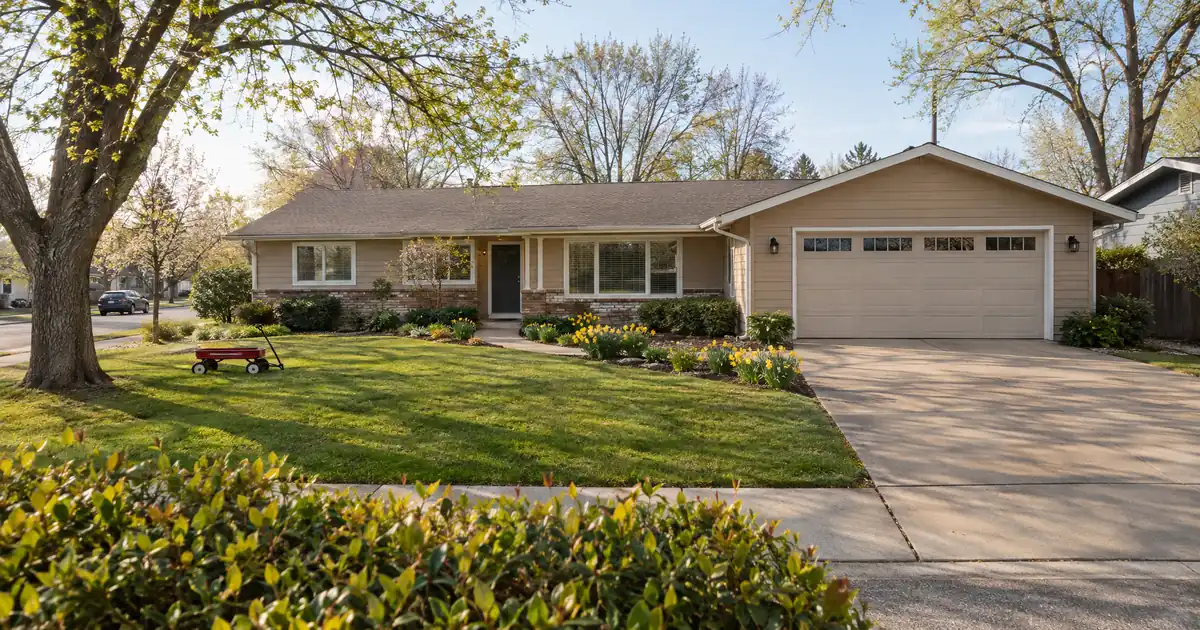
The Quick Read: A DSCR cash-out refinance can supply the money for a new roof or major system, but it works as a sequencing tool rather than a repair loan, because the property usually has to be rent-ready at appraisal, the new balance must still clear the coverage test, and leverage tops out at 75% on an investment-property cash-out. The loan never pays the contractor directly. It hands the investor cash at closing, and the investor decides what to do with it.
- Refinance while the roof or HVAC still works, then spend the proceeds on the replacement.
- If the system has already failed, bridge the repair first and refinance afterward.
- A larger balance means a thinner coverage ratio, so decide how much cash to pull by working backward from coverage.
- A recently purchased property can face a cap on proceeds, no matter what the appraisal says.
- Clearing a 1.00 coverage ratio is not the same as positive cash flow.
What Does a Rental Cash-Out Refinance Actually Do for a Big Repair?
It replaces the existing mortgage with a larger one and returns the difference as cash. Cash to the borrower is the new loan, minus the old payoff, minus closing costs. The new loan is the lower of two numbers: the LTV limit applied to appraised value, and the amount the rent can support at the required coverage.
DSCR Cash-Out Calculator
Run the cash-out numbers in your market
Rate source: Freddie Mac 30-yr average via FRED® — Federal Reserve Bank of St. Louis · effective Oct 15, 2026
Prefilled with starting assumptions — enter your property’s value, balance, taxes, and insurance for a more accurate picture.
Program parameters update from Lendmire’s centralized guideline source. Taxes and insurance are editable estimates.
As of Oct 15, 2026 · General Freddie Mac market benchmark, not a Lendmire loan offer. Property value, balance, taxes, and insurance are editable estimates. Maximum loan-to-value varies by lender, program, property type, and seasoning. Not a Loan Estimate, approval, or commitment to lend. Program availability and eligibility are subject to lender guidelines, credit approval, property review, and underwriting.
That second number surprises people. Rent can cap the loan before value does. A property with plenty of equity but modest rent may produce less cash than the equity math suggests.
The proceeds are unrestricted. The investor can put them into a roof, a furnace, a water heater, or the down payment on another property. Lendmire’s piece Is a Cash-Out Refinance the Usual Way Investors Fund the Next Rental? covers that last use. For the full program picture, the complete DSCR loans guide walks through how these loans are structured.
DSCR loans are designed for non-owner-occupied investment properties. Because they are business-purpose investor loans, they are reviewed differently from a standard owner-occupied mortgage. The loan is reviewed primarily on property-level rental income covering the payment, subject to lender guidelines.
Why Is Timing the Hard Part?
The core problem is simple. The loan that pays for the roof is underwritten before the roof is replaced. A property that needs a roof today is a poor candidate for a cash-out meant to pay for that roof. A property with an aging but working roof is a good one.
Most programs in the wholesale network want the property rent-ready at appraisal. That means no major systems out and no unfinished work. If the appraiser reports value subject to repairs, the lender typically requires a re-inspection after the work is done. That adds a step and a cost.
Appraisers report condition on a scale from C1 to C6. Where the line falls is lender-specific, but the pattern is consistent:
- An aging roof with life left: reviewed case by case, and results differ by lender.
- An active leak or no working HVAC: generally not eligible until repaired.
- A roof near the end of its life: can trigger a subject-to-repairs report, which must be cleared before the loan funds.
Two sequences work in practice.
Refinance first, replace second. The investor refinances while the system still functions, then uses the proceeds on the replacement. This is the cleanest path when the roof is old but not failing.
Bridge first, refinance second. The investor pays for the repair with short-term financing or cash. Then the DSCR refinance pays off the bridge. This is the standard fix for a system that has already failed. It is a sequence around the rules, not an exception inside them.
The flip point is the condition of the system. If the appraiser could reasonably flag it, bridge first. If it is simply old, refinance first. When the answer is unclear, a broker can ask lenders in the network how they treat that specific roof before an appraisal is ordered.
How Does Underwriting Treat the Request, Step by Step?
Underwriting treats the file as a standard cash-out. Nothing about the roof changes the sequence, though it can change the outcome.
1. Classification. The lender decides whether the deal is a cash-out or a rate-and-term refinance. That choice sets the leverage ceiling and starts the seasoning clock. Cash-out on an investment property tops out around 75% LTV across most of the network, and about 6 months of ownership is the common expectation, measured from title recording.
2. Appraisal. The appraisal does two jobs. It sets the value that drives LTV, and it produces a market-rent opinion (the single-family rent schedule or the 2–4 unit operating statement) that drives coverage. Lenders generally credit the lower of the in-place lease and the appraiser’s market rent.
3. Coverage test. DSCR is monthly rent divided by the full monthly obligation: principal, interest, taxes, insurance, and any HOA dues. Repairs, vacancy, management, utilities, and capital expenses sit outside the calculation. Most programs in the network start at 1.00, and stronger ratios open better pricing and leverage. A separate select-lender path takes coverage below 1.00, with leverage and terms adjusted.
4. Sizing. Taking more cash raises the balance, which raises the payment and pushes coverage toward the floor. The sizing logic is covered below.
5. Credit and reserves. A 620 score floor exists in parts of the network. Most programs want around 660, and 700 or higher unlocks the strongest leverage tiers. Reserves vary by lender, leverage, and loan size, and are commonly around 6 months of PITIA, stepping up to about 9 months on loans above $1,500,000. Standard programs run up to $3,000,000.
6. Spend the proceeds. Keep the bid, contract, invoices, and permits. Those records matter for the books and for any later conversation with a tax professional.
These are ceilings and typical positions, not entitlements. Each file is underwritten individually and is not a commitment to lend.
How Do the Funding Options Compare?
The right tool depends on whether the system has failed, how much equity the property holds, and how much cash the investor wants to keep on hand.
| Option | Best when | Main risk |
|---|---|---|
| Cash reserves | System is failing now | Drains operating cash |
| Bridge loan, then DSCR refinance | Repair can’t wait for appraisal | Two sets of costs |
| Cash-out refinance before the work | Roof is old but working | Rent-ready test at appraisal |
| Cash-out refinance after paying out of pocket | Investor paid first, wants cash back | Basis cap on recent purchases |
Cash is the simplest and costs the least in fees. It also takes away the buffer that covers the next surprise.
The last row deserves attention. An investor can refinance after paying for the work and take the proceeds as replenishment. This is allowed, but a cash-out refinance can’t reimburse a recent purchase beyond the lender’s basis rules, discussed below.
What Does a Worked Example Look Like?
The numbers below are modeled assumptions, not market data. They show how the sizing works in percentages and ratios.
Say a rental has a current mortgage balance equal to 50% of its appraised value. The investor wants to replace the roof and take the maximum on an investment-property cash-out at 75% LTV. Before closing costs, the cash returned is the gap between those two percentages: 25% of appraised value. Final terms depend on the lender’s guidelines, the property type, and the borrower’s complete credit picture.
Now run the coverage test. Assume rent covers the old payment at about 1.60x. Pulling the balance from 50% to 75% of value grows the loan by half. Taxes and insurance do not grow with the loan, so the payment does not rise by a full half. Coverage would likely land somewhere between 1.1x and 1.2x. That clears a 1.00 baseline, but the margin is much thinner.
Take the same property, but suppose rent supports a smaller loan than 75% of value. The rent-supported number then governs, and the cash shrinks to match. The investor may discover that the property funds the HVAC replacement but not the roof.
A smaller example: an investor needs only an HVAC unit and a water heater, and pulls cash to roughly 60% LTV instead of 75%. Coverage stays comfortable, and the balance stays modest. Taking less than the ceiling is often the stronger structure.
Clearing 1.00 is also not positive cash flow. A rental at 1.05x can still lose money after repairs, vacancy, management, and utilities, none of which the coverage ratio counts. The stronger files clear both tests: enough equity and enough rental coverage.
Where Does the General Rule Break?
Several edge cases change the answer.
Recent purchases and the cost-basis cap. On a recently acquired property, proceeds are typically capped at the lower of appraised value at the applicable LTV and the documented cash purchase price. After a longer holding period, many programs rely on appraised value alone. A rate-and-term refinance is not subject to that cap, but it returns no cash. Replacing a roof right after buying does not raise the basis a lender uses. An improvement may support a higher appraised value, depending on comps and underwriter review, but it is never a guaranteed lift.
A failing system before closing. A subject-to-repairs report plus a re-inspection is the typical path. A few lenders in the network will work with an aging system, and the strictest overlays will not. Insurance matters here too, since a roof near the end of its life can become a pre-closing issue with the carrier.
Appraisal waivers. Automated valuations are rare and limited to narrow files. Cash-out refinances generally still need a full appraisal.
Thin coverage after the refinance. At a full 75% cash-out, coverage can land right at the floor. One vacant month or one repair then puts the property underwater on a cash basis. Each figure is subject to lender guidelines and a complete review of property type, leverage, and credit.
Prepayment penalty timing. Refinancing out of a recent DSCR loan inside its penalty window can add cost. Check the existing note before ordering an appraisal.
Property type. Manufactured homes (single- and double-wide), log homes, and barndominiums are not offered in the network’s DSCR programs.
Lifespan varies with material and climate. InterNACHI’s life expectancy chart lists 3-tab asphalt shingles at 20 years and architectural asphalt at 30. It lists central air conditioning at 7 to 15 years, furnaces at 15 to 25, and conventional water heaters at 6 to 12. A hot-climate chart from the same association is far shorter: 10 to 12 years for 3-tab shingles and 15 to 20 for architectural. The association describes these as guidelines, not guarantees, so a given roof may outlast or fall short of them.
Tax treatment can depend on how the funds are used and how the property is held; investors should keep clear records, as IRS Publication 527 advises, and speak with a qualified tax professional before relying on any deduction.
Finally, this is not an FHA or VA product. Those programs work only for owner-occupied homes. Lendmire’s piece Can a VA Cash-Out Refinance Fund a Rental Down Payment? covers where that line falls.
What Does the Decision Look Like in Practice?
Start with the system, not the loan. The condition of the roof or equipment decides the sequence.
| Condition | Typical move |
|---|---|
| Old but working | Refinance first, replace after |
| Active leak or dead system | Bridge or cash first, refinance after |
| Minor patch needed | Pay from reserves, refinance later |
| Several properties aging together | Stagger replacements and refinances |
Then size the cash. Work backward from coverage, then decide how much to pull. An investor who takes the full ceiling may leave no margin for the next repair. Many investors set aside a share of gross rent for capital expenses as a standing practice, because the failure always arrives at a bad moment.
Portfolio owners face this on a rolling basis. A roof this year, a furnace next year, and a water heater after that can strain operating cash on their own. Planning the refinance around the replacement schedule, rather than reacting to each failure, usually produces better terms.
A short document list helps at the start:
- The contractor’s bid and scope of work.
- The current mortgage statement and lease.
- The insurance declarations page.
- Photos or an inspection report showing the system’s condition.
Common mistakes follow a pattern. Investors order the appraisal on a failing roof. They take the maximum cash without checking the coverage ratio afterward. They assume the new roof will lift value enough to cover itself. They also skip the prepayment penalty review on the existing loan.
Key Terms Defined
Cash-out refinance: A new, larger loan that pays off the existing mortgage and returns the difference as cash at closing.
Rent-ready: A property with working major systems and no unfinished work, which most programs expect at appraisal.
Subject-to-repairs appraisal: A valuation that assumes specified work will be completed, typically followed by a re-inspection.
DSCR: Monthly rent divided by the full monthly obligation of principal, interest, taxes, insurance, and any HOA dues.
Cost basis cap: A limit on cash-out proceeds for recently purchased properties, tied to the documented purchase price.
Seasoning: The ownership period a lender requires, measured from title recording, before it allows a cash-out.
Frequently Asked Questions
Can I refinance a rental to pay for a roof?
Yes, if the property qualifies as it stands today. The cash-out returns unrestricted cash, which can pay for the roof afterward. The roof generally can’t be failing at appraisal, and the new balance has to clear the coverage test at up to 75% LTV on an investment-property cash-out.
Can I refinance after I’ve already paid for the work?
Yes. Many investors pay first and refinance afterward to replenish cash. The proceeds are not reimbursement in a formal sense, and on a recently purchased property the cost-basis cap may limit how much comes back. Equity, seasoning, credit, and coverage still apply.
Does it work for HVAC, plumbing, or a water heater?
It works the same way, because the loan does not care what the cash buys. The difference is the appraisal. A dead HVAC system or a failing plumbing line can make a property ineligible until it is repaired, while an aging but working system generally does not.
Will a new roof raise my appraised value?
It may support a higher value, depending on comps and underwriter review. It is not a guaranteed lift, and repairs often add less than they cost. Do not count on the new roof to create the equity that pays for it.
Is a cash-out refinance better than a bridge loan?
It depends on the system’s condition. A cash-out refinance suits a roof that is old but working, since it avoids a second set of costs. A bridge suits a system that has already failed and blocks the refinance. The break-even depends on how much equity the property has and what the existing loan carries.
Next Step
If you are buying or refinancing a rental property and want to see how the numbers work, Lendmire, a mortgage broker arranging DSCR loans across 41 markets including Washington, D.C., can help you compare DSCR loan options based on the property income, credit profile, leverage, and investor goals. Program terms vary by lender and every file is reviewed individually. Reach the team at 828-256-2183.
For the mechanics of pulling equity out of a rental property, see Lendmire’s guide to cash-out refinance on an investment property.
About Lendmire
Lendmire (NMLS# 2371349) is a mortgage brokerage built around DSCR investor lending, with programs available in 41 markets, including Washington, D.C. DSCR lenders commonly evaluate rental-income coverage instead of personal income paperwork — a practical fit for LLC-owned and multi-property investors. Terms vary by lender, property, leverage, and program. Scotsman Guide named Lendmire a Top Mortgage Workplace in both 2025 and 2026.
Get Started
Ready to find the right loan for you?
In about 30 seconds you can review financing options available for your investment property. No commitment required.
Informational only. Not a Loan Estimate, approval, or commitment to lend. Program availability and eligibility are subject to lender guidelines, credit approval, property review, and underwriting.
References
1. InterNACHI Life Expectancy Chart
2. InterNACHI Hot-Climate Life Expectancy Chart
This article is part of Lendmire’s investment property cash-out refinance program — full qualification details, guidelines, and scenarios live on the program page.
Related reading: Selling a Rental vs. a DSCR Cash-Out Refinance for the Next Purchase · How Much a DSCR Refinance Releases on a Part-Year Short-Term Rental · How to Convert a Fourplex to Condos and Refinance Each on DSCR
Brandon Miller
Founder & CEO, Mortgage Loan Originator, Lendmire LLC
- Mortgage Loan Originator · NMLS# 1129696 · Verify on NMLS Consumer Access
- North Carolina Real Estate Broker · License# 343312 · Verify on NCREC
- North Carolina Insurance Producer · License# 19053198 · Property, Casualty, Life, Health · Verify on NAIC SBS
- Lendmire LLC · Firm NMLS# 2371349 · Verify firm licensure
Required disclosures. Lendmire (NMLS# 2371349) operates as a licensed mortgage broker, not a direct lender or depository. The discussion in this article is general in nature and should not be relied upon as financial, legal, or tax advice — every investment scenario is unique and should be reviewed by a qualified professional. Any loan inquiry is subject to lender underwriting, and this article is not a commitment to lend or a guarantee of approval. Mortgage rates, loan terms, and program guidelines vary by borrower, property, and state, and may change without notice. Equal Housing Opportunity. Verify licensure at NMLS Consumer Access.