
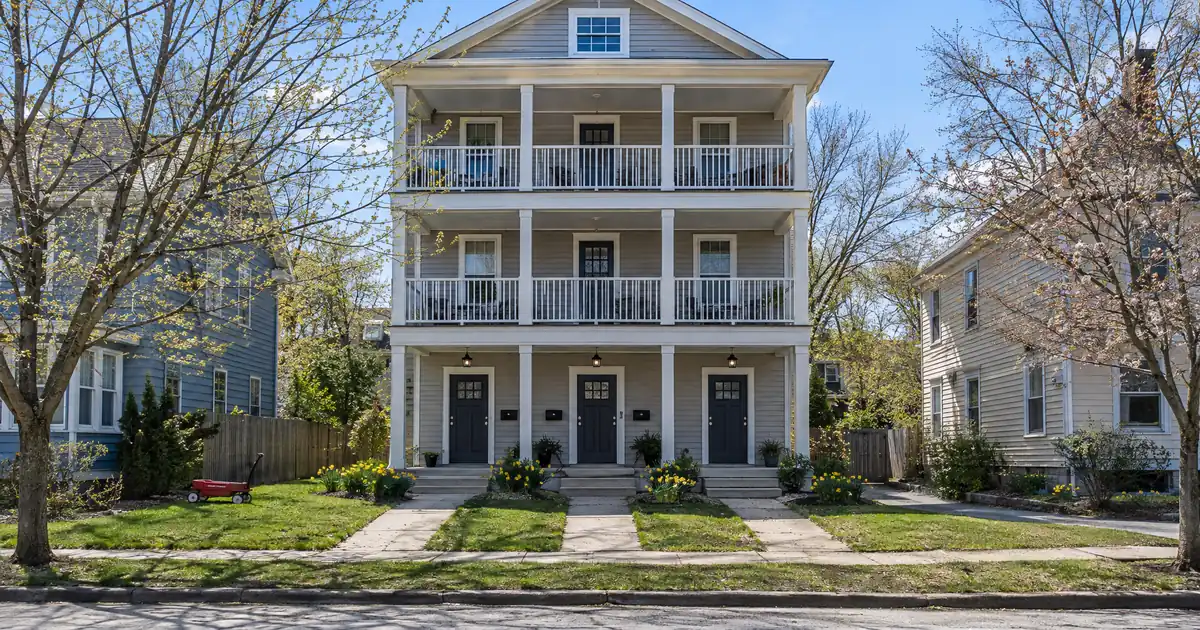
The Quick Read: A cash-out refinance can pay for a roof on a 2-4 unit rental when the building has enough equity and the rent still covers the larger payment. The new loan pays off the old mortgage, and the leftover cash goes to the roofer. Lenders size it on appraised value and rent coverage, not on the roofing quote.
- Cash-out on an investment property tops out at 75% LTV, subject to lender guidelines.
- About 6 months of ownership is the usual seasoning expectation.
- Many select programs start at a 1.00 coverage ratio, and stronger ratios open better terms.
- Credit tiers run from a 620 floor up through 700+.
- Reserves are commonly about 6 months of PITIA, and more above $1,500,000.
A roof is a big, lumpy bill. It sits outside the DSCR math, which is why the funding question deserves more thought than the ratio alone.
DSCR Cash-Out Calculator
Run the cash-out numbers in your market
Rate source: Freddie Mac 30-yr average via FRED® — Federal Reserve Bank of St. Louis · effective Oct 15, 2026
Prefilled with starting assumptions — enter your property’s value, balance, taxes, and insurance for a more accurate picture.
Program parameters update from Lendmire’s centralized guideline source. Taxes and insurance are editable estimates.
As of Oct 15, 2026 · General Freddie Mac market benchmark, not a Lendmire loan offer. Property value, balance, taxes, and insurance are editable estimates. Maximum loan-to-value varies by lender, program, property type, and seasoning. Not a Loan Estimate, approval, or commitment to lend. Program availability and eligibility are subject to lender guidelines, credit approval, property review, and underwriting.
What Is a Cash-Out Refinance on a Small Multifamily Building?
A cash-out refinance replaces your current mortgage with a new, larger first-lien loan. The new loan pays off the old balance, covers closing costs, and returns the difference as cash. It is a one-time, closed-end loan. There are no further draws.
The size of that loan comes from the building’s appraised value and its rent, not from the roof bid. A $40,000 roofing quote does not create a $40,000 loan. It only tells you how much cash you need to walk away with after payoff and costs.
On a 2-4 unit, the appraiser values the building as an income property, using a form built for two- to four-unit properties. Fannie Mae’s Form 1025 is the standard example. This article mentions it only to name the report type. It does not set the rules for DSCR files. The report asks the appraiser to describe condition, including needed repairs and deterioration. That matters here, because the roof you want to replace is part of what the appraiser sees.
Lendmire is a mortgage broker. It arranges DSCR investor loans through select lenders in its wholesale network, across 41 markets including Washington, D.C. The lenders review and approve the file. Lendmire’s complete DSCR loans guide covers the program basics.
How Does Underwriting Treat a Roof Cash-Out, Step by Step?
Underwriting runs two tests side by side: equity and rent. Equity limits the loan through the 75% LTV ceiling on a cash-out. Rent limits it through the coverage ratio. The tighter test sets your cash. Exact terms depend on the lender’s guidelines, property type, leverage, and a full review of the borrower’s file.
Here is the sequence a typical file follows.
1. Seasoning check. Most programs expect about 6 months of ownership, measured from title recording. Some lenders differ. Your broker can tell you which ones fit your timeline.
2. Value. The appraiser reports condition and value. A roof near the end of its life may weigh on the value, since a buyer would face a near-term expense. One appraiser-industry explainer shows how age-life depreciation treats an aging roof. Treat it as an illustration, not a rule.
3. Rent test. Rent used for lender review is divided by the full monthly payment: principal, interest, taxes, insurance, and any association dues. That is the DSCR. Operating costs are not netted out first.
4. The larger payment. Borrowing more to fund the roof raises the payment. That lowers coverage. A building that cleared the test comfortably before may land closer to the floor after.
5. Reserves. Commonly about 6 months of PITIA, stepping up to about 9 months above $1,500,000. Some conservative files at modest leverage can see reserves waived, though that applies to rate-term files, not cash-out. Lendmire’s piece How Reserves Are Counted on a 2–4 Unit Rental Cash-Out Refinance goes deeper.
6. Proceeds sequence. Payoff comes first. Then closing costs, reserves if needed, and any prepayment charge on the old loan. What remains is your roof money.
Credit matters too. A 620 floor exists in parts of the network. Most programs want around 660, and 700+ unlocks the strongest leverage tiers.
What Does the Roof Do to Your Coverage Ratio?
The roof lowers coverage twice. First, a bigger loan means a bigger payment. Second, the roof itself earns no new rent. A new roof rarely lets you raise rents on its own.
Run it conceptually. Say a fourplex covers its payment at about 1.30x. You pull cash for the roof, and the payment rises. Coverage might slide toward 1.15x. That still clears a 1.00 floor. But the file can pass and still leave you thin on real cash flow.
Here is the catch. DSCR compares rent to PITIA only. Repairs, vacancy, management, utilities, and capital spending sit outside the calculation. Clearing 1.00 is not the same as positive cash flow. The ratio answers the lender’s question. It does not answer yours.
If the number comes in under 1.00 after the roof, a separate path exists. Coverage below 1.00 is available through select lenders in the network, with leverage and terms adjusted. Expect lower leverage and different terms. Whether that makes sense depends on how long you plan to hold and what the building will earn once the roof is done.
What Are the Variations on This Structure?
You have several ways to shape the loan, and each trades payment size against flexibility.
| Structure | What changes | Best for |
|---|---|---|
| 30-year fixed | Spine of the network; steady payment | Most hold-long investors |
| 40-year term | Lower payment, select lenders | Files that need more coverage |
| Interest-only period | Lower early payment, select lenders | Short-term cash-flow relief |
| ARM | Adjustable structure | Investors planning a shorter hold |
Above $2,500,000, the network generally holds to 30-year fixed structures. Standard loans run up to $3,000,000. Smaller balances route through select lenders, so a modest cash-out on a small building still has a path.
A larger down payment on a purchase can lift coverage. On a refinance, the equivalent is leaving more equity in the building by taking less cash. Taking only what the roof requires, plus a modest contingency, keeps leverage and payment lower. More equity never erases leverage caps, credit floors, reserve rules, or property eligibility. The strongest files clear both tests.
Many DSCR loans also carry a multi-year prepayment structure. That affects how long you should plan to hold the new loan, so ask for the terms before you commit.
Is a Roof a Repair or an Improvement?
A full roof replacement is generally treated as a capital improvement, not a one-year repair deduction. IRS Publication 527 tells landlords to separate repairs from improvements and lists a new roof among additions or improvements that are depreciated. Tax treatment varies; consult a qualified professional.
Where Does the General Rule Break?
Several edge cases can change the plan.
The roof is failing at appraisal. Condition findings can lead a lender to require repairs. Some readers will have heard of a two-year remaining-life rule. That is an FHA standard, described in HUD’s roof guidance, and it governs owner-occupied FHA loans. A DSCR file is not governed by it. Do not assume the same threshold applies. Each lender sets its own condition standards.
The cash arrives after the roof is needed. If the roof is leaking now, a refinance may not fund soon enough. Options include paying out of pocket, temporary repairs to buy time, or a short-term repair loan before refinancing. Some lenders may allow a repair holdback. Whether that is available depends on the program and lender, so ask your broker before assuming it.
Insurance. Insurability is a closing condition. Older roofs can be hard to insure, or may be covered at actual cash value instead of full replacement cost. Insurers weigh age and condition, and may ask for an inspection. A roofing trade explainer describes how insurers weigh age and condition. Get a fresh insurance quote early. A roof problem found late can derail a file that otherwise works.
Owner-occupied buildings. DSCR loans are designed for non-owner-occupied investment properties. Because they are business-purpose investor loans, they are reviewed differently from a standard owner-occupied mortgage. If you live in one unit of your fourplex, this product is generally not the fit. An owner-occupied 2-4 unit follows different rules. A compliance publication explains why the unit count and occupancy matter, and why the investment label alone does not settle the question.
Ineligible property types. Manufactured homes, log homes, and barndominiums are not offered in the network’s DSCR programs.
LLC title. Entity-held buildings can use these loans, subject to lender program eligibility. Title drives which products exist at all, so confirm it before you plan the project.
Cash-Out, Cash, or Something Else?
For a roof, the honest decision is about size and timing. The right tool depends on your existing loan, your liquidity, and how much cash you need.
If your current mortgage carries terms you would hate to give up, a refinance is a heavy tool for a modest bill. You trade the existing terms and pay closing costs to get the cash. On a small need, paying from reserves or sequencing the work can win.
If the roof bill is large relative to your liquidity, cash-out spreads it across a long amortization instead of draining reserves. The cost is a higher payment, closing costs, and a possible prepayment structure.
The deciding questions:
- Does the building still produce real cash flow after the larger payment, not just a passing ratio?
- Are you comfortable giving up your current loan terms?
- Will you hold long enough to recover closing costs?
- Does the roof need to be done before the refinance can close?
An investor with a duplex and a roof near the end of its life might pull only what the quote requires, add a contingency for hidden decking damage, and keep leverage well under the cap. That choice protects coverage and leaves room for the next surprise.
Order of Operations: Getting From Quote to Funded Roof
1. Collect two or three roofing bids and add a contingency for decking surprises.
2. Estimate net proceeds after payoff and costs, to learn the loan size you need.
3. Check equity against the 75% cash-out ceiling.
4. Check rent coverage on the larger payment.
5. Confirm seasoning and title.
6. Gather leases, the rent roll, the payoff statement, entity documents, and the roofing quotes.
7. Get the appraisal and insurance quote lined up.
8. Close, then pay the roofer from proceeds. Every figure here varies by lender and program — guidelines, property type, leverage, and credit profile all apply.
Using the proceeds on the roof keeps the purpose clear and the file clean. Keep the invoices. A roof tied to the property you own is a straightforward business use of the funds.
Tax treatment can depend on how the funds are used and how the property is held; investors should keep clear records and speak with a qualified tax professional before relying on any deduction.
Key Terms Defined
Cash-out refinance: A new first-lien loan that pays off the old mortgage and returns the extra amount as cash.
DSCR: Qualifying monthly rent divided by the full monthly payment, including taxes and insurance.
LTV: The loan amount as a share of the property’s appraised value.
Seasoning: How long you have owned the property before a lender will count a cash-out against its value.
Capital improvement: Work that adds to a property’s life or value, usually depreciated instead of deducted at once.
PITIA: Principal, interest, taxes, insurance, and association dues, the full monthly obligation.
Frequently Asked Questions
Can a cash-out refinance pay for a roof on a 2-4 unit rental?
Yes, when equity and rent coverage both support the larger loan. The cash-out ceiling is 75% LTV on an investment property, and the file typically needs at least about 6 months of ownership. Qualification stays subject to lender guidelines, credit review, and the property’s condition.
Does the roof quote set my loan amount?
No. The loan is sized on appraised value, the leverage cap, and rent coverage. The roof bid only sets the cash you need after payoff, closing costs, and reserves. A recently replaced or aging roof may support or weigh on appraised value, depending on comps and underwriter review.
What if my coverage drops below 1.00 after the larger loan?
Many select programs start at 1.00, and a separate select-lender path takes coverage below 1.00 with leverage and terms adjusted. If the ratio is tight, taking less cash can restore coverage. Weigh the result against holding period and what the building earns after the roof.
Can I do this in an LLC?
Often, yes, subject to lender program eligibility. Title affects which products are available, so confirm how the building is held before you commit to a plan.
What if the roof is leaking now?
A refinance may not fund in time for an urgent repair. Temporary repairs, paying from reserves, or a short-term repair loan can bridge the gap. Ask your broker whether any lender in the network offers a repair holdback.
If you are buying or refinancing a rental property and want to see how the numbers work, Lendmire can help you compare DSCR loan options based on the property income, credit profile, leverage, and investor goals. Reach the team at 828-256-2183 or request a quote.
For how equity extraction works on an investment property, see Lendmire’s guide to cash-out refinance on an investment property.
About Lendmire
Lendmire is a non-QM mortgage brokerage (NMLS# 2371349) arranging DSCR investor loans in 41 markets, including Washington, D.C., through wholesale and investor-lending channels. DSCR loans are evaluated by the lender on rental income rather than personal income, subject to lender guidelines — a fit for LLC-owned portfolios, self-employed investors, and operators scaling beyond conventional loan caps. Recognized as a Scotsman Guide Top Mortgage Workplace in 2025 and 2026.
Get Started
Ready to find the right loan for you?
In about 30 seconds you can review financing options available for your investment property. No commitment required.
Informational only. Not a Loan Estimate, approval, or commitment to lend. Program availability and eligibility are subject to lender guidelines, credit approval, property review, and underwriting.
References
2. Elite Appraise, roof condition and appraisal
4. Caesars Roofing, roof age and insurance
5. Compliance Alliance, Reg Z and investment properties
This article is part of Lendmire’s investment property cash-out refinance program — full qualification details, guidelines, and scenarios live on the program page.
Related reading: How Much a DSCR Refinance Releases on a Part-Year Short-Term Rental · Selling a Rental vs. a DSCR Cash-Out Refinance for the Next Purchase · How Much Cash a 2-4 Unit DSCR investor Brings After a Low Appraisal
Brandon Miller
Founder & CEO, Mortgage Loan Originator, Lendmire LLC
- Mortgage Loan Originator · NMLS# 1129696 · Verify on NMLS Consumer Access
- North Carolina Real Estate Broker · License# 343312 · Verify on NCREC
- North Carolina Insurance Producer · License# 19053198 · Property, Casualty, Life, Health · Verify on NAIC SBS
- Lendmire LLC · Firm NMLS# 2371349 · Verify firm licensure
Compliance and disclosures. Lendmire (NMLS# 2371349) is a licensed mortgage broker and is not a direct lender, depository institution, financial advisor, or tax professional. Content in this article is general market analysis and educational information — not financial, legal, or tax advice for any specific situation. Lendmire does not guarantee loan approval; every transaction is subject to underwriting by the funding lender. Mortgage pricing and loan program guidelines are subject to change at any time without notice and vary by borrower characteristics, property type, and state regulations. Lendmire complies with Equal Housing Opportunity. Licensure verification: NMLS Consumer Access.