
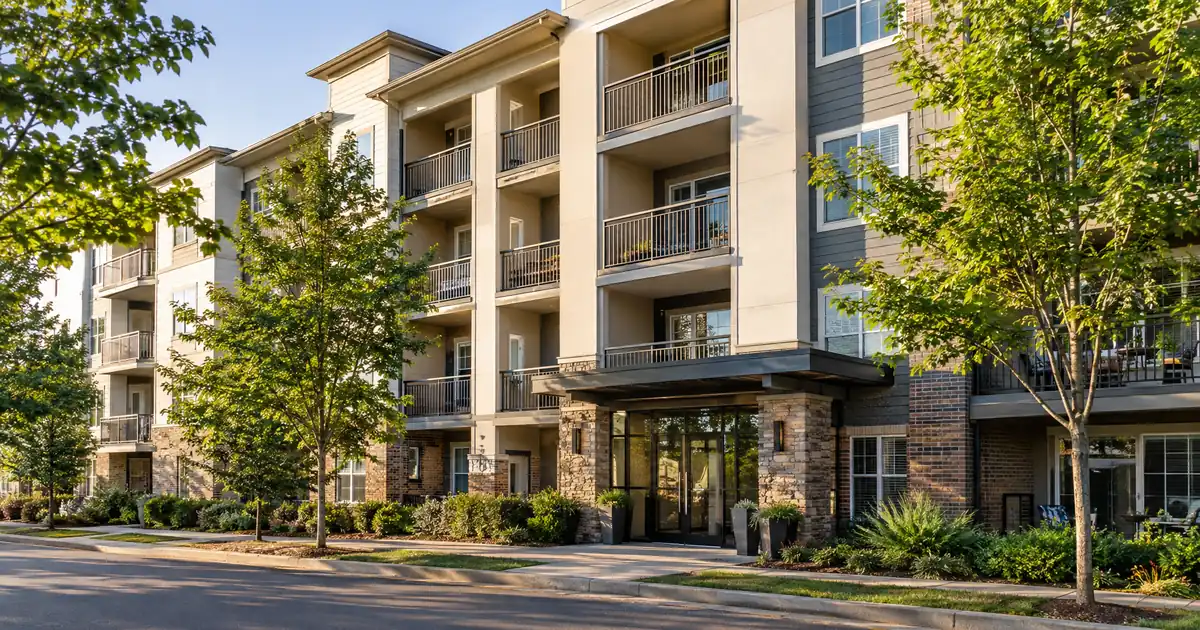
The Quick Read: The move works as a sequence: short-term hard money buys and rehabs the property, the building leases up and stabilizes, and long-term rental financing then replaces the hard money. The catch is that the standard hard money program Lendmire places covers 1-4 unit buildings, plus ground-up construction up to 10 units, so an existing 5-10 unit building usually needs a different route.
- Five units is the line where lenders stop treating a property as a house and start treating it as an income stream.
- Value on a 5-10 unit building follows net operating income and the market cap rate, not neighboring sales.
- Hard money terms typically run 6-18 months, which must cover rehab, lease-up, and the exit loan’s seasoning period.
- Plan the takeout loan before you buy, because the permanent lender’s appraisal and rent coverage decide whether you exit.
- Program terms vary by lender, property, and experience, and nothing here is a commitment to lend.
Why Flippers Look at Five to Ten Units
Flipping rewards speed and volume, and the margin per deal is shrinking. ATTOM’s latest flipping report puts the typical flip margin at 21.5%, down from 27.6% a year earlier, with a typical 161 days from purchase to resale. HousingWire’s coverage of ATTOM data shows cash buyers made up 61.1% of flipped homes. Financed flippers are bidding against people who need no lender.
What this loan actually costs to carry.
Hard money is sized against the project and priced by time. Enter the deal and see how much the program will lend, the cash required at closing, the carry while you hold it, and what is left at the exit.
Leverage tiers on the current program: 85% with fewer than 2, 90% with 2 or more, 93% with 5 or more completed projects — every tier capped at 75% of after-repair value. Loan amounts up to $5,000,000, larger by exception; terms of 6 to 18 months, interest-only, no prepayment penalty. The rehab portion funds in draws against completed work, not at closing.
Program parameters shown update from Lendmire’s centralized guideline source. Rate, points, and months are editable assumptions, not quoted terms.
Cost cap sets the loan · positive spread
Illustrative estimate only — not a quote, Loan Estimate, approval, or commitment to lend. Rate, points, and months are editable assumptions. Hard money is business-purpose financing for real estate investors, not a consumer mortgage. Leverage on the current program tops out at 93% of project cost for investors with a documented track record, capped at 75% of after-repair value, with rehab funding up to 100% of the documented budget released in draws; actual terms vary by lender, borrower experience, property, and exit. Lendmire is a mortgage broker, not a lender.
That data covers single-family homes and condos only. It says nothing about what a multifamily building returns. It is a reason to consider holding, not proof that holding pays more.
The 5-10 unit band attracts flippers because the skills carry over. You already budget rehabs, manage contractors, and read a neighborhood. In a building, those same skills raise income instead of resale price. The lever changes from finish level to rents and expenses.
What Changes at Five Units
Five units is where the lending category changes. Most 1-4 unit loans lean on the borrower: credit, reserves, and the property’s rent. At five or more units, underwriting leans much harder on the building’s own numbers.
Three things shift at once:
1. The loan type. Residential and standard 1-4 unit DSCR products stop at four units. Buildings with five or more units sit in a separate rental portfolio term structure, which depends on the lender. Those loans can carry shorter maturities with a balloon, so the exit plan includes a later refinance.
2. The valuation method. An appraiser values a 5+ unit building on its income, not on comparable house sales.
3. The paperwork. Expect a rent roll, leases, and often trailing twelve-month operating statements.
A 5-unit building is not a big fourplex. It is a different asset with a different lender pool.
How Value Works on a Building
Value on an income property comes from two numbers. Net operating income (NOI) is the rent collected, minus vacancy and operating expenses, before any loan payment. The cap rate is the return the market expects on a building like yours.
Divide NOI by the cap rate and you get value. This is why flippers find the model familiar and strange at the same time.
Here is an illustration with no dollars. Say a building’s NOI rises 10% after you fix underpriced rents and cut waste. At the same cap rate, its value rises about 10%. You created that value through income, not paint and finishes.
The reverse is also true. A rehab that improves looks but not rents may add little. An appraisal may support a higher value, depending on comps and underwriter review, but it is never guaranteed.
How Hard Money Fits (and Where It Doesn’t)
Hard money is short-term, asset-based financing that funds an acquisition and rehab. The lender looks at the property, your plan, and your exit more than at your personal income. A bridge loan is a similar short-term loan repaid from long-term financing once it becomes available. People use the two terms loosely, so this article calls the product hard money throughout.
Here is the honest scope of the program Lendmire arranges. Collateral is non-owner-occupied residential property of 1-4 units, and ground-up construction is available up to 10 units. Commercial properties are not on the sheet. An existing 5-10 unit building bought as a rehab falls outside it.
That leaves three realistic routes for a flipper:
- Step up through 1-4 units. Buy and hold a fourplex first. It teaches tenant management and rent-roll discipline on a building the hard money program does cover.
- Build it. Ground-up construction up to 10 units can be funded with hard money, then refinanced into rental financing once leased. This suits builders more than classic rehabbers.
- Buy an existing 5-10 unit building through a separate commercial lender. That sits outside this program, with its own terms and a smaller lender pool.
For the program Lendmire arranges, the typical terms run like this. Figures vary by lender, property, and experience.
| Feature | Typical range |
|---|---|
| Term | 6-18 months, interest-only |
| Prepayment penalty | None |
| Fix-and-flip leverage | 85%-93% of project cost, capped at 75% of after-repair value |
| Top tier | Reserved for 5+ completed projects |
| Bridge purchase, no rehab | Up to 80% of purchase price |
| Refinance | Up to 65% of value |
| Credit | 620 minimum, extra conditions below 660 |
Fix-and-flip leverage is tiered by completed projects: 93% of project cost at five or more, 90% at two or more, and 85% with fewer than two. The rehab budget can fund up to 100% in draws against completed work. That is a rehab-budget figure, not a purchase loan-to-value. There is no true 100% purchase program. Loan sizes reach $5,000,000, and larger loans are handled by exception.
Flip Skills Versus Hold Skills
| Skill | In a flip | In a building |
|---|---|---|
| Rehab budgeting | Maximize resale | Maximize rent per dollar |
| Timeline | Sell at the end | Lease up, then refinance |
| Buyer | The next owner | Tenants, then a lender |
| Risk | Market shift | Vacancy, turnover, rent coverage |
| Reward | One-time profit | Ongoing income plus value |
Flippers underrate the tenant side. A vacant house has no residents. An occupied building does, so a rehab becomes a phased project with tenant turnover. Draws, access, and unit sequencing all change.
The mindset changes too. A flip ends with a sale. A hold ends with a refinance or a decision to keep owning. Tax treatment varies; consult a qualified professional before relying on any deduction.
Are You Ready? A Checklist
You are likely ready if most of these are true:
- You have completed multiple projects with documented budgets and results. Experience also sets hard money leverage tiers.
- You hold reserves beyond your down payment, because a lease-up that slips costs interest-only carry.
- Your credit sits at 660 or higher. A 620 floor exists, but it comes with extra conditions.
- You have a contractor team that can work around occupied units.
- You have a plan for who manages the building, whether you or a third party.
- You know your exit lender’s test before you buy.
If you are short on several, start with a smaller building. Lendmire’s piece how to move five or more flips from hard money into a DSCR loan covers how a pile of finished flips becomes a held portfolio.
The Timeline and Where It Breaks
A building takes longer than a flip. Run the phases in order, and test each against the loan clock.
| Phase | Main risk |
|---|---|
| Acquire | Seller’s books overstate income |
| Rehab | Scope grows once walls open |
| Lease up | Units sit vacant longer than planned |
| Season | Lender wants time on the new rents |
| Refinance | Appraisal or coverage falls short |
Hard money terms run 6-18 months. ATTOM’s 161-day average flip is a single-family number, and a building’s rehab, lease-up, and seasoning can easily outrun it. Size the term so it outlasts every phase with room to spare.
Brokers who move bridge loans into long-term debt tend to see the same two stall points. One is an appraisal that lands below the planned after-repair value. The other is a seasoning period that doesn’t line up with the loan’s maturity. Treat your after-repair value as a planning number only. The permanent lender’s appraisal decides.
What the Exit Lender Will Test
Many investors refinance out of hard money into long-term DSCR investor loans once the property is stabilized, and Lendmire brokers that path. For buildings of five or more units, the takeout sits in the rental portfolio structure described earlier.
The test is simple to say. DSCR means debt service coverage ratio: the property’s rent divided by its full monthly payment, which covers principal, interest, taxes, insurance, and any association dues. 1.00 is where many select programs start, and stronger ratios open better pricing and leverage. A separate select-lender path takes coverage below 1.00, with leverage and terms adjusted.
Clearing 1.00 is not the same as positive cash flow. The ratio leaves out repairs, vacancy, management, utilities, and capital expenses. A building can clear the test and still lose money after those costs.
Coverage is only one half of the test. A bigger down payment can lift the ratio, but it never erases credit floors, reserve rules, or property eligibility. Strong files show both enough equity and enough rental coverage. Reserves vary by lender, leverage, and loan size, and they commonly run around six months of payment obligations. Confirm each lender’s guidelines against your specific building. For the full framework, see Lendmire’s complete DSCR loans guide.
Due Diligence on a Larger Building
Because the building is valued on income, the seller’s numbers matter more than the photos.
- Rent roll. Compare it against the actual leases, not just the summary.
- Trailing twelve-month statements. Check that collected income matches the claimed income.
- Expense ratio. Look for deferred maintenance hiding behind low expenses.
- Vacancy history. Ask what units sat empty and why.
- Rent-control or tenant-protection limits. Market-rent upside may not hold where rules cap increases.
- Unit-level condition. A 5-unit building and a 10-unit building carry different operational loads.
A building that cannot show a rent roll may not qualify for permanent financing at purchase. It has to be leased up first, and your hard money must cover that time. Mixed-use and condo-conversion exits need different loan structures and longer timelines. Don’t apply a single-family flip template to them.
Not every property type is eligible either. Manufactured homes, log homes, and barndominiums are not offered in the network.
Key Terms Defined
- Hard money: short-term, asset-based financing that funds a purchase and rehab, judged mainly on the property, the plan, and the exit.
- NOI (net operating income): rent collected minus vacancy and operating expenses, before any loan payment.
- Cap rate: the return the market expects on a building, used to turn NOI into value.
- DSCR: the property’s rent divided by its full monthly payment, including taxes and insurance.
- Seasoning: the waiting period a lender wants before refinancing on new rents or new ownership.
- Rent roll: a unit-by-unit list of tenants, rents, and lease dates.
Mistakes That Cost Flippers Money
- Buying too big. The 5-7 unit sizes are often the least efficient, while 8-10 units are better but still short of large-building scale. Pick a size you can actually run.
- Treating the bridge approval as the refinance approval. The two lenders run different tests. Hard money sizes on cost and after-repair value, while the permanent loan sizes on its own appraisal and rent coverage.
- Underestimating stabilization time. If leasing runs late, the interest-only carry keeps ticking.
- Assuming no paperwork. A rental loan is reviewed primarily on property-level rental income covering the payment, subject to lender guidelines. That removes personal-income documentation, not the rent roll and leases.
If stabilization slips, you have three exits. Request an extension from the lender, refinance into a longer-term loan sooner at lower leverage, or sell. Each is easier when you arrange it before the clock runs out.
Frequently Asked Questions
Can I use hard money on a 5+ unit building?
Not through the standard hard money program Lendmire places. That program covers 1-4 unit non-owner-occupied properties, plus ground-up construction up to 10 units. An existing 5-10 unit building typically needs a separate commercial or bridge lender. Terms there vary widely.
Should I stop flipping once I buy a building?
Not necessarily. Many investors keep flipping while they learn to operate a building. Flip proceeds can fund reserves or the next down payment, but a building needs attention, so avoid stretching your team too thin.
How big should my first building be?
Smaller is safer. A fourplex held through the standard program teaches tenant management before you step to five or more units. Make the jump only when you can explain your exit lender’s test.
What if stabilization takes too long?
Talk to the lender about an extension before the term ends, since terms run 6-18 months. Otherwise, refinance at lower leverage or sell. Reserves for extra interest-only carry make each option easier.
How do I fund the down payment?
Flip proceeds are a common source, and timing a sale ahead of the purchase helps. Remember that hard money leverage is measured on project cost and tops out below 100%. Keep reserves on top of the equity you put in.
Next Step
If you are buying, rehabbing, or refinancing an investment property on a short timeline and want to see how the numbers work, Lendmire can help you compare hard money options based on the project, the exit plan, leverage, and your goals.
About Lendmire
Lendmire is a non-QM mortgage brokerage (NMLS# 2371349) arranging DSCR investor loans in 41 markets, including Washington, D.C., through wholesale and investor-lending channels. DSCR loans are evaluated by the lender on rental income rather than personal income, subject to lender guidelines — a fit for LLC-owned portfolios, self-employed investors, and operators scaling beyond conventional loan caps. Recognized as a Scotsman Guide Top Mortgage Workplace in 2025 and 2026.
Get Started
Ready to find the right loan for you?
In about 30 seconds you can review financing options available for your investment property. No commitment required.
Informational only. Not a Loan Estimate, approval, or commitment to lend. Program availability and eligibility are subject to lender guidelines, credit approval, property review, and underwriting.
References
1. ATTOM, Home Flipping Profits Continue Gradual Two-Year Decline
2. HousingWire, ATTOM Q1 Home Flipping coverage
3. Corporate Finance Institute, bridge loan
This article is part of Lendmire’s hard money loan program — full qualification details, guidelines, and scenarios live on the program page.
Related reading: Should a BRRRR Investor Exit Hard Money on a Low Cash-Out Refinance? · Can a Paid-Off 2-4 Unit Rental Get a First-Position HELOC? · How Much a DSCR Cash-Out Can Cover for a Fund Capital Call
Brandon Miller
Founder & CEO, Mortgage Loan Originator, Lendmire LLC
- Mortgage Loan Originator · NMLS# 1129696 · Verify on NMLS Consumer Access
- North Carolina Real Estate Broker · License# 343312 · Verify on NCREC
- North Carolina Insurance Producer · License# 19053198 · Property, Casualty, Life, Health · Verify on NAIC SBS
- Lendmire LLC · Firm NMLS# 2371349 · Verify firm licensure
Important disclosures. Lendmire (NMLS# 2371349) is a licensed mortgage brokerage. Lendmire is not a direct lender, depository institution, or financial advisor. All loan inquiries are subject to lender underwriting; this article does not constitute a commitment to lend. Rates, terms, and program guidelines are subject to change without notice and vary by borrower profile, property type, and state. Information in this article is general in nature and is not financial, legal, or tax advice. Equal Housing Opportunity. NMLS Consumer Access: nmlsconsumeraccess.org.