
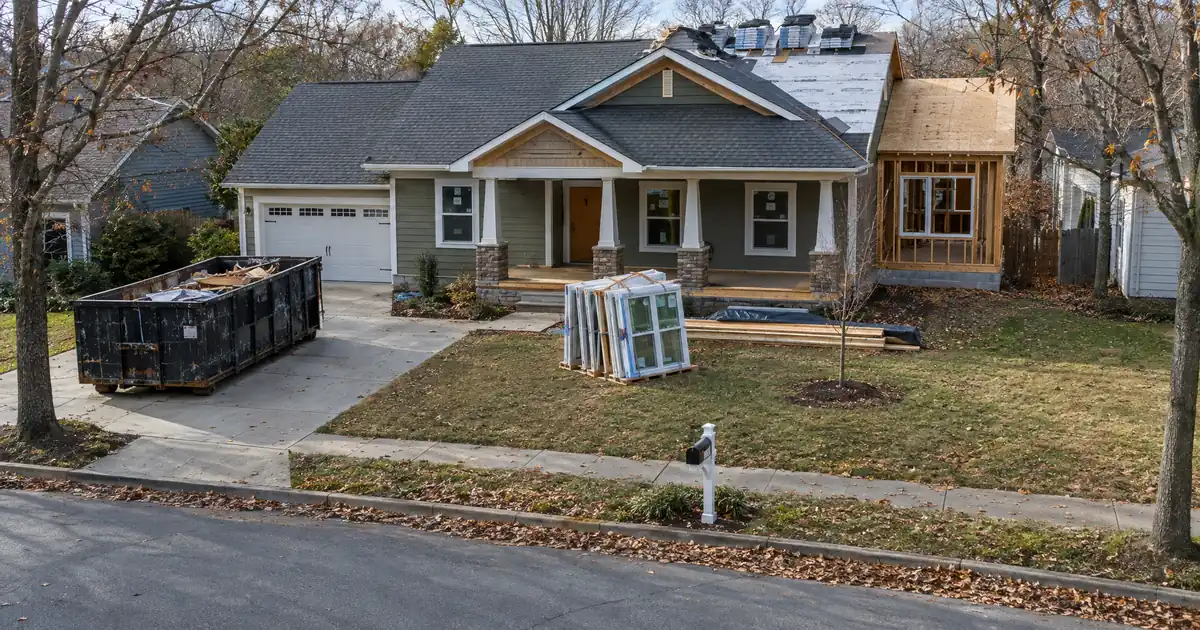
The Quick Read: The after-repair appraisal on a flip loan and the value a long-term lender assigns are two separate numbers, produced by two separate parties for two separate loans, and each one caps a different part of your deal. The after-repair number sizes the short-term loan, mostly through a cap on loan-to-ARV, while the lender’s current-value number sizes the rental loan you use to exit. Flippers who plan around only one of them are the ones who get surprised at the other.
- The ARV appraisal is a forward-looking opinion of the finished property. It sizes the flip loan.
- Lender value is the as-is appraised number a lender applies its formula to. On the exit, it sizes the long-term rental loan.
- Your own ARV is an estimate until a third party confirms it, so it never sizes anything on its own.
- Experience raises leverage on a flip loan. It does not change how the property gets valued.
- The 70% rule is your purchase screen. It is not a lender’s loan cap.
Side-by-Side
Both options are real tools in the same flip-to-hold pipeline. The ARV-based flip loan is for the buy-and-rehab stretch. The value-based rental loan is for what comes after, when the property is finished, rented, and ready for long-term financing. Neither replaces the other. The table below shows published industry norms for each side, with the program figures reflecting what Lendmire’s wholesale network commonly places. Everything varies by lender, property, and experience.
What this loan actually costs to carry.
Hard money is sized against the project and priced by time. Enter the deal and see how much the program will lend, the cash required at closing, the carry while you hold it, and what is left at the exit.
Leverage tiers on the current program: 85% with fewer than 2, 90% with 2 or more, 93% with 5 or more completed projects — every tier capped at 75% of after-repair value. Loan amounts up to $5,000,000, larger by exception; terms of 6 to 18 months, interest-only, no prepayment penalty. The rehab portion funds in draws against completed work, not at closing.
Program parameters shown update from Lendmire’s centralized guideline source. Rate, points, and months are editable assumptions, not quoted terms.
Cost cap sets the loan · positive spread
Illustrative estimate only — not a quote, Loan Estimate, approval, or commitment to lend. Rate, points, and months are editable assumptions. Hard money is business-purpose financing for real estate investors, not a consumer mortgage. Leverage on the current program tops out at 93% of project cost for investors with a documented track record, capped at 75% of after-repair value, with rehab funding up to 100% of the documented budget released in draws; actual terms vary by lender, borrower experience, property, and exit. Lendmire is a mortgage broker, not a lender.
| Factor | ARV-based flip loan | Value-based rental (DSCR) loan |
|---|---|---|
| Value that sizes the loan | After-repair value plus project cost | Current appraised value |
| Review basis | Property, plan, and exit | Rent covering PITIA, plus credit |
| Documentation | Scope, budget, comps, liquidity | Appraisal, rent schedule, assets |
| Property types | Non-owner 1-4 units; ground-up to 10 | Investment 1-4 units; some types excluded |
| Entity vesting | LLC common, per program terms | LLC common, per program terms |
| Loan shape | 6-18 months, interest-only | 30-year fixed spine; other terms by select lenders |
| Leverage anchor | 85-93% of cost, capped at 75% of ARV | 75-80% on purchase; about 75% on cash-out |
| Reserve expectations | Cash gap drives it; varies | Commonly about 6 months of PITIA |
A few of those cells need unpacking. PITIA is principal, interest, taxes, insurance, and association dues, which is the full monthly obligation a rental loan tests against rent. Hard money leverage is tiered by how many projects you have finished. A first-time investor sits at the lowest tier, and the top tier is reserved for experienced investors.
Key Terms Defined
ARV (after-repair value): the estimated worth of the property once the renovation is finished. It is a projection, not a current value.
As-is value: what the property is worth today, in its current condition.
Loan-to-cost: the loan as a percentage of your total project cost, meaning purchase plus rehab.
Loan-to-ARV: the loan as a percentage of the after-repair value. It is the cap that usually binds on thin deals.
BPO (broker price opinion): a lighter-weight value opinion from a real estate broker, sometimes used in place of a full appraisal.
DSCR (debt service coverage ratio): monthly rent divided by the full monthly obligation (PITIA). A 1.00 means rent matches the payment.
What Is Actually Being Valued
An appraiser who values a property “after repairs” is describing something that is not yet true. Appraisers call this a hypothetical condition: the value assumes the work is finished as described in the contractor bids, plans, or scope, even though it isn’t. An appraiser writing at The Valuation Piece lays out how that assumption works. The consequence for you is that the ARV is only as credible as the scope and budget behind it.
Investor-education sources define ARV the same way. Landlord Studio explains that ARV differs from current market value, and the gap is the value the repairs are expected to add. Stessa describes building it from a comparative market analysis, using recent sales of similar homes matched on square footage, bed and bath count, lot size, age, and condition.
Your version of that number is the starting point. The lender’s version is the one that binds.
When the ARV Appraisal Is the Better Fit
The ARV-based flip loan fits when the property needs work, the value comes from the finished product, and you plan to sell or refinance within a short window. It is the right tool in these situations:
- The property is not rentable or sellable as it stands. A lender sizing on as-is value would barely lend against a distressed house. Sizing against the finished value, with funds released in draws as work completes, is what makes the project reviewable at all.
- You have a track record. In Lendmire’s network, leverage runs on a ladder tied to documented completed projects: up to 93% of project cost at 5+ completed projects, 90% at 2+, and 85% with fewer than 2. Every tier is capped at 75% of after-repair value. Up to 100% of the rehab budget funds in draws against completed work. These figures vary by lender, property, and experience.
- Speed of execution matters more to you than a long runway. Terms run 6-18 months, interest-only, with no prepayment penalty. There are no multi-year options on this program.
- The qualification story is the asset, not your income file. Underwriting looks at the property, the plan, and the exit. Credit still matters, with a 620 minimum score and additional conditions below 660.
The tradeoff is that a forward-looking value is the most debatable value in the process. You are asking a lender to credit work that has not happened. Lenders treat that conservatively, and they should.
There is also a structural point experienced flippers sometimes blur. Total cost leverage and ARV leverage are two tests, and the lower of the two controls the loan. At the top cost tier, many thin deals run into the ARV cap before the cost tier. That is why the lender’s ARV, not your ARV, decides how much cash you bring.
When Lender Value Is the Better Fit
The value-based loan fits when the work is done and the property earns rent. Here the question is no longer what the property will be worth. It is what the property is worth now and whether the rent carries the debt.
Lender value is the better fit in these situations:
- You are holding, not selling. A rental loan on a stabilized property suits a buy-and-hold plan better than carrying short-term debt past the point it was designed for.
- The rent supports the payment. DSCR loans qualify primarily on property-level rental income covering the payment, subject to lender guidelines. Across the network, 1.00 is where many select programs start. A separate select-lender path takes coverage below 1.00, with leverage and terms adjusted. Stronger ratios generally open better leverage and terms.
- You want longer runway. The spine is the 30-year fixed, and select lenders in the network offer 40-year and interest-only structures.
- You are pulling cash out of a finished project. Cash-out tops out around 75% LTV across most of the network, and about 6 months of seasoning is a common expectation. If you are leaning on a short-term loan instead, the cash-out and rate/term refinance limit there is up to 65% of value.
One caution belongs here. Clearing 1.00 is not the same as positive cash flow. The calculation compares rent to PITIA only. Repairs, vacancy, management, utilities, and capital reserves sit outside it.
Many investors refinance out of hard money into long-term DSCR investor loans once the property is stabilized, and Lendmire brokers that path.
Why the Two Numbers Diverge
Lenders value conservatively because the property is their collateral if the deal fails. A forward-looking value carries more risk than a current one, and they price that risk into the formula. Several things push the lender’s ARV below yours:
- Comps. You picked recent renovated sales. The appraiser may reject any that are stale, distant, or across a boundary that matters to buyers.
- Over-improving. A finished house priced well above its block does not get credited at full value.
- Scope credibility. A thin budget against a heavy renovation lowers the number, because the appraiser cannot assume the finished condition is realistic.
- Space that doesn’t count. Unpermitted additions typically do not get counted in the value.
- Different producers. A BiggerPockets discussion on who decides ARV describes lenders using appraisal management companies, cross-checking against internal underwriting, and weighting outside appraisals differently from one lender to the next.
That discussion also describes a borrower whose later appraisal came in much lower than the ARV, forcing the borrower to bring cash to move into conventional financing. That is the exit risk in a single sentence.
One Flip at Two Values
Run the numbers on a modeled flip. These are assumptions, not market data, and they use index units rather than dollars. Say your total project cost is 80 and your ARV is 100. At the top experience tier, the loan is 93% of cost, or 74.4, and the ARV cap of 75% is 75. The lower figure controls, so the loan is 74.4, and you bring about 5.6 in cash.
Now the lender’s ARV comes in at 90. The cap becomes 67.5, which is below 74.4, so the ARV cap now controls. Your cash to bring rises to 12.5, more than double. Your expected margin before selling costs also shrinks from 20 to 10, since the property is worth less than you planned.
The 70% rule would have flagged part of this at the offer stage. That rule says maximum offer equals ARV times 70% minus repair costs. Landlord Studio calls it a quick filter rather than a precise valuation. It is your purchase-price screen. It is not a lender’s loan-to-ARV cap, and the two numbers answer different questions. Keep them apart when you underwrite.
The stress test is simple. Before you make an offer, haircut your ARV by 5% to 10%, recompute the ARV cap and the cash you must bring, and check whether the deal still works. If it doesn’t, the margin was never as wide as it looked.
What Experience Changes (and Doesn’t)
Experience mostly changes leverage. The ladder of 85%, 90%, and 93% of cost reflects documented completed projects. It does not change how an appraiser values the house. Comps, scope, and condition still drive the number.
In Lendmire’s file work across a wholesale network, experienced flippers who get the cleanest valuations tend to hand over the same package every time: sold and renovated comps with photos, a scope and budget that match the finish level the ARV assumes, and a short explanation of any unusual adjustment. Package quality is the habit that separates a smooth valuation from a contested one. Different lenders also trust different sources, so it pays to ask up front whether the lender leans on an outside appraisal or internal review.
If the number comes in low, the options are usually rebuttal comps, a second opinion, restructuring the deal with more cash, or walking away. Walking away is a legitimate choice when the margin disappears at the lender’s number.
The Exit Appraisal Is a Separate Test
The ARV that sized your hard money loan does not carry over to the lender that takes you out. That lender orders its own appraisal and its own rent schedule. Fannie Mae’s Form 1007, prepared by the appraiser as an attachment to the appraisal of a single-family investment property, shows the kind of rent documentation commonly used. A similar form exists for 2-4 units. DSCR loans are not agency products, so this is a format reference only.
On the DSCR side, purchase leverage on most files lands at 75%-80% LTV, and select high-leverage programs reach 85% with roughly a 700+ score. Credit expectations typically run around 660, with a 620 floor in parts of the network. Reserves vary by lender, leverage, loan size, and transaction type, commonly around 6 months of PITIA. The strongest files clear both tests: enough equity and enough rental coverage.
For short-term rental exits, purchase runs to 75% LTV, refinance around 70%, and cash-out 70%. Expect a 640+ score and about 12 months of hosting history. Short-term rental rules can vary by city, county, HOA, and property type, so investors should confirm local rules before relying on projected rental income. Final terms depend on lender guidelines, property type, leverage, and the borrower’s complete credit picture.
If you are scaling volume, Lendmire’s piece on blanket loans versus per-rehab loans for a high-volume flipper covers how to structure several projects at once.
The Verdict
Choose the ARV-based flip loan when the property needs work and the finished value is the point. Choose the value-based rental loan when the property is finished and earns rent. For most experienced flippers who plan to hold, the answer is both, in sequence, and the real skill is underwriting each stage on its own number.
Your ARV is a projection until someone else confirms it. The lender’s ARV sizes the flip loan. The exit lender’s appraisal sizes the next one. A deal that works at a haircut on all three is a deal worth doing. Tax treatment varies; consult a qualified professional.
For a wider view of how these loans fit together, see Lendmire’s complete DSCR loans guide.
Next Step
If you are buying, rehabbing or refinancing an investment property on a short timeline and want to see how the numbers work, Lendmire can help you compare hard money options based on the project, the exit plan, leverage, and your goals. Lendmire is a broker that arranges financing through select lenders in its wholesale network, across 41 markets including Washington, D.C. Nothing here is a commitment to lend, and every file is underwritten individually.
Frequently Asked Questions
Does the lender use my ARV?
Not as your number. The lender orders its own appraisal or broker price opinion and may cross-check it against internal underwriting. Your ARV helps you pick the deal and supports the package, but the lender’s version sets the cap.
Will I get a full appraisal or a BPO?
It depends on the lender and the deal. Some rely on a full appraisal, often through an appraisal management company, while others use a lighter opinion of value or internal review. Ask which one applies before you submit.
Why is my ARV higher than the lender’s?
Usually comps, scope, or condition. Stale or distant comps, listing prices instead of sold prices, over-improving for the block, and thin budgets all push the lender’s number down. Lenders also value conservatively because the property is their collateral if the deal fails.
Is the 70% rule a lender rule?
No. It is an investor screen for the maximum purchase offer. A lender’s loan sizing runs on its own loan-to-cost and loan-to-ARV caps, which vary by lender, property, and experience.
What if the exit lender values the property lower?
Then you bring more cash or restructure at the refinance. The exit lender orders its own appraisal and rent schedule, so the hard money ARV does not carry over. Stress-testing your margin at a lower value before you buy is the best protection.
About Lendmire
As a non-QM mortgage broker (NMLS# 2371349), Lendmire facilitates DSCR investor loans across 41 markets, including Washington, D.C. DSCR eligibility is generally reviewed around property-level rental income instead of personal income documentation, subject to lender guidelines, serving LLC-structured portfolios and self-employed borrowers who don’t fit conventional boxes. A two-time Scotsman Guide Top Mortgage Workplace (2025, 2026).
Get Started
Ready to find the right loan for you?
In about 30 seconds you can review financing options available for your investment property. No commitment required.
Informational only. Not a Loan Estimate, approval, or commitment to lend. Program availability and eligibility are subject to lender guidelines, credit approval, property review, and underwriting.
References
1. The Valuation Piece: Playing Pretend
2. Landlord Studio: ARV in Real Estate
4. BiggerPockets: Who decides ARV when applying for hard money
This article is part of Lendmire’s hard money loan program — full qualification details, guidelines, and scenarios live on the program page.
Related reading: Should You Close a DSCR Refinance or Wait for a Second Appraisal? · Full Appraisal vs Automated Value on a Rural DSCR Loan With No Comps · Can a DSCR Lender Release a Detached Unit From the House?
Brandon Miller
Founder & CEO, Mortgage Loan Originator, Lendmire LLC
- Mortgage Loan Originator · NMLS# 1129696 · Verify on NMLS Consumer Access
- North Carolina Real Estate Broker · License# 343312 · Verify on NCREC
- North Carolina Insurance Producer · License# 19053198 · Property, Casualty, Life, Health · Verify on NAIC SBS
- Lendmire LLC · Firm NMLS# 2371349 · Verify firm licensure
Compliance and disclosures. Lendmire (NMLS# 2371349) is a licensed mortgage broker and is not a direct lender, depository institution, financial advisor, or tax professional. Content in this article is general market analysis and educational information — not financial, legal, or tax advice for any specific situation. Lendmire does not guarantee loan approval; every transaction is subject to underwriting by the funding lender. Mortgage pricing and loan program guidelines are subject to change at any time without notice and vary by borrower characteristics, property type, and state regulations. Lendmire complies with Equal Housing Opportunity. Licensure verification: NMLS Consumer Access.