
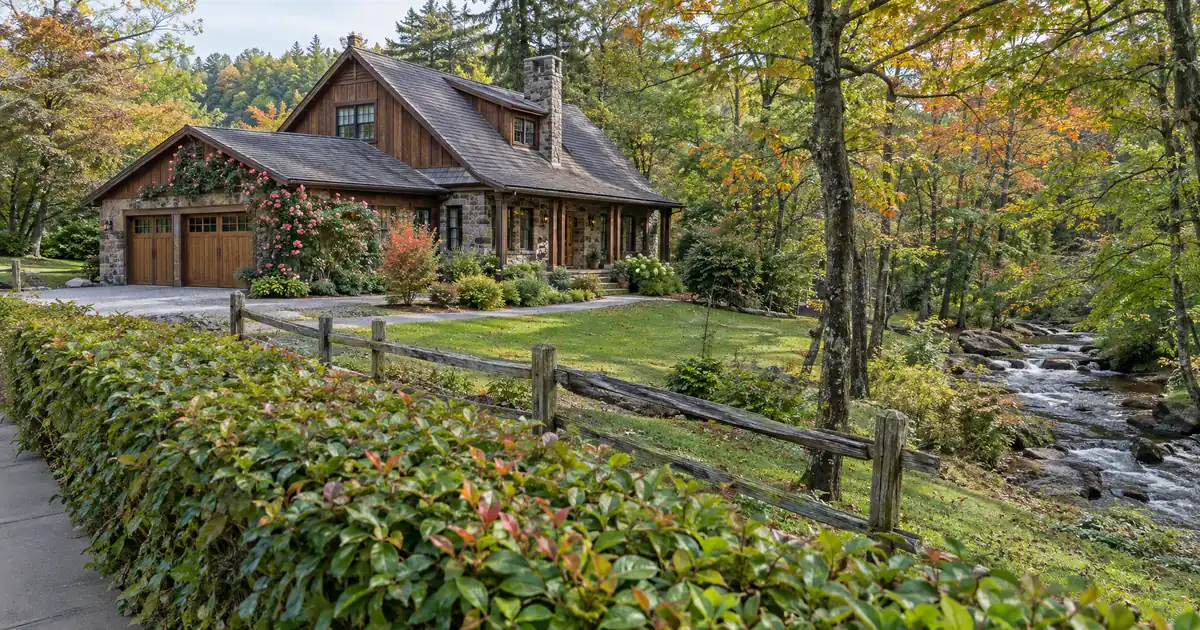
The Quick Read: On a rural rental with no nearby sales, a full appraisal by a local appraiser is usually the only valuation a DSCR lender will rely on. An automated value needs dense sales data that rural markets rarely produce, and only an appraiser can also give the market-rent opinion that feeds the coverage ratio. An automated value is a narrow tool. It fits well-documented properties in busy markets, not a farmhouse at the end of a county road.
- A full appraisal sets two numbers: the value used for leverage and the market rent used for coverage.
- An automated value sets one number, the value, and it gets less reliable as comparable sales thin out.
- Rural files turn on whether a credible value can be supported, more than on how you qualify.
- Manufactured homes, log homes, and barndominiums are not offered in the network’s DSCR programs, so rural property type matters early.
The Honest Answer: Who Each Option Is Really For
A full appraisal is for the investor buying or refinancing a rural property where sales are scarce, the lot is large, or the house is unusual. That describes most rural deals. An automated value is for a standard house in a data-rich market, where a lender is comfortable that a model can price it. Rural files with no comps rarely fit that description.
DSCR Calculator
Run the numbers in your market
Rate source: Freddie Mac 30-yr average via FRED® — Federal Reserve Bank of St. Louis · effective Oct 15, 2026
Prefilled with starting assumptions — enter your own rent or nightly figures, taxes, insurance, and HOA for a more accurate picture.
Program parameters update from Lendmire’s centralized guideline source. Taxes and insurance are editable estimates.
As of Oct 15, 2026 · General Freddie Mac market benchmark, not a Lendmire loan offer. Rent, nightly rate, occupancy, taxes, and insurance are editable estimates. Short-term rental figures are estimates only and vary significantly by season, property type, management approach, and local short-term-rental rules — confirm local regulations before relying on them. Qualifying income for short-term rentals varies by program — some use appraisal market rent, others use documented STR history or projections — and is confirmed in underwriting. Not a Loan Estimate, approval, or commitment to lend. Program availability and eligibility are subject to lender guidelines, credit approval, property review, and underwriting.
Neither option is better in the abstract. The question is which one can produce a number the underwriter will trust. DSCR, the debt service coverage ratio, compares a property’s monthly rent with its full monthly obligation. That obligation is PITIA: principal, interest, taxes, insurance, and association dues. The valuation method affects both sides of the file, which is why this choice matters more than most investors expect.
Side-by-Side
The automated column reflects published industry norms. Lendmire’s wholesale network places both kinds of files, but the rules vary by lender.
| Factor | Full Appraisal | Automated Value (AVM) |
|---|---|---|
| Review basis | Property rent vs. PITIA | Property rent vs. PITIA |
| What it produces | Value plus market-rent opinion | Value estimate only |
| Site visit | Yes, by a local appraiser | None |
| Sparse comps | Wider search, documented adjustments | Lower confidence, wider error |
| Unusual or acreage property | Described and valued individually | Often outside model coverage |
| Rural availability | Standard path | Narrow where offered |
| Entity vesting | Individual or LLC | Individual or LLC |
| Reserves | Varies by lender and leverage | Varies by lender and leverage |
Both options carry the same loan rules. Entity vesting in an LLC is possible, subject to lender program eligibility. Reserves are commonly around 6 months of PITIA, though they vary by lender, leverage, loan size, and transaction type. Loans above $1,500,000 typically step up to about 9 months.
The documentation burden differs. A full appraisal adds an inspection and a report, while an automated value adds almost nothing. That is the whole case for an automated value, and it only helps if the lender will accept one.
Key Terms Defined
Full appraisal: a licensed appraiser inspects the property, selects comparable sales, adjusts for differences, and writes a report supporting a value.
Automated valuation model (AVM): software that estimates value from public records and sales data, with no inspection.
Comps: recent nearby sales of similar properties that anchor an appraised value.
Market rent opinion: the appraiser’s view of what the property should rent for, usually on the single-family rent schedule form (Form 1007) or within the small-income-property report (Form 1025) for two to four units.
Extraordinary assumption: a stated assumption in a report that, if false, could change the conclusion.
Confidence score: a rating many models attach to an estimate, where a low score signals a shaky number.
Why Rural Files With No Comps Break Automated Values
An AVM works by comparing your property with nearby sales. Rural areas have fewer sales and often longer distances between them. First American’s data and analytics arm says AVMs perform best where comparable sales activity is strong and data is complete. It names rural properties with limited sales as a harder environment. It also lists custom homes and unique designs as harder cases.
When the data is thin, the model still returns a number. That number often comes with a low confidence score, and the lender sees both. A low score on a rural file tends to send it toward a full appraisal, not toward an approval.
The model also cannot see what makes a rural property valuable or troublesome. Outbuildings, acreage, well and septic, road access, and condition sit outside most data feeds. An appraiser sees them on site.
There is a second problem that investors miss. An AVM produces a value, not a rent opinion. The rent opinion on an appraisal is a comparable-rent schedule completed by an appraiser, and a model cannot produce one. If an automated value is used at all, the rent figure has to come from somewhere else, such as a signed lease or a separate rent report. The lender decides what is acceptable.
A short regulatory note belongs here. DSCR loans are business-purpose investor loans on non-owner-occupied property, so they are reviewed differently from a standard owner-occupied mortgage. The interagency quality control rule for AVMs is a framework for lenders that use models, and it does not say when a model may replace an appraisal. Its coverage, per the CFPB’s small entity compliance guide, centers on a consumer’s principal dwelling. A rental is not one. So the rule probably does not govern a DSCR rental’s valuation, and each lender sets its own standards.
What an Appraiser Does When Comps Are Thin
A good rural appraiser does not shrug when comps are scarce. McKissock, an appraiser education firm, notes that rural areas have fewer transactions, so appraisers may search neighboring towns or other regions for comparables. Acreage, unconventional homes, and outbuildings have to be described and valued for what they contribute.
In practice the appraiser works through a sequence:
1. Widens the search in distance and in time.
2. Adjusts each comp for age, size, land, and condition.
3. Explains in writing why distant sales are still relevant.
4. Considers other valuation approaches where the property supports them.
5. Decides whether a credible value is supportable at all.
Step five matters. If research is too limited, the appraiser can expand the scope of work, rely on an extraordinary assumption, or decline the assignment. The Appraisal Institute’s guidance on standards says an extraordinary assumption has to be conspicuously disclosed, along with a statement that it might have affected the result. Underwriters read those disclosures, and different lenders react to them differently.
This is also why the appraisal sets both leverage and coverage. A cautious value reduces the loan amount available. A thin rent schedule can reduce the ratio.
When a Full Appraisal Is the Better Fit
Choose the full appraisal when any of these are true:
- Recent sales near the property are sparse or distant.
- The property has meaningful acreage, outbuildings, or a custom design.
- You need a documented market-rent opinion for the coverage ratio.
- The file is a purchase, where the value is tested against your contract price.
- The lender flags the area as rural.
Most rural DSCR files land here. The appraisal costs money and adds a site visit, and some rural areas have few qualified appraisers, which affects scheduling. In exchange you get the only valuation that addresses both value and rent, and the one most underwriters will accept on collateral a model cannot price.
Property type comes first. DSCR on manufactured homes (single- and double-wide), log homes, and barndominiums is not offered in the network. A rural parcel with one of those structures needs a different path before valuation even comes up. The standard single-family, small multifamily, and similar eligible types follow the usual rules.
The loan terms around the appraisal are familiar. Across the network, purchases typically land at 75%-80% LTV, meaning 20%-25% down, and cash-out refinances top out around 75% LTV. Credit floors start at 620 in parts of the network, most programs want around 660, and 700 or higher unlocks the strongest leverage tiers. The lender sets the final terms on each file, subject to lender guidelines.
Coverage deserves a plain statement too. A 1.00 ratio is where many select programs start, and a separate select-lender path takes coverage below 1.00 with leverage and terms adjusted. A stronger ratio opens better terms. Clearing 1.00 does not mean the property produces positive cash flow, because DSCR compares rent to PITIA only. Repairs, vacancy, management, utilities, and capital expenses sit outside the calculation, and rural homes can carry more of them. Pencil those in separately.
For more on how the complete process fits together, see Lendmire’s complete DSCR loans guide.
When an Automated Value Is the Better Fit
An automated value earns its place in narrower situations:
- The property is a typical house in a market with plenty of recent sales.
- The lender’s program allows a model-based value for that loan type and size.
- You can document rent separately, with a lease or a rent report.
- You want to avoid the cost and scheduling of an appraisal.
Industry norms point to a limited set of uses, usually refinances of existing loans on properties in well-covered markets. Where lenders accept automated values at all, rural ZIP codes, acreage, and unusual features tend to push the file back to a full appraisal. Treat that as a pattern, not a rule, because each lender sets its own eligibility.
An automated value also carries a quieter risk. Model estimates built from past sales can inherit whatever distortions exist in that data. For an investor, the practical risk is simpler: a model can look confident on a property it has never seen. If the number feels too good, a full appraisal is the cheaper way to find out.
One related point on short-term rentals. The rent schedule measures monthly rent, so it is not a nightly-rate tool. If you are weighing valuation on a vacation property, Lendmire’s piece Full DSCR Appraisal vs No-Appraisal Program on a Short-Term Rental covers that angle.
DSCR vs. conventional financing
There are two common ways to finance an investment property, and they qualify you differently — here’s how investors weigh them.
Why investors choose it
- Qualifies on the property’s rental income — no personal tax returns, W-2s, or pay stubs needed to document income.
- No personal debt-to-income ceiling to clear, so existing mortgages and obligations don’t cap your borrowing the same way.
- Can be closed in an LLC, keeping the property inside a business entity.
- Built for scaling — not held to the limit on number of financed properties that conventional financing applies.
- Underwriting centers on the deal: generally qualifies when the rent covers the payment, a 1.00x coverage ratio being a common baseline (confirmed in underwriting).
- Designed specifically for investment property, including long-term and, where the program allows, short-term rentals.
Where it’s strong
- Often the lowest ongoing financing cost for a buyer who fully qualifies on personal income — a fit for a first property or a cost-first purchase.
Trade-offs for investors
- Requires full personal income documentation and must fit within a debt-to-income limit — salary, existing debts, and other mortgages all count.
- Typically held in your personal name rather than a business entity.
- Caps how many financed properties you can carry, which can become a ceiling as a portfolio grows.
- Evaluates you as a borrower as much as the property, which usually means more paperwork.
How investors usually choose: a first or single property often optimizes for the lowest financing cost; portfolio builders often optimize for leverage, vesting in an LLC, and scaling past conventional caps. The right answer depends on your goals, the property, and current guidelines — both paths run through select lenders in Lendmire’s wholesale network, with eligibility and terms confirmed in underwriting.
A Rural Example
Run the numbers on a modeled scenario. Say you sign a contract on a rural duplex with few nearby sales, and you plan to put 25% down. The assumptions are illustrative, not sourced market data. Each figure is subject to lender guidelines and a complete review of property type, leverage, and credit.
An automated value comes back with a low confidence score and a wide error range. The lender declines to rely on it and orders a full appraisal. The appraiser widens the search, adjusts the distant comps, and concludes the value is about 8% below your contract price.
Leverage generally applies to the lower of price and value on a purchase. Your 75% cap now covers a smaller loan than you planned, and you fund the gap in cash. Meanwhile, the rent schedule lands lower than your listing estimate. Coverage that looked like roughly 1.20x on your numbers might come out closer to 1.05x on the appraiser’s.
Nothing went wrong in this example. The file simply met reality. The point is that value and rent move separately, and either can reshape the deal. A larger down payment lowers the loan and can lift the ratio, but it never erases credit floors, reserve rules, or property eligibility. The strongest files clear both tests: enough equity and enough rental coverage.
If the Value Comes In Low
A low appraisal is a problem to work, not a verdict. A sensible sequence:
1. Read the report for errors in size, condition, or land that you can document.
2. Gather better comps and ask the lender about a reconsideration of value.
3. Check whether an extraordinary assumption is driving the number.
4. Renegotiate the price with the seller if the value holds.
5. Ask your broker whether a different program fits the file better.
Reconsideration depends on the lender and the evidence. Better comps, not argument, move the number. These are practical steps, not guarantees.
Before You Go Under Contract
Rural buyers can prevent most valuation surprises before signing:
- Confirm the acreage and structure types with county records.
- Check whether the property carries a rural flag with your lender.
- Find out how the lender treats land beyond a typical lot size.
- Look for at least three rental comps, not just three sale comps.
- Collect the lease if the property is occupied, plus listing evidence for rent.
- Confirm the structure is an eligible type before you spend on diligence.
Talking to a broker at this stage costs nothing and often saves a deal. Acreage limits vary by lender, so the answer on your parcel can differ across the network.
The Verdict
Pick the full appraisal when comps are scarce, which is the premise of this article. It is the valuation that can handle distance, acreage, and unusual construction, and it is the only one that supports a market-rent opinion. Pick an automated value only when the property, the market, and the lender’s program all line up, and plan on a full appraisal as the likely result for anything truly rural.
The two options are not rivals so much as tools for different data conditions. When sales are plentiful, a model can be enough. When they are not, a person with local knowledge has to do the work. Tax treatment varies, so consult a qualified professional about how any of this affects your return.
If you are buying or refinancing a rental property and want to see how the numbers work, Lendmire can help you compare DSCR loan options based on the property income, credit profile, leverage, and investor goals. As a broker, Lendmire arranges DSCR financing through select lenders in its wholesale network, with 41 markets including Washington, D.C. For a contrast with another low-comp situation, see Lendmire’s piece on a full DSCR appraisal vs no-appraisal program on new construction.
Rural markets reward the investor who prices the unknowns before the lender does.
Frequently Asked Questions
Can I use only an automated value on a rural DSCR loan?
Rarely. Models need comparable sales and complete data, and rural properties often lack both. Where a lender allows an automated value at all, it tends to be for standard properties in data-rich areas. Plan on a full appraisal, and ask early.
Does a full appraisal also set the market rent?
Usually, yes. The appraiser completes a rent schedule for the property, or a combined report for two to four units, and the lender can use that rent as the coverage numerator. An automated value gives no rent opinion, so rent has to come from a lease or a separate report.
What counts as having no comps?
It means recent sales of similar properties are too few, too old, or too far away to support a clean comparison. The appraiser can still work such a file by widening the search and adjusting, but some properties cannot be valued credibly, and the appraiser may decline the assignment.
What if my property is unusual?
An unusual property gets valued individually by an appraiser, who describes what each feature contributes. Eligibility is a separate question. Manufactured homes, log homes, and barndominiums are not offered in these DSCR programs, however well they would appraise.
Why do different automated values disagree?
Each model uses different data and methods, and thin markets magnify the differences. A wide gap between two estimates on the same rural property is itself a warning that the data is sparse.
For current guidelines and terms, see Lendmire’s DSCR loan programs page.
About Lendmire
Lendmire, NMLS# 2371349, is a non-QM mortgage broker serving real estate investors in 41 markets, including Washington, D.C., through DSCR investor loan programs. Qualification is generally reviewed around the subject property’s rental income, not the borrower’s W-2 history, a practical fit for LLC-titled portfolios and self-employed investors. All scenarios remain subject to lender review and program guidelines. Two consecutive Scotsman Guide Top Mortgage Workplace recognitions (2025, 2026).
Get Started
Ready to find the right loan for you?
In about 30 seconds you can review financing options available for your investment property. No commitment required.
Informational only. Not a Loan Estimate, approval, or commitment to lend. Program availability and eligibility are subject to lender guidelines, credit approval, property review, and underwriting.
References
1. First American Data & Analytics: AVM guide
2. Federal Register: Quality Control Standards for Automated Valuation Models
3. CFPB Small Entity Compliance Guide: AVM Quality Control Standards
4. McKissock: Appraising Rural Properties
5. Appraisal Institute’s guidance on standards
This article is part of Lendmire’s DSCR loan program — full qualification details, guidelines, and scenarios live on the program page.
Related reading: How to Insure a Rural Cabin or Condotel Rental for a DSCR Loan · Staying With a DSCR Lender That Sold Your Loan vs Using a Broker · How to Handle a Low Appraisal on a 2-4 Unit DSCR Rental Purchase
Brandon Miller
Founder & CEO, Mortgage Loan Originator, Lendmire LLC
- Mortgage Loan Originator · NMLS# 1129696 · Verify on NMLS Consumer Access
- North Carolina Real Estate Broker · License# 343312 · Verify on NCREC
- North Carolina Insurance Producer · License# 19053198 · Property, Casualty, Life, Health · Verify on NAIC SBS
- Lendmire LLC · Firm NMLS# 2371349 · Verify firm licensure
Disclosures. The information presented in this article is general market commentary, not financial, legal, or tax advice. Lendmire is a mortgage brokerage (NMLS# 2371349) — not a direct lender or depository institution — and loan placement is subject to lender underwriting. Nothing in this content represents a commitment to lend. Loan terms, pricing, and program availability vary based on borrower qualifications, property characteristics, and state of subject property, and are subject to change at any time. Lendmire complies with Equal Housing Opportunity requirements. Consumer access: nmlsconsumeraccess.org.