
The Quick Read: Usually yes in the wider market, because a 5-to-10-unit building is commercial-class collateral and some bridge and hard money lenders fund the purchase and rehab on it, but Lendmire’s own hard money program covers 1-4 units, so you need to find the right lender and plan the exit before you buy. The refinance that pays the short-term loan off is where these deals succeed or stall.
- The lender pool shrinks at five units, because many hard money lenders stop at four.
- The exit lender looks at the building’s income and its own appraisal, not your after-repair estimate.
- A DSCR loan can take out the hard money once the building is leased and the ownership clock has run.
- Size the first loan backward from the refinance, never forward from the purchase price.
Key Terms Defined
BRRRR stands for buy, rehab, rent, refinance, repeat. You buy a weak property, fix it, lease it, and refinance to pull your capital back out.
Hard money is short-term, interest-only financing secured by the property. The lender looks at the asset, the plan, and the exit rather than your personal income.
DSCR (debt service coverage ratio) compares a property’s rent to its monthly obligation. A DSCR loan is reviewed primarily on property-level rental income covering the payment, subject to lender guidelines.
PITIA is principal, interest, taxes, insurance, and any association dues. It is the full monthly obligation that rent is measured against.
NOI (net operating income) is rental income after vacancy and operating expenses, before debt payments.
Rent roll is a unit-by-unit schedule showing each tenant’s rent, lease terms, and occupancy.
Seasoning is the waiting period a lender wants between buying a property and cash-out refinancing it.
Draw is a release of rehab funds after a portion of the work is finished and inspected.
DSCR Calculator
Run the numbers in your market
Rate source: Freddie Mac 30-yr average via FRED® — Federal Reserve Bank of St. Louis · effective Oct 15, 2026
Prefilled with starting assumptions — enter your own rent or nightly figures, taxes, insurance, and HOA for a more accurate picture.
Program parameters update from Lendmire’s centralized guideline source. Taxes and insurance are editable estimates.
As of Oct 15, 2026 · General Freddie Mac market benchmark, not a Lendmire loan offer. Rent, nightly rate, occupancy, taxes, and insurance are editable estimates. Short-term rental figures are estimates only and vary significantly by season, property type, management approach, and local short-term-rental rules — confirm local regulations before relying on them. Qualifying income for short-term rentals varies by program — some use appraisal market rent, others use documented STR history or projections — and is confirmed in underwriting. Not a Loan Estimate, approval, or commitment to lend. Program availability and eligibility are subject to lender guidelines, credit approval, property review, and underwriting.
Where Does Hard Money Fit in a Small-Apartment BRRRR?
Hard money fits the first two letters of BRRRR: the buy and the rehab. It is asset-based and interest-only, which suits a distressed building that no permanent lender would touch today. A different loan, long-term rental financing, handles the refinance.
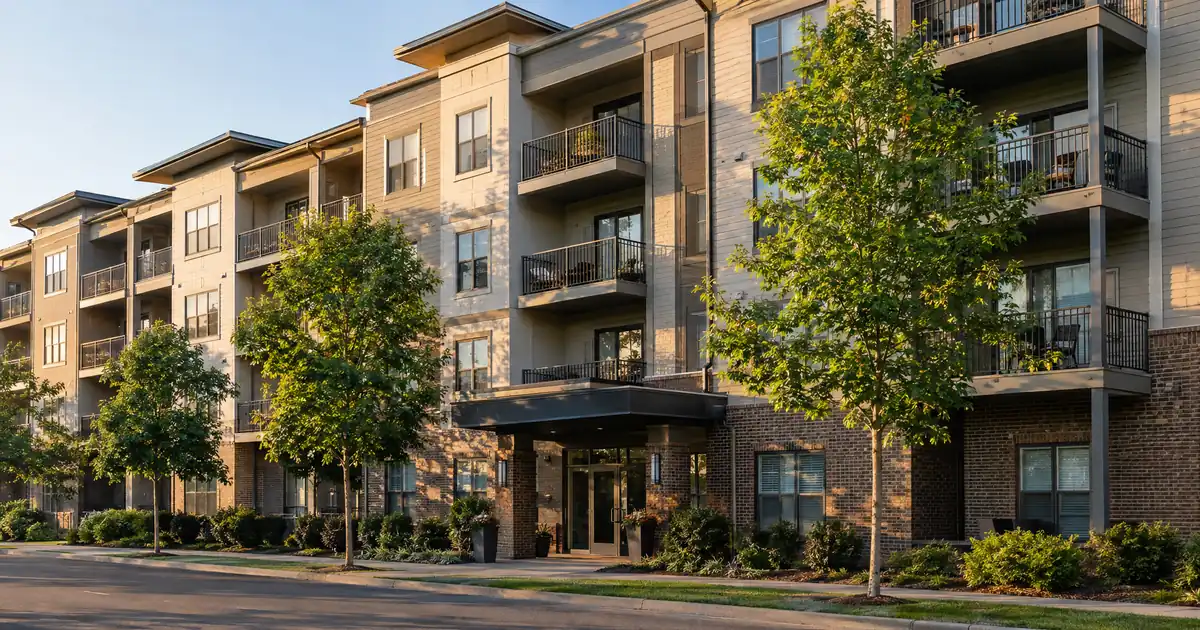
Five units is where the lender pool narrows. Many hard money lenders fund one to four units and stop there. A building with five to ten doors is commercial-class collateral, so you are looking at a smaller group of bridge lenders that handle it.
For reference, here is how the network’s 1-4 unit hard money program is built. These figures are not a 5-10 unit offer. Terms run 6 to 18 months, interest-only, with no prepayment penalty. A bridge purchase with no rehab can reach up to 80% of the purchase price. Up to 100% of the rehab budget is funded in draws against completed work. A 620 credit score is the floor, with added conditions below 660. All of this varies by lender, property, and experience, and none of it is a commitment to lend.
The same program also funds ground-up construction up to 10 units. That is a different play from buying and renovating an existing building, but it matters if your version of BRRRR starts with dirt. Leverage there is tied to project cost and completed value, and the top tier is reserved for investors with several finished projects.
Commercial-class lenders for existing 5-10 unit buildings set their own leverage, terms, and sponsor requirements. Ask each one for its rules in writing before you make an offer, because the terms differ more at this size than on a single-family flip.
Why Does Five Units Change the Underwriting?
At five units the lender stops asking what a comparable house would rent for and starts asking what this building actually earns. The review leans on documents: a current rent roll, leases, and trailing operating statements.
Value works differently too. A one-to-four-unit property is usually valued against sales of similar properties. A larger building is typically valued on income: NOI divided by a market capitalization rate. That means every dollar of expense you cut or rent you document can move the value, and every unpaid or month-to-month unit can drag it down.
This is why many investors say BRRRR can be cleaner on apartments than on houses. Income drives value, so a successful lease-up has a direct effect on the appraisal. It also cuts the other way. A half-empty building that looks great after rehab may not refinance, because the exit lender prices what is leased, not what you plan to lease.
In-place rents beat projected rents every time. If two units are month-to-month below market and one tenant is behind, the exit lender sees exactly that. A rent roll you can document is worth more than a pro forma you believe in.
How Do You Size Hard Money Backward From the Refinance?
Start with the takeout loan and work back. Ask what the refinance lender will likely appraise the building at, then confirm the hard money payoff, including rehab draws and interest, sits comfortably under that lender’s leverage limit. Lendmire’s piece How a BRRRR Investor Sizes Hard Money for a Clean DSCR Refi walks through that logic in more depth.
The reason is simple. The payoff never moves, but the appraisal can. Cash back falls faster than value does.
Run the numbers on a modeled building. Assume the total hard money payoff equals 70% of the value you expect at refinance. On a DSCR loan, the cash-out refinance ceiling is 75% of value on a non-owner-occupied investment property, so that file clears with room to spare. Now say the appraisal lands 10% under your estimate. The same payoff is now about 78% of the lower value. That is over the cash-out ceiling, and you must bring cash to the table. These are modeled assumptions, not market data.
| Step | What happens | What to check |
|---|---|---|
| Buy | Hard money funds the purchase | Lender covers 5-10 units |
| Rehab | Draws fund finished work | Budget fits the exit appraisal |
| Rent | Leases signed per unit | In-place rents, not projections |
| Refinance | DSCR loan pays off bridge | Payoff under the leverage ceiling |
| Cash left | Any gap is yours to cover | Test a 10% appraisal miss |
What Does the DSCR Exit Look Like?
The exit for many investors is a DSCR loan, and on this loan the figures are set by the program, not by your hopes. Across the network, a cash-out refinance on a non-owner-occupied investment property tops out around 75% of value. A rate-and-term refinance, which pays off the old loan and returns no cash at closing, can reach up to 85% of value on the same kind of property. Loan sizes run up to $3,000,000 on standard programs. Eligibility on a 5-10 unit building is reviewed by each lender, so expect these to be ceilings rather than promises.
Two tests run side by side: equity and coverage. Equity means the payoff fits under the leverage ceiling. Coverage means the rent supports the monthly obligation. A file that passes one and fails the other does not close as drawn.
On coverage, 1.00 is where many select programs start, meaning rent equals PITIA. A separate select-lender path takes coverage below 1.00, with leverage and terms adjusted. Stronger coverage generally opens better terms. Clearing 1.00 is not the same as positive cash flow, because repairs, vacancy, management, utilities, and capital spending all sit outside the DSCR calculation.
On a larger building, the lender may also run a commercial-style NOI review alongside the DSCR math, depending on the program. That is one more reason to present a clean rent roll and operating history.
Credit scores start at a 620 floor in parts of the network. Most programs want closer to 660, and 700 or higher unlocks the strongest leverage. Reserves are commonly around six months of PITIA, with about nine months on loans above $1,500,000. Reserves vary by lender, leverage, loan size, and transaction type.
Seasoning is the piece investors misjudge. For a cash-out refinance, the common expectation is about six months of ownership, measured from the date title was recorded. Finishing the rehab does not start that clock, and neither does signing leases. If your hard money term is short, make sure the seasoning date lands well inside it.
Lendmire brokers this path through select lenders: see the hard money exit refinance program for how the handoff works. For the full picture of how these loans are built, the complete DSCR loans guide covers the basics. DSCR loans are not offered on manufactured homes, log homes, or barndominiums.
Does Business-Purpose Status Matter Here?
DSCR loans are designed for non-owner-occupied investment properties. Because they are business-purpose investor loans, they are reviewed differently from a standard owner-occupied mortgage. A Federal Reserve supervisory manual treats credit to buy or improve non-owner-occupied rental property as business-purpose credit.
Ownership structure can matter. Doss Law notes that loans to bona fide business entities are exempt from the consumer-lending rules regardless of purpose. Loans to individuals lean more on documented business purpose. If you plan to hold the building in an LLC, that is subject to lender program eligibility, so confirm the structure before you sign the bridge loan.
What Can Go Wrong, and What Do You Do About It?
Most failures are predictable. The table pairs each with a realistic fix.
| Problem | Why it hurts | Fix |
|---|---|---|
| Appraisal short | Payoff exceeds ceiling | Bring cash or reduce debt |
| Rent short | Coverage under program floor | Raise rents or pick sub-1.00 path |
| Rehab overrun | Debt grows past plan | Hold contingency, cap scope |
| Lease-up late | Term ends unstabilized | Plan extension or second bridge |
| Seasoning not met | Cash-out not yet available | Time the term past that date |
A sub-1.00 path through select lenders exists, but leverage and terms adjust, so it is a plan B and not a plan A. Extensions and second bridge loans also cost money, which is why the cleanest BRRRR files leave a cushion in the timeline and the budget.
Here is something many DSCR files show. The investor builds the budget on the rehab and forgets the exit appraisal, then discovers the new lender uses its own valuation and its own income figures. Test the deal at a lower value and a lower rent before you commit, not after.
What About Draws and Rehab in an Occupied Building?
Draws are reimbursements. You pay for the work, the lender inspects it, and funds are released against completed progress. Plan your cash flow so you can front each phase.
Occupied buildings add a wrinkle. Every unit you take offline for renovation leaves the rent roll while the work runs, and the exit lender sees only what is leased and paying at refinance. Phasing unit turns, so most units stay occupied, protects the numbers. Gutting several units at once can be faster to build and harder to refinance.
Heavy work in an occupied building also affects tenant relations and lease renewals, both of which show up in the documents the exit lender reviews.
How Does Hard Money Compare With Other Ways to Buy?
Hard money is one acquisition tool among several. The right one depends on how much rehab you need and how soon you can stabilize.
| Option | Best for | Main tradeoff |
|---|---|---|
| Hard money | Distressed, rehab-heavy | Short term, higher cost |
| Bridge loan | Larger value-add | Sponsor and experience review |
| Private money | Relationship deals | Terms set person to person |
| Seller financing | Motivated sellers | Rare, negotiated case by case |
| Equity partner | Thin cash | Shared profit and control |
Hard money costs more than permanent financing. What it buys is flexibility on property condition and rehab funding, which matters on a run-down small apartment building that long-term lenders would turn away.
When Is Hard Money the Wrong Tool?
Skip it when the deal does not need it. Three signs point that way:
- The building is already stabilized and leased, so a permanent loan fits from day one.
- The rehab is light, so the cost of short-term money outweighs the benefit.
- The gap between purchase price and expected value is thin, leaving no room if the appraisal misses.
A building at five or more units with deferred maintenance and in-place rents that already support a refinance is a good candidate. A building you hope to fix up and lease from empty is a riskier one.
What Documents Do You Need at Each End?
The bridge lender wants the asset story. The exit lender wants the income story.
- Acquisition: purchase contract, rehab scope and budget, entity documents, proof of cash to close, and your experience summary.
- Exit: the hard money note and payoff statement, draw history and receipts, rent roll, leases, trailing operating statements, insurance, title, and entity documents.
Keep the business-purpose paperwork with the file and confirm that the entity and occupancy facts match what you told each lender.
Frequently Asked Questions
Can I use hard money on a 5-unit building?
In the wider market, yes. A 5-unit building is commercial-class, and bridge and hard money lenders that handle that class can fund it. Many hard money lenders stop at four units, so the pool is smaller. Lendmire’s own hard money program covers 1-4 units, so match the lender to the building before you make an offer.
Is a 5-to-10-unit building residential or commercial?
It is commercial-class collateral. Conventional residential programs stop at four units, so the lender reviews the building on its income and operating history. That drives the documents you gather and how the appraisal is built.
Can a DSCR loan pay off the hard money on a larger building?
It can, subject to lender guidelines and property review. A DSCR cash-out refinance on a non-owner-occupied investment property tops out around 75% of value, and a rate-and-term refinance can reach up to 85%. Seasoning of about six months from title recording is the common expectation for cash-out.
What credit score do I need?
The bridge side starts at a 620 floor on the 1-4 unit program, with added conditions below 660. On a DSCR loan, a 620 floor exists in parts of the network, most programs want around 660, and 700 or higher unlocks the strongest leverage. Terms vary by lender, property, and experience.
Does clearing 1.00 coverage mean the building cash flows?
No. DSCR compares rent to PITIA only, so repairs, vacancy, management, utilities, and capital spending sit outside it. Run your own operating budget on top of the coverage ratio.
Next Step
If you are buying, rehabbing, or refinancing an investment property on a short timeline and want to see how the numbers work, Lendmire can help you compare hard money options based on the project, the exit plan, leverage, and your goals. Lendmire is a broker that arranges financing through select lenders in its wholesale network across 41 markets, including Washington, D.C.
About Lendmire
Lendmire (NMLS# 2371349) is a mortgage brokerage built around DSCR investor lending, with programs available in 41 markets, including Washington, D.C. DSCR lenders commonly evaluate rental-income coverage instead of personal income paperwork — a practical fit for LLC-owned and multi-property investors. Terms vary by lender, property, leverage, and program. Scotsman Guide named Lendmire a Top Mortgage Workplace in both 2025 and 2026.
Get Started
Ready to find the right loan for you?
In about 30 seconds you can review financing options available for your investment property. No commitment required.
Informational only. Not a Loan Estimate, approval, or commitment to lend. Program availability and eligibility are subject to lender guidelines, credit approval, property review, and underwriting.
References
1. Federal Reserve supervisory manual, Truth in Lending
2. Doss Law, business-purpose exemption guide
This article is part of Lendmire’s hard money loan program — full qualification details, guidelines, and scenarios live on the program page.
Related reading: How to Make a DSCR Cash-Out Cover Your Hard Money Note and Rehab Cards · How to Present a Delinquent Unit in a DSCR Pool With One Fourplex · How to Refinance Out of Hard Money With a DSCR Loan Before the Payoff
Brandon Miller
Founder & CEO, Mortgage Loan Originator, Lendmire LLC
- Mortgage Loan Originator · NMLS# 1129696 · Verify on NMLS Consumer Access
- North Carolina Real Estate Broker · License# 343312 · Verify on NCREC
- North Carolina Insurance Producer · License# 19053198 · Property, Casualty, Life, Health · Verify on NAIC SBS
- Lendmire LLC · Firm NMLS# 2371349 · Verify firm licensure
Legal disclosures. Lendmire (NMLS# 2371349) is a state-licensed mortgage brokerage that arranges financing through wholesale lender relationships. Lendmire is not a direct lender, depository institution, or registered financial advisor. The discussion above is general informational content about real estate financing — it is not financial, legal, or tax advice, and readers should consult licensed professionals for guidance on their individual circumstances. Loan inquiries are subject to lender underwriting; this article does not represent a commitment to lend. Loan terms, rates, and qualification standards vary by borrower, property, and state, and are subject to change at any time. Equal Housing Opportunity. NMLS Consumer Access: nmlsconsumeraccess.org.