
The Quick Read: A tenant who is behind on rent in one fourplex unit does not automatically sink a pooled DSCR file, but it changes how that unit’s rent is counted and proven. You disclose it up front, document what was paid, and show the lender a plan. A managed problem reads very differently from a surprise.
- A late tenant is not a loan default. Only missed loan payments or breached loan terms are.
- Rent is counted unit by unit, from leases and proof of payment.
- A non-paying unit may be counted at market rent, dropped, or treated more strictly, depending on the program.
- Test your pool coverage with and without the unit before you submit.
- Passing the coverage test is not the same as positive cash flow.
A pooled request is one note covering several properties. The lender tests combined rent against combined payment. If one fourplex is in that pool and one of its four tenants has stopped paying, that door can pull the whole number down. Here is how the review works and how to present it.
DSCR Calculator
Run the numbers in your market
Rate source: Freddie Mac 30-yr average via FRED® — Federal Reserve Bank of St. Louis · effective Oct 15, 2026
Prefilled with starting assumptions — enter your own rent or nightly figures, taxes, insurance, and HOA for a more accurate picture.
Program parameters update from Lendmire’s centralized guideline source. Taxes and insurance are editable estimates.
As of Oct 15, 2026 · General Freddie Mac market benchmark, not a Lendmire loan offer. Rent, nightly rate, occupancy, taxes, and insurance are editable estimates. Short-term rental figures are estimates only and vary significantly by season, property type, management approach, and local short-term-rental rules — confirm local regulations before relying on them. Qualifying income for short-term rentals varies by program — some use appraisal market rent, others use documented STR history or projections — and is confirmed in underwriting. Not a Loan Estimate, approval, or commitment to lend. Program availability and eligibility are subject to lender guidelines, credit approval, property review, and underwriting.
Key Terms Defined
DSCR (debt service coverage ratio) is monthly rent divided by the monthly housing obligation. The loan is reviewed primarily on property-level rental income covering the payment, subject to lender guidelines.
PITIA is principal, interest, taxes, insurance, and any association dues. It is the payment side of the ratio. Repairs, vacancy, and management sit outside it.
Pool (blanket or portfolio request) is one loan or one underwriting package covering several properties. Coverage is tested on the combined rent and the combined payment.
Tenant delinquency means a tenant is behind on rent. It is a property-level problem.
Loan delinquency means the borrower is late on the mortgage payment. It is a loan-level problem, and it is a different event.
Cross-default is a loan term that lets a default on one property trigger the whole note. The loan documents control it, not the rent roll.
Rent roll is a schedule listing each unit, its tenant, lease terms, rent, and payment status.
How the Lender Sees One Fourplex Inside a Pool
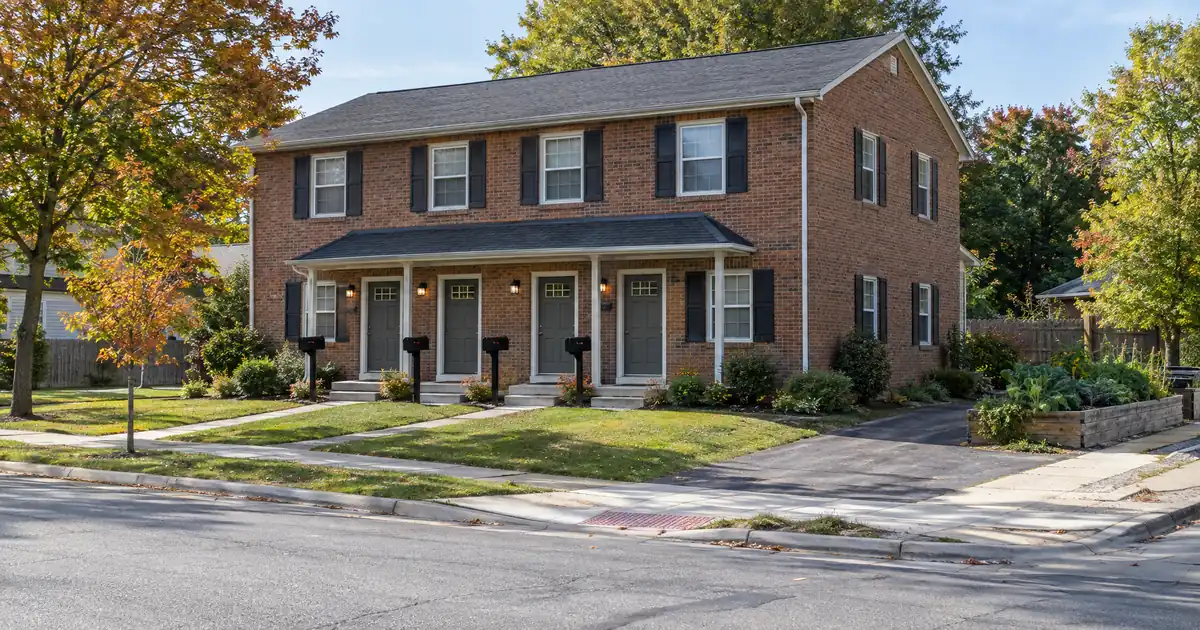
A fourplex is one building with four rent streams sitting over one payment. A lender treats it as a single asset in the pool, but the rent is built from the bottom up, unit by unit.
The appraiser reports on a small-income-property form. Fannie Mae’s Selling Guide lists Form 1025 as the report for two- to four-unit properties, and Fannie Mae’s forms list titles it the Small Residential Income Property Appraisal Report. It is mentioned only for the form name. DSCR loans are not agency products, and agency rules do not govern them. What matters is that the form carries a rent schedule, so every unit gets its own rent opinion.
Across Lendmire’s wholesale network, most programs take the lower of the lease rent or the appraiser’s market rent for each unit, then add the four together. An above-market lease does not raise the figure. A below-market lease can pull it down.
This is where a delinquent unit gets awkward. Rent counts only as far as a lease or a market-rent opinion supports it, and many programs also want proof that rent is actually being paid. A unit with a lease but no payments is hard to call income. It usually falls into one of two treatments:
- Counted at market rent, the way a vacant unit often is.
- Dropped, which leaves the file on the leased and paying units only.
Which treatment applies to a leased unit that isn’t paying varies by program, so it is the first thing to confirm before you submit.
One bit of good news: a fourplex spreads risk. One bad unit is a quarter of the building’s rent, not all of it. That is a smaller hit than a single-family tenant going unpaid.
What Does One Delinquent Unit Do to the Number?
It depends on which treatment the program applies. A modeled illustration shows the swing. Say a full fourplex covers at about 1.20x. Drop one unit from the count and the same building lands near 0.90x. That is a model, not market data, but the shape holds: one door can move a building from comfortable to short.
Now put that building in a pool. The pool is tested on combined rent over combined payment, so the fourplex’s weaker number is averaged with everything else. Strong properties can absorb it. A thin pool cannot.
Here are the three treatments side by side, in ratios only:
| Treatment of the delinquent unit | Effect on fourplex coverage | Effect on pool |
|---|---|---|
| Lease rent counted in full | Stays near the full-building ratio | Little change |
| Counted at market rent | Moves toward the market-rent ratio | Modest change |
| Counted at zero | Drops by about a quarter of rent | Pooled ratio falls |
Add a second problem, such as a vacancy in another property, and the pooled ratio can slide fast. That stress case is why you test the pool with and without the delinquent unit before anyone else does.
If the zero treatment pushes the pool under 1.00, the file is not necessarily dead. Coverage below 1.00 is available through select lenders in the network, with leverage and terms adjusted. By contrast, 1.00 is where many select programs start. Treat those as different paths, not one program with a moving floor.
The Unit-Problem Matrix
Underwriters ask a different question for each kind of unit issue. This table shows what they look at and what you should bring.
| Unit situation | What the lender looks at | Evidence to supply |
|---|---|---|
| Tenant behind on rent | Payment history, arrears, status | Ledger, deposits, cure plan |
| Eviction in progress | Whether the unit is truly occupied | Notices, timeline, narrative |
| Vacant | Market rent opinion | Appraisal rent schedule |
| Month-to-month | Lease basis, payment proof | Expired lease plus deposits |
| Below-market lease | Lower-of rule | Lease, market rent support |
| Related-party tenant | Arm’s-length rent | Lease, market rent, closer review |
An eviction in progress is the murkiest row. Treatment varies by program. Describe the facts plainly and let the lender decide how to count it. A unit with a dispute behind it is not rent-ready in the way a clean vacancy is, so expect stricter handling than a vacant door gets.
Step-by-Step: Present It Before the Lender Finds It
1. Confirm the building is a legal fourplex. Five or more units are underwritten differently, as commercial multifamily.
2. Build one master rent roll for the pool. One row per property or unit. Every rent figure ties to a signed lease, and every lease ties to deposits. Mismatches generate reviewer questions.
3. Pull the unit ledger and bank deposits. Show what was paid and when. Do not round or smooth the arrears.
4. Add the paper trail. Include any signed payment plan, written notices, and eviction status with a timeline if there is one. Note the security deposit held.
5. Decide how the unit is labeled. If the tenant is leaving, document the move-out and present the unit as vacant, so market rent applies. If the tenant is staying and paying again, show the recent receipts.
6. Write a short cover note. Name the unit, state the arrears, say what you are doing about it, and give the date you expect it resolved. Flagging a known item makes it read as disclosed rather than discovered.
7. Run the pool both ways. Calculate coverage with the unit at lease rent and at zero. Know your worst number before the lender does.
A good cover note is plain. Something like: one of four units in the fourplex is behind on rent, here is the ledger, here is the cure plan, and here is the pool ratio with and without that unit. That reads as a landlord managing the asset.
Present As-Is, Cure First, Carve Out, or Split?
You have four options. None is always right.
| Option | When it fits | What it costs you |
|---|---|---|
| Present as-is | Pool clears comfortably with the unit at zero | Extra explanation; stricter review |
| Cure first | Arrears can be collected or tenant re-leased with proof | A delay before you apply |
| Carve out the fourplex | Pool clears without it | You finance that building separately |
| Split the pool | One building drags several others | Multiple files instead of one |
If the pool passes with the unit counted at zero, present as-is with a clear note. If it only passes when the unit counts, cure first. Collect the arrears, re-lease with documented payment, or document turnover so market rent applies. If one fourplex is the weak link, carving it out can protect the rest of the pool.
Is waiting worth it? Submit now when the numbers hold in your worst case. Cure first when the unit is the difference between clearing and missing. Be honest with yourself on timing.
DSCR vs. conventional financing
There are two common ways to finance an investment property, and they qualify you differently — here’s how investors weigh them.
Why investors choose it
- Qualifies on the property’s rental income — no personal tax returns, W-2s, or pay stubs needed to document income.
- No personal debt-to-income ceiling to clear, so existing mortgages and obligations don’t cap your borrowing the same way.
- Can be closed in an LLC, keeping the property inside a business entity.
- Built for scaling — not held to the limit on number of financed properties that conventional financing applies.
- Underwriting centers on the deal: generally qualifies when the rent covers the payment, a 1.00x coverage ratio being a common baseline (confirmed in underwriting).
- Designed specifically for investment property, including long-term and, where the program allows, short-term rentals.
Where it’s strong
- Often the lowest ongoing financing cost for a buyer who fully qualifies on personal income — a fit for a first property or a cost-first purchase.
Trade-offs for investors
- Requires full personal income documentation and must fit within a debt-to-income limit — salary, existing debts, and other mortgages all count.
- Typically held in your personal name rather than a business entity.
- Caps how many financed properties you can carry, which can become a ceiling as a portfolio grows.
- Evaluates you as a borrower as much as the property, which usually means more paperwork.
How investors usually choose: a first or single property often optimizes for the lowest financing cost; portfolio builders often optimize for leverage, vesting in an LLC, and scaling past conventional caps. The right answer depends on your goals, the property, and current guidelines — both paths run through select lenders in Lendmire’s wholesale network, with eligibility and terms confirmed in underwriting.
When Tenant Delinquency Becomes a Loan Problem
A late tenant is not a loan default. That is a common mix-up. The ladder runs differently: a missed mortgage payment, a notice, a cure period, and only then acceleration, depending on the loan documents. Unpaid rent matters because it can squeeze cash for the loan payment. It does not trigger a default on its own.
The real risks are quieter. If rent stays unpaid and you stop covering the payment from other funds, you create the loan delinquency. If the loan documents include cross-default or retest terms, a weak property can have consequences for the others. Read those terms before you close, because they decide the outcome, not the rent roll.
One observation from pooled files: the borrowers who get tripped up are rarely those with a late tenant. They are the ones who didn’t read the release and retest terms.
After Closing: Releases, Retests, and the Next Sale
A delinquent unit you leave behind can follow you. If you later want to sell one property out of the pool, the release usually involves an allocated balance and a retest of what remains. A weak fourplex still in the pool can make the remaining coverage harder to hold. Clean it up early, and keep the ledger current.
For related ground, Lendmire’s piece How to Present a Rental Pool in One Subdivision to a DSCR Lender covers how a pooled package is organized.
Where the General Rule Breaks
- Month-to-month or expired lease. Handling varies. Common treatment is the expired lease plus deposits as proof, or market rent.
- Related-party tenant. Expect market rent and closer review.
- Owner or family living in a unit. That is not a DSCR-eligible occupancy. A relative paying market rent under a real lease is program-specific.
- Short-term rental unit. Programs differ.
- Unit offline for repair. Present it as vacant with a repair plan.
- Refinance versus purchase. An occupied non-paying unit may be treated more strictly than a clean vacancy, because an eviction or dispute is not rent-ready. Treat that as directional and confirm per program.
What the Investor Decision Looks Like
Ratio treatment decides leverage and pricing. A unit counted at zero can push a file below 1.00 and into lower-leverage or adjusted-terms programs. Most programs we place files with run purchases at 75%–80% LTV on investment property. Cash-out tops out around 75%. Credit tiers commonly start around 620, with 660 typical and 700+ opening stronger leverage. Reserves are commonly about 6 months of PITIA, stepping up to about 9 months on loans above $1,500,000. All of it is subject to lender guidelines and varies by borrower, property, and loan scenario.
A larger down payment can lift the ratio, but it never erases leverage caps, credit floors, or reserve rules. The strongest files clear both tests: enough equity and enough rental coverage.
One more caution. Clearing 1.00 is not positive cash flow. If a unit pays nothing, real cash flow is thinner than the ratio shows. Repairs, vacancy, management, and capex sit outside the calculation.
For the full picture, see the complete DSCR loans guide.
Common Misconceptions
“A signed lease equals income.” The lease must be backed by proof of payment, and the lower-of rule caps it.
“A delinquent unit counts as zero.” Many programs count a vacant unit at market rent. Whether a non-paying occupied unit gets the same treatment is program-specific.
“DSCR ignores everything but rent.” It sets aside personal income documentation, but the file still reviews credit, reserves, leases, and payment history.
“I can live in one unit.” Not on a DSCR loan.
Frequently Asked Questions
Does one delinquent unit disqualify the fourplex?
Not by itself. The lender recounts the building with that unit at lease rent, market rent, or zero, depending on the program. If the pool still clears with the weakest treatment, the unit is a documentation issue, not a dealbreaker.
Will the lender count that unit’s lease rent or market rent?
It varies by program. Many take the lower of lease or market rent for each unit. A leased unit that isn’t paying may be counted at market rent, dropped, or reviewed more strictly. Ask before you submit.
Is a late tenant a default on my loan?
No. A tenant paying late is a property problem. Loan default comes from missed mortgage payments or breached loan terms. Unpaid rent matters because it can strain the cash you use to pay the loan.
Should I evict before applying?
It depends on your facts. A cure plan with documented payments, or a documented move-out that lets market rent apply, can improve the file. An eviction in progress is treated case by case, so describe it plainly in your cover note.
What proof of payment do I need?
A unit ledger, bank deposits, and signed leases that tie to the rent roll. Add any payment-plan agreement and notice history. Every rent figure should trace to a document.
Ask Before You Submit
- How does this program count a leased unit that isn’t paying?
- Does it use lower-of lease or market rent per unit?
- What does the pool ratio look like with and without the fourplex?
- Do the loan documents include cross-default or retest terms?
- What happens to the remaining pool on a release?
Tax treatment varies; consult a qualified professional.
If you are buying or refinancing a rental property and want to see how the numbers work, Lendmire can help you compare DSCR loan options based on the property income, credit profile, leverage, and investor goals. Lendmire is a broker arranging financing through select lenders in its wholesale network across 41 markets, including Washington, D.C. This is not a commitment to lend.
A fourplex with one bad door is a manageable file when you show the lender the whole building first.
About Lendmire
Lendmire (NMLS# 2371349) is a mortgage brokerage built around DSCR investor lending, with programs available in 41 markets, including Washington, D.C. DSCR lenders commonly evaluate rental-income coverage instead of personal income paperwork — a practical fit for LLC-owned and multi-property investors. Terms vary by lender, property, leverage, and program. Scotsman Guide named Lendmire a Top Mortgage Workplace in both 2025 and 2026.
Get Started
Ready to find the right loan for you?
In about 30 seconds you can review financing options available for your investment property. No commitment required.
Informational only. Not a Loan Estimate, approval, or commitment to lend. Program availability and eligibility are subject to lender guidelines, credit approval, property review, and underwriting.
References
1. Fannie Mae Selling Guide B4-1.2-01
2. Fannie Mae: Selling Servicing Guide Forms
This article is part of Lendmire’s DSCR loan program — full qualification details, guidelines, and scenarios live on the program page.
Related reading: 2-4 Unit Airbnb Building vs Five-Plus-Unit Building for a DSCR Loan · How to Prepare Leases and a Rent Roll for a 2-4 Unit DSCR Loan · Can a Condo Be Refinanced on DSCR Before Any Rent Is Collected?
Brandon Miller
Founder & CEO, Mortgage Loan Originator, Lendmire LLC
- Mortgage Loan Originator · NMLS# 1129696 · Verify on NMLS Consumer Access
- North Carolina Real Estate Broker · License# 343312 · Verify on NCREC
- North Carolina Insurance Producer · License# 19053198 · Property, Casualty, Life, Health · Verify on NAIC SBS
- Lendmire LLC · Firm NMLS# 2371349 · Verify firm licensure
Disclosure information. Lendmire is a state-licensed mortgage brokerage under NMLS# 2371349. Lendmire is not a depository institution, direct lender, or financial advisor — all loans referenced are placed through wholesale lender partners and are subject to each lender's underwriting standards. This article is provided for general informational purposes and is not a commitment to lend, nor does it constitute financial, legal, or tax advice. Loan programs, terms, rates, and qualification standards change without notice and depend on borrower profile, property type, and the state in which the subject property is located. Equal Housing Opportunity provider. NMLS Consumer Access: nmlsconsumeraccess.org.