
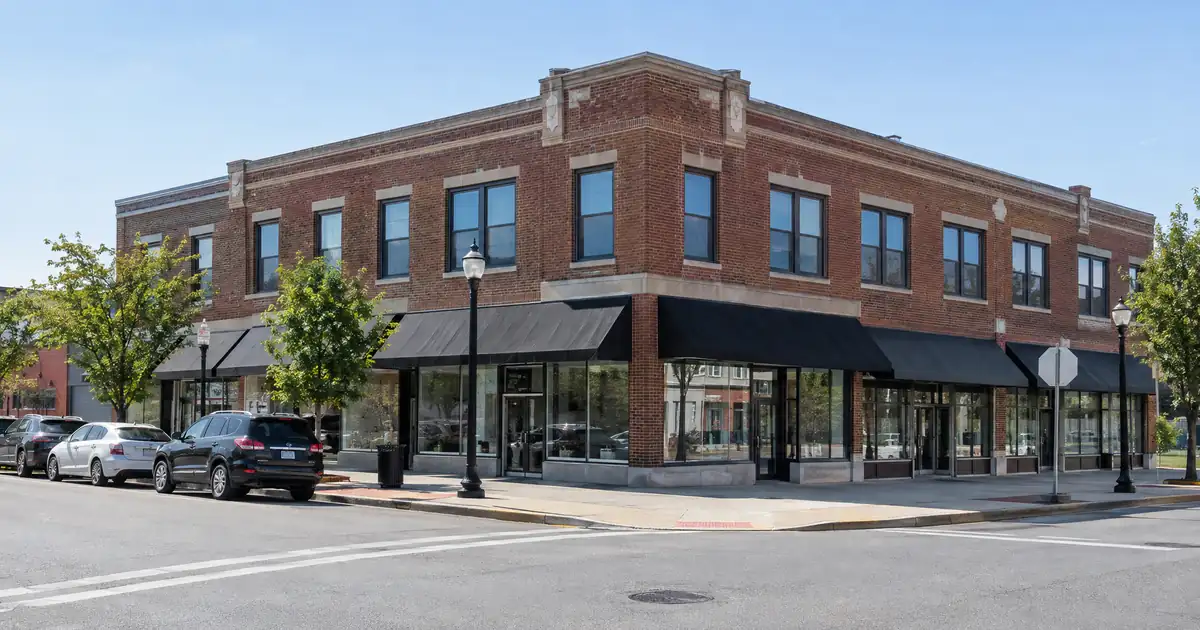
The Quick Read: On a 10-unit building, the choice usually comes down to two things: how long the loan lasts and which ratio the lender uses to size it. A DSCR loan typically offers a long fixed term with no forced payoff date and tests rent against the payment. A commercial loan tests the building’s net income after operating costs, and it often ends in a balloon.
- A 10-unit building sits above the standard 1-4 unit DSCR product. A narrower specialty tier exists through select lenders and depends on the program.
- The same building can pass one ratio test and fail the other.
- A shorter commercial term turns your hold plan into a refinance plan.
- Clearing a coverage ratio is not the same as positive cash flow.
- Stabilized buildings fit both options. Heavy rehab or high vacancy usually points toward commercial or bridge-style financing.
Lendmire is a broker. It arranges financing through a wholesale network of lenders, so both paths are on the table. The comparison below is fair to both.
DSCR Calculator
Run the numbers in your market
Rate source: Freddie Mac 30-yr average via FRED® — Federal Reserve Bank of St. Louis · effective Oct 15, 2026
Prefilled with starting assumptions — enter your own rent or nightly figures, taxes, insurance, and HOA for a more accurate picture.
Program parameters update from Lendmire’s centralized guideline source. Taxes and insurance are editable estimates.
As of Oct 15, 2026 · General Freddie Mac market benchmark, not a Lendmire loan offer. Rent, nightly rate, occupancy, taxes, and insurance are editable estimates. Short-term rental figures are estimates only and vary significantly by season, property type, management approach, and local short-term-rental rules — confirm local regulations before relying on them. Qualifying income for short-term rentals varies by program — some use appraisal market rent, others use documented STR history or projections — and is confirmed in underwriting. Not a Loan Estimate, approval, or commitment to lend. Program availability and eligibility are subject to lender guidelines, credit approval, property review, and underwriting.
Key Terms Defined
DSCR (debt service coverage ratio): a measure of whether income covers the loan payment. Above 1.00 means income exceeds the payment.
PITIA: principal, interest, taxes, insurance, and association dues. This is the full monthly obligation in a DSCR loan test.
NOI (net operating income): rent and other income minus operating expenses such as vacancy, management, maintenance, taxes, and insurance. It excludes loan payments.
Balloon: a loan that amortizes over a long schedule but comes due early, leaving a large balance to refinance or pay off.
Amortization: the schedule over which the balance is paid down. A loan can amortize over 25 years yet mature in five.
Recourse: whether the lender can pursue your personal assets if the property does not cover the debt.
Side-by-Side
The DSCR column reflects how the network’s programs generally work. The commercial column shows published industry norms, which vary by lender and deal. Both are subject to lender guidelines.
| Factor | DSCR loan (network programs) | Commercial loan (industry norms) |
|---|---|---|
| Review basis | Property rent vs. PITIA | Property NOI vs. debt service |
| Ratio formula | Rent ÷ PITIA | NOI ÷ annual debt service |
| Documentation | Light personal-income paperwork | Fuller financials, rent roll, operating history |
| Property fit | Stabilized rentals | Stabilized to transitional, by lender |
| Entity vesting | LLC common, per program | LLC common, guarantees often requested |
| Term structure | 30-year fixed is the spine | Shorter fixed period, often a balloon |
| Maturity event | Often none within the hold | Refinance or payoff at maturity |
| Recourse | Program-dependent | Varies with leverage and loan size |
| Reserves | Often about 6 months PITIA | Lender-set, often liquidity-focused |
Notice what the table leaves out: pricing. Pricing varies by borrower, property, and lender, so the calculator handles it.
When DSCR Is the Better Fit
A DSCR loan fits the investor who plans to hold the building for years and wants the debt to stay put. Across our wholesale network, the 30-year fixed term is the spine of the product. Extended terms such as 40-year and interest-only periods are available through select lenders, and ARM structures exist for investors who want them.
Here is why term matters on 10 units. A long, fully amortizing loan means no refinance deadline. Your plan does not depend on what lending conditions look like at year five.
DSCR also suits investors whose traditional personal-income documentation does not tell the full story. A self-employed owner with heavy write-offs may look thin on paper but own a building with strong rent. The loan is reviewed primarily on property-level rental income covering the payment, subject to lender guidelines. Personal paperwork is lighter, though not absent.
Entity ownership works too. Many investors vest the building in an LLC, subject to lender program eligibility, and a DSCR file is built around the property rather than a personal debt-to-income calculation.
The honest limits are real. The standard DSCR product covers 1-4 units. A 5-10 unit loan runs through a narrower specialty tier at select lenders, and the unit cap varies by program, so confirm it before paying for an appraisal. Reserves, leverage, and documentation on that tier can look more commercial than on a fourplex.
Typical network ranges give you a starting point. Purchases on investment property commonly land at 75%-80% LTV, and cash-out refinances on standard rentals top out around 75% LTV. Credit floors start at 620 in parts of the network, most programs want about 660, and 700 or higher opens the strongest tiers. Standard programs run up to $3,000,000. Reserves are commonly around 6 months of PITIA and step up to about 9 months above $1,500,000. Every file is underwritten individually. For the full picture, see the complete DSCR loans guide.
A DSCR loan will not fit a building that needs heavy rehab or carries high vacancy. Property types like manufactured homes, log homes, and barndominiums are not offered in these programs at all.
When a Commercial Loan Is the Better Fit
A commercial loan fits the investor who wants the lender to underwrite the building as a business. That means rent roll, leases, and operating history. If your building has strong, documented operations, this approach can recognize it. Commercial lenders also handle transitional buildings, such as partial vacancy or modest value-add plans, that stabilized-only DSCR programs pass on.
Commercial financing can also work for borrowers with strong banking relationships, substantial liquidity, and a plan to refinance on a known schedule. Some commercial structures allow non-recourse debt, usually at lower leverage and with standard carve-outs for fraud and similar bad acts. Non-recourse does not always mean no personal exposure. Read the carve-out language before you assume it.
A shorter term is not a flaw if it matches your plan. If you intend to sell or refinance in five to seven years, a balloon is a scheduled event rather than a trap. The risk shows up when the plan says “hold forever” and the loan says “due soon.”
Commercial loans also come with more paperwork and more underwriting judgment. Lenders measure coverage on NOI, and published norms for commercial lending cluster around 1.20 to 1.25. Wikipedia’s overview of the debt service coverage ratio puts the typical commercial real estate minimum at about 1.25. Because NOI deducts real operating costs, the commercial test is the stricter one on most buildings.
Two Ratios, One Building
The same 10-unit building can produce two different coverage numbers. The DSCR loan test divides rent by PITIA. The commercial test divides NOI by debt service. NOI subtracts vacancy, management, repairs, and other operating costs before the division, so it is almost always the lower figure.
Run a modeled example. These are illustrative assumptions, not market data. Say a stabilized 10-unit building reads about 1.30x on rent over PITIA. Under a lender that wants 1.25x on NOI, it falls short. Under a DSCR program that starts at 1.00 on rent over PITIA, it clears comfortably.
Neither answer is wrong. They measure different things. The mismatch becomes a problem when an investor sizes the deal on one method and the lender underwrites the other.
Now add term. A shorter amortization raises the annual debt service, which lowers the ratio and shrinks the loan the building can support. A longer amortization does the opposite. This is how term and ratio interact: the same rent supports a larger loan on a long schedule than on a short one.
Here is the catch with the DSCR number. DSCR compares rent to PITIA only. Clearing 1.00 does not mean the building produces positive cash flow, because repairs, vacancy, management, utilities, and capital expenses sit outside the calculation. A building at 1.20x can still lose money in a bad year. Run your own operating budget alongside the lender’s math.
Coverage below 1.00 is a different path. Many select programs start at 1.00, while sub-1.00 coverage is available through select lenders in the network, with leverage and terms adjusted. A larger down payment can lift coverage by lowering the payment, but it does not erase leverage caps, credit floors, reserve rules, or property eligibility. The strongest files clear both tests: enough equity and enough rental coverage.
What Happens at the End of the Term?
A balloon turns a 10-unit hold into a refinance bet. When the loan matures, you refinance, sell, or pay off the balance. At that point the building has to pass a ratio test again, under whatever conditions exist then.
The risks stack up. Rents may have risen, which helps. Operating costs may have risen too, which hurts the NOI test. Lending standards may have tightened. And the loan size that worked on day one may not be supportable on the new test.
A fully amortizing 30-year DSCR loan removes that event from the hold plan. You still face normal property risk, but you are not forced into a market on a lender’s schedule. Balloon risk is refinance risk, and that distinction decides many of these files.
Prepayment terms matter on both sides. If you plan to sell early, ask how the structure treats payoff before you commit. Terms differ widely by lender and program.
Why the Line Falls at Five Units
Federal consumer-lending rules define a dwelling as a structure with one to four units, as the Federal Register notice of the ability-to-repay rule under Regulation Z lays out. That definition is why 1-4 units is the standard residential box and 5+ units is treated as commercial. It is a classification line more than a physical one.
DSCR loans are designed for non-owner-occupied investment properties. Because they are business-purpose investor loans, they are reviewed differently from a standard owner-occupied mortgage. A 10-unit building sits past the line either way, which is why program availability narrows and why you should shop by unit cap early.
A Decision Filter for Your Building
Work through these in order.
1. Is the building stabilized? If it needs heavy rehab or carries high vacancy, commercial or bridge-style financing is the likelier fit.
2. What is the lender’s unit cap? Some DSCR programs stop at 4, some at 8, some at 10. Get it in writing first.
3. How long will you hold? A long hold favors a long fixed term. A five-to-seven-year exit tolerates a balloon.
4. Which ratio does the deal clear? Test rent over PITIA and NOI over debt service. If it fails the NOI test, you know before you apply.
5. What does your personal file look like? Heavy write-offs favor property-level underwriting. A strong, documented income picture and a banking relationship favor commercial.
6. How much recourse can you accept? Ask what the structure requires and what the carve-outs cover.
7. What are your reserves? Reserve expectations vary by lender, leverage, loan size, and transaction type.
Two investors illustrate the split. A portfolio scaler who wants to hold several buildings long term and keep personal paperwork light usually gravitates toward DSCR. A borrower with a strong banking relationship, a transitional building, and a planned sale in a few years may prefer commercial.
Frequently Asked Questions
Can a DSCR loan be used on a 10-unit building?
Sometimes. The standard DSCR product covers 1-4 units, and a narrower specialty tier at select lenders can extend to larger buildings. The unit cap and terms depend on the program, and the building generally needs to be stabilized.
Is a commercial loan harder to qualify for?
Usually it asks for more. Lenders typically want fuller financials, operating history, and a coverage test on NOI, and borrower strength also counts. That is more paperwork than a property-focused DSCR file, though neither is easy on a weak building.
Does a passing DSCR mean the building makes money?
No. The ratio compares rent to PITIA and nothing else. Vacancy, repairs, management, utilities, and capital expenses sit outside it, so a building can clear the ratio and still lose money.
Can an LLC borrow on either loan?
Many investors vest in an LLC on both. On DSCR files it is subject to program terms, and commercial lenders often ask for personal guarantees even when the borrower is an entity.
What if the building does not reach 1.00?
Many select programs start at 1.00, but a separate path takes coverage below 1.00 through select lenders in the network, with leverage and terms adjusted. A commercial lender will instead look at whether NOI supports the loan size.
The Verdict
Pick DSCR when the building is stabilized, you want a long fixed term, and you want underwriting centered on rent coverage. Pick commercial when the building has operating history to prove, the plan has a defined exit, or you want the lender to read the business behind the building. Where both fit, term usually breaks the tie: a hold-forever plan wants no maturity date, and a sell-in-five plan can live with one. Tax treatment varies; consult a qualified professional.
If you are buying or refinancing a rental property and want to see how the numbers work, Lendmire can help you compare DSCR loan options based on the property income, credit profile, leverage, and investor goals. Its related pieces on DSCR multifamily terms versus commercial bank terms and DSCR loans versus commercial loans on 5-10 unit rentals go deeper on each side.
A 10-unit building rewards the investor who asks about the maturity date before asking about the ratio.
About Lendmire
Lendmire — NMLS# 2371349 — is a mortgage brokerage specializing in DSCR investor loans, helping arrange financing across 41 markets, including Washington, D.C., through wholesale and investor-lending channels. The model centers on property-level rental income reviewed by the lender rather than W-2 documentation, subject to lender guidelines, suiting entity-owned and multi-property investors. Lendmire holds Scotsman Guide Top Mortgage Workplace recognition for 2025 and 2026.
Get Started
Ready to find the right loan for you?
In about 30 seconds you can review financing options available for your investment property. No commitment required.
Informational only. Not a Loan Estimate, approval, or commitment to lend. Program availability and eligibility are subject to lender guidelines, credit approval, property review, and underwriting.
References
1. Wikipedia: Debt Service Coverage Ratio
2. Federal Register: Ability to Repay and Qualified Mortgage Standards Under the Truth in Lending Act
This article is part of Lendmire’s DSCR loan program — full qualification details, guidelines, and scenarios live on the program page.
Related reading: How to Prepare Leases and a Rent Roll for a 2-4 Unit DSCR Loan · How to Insure a Ski Cabin Short-Term Rental for a DSCR Loan · 2-4 Unit Airbnb Building vs Five-Plus-Unit Building for a DSCR Loan
Brandon Miller
Founder & CEO, Mortgage Loan Originator, Lendmire LLC
- Mortgage Loan Originator · NMLS# 1129696 · Verify on NMLS Consumer Access
- North Carolina Real Estate Broker · License# 343312 · Verify on NCREC
- North Carolina Insurance Producer · License# 19053198 · Property, Casualty, Life, Health · Verify on NAIC SBS
- Lendmire LLC · Firm NMLS# 2371349 · Verify firm licensure
Legal disclosures. Lendmire (NMLS# 2371349) is a state-licensed mortgage brokerage that arranges financing through wholesale lender relationships. Lendmire is not a direct lender, depository institution, or registered financial advisor. The discussion above is general informational content about real estate financing — it is not financial, legal, or tax advice, and readers should consult licensed professionals for guidance on their individual circumstances. Loan inquiries are subject to lender underwriting; this article does not represent a commitment to lend. Loan terms, rates, and qualification standards vary by borrower, property, and state, and are subject to change at any time. Equal Housing Opportunity. NMLS Consumer Access: nmlsconsumeraccess.org.