
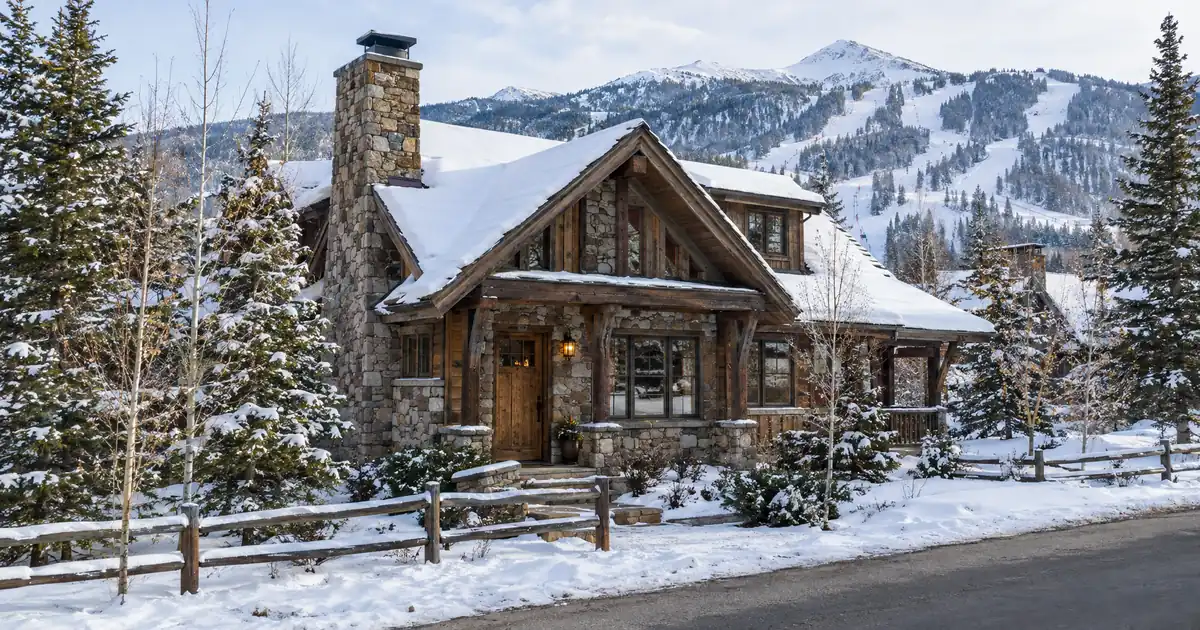
The Quick Read: A ski cabin that takes nightly guests needs a policy written for short-term rental use, and that policy’s premium goes straight into the monthly obligation your DSCR is measured against. Quote it before you make an offer, and bind it before closing. The policy must name the right insured, match the rental model, and keep rental coverage at or above the program floor.
- A standard homeowners policy or plain landlord policy usually does not fit a cabin booked by the night.
- Insurance is the “I” in PITIA, so a higher premium lowers your coverage ratio.
- Lenders look for a declarations page, a mortgagee clause, loss-of-rents coverage, and a binder in place by closing.
- Mountain risks such as vacancy gaps, wildfire, snow load, and frozen pipes decide whether a claim actually pays.
- Log-construction cabins fall outside the network’s DSCR programs, so confirm the construction type before you shop for coverage.
Key Terms Defined
DSCR (debt service coverage ratio): The property’s rent used for lender review divided by its full monthly obligation. A result of 1.00 means rent equals that obligation.
PITIA: Principal, interest, taxes, insurance, and association dues. It is the full monthly obligation in the DSCR formula.
Declarations page: The summary page of an insurance policy. It lists the insured, the address, the coverage types, and the limits.
Mortgagee clause: The wording that names the lender on the policy so claim payments protect the loan.
Loss of rents: Coverage that replaces booking income while the cabin is being repaired after a covered loss.
Ordinance or law: Coverage for the added cost of rebuilding to current building codes, which are often stricter than the codes the cabin was built under.
Binder: A temporary proof of coverage issued when you buy a policy, before the full policy documents arrive.
Short-Term Rental Calculator
Run the STR numbers in your market
Rate source: Freddie Mac 30-yr average via FRED® — Federal Reserve Bank of St. Louis · effective Oct 15, 2026
Prefilled with starting assumptions — enter your nightly rate, occupancy, taxes, and insurance for a more accurate picture.
Short-term rental income is documented with a 12-month history or a market data report. Program parameters update from Lendmire’s centralized guideline source.
As of Oct 15, 2026 · General Freddie Mac market benchmark, not a Lendmire loan offer. Nightly rate, occupancy, taxes, and insurance are editable estimates. Qualifying income for short-term rentals varies by program — some use appraisal market rent, others use documented STR history or projections — and is confirmed in underwriting. Not a Loan Estimate, approval, or commitment to lend. Program availability and eligibility are subject to lender guidelines, credit approval, property review, and underwriting.
Why the Premium Moves Your DSCR
Insurance is one of the five pieces of the monthly obligation, so every dollar of premium comes out of your coverage cushion. A ski cabin that moves from a landlord-grade policy to a short-term-rental policy, with wildfire and freeze terms attached, usually pays more. On a thin file, that increase decides whether the number clears the program floor.
Here is the arithmetic. The lender takes the rent used for lender review and divides it by principal, interest, taxes, insurance, and association dues. Anything that grows the denominator shrinks the ratio. The complete DSCR loans guide walks through the full formula.
Run a modeled example with assumed inputs, not market data. Say a cabin clears about 1.15x with a basic landlord premium. The real short-term-rental policy costs more, and the ratio slides to roughly 1.02x. The cabin still clears 1.00, but the cushion is gone. One more increase at renewal, such as a higher wildfire surcharge, could push it under.
Many investors make one mistake here. They quote insurance after the offer is accepted and then discover the coverage ratio no longer works. Get a quote for the actual rental model first.
Clearing 1.00 does not mean the cabin is cash-flow positive. DSCR compares rent to PITIA only. Repairs, vacancy, snow removal, utilities, management, and capital expenses all sit outside the calculation.
Across the wholesale network Lendmire places files with, 1.00 is where many select programs start. Stronger ratios open better pricing and leverage. A separate select-lender path takes coverage below 1.00, with leverage and terms adjusted.
Which Policy Form Fits a Nightly Rental?
A nightly ski cabin needs a form built for short-term rental use. A dedicated rental policy covers guest-caused damage, commercial liability, and lost rental income, according to Ramsey Solutions. That same source calls platform protections such as AirCover supplemental, not a substitute for real insurance.
The National Association of Insurance Commissioners says most homeowners and dwelling policies are not designed to cover accidents that arise from short-term rentals. It adds that a paying guest injured on a rental property might be excluded. The Wisconsin Office of the Commissioner of Insurance says the same about homeowners and renters policies. It also notes that some insurers now offer policies designed for hosts.
Here is how the main forms compare.
| Policy form | Fits nightly guests? | Lender view |
|---|---|---|
| Homeowners | Usually excluded | Rarely fits the rental model |
| Long-term landlord | Often excluded | Needs endorsement or a swap |
| Landlord plus STR endorsement | Yes, if the wording is clear | Depends on lender guidelines |
| Dedicated STR policy | Built for it | Generally the cleanest match |
| Commercial habitational | Fits some operating models | Depends on lender guidelines |
Pick the form before you write an offer. Ask the agent which form the carrier will write for your cabin, not which form is more affordable. A lender reads the policy against the rental model on the application, so a mismatch gets flagged.
What Each Coverage Part Does for a Ski Cabin
Each coverage line answers a specific loss, and the lender cares about different lines than the guest does.
| Coverage | Ski-cabin scenario | Why the lender cares |
|---|---|---|
| Dwelling (replacement cost) | Roof collapse under heavy snow | Protects the collateral |
| Guest liability | Guest slips on an icy deck | Protects the owner’s balance sheet |
| Loss of rents | October fire, repairs run into spring | Protects the income behind the DSCR |
| Ordinance or law | Rebuild must meet current snow-load code | Keeps the rebuild affordable |
| Umbrella liability | Hot-tub injury exceeds base limits | Added protection above base limits |
Set the dwelling limit at replacement cost, not market value or loan balance. A limit built on market value can leave the cabin underinsured, and it can fail a lender’s insurable-value test. Mountain construction costs track labor and haul distance, not the sale price of the cabin.
Loss-of-rents wording deserves a close read. A policy tied to a long-term lease amount does not respond well to a cabin whose income swings with ski season. Ask how the carrier calculates lost income for nightly bookings.
Liability climbs where the cabin has a hot tub, a fire pit, a deck, outside stairs, or high guest capacity. An umbrella policy is a recommendation, not a lender requirement. One mountain-cabin insurance agency suggests carrying at least $1 million, and more for high-occupancy cabins.
Step by Step: From Quote to Binder
Work the steps in this order, because each one feeds the next.
1. Choose the policy structure. Decide between an endorsed landlord policy, a dedicated rental policy, or a commercial form. The carrier’s appetite for your cabin will narrow the options.
2. Disclose the real use. Tell the agent the cabin is a nightly rental. Give the exact borrowing entity name, any wildfire or water exposure, and your loss history. Undisclosed rental activity can lead to a denied claim or a cancelled policy, as Guesty notes.
3. Select the coverage parts. Use the table above as a checklist. Add ordinance or law and an extended loss-of-rents period if the cabin is older.
4. Run the premium through the DSCR. Use the actual quote, not a placeholder. Test the ratio at the quoted premium and at a meaningfully higher one.
5. Bind and assemble the evidence. Gather the binder, the declarations page, the evidence of insurance with the mortgagee clause, and the paid receipt. The named insured has to match the borrower or LLC, subject to lender program eligibility. The address must match as well, and the policy must be effective on or before closing.
6. Underwriter review. The reviewer checks the policy type, the dwelling and liability limits, and the confirmation of short-term-rental use. They also check loss-of-rents coverage, the binder, and proof that short-term rental use is allowed at the address.
Short-term rental rules can vary by city, county, HOA, and property type, so investors should confirm local rules before relying on projected rental income.
Where the General Rule Breaks on Mountain Cabins
The rules above hold for most rental properties. A ski cabin adds a set of exposures that change the answer.
Vacancy and winter gaps
Ski cabins sit empty between seasons. Vacancy clauses typically limit coverage after an extended stretch without occupancy, and First Mark Insurance places the trigger at roughly 30 to 60 days. Theft and water damage tend to be reduced first.
Burst-pipe claims are a related problem. Insurers may deny them when winterization was poor. A cabin with active bookings may be treated differently from an empty seasonal home, so ask each carrier how it defines vacant.
Wildfire
After major wildfire losses, some insurers exclude wildfire or attach a separate, higher deductible. Insurance agency ASI puts these deductibles at 2% to 5% of dwelling value. That is an insurance figure, not a lender figure, but it changes what a claim actually pays. If the standard market declines the cabin, a specialty carrier may be the route. Ask the lender early whether it accepts policies from non-standard carriers.
Snow load, ice dams, and the long rebuild
Older slopeside chalets were often built to codes weaker than today’s snow-load rules. That makes ordinance or law coverage valuable after a collapse. Ice dams and roof condition also affect insurability.
A major loss in October can take until the following summer to repair. Mountain placements therefore often need an extended period of restoration on the loss-of-rents line. Without it, the rental income behind the loan could stop long before repairs finish.
Flood, condos, and duplex chalets
A cabin in a federally designated flood zone will trigger a flood insurance requirement, and standard landlord policies exclude flood. Slopeside condos and duplex chalets add another layer. The building’s master policy and the HOA’s short-term-rental rules both interact with your own coverage, and short-term rental use can raise master-policy premiums.
Log construction
Log homes are not offered under the network’s DSCR programs. If the cabin is log construction, no insurance structure will fix that. Manufactured homes and barndominiums are also outside these programs. Confirm the construction type before you pay for an inspection or a quote.
Platform coverage
Host protections from the booking platforms are supplemental. They are unlikely to stand in for the primary policy a lender requires.
DSCR vs. conventional financing
There are two common ways to finance an investment property, and they qualify you differently — here’s how investors weigh them.
Why investors choose it
- Qualifies on the property’s rental income — no personal tax returns, W-2s, or pay stubs needed to document income.
- No personal debt-to-income ceiling to clear, so existing mortgages and obligations don’t cap your borrowing the same way.
- Can be closed in an LLC, keeping the property inside a business entity.
- Built for scaling — not held to the limit on number of financed properties that conventional financing applies.
- Underwriting centers on the deal: generally qualifies when the rent covers the payment, a 1.00x coverage ratio being a common baseline (confirmed in underwriting).
- Designed specifically for investment property, including long-term and, where the program allows, short-term rentals.
Where it’s strong
- Often the lowest ongoing financing cost for a buyer who fully qualifies on personal income — a fit for a first property or a cost-first purchase.
Trade-offs for investors
- Requires full personal income documentation and must fit within a debt-to-income limit — salary, existing debts, and other mortgages all count.
- Typically held in your personal name rather than a business entity.
- Caps how many financed properties you can carry, which can become a ceiling as a portfolio grows.
- Evaluates you as a borrower as much as the property, which usually means more paperwork.
How investors usually choose: a first or single property often optimizes for the lowest financing cost; portfolio builders often optimize for leverage, vesting in an LLC, and scaling past conventional caps. The right answer depends on your goals, the property, and current guidelines — both paths run through select lenders in Lendmire’s wholesale network, with eligibility and terms confirmed in underwriting.
If the Quotes Come Back High
A high premium changes the deal, but it does not end it. You have four practical moves.
Reprice the deal. If the ratio only works at the old premium, the purchase price may be too high. Insurance is a fixed cost, so the price is the lever you control.
Adjust leverage. A larger down payment lowers the monthly payment and can lift the DSCR. It never erases leverage caps, credit floors, reserve rules, or property eligibility, so the strongest files clear both tests: enough equity and enough rental coverage. On most short-term-rental purchase files, leverage tops out around 75% LTV. Short-term-rental refinance and cash-out files top out around 70% LTV, versus roughly 75% on standard long-term rentals.
Look at structure. Interest-only periods and extended terms are available through select lenders in the network. Both change the monthly obligation without touching the premium.
Consider the sub-1.00 path. Coverage below 1.00 is available through select lenders in the network, with leverage and terms adjusted. Expect lower leverage and different pricing, and expect the file to be underwritten individually.
Short-term-rental files generally want a credit score of 640 or higher and about 12 months of hosting history. The purchase floor is 1.00, and the refinance floor is 1.00 as well. Loan sizes run up to $3,000,000 on standard programs, and all of this is subject to lender guidelines and credit approval.
Lendmire’s piece How a Short-Term Rental Loan Works on a Ski-Town Property covers the loan side.
Questions to Ask Your Agent Before You Bind
Bring this list to the first call.
- Which policy form will you write for a cabin booked nightly?
- Is the loss-of-rents limit tied to nightly bookings or to a lease amount?
- How do you define vacant, and what changes if the cabin has bookings?
- Does the policy carry a separate wildfire deductible?
- Is ordinance or law included, and at what limit?
- Is the dwelling limit set at replacement cost?
- Does the carrier accept an LLC as the named insured?
- What does the HOA master policy cover, if the cabin is a condo?
- What happens to the premium at renewal if a claim occurs?
Ask your loan broker for the lender’s insurance checklist before you bind. Different lenders word their requirements differently, and a clean policy can still stall if one detail is off.
Tax treatment varies; consult a qualified tax professional before relying on any deduction.
Frequently Asked Questions
Does a landlord policy work for a ski cabin I rent by the night?
Usually it needs an endorsement or a replacement. Landlord forms are written for long-term leased occupancy, and many exclude or limit nightly rentals. Ask for a short-term-rental endorsement or a dedicated rental policy, and have the agent confirm in writing that nightly use is covered.
Can Airbnb or Vrbo host protection replace my own policy?
No. Platform protections are supplemental, and a lender will want a primary policy that names the lender on the declarations page. Treat the platform coverage as a backstop for guest-caused damage, not as your insurance.
Does the insurance premium count in the DSCR?
Yes. Insurance is part of PITIA, so a higher premium lowers the coverage ratio. That is why a quote for the actual rental model should come before an offer, not after it.
Do I need an umbrella policy?
Lenders generally focus on the base policy, so an umbrella is a risk decision more than a loan requirement. It makes more sense when the cabin has a hot tub, a fire pit, or sleeps a large group. A mountain-cabin agency suggests starting at $1 million of umbrella coverage, as noted above.
What if my cabin is empty in shoulder season?
Ask about a vacancy endorsement and what the carrier requires for freeze protection. Without one, a long gap can reduce coverage for theft and water damage. Carriers define vacant differently, so get the definition for a cabin with bookings in writing.
Next Step
If you are buying or refinancing a rental property and want to see how the numbers work, Lendmire can help you compare DSCR loan options based on the property income, credit profile, leverage, and investor goals. As a broker, Lendmire arranges these loans through select lenders in its wholesale network across 41 markets, including Washington, D.C. Programs change, qualification is subject to lender guidelines, and nothing here is a commitment to lend. Call 828-256-2183 to talk through a ski-cabin file.
About Lendmire
A non-QM mortgage broker (NMLS# 2371349), Lendmire arranges DSCR financing for real estate investors in 41 markets — 40 states plus Washington, D.C. Because deals are underwritten primarily on property cash flow rather than personal income documentation, the structure suits self-employed buyers and entity-owned portfolios. Lendmire places loans through wholesale investor lenders; it is not a direct lender. Scotsman Guide named Lendmire a Top Mortgage Workplace in both 2025 and 2026.
Get Started
Ready to find the right loan for you?
In about 30 seconds you can review financing options available for your investment property. No commitment required.
Informational only. Not a Loan Estimate, approval, or commitment to lend. Program availability and eligibility are subject to lender guidelines, credit approval, property review, and underwriting.
References
1. Ramsey Solutions, short-term rental insurance
2. NAIC consumer insight on renting out your home
3. Wisconsin Office of the Commissioner of Insurance, home sharing guide
4. ASI, hidden insurance costs for cabin owners
5. Guesty guide to short-term rental insurance for hosts
6. First Mark Insurance, seasonal home insurance
This article is part of Lendmire’s short-term rental loan program — full qualification details, guidelines, and scenarios live on the program page.
Related reading: Can Short-Term and Long-Term Rentals Share One Portfolio DSCR Loan? · How to Choose a DSCR Loan or Bank Commercial Loan on a Rental · Can You Get a DSCR Loan After a Short Sale or a Lost Rental?
Brandon Miller
Founder & CEO, Mortgage Loan Originator, Lendmire LLC
- Mortgage Loan Originator · NMLS# 1129696 · Verify on NMLS Consumer Access
- North Carolina Real Estate Broker · License# 343312 · Verify on NCREC
- North Carolina Insurance Producer · License# 19053198 · Property, Casualty, Life, Health · Verify on NAIC SBS
- Lendmire LLC · Firm NMLS# 2371349 · Verify firm licensure
Compliance and disclosures. Lendmire (NMLS# 2371349) is a licensed mortgage broker and is not a direct lender, depository institution, financial advisor, or tax professional. Content in this article is general market analysis and educational information — not financial, legal, or tax advice for any specific situation. Lendmire does not guarantee loan approval; every transaction is subject to underwriting by the funding lender. Mortgage pricing and loan program guidelines are subject to change at any time without notice and vary by borrower characteristics, property type, and state regulations. Lendmire complies with Equal Housing Opportunity. Licensure verification: NMLS Consumer Access.