
The Quick Read: To present a rental pool in one subdivision, build one indexed package that proves every house’s rent, shows the full monthly obligation for each, and tells the lender up front where the pool is concentrated. The lender tests the pool as a whole, so the package has to make the weakest house and the shared-neighborhood risk easy to see and easy to underwrite.
- Pooled rent is tested against pooled PITIA, with HOA dues counted on the payment side.
- Every house still needs a lease or an appraiser-supported market rent.
- Each house is still valued and appraised on its own.
- The pool can carry a weaker house, but underwriting tests the pooled coverage, the leverage and the terms.
- One subdivision means one micro-market, so lenders look hard at correlated risk.
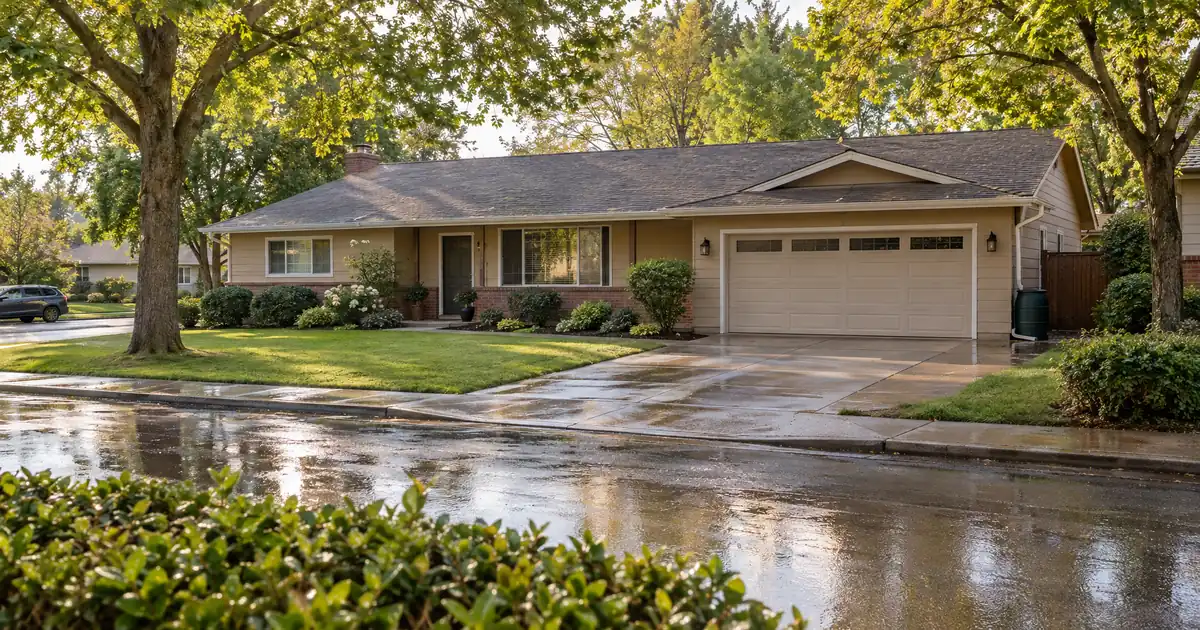
Picture an investor with six similar houses on adjoining streets, all rented. The houses share a builder, a floor plan family and an HOA. That uniformity helps the file, because rents are easy to compare. It also hurts, because one event can hit all six doors at once. A good presentation shows both sides.
What Is a Rental Pool in the DSCR Sense?
A rental pool, in this context, is several rentals financed under one note. Across Lendmire’s wholesale network this is called a portfolio DSCR loan, a blanket loan or a cross-collateralized loan. They all name the same thing: one note secured by several properties. Lendmire arranges these through select lenders in its network.
Two clarifications keep the vocabulary clean.
First, this is not a hotel or condo-hotel revenue-sharing pool, where owners split income from a managed rental program. Nothing here involves shared revenue. It is one loan on your own houses.
Second, a bank’s “portfolio loan” is a loan the bank keeps on its own books. That is a different sense of the word. A loan can be kept by a lender and still be a single-property loan, and a pooled loan can be sold into the secondary market.
Even with one appraiser and one closing date, separate loans stay separate, and a default on one does not automatically reach the others. A true blanket is one note with every property pledged against it.
DSCR itself is a second, separate design choice. DSCR is how the loan is reviewed, on the property’s rental income covering the payment. Blanket is how the loan is collateralized. They often show up together, but they are not the same decision. The complete DSCR loans guide covers the qualifying side in full.
How Does the Lender Read a One-Subdivision Pool?
The lender sees a uniform pool with shared exposure. Uniform product makes rent evidence easy to line up. Shared location means a local event can move every house together, so the underwriter looks for correlation, not just averages.
No program guideline we place files under treats a same-subdivision pool as a special category. What follows is reasoning from how pooled files get reviewed, not a published rule.
What helps the file:
- Similar floor plans, so rent comparisons are tight and outliers stand out.
- One HOA with one set of documents.
- Leases of similar length and similar start dates, laid out in one schedule.
- A clean ownership structure, with every deed vesting in the same entity.
What the underwriter worries about:
- A tax reassessment that lands on every parcel at once.
- A flood, fire or storm that touches the whole street.
- An HOA special assessment or dues increase across all doors.
- Rent comps that all draw from the same thin pool of nearby leases.
- Vacancy that arrives for every house together.
The honest read is that pooling concentrates what a spread-out portfolio would diversify. Small investors hold much of this stock anyway. AEI research finds small investors with 2 to 9 properties own about 11 percent of single-family rentals, so a handful of houses in one community is a common borrower profile. Lenders see it often. The package should answer the concentration question before it is asked.
How the Pooled Coverage Math Works
The ratio is total rent over total PITIA, which is principal, interest, taxes, insurance and any HOA dues. In a subdivision, HOA dues belong in the denominator for every house. Missing them on even a few doors moves the number.
On the 30-year portfolio DSCR loan, coverage is measured on the pool. That structure covers 2 to 20 properties under one note, with loan sizes from $300,000 to $5,000,000 and larger balances on review. Leverage runs up to 80% of value on a purchase or rate-and-term refinance, and cash-out stays at or below 75% of pooled value. The coverage floor is 1.00 on the pool, subject to lender guidelines.
Here is the simplified picture, using ratios only. Three houses cover at 1.30x, 1.10x and 0.90x. With equal obligations, they average 1.10x, which clears a 1.00 floor. Change the set to 1.30x, 0.80x and 0.70x and the average falls to about 0.93x. That fails.
The averaging only works when obligations are equal. The real figure is total rent divided by total PITIA, so a house with a larger payment weighs more. One house under 1.00 can sit in the pool, but underwriting tests the pooled coverage, the leverage and the terms.
| Test | What the lender checks | Where it can bind |
|---|---|---|
| Pooled coverage | Total rent over total PITIA | Weak houses drag the total |
| Leverage cap | Pooled value against the cap | Low appraisals on any house |
| Credit | Borrower score against the floor | Credit floor is 640 on the portfolio programs, 680 or 720 on some structures |
| Reserves | Held for taxes, insurance and capex on the term loan | Larger or term-loan files |
The loan is sized at the smaller of two limits: what pooled rent can carry at the coverage floor, and what the leverage cap allows against pooled value. Clearing 1.00 also does not mean positive cash flow. Repairs, vacancy, management and utilities sit outside the calculation.
What Goes in the Presentation Package?
Put everything in one indexed package, with a one-page schedule on top. The schedule is the single most useful page. It lets the underwriter see the whole pool without opening a single lease.
| Item | Purpose | Who supplies it |
|---|---|---|
| One-page house schedule | Address, rent, taxes, insurance, HOA per house | Investor |
| Leases | Prove in-place rent | Investor |
| Appraisal rent schedule | Supports market rent where a lease is missing | Appraiser |
| HOA documents | Rental rules, dues, any assessments | Investor or HOA |
| Entity documents | Ownership and authority to borrow | Investor |
| Insurance evidence | Coverage on each house | Insurance agent |
| Title information | Vesting and liens on each deed | Title company |
Every property still needs a lease or an appraiser-supported market rent. A leased single-family house gets an appraisal plus a rent schedule, Form 1007. A 2-4 unit property gets Form 1025. Those are agency form names, used here only as labels for the appraisal reports. Pooling does not skip valuation, and per-property appraisal and title work largely remain.
Operator note: the files that stall are rarely the ones with a weak house. They are the ones where the schedule and the leases disagree. If the schedule shows one rent and the lease shows another, the underwriter stops and asks, and every house gets a second look. Reconcile the schedule to the leases before the package goes in.
Disclose the soft spots. If one house is vacant or on a short lease, say so on the schedule. A vacant house in a pool can be kept in, cured with a lease, carved out, or split into a second pool. Surprises cost more than the vacancy itself.
HOA and Community Diligence
In one subdivision, the HOA is a shared variable, so the HOA file deserves its own section. Have the documents ready for all houses at once.
- Rental rules. Check for rental caps, minimum lease terms and registration requirements before the file goes in.
- Dues. Dues feed PITIA for every house. A scheduled increase affects the whole pool.
- Special assessments. Disclose any pending or recent assessment.
- Attached units. Where the pool includes condos or townhomes, the project itself gets reviewed. A project with heavy investor concentration or pending litigation can trim leverage or narrow the lenders willing to look at it. Condos are where files slow down.
Short-term rentals run on separate parameters. For short-term rental collateral, purchase leverage tops out at 75%, and lenders expect a 640+ score and about 12 months of hosting history. Form 1007 measures long-term market rent only, so a short-term rental needs its own income evidence. Short-term rental rules can vary by city, county, HOA and property type, so investors should confirm local rules before relying on projected rental income.
Showing Rent Consistency Across Similar Houses
Similar houses should show similar rents. Line them up on the schedule by floor plan and lease start. Where one house sits well above or below the others, add a short explanation: a renovated kitchen, a corner lot, a below-market lease to a long-term tenant.
Outliers matter more here than in a mixed portfolio. If five houses rent in a tight band and one rents far below it, the underwriter will ask why, and a clear note beats a guess. If the appraiser’s market rent for that house sits above the lease, the file may use the lower in-place figure or the appraiser’s figure depending on program guidelines. Know which one your schedule uses.
One caution on shared comps. If every appraiser rent comes from the same few nearby leases, the evidence is thinner than it looks. A pool is not stronger because six houses cite the same three comparables.
The Correlated-Risk Stress Test
Run this before the lender does. In a spread-out portfolio, one bad door is one bad door. In a single subdivision, a shock can hit every door.
| Scenario | What it does to the pool | What to prepare |
|---|---|---|
| Two houses vacant together | Pooled rent falls, PITIA does not | Show coverage with those rents removed |
| Community-wide rent dip | Every rent moves at once | Show how far rents can fall before coverage drops under 1.00 |
| HOA dues increase | Every PITIA rises | Rerun the ratio with higher dues |
| Fire on one house | One idle house lowers pooled coverage even if the others keep paying | Confirm insurance and loss-of-rent coverage |
The fire case is worth a note. Under a true blanket note, one idle house lowers pooled coverage even if the rest keep paying. That is the pooling trade in miniature. You gain offset on weak houses and you take on shared exposure.
Present the stress numbers as ratios, not promises. A pool that still covers after two vacancies tells the lender you have thought about it. A pool that fails after one tells you to reduce the count or add a stronger house.
Which Houses Go In, and Which Stay Out?
Pooling can carry a weaker house, and blanket structures help most when equity is thin on individual properties. Stronger properties can offset weaker ones. That is the main reason to pool.
| Option | Fits when | Trade-off |
|---|---|---|
| All houses in one pool | Uniform set, held long term | Cross-collateral exposure on every house |
| Partial pool | One house is weak or vacant | Weak house needs its own path |
| Separate loans | You expect to sell doors | More appraisals and files |
A pool suits an investor who holds a uniform set of rentals for the long term and rarely sells individual doors. If you plan to sell one house in two years, the release terms matter more than anything else on the page.
Eligibility has limits. Owner-occupied property, co-ops, mixed-use and commercial property are ineligible in the pool. Manufactured and mobile homes are not reviewable on these programs. Small multifamily of five or more units is eligible only inside the rental portfolio term loan, a separate structure for five or more rental properties or units under one loan, with loan sizes from $500,000 to $50,000,000. Final terms depend on lender guidelines, property type, leverage, and the borrower’s complete credit picture.
Cross-Collateralization and Release Terms
A blanket puts every property at risk. With a separate loan on each rental, the lender can generally foreclose only on the house that defaulted. Under a blanket, a default can reach all the collateral. A personal guarantee can also follow the borrower beyond the collateral on recourse loans. Non-recourse structures exist on the term loan, with carve-outs such as fraud and bankruptcy.
Release terms are the practical question. Partial releases, substitutions and the sale of one house out of the pool follow the loan documents and the lender’s release terms. These are negotiated lender by lender, not standardized. The release price typically runs above the property’s allocated balance, and the remaining pool still has to cover its debt service. A release clause is not automatic, and in some loans it may not exist at all.
A statute does not fill the gap. Federal due-on-sale law makes due-on-sale clauses enforceable and creates no right to a partial release. Read the release language before you sign, and ask for the allocation schedule and the cross-default terms in writing.
Pooling also has a cost side. Blanket loans can carry higher closing costs than single loans, and the foreclosure exposure is real. Much of the per-property appraisal and title work remains, so a blanket is not just several loans for less money. It adds cross-collateralization on top.
Seasoning and Cash-Out on a Pool
Cash-out on a pool never exceeds 75% of pooled value for standard rentals. Inside the first six months of ownership, the loan is also capped at 90% of total cost (purchase price plus documented improvements), and 100% of total cost from six to twelve months, and the leverage ceiling still applies. The loan is the lower of the two. After twelve months, appraised value alone is the basis. A rate-and-term refinance is not subject to the cost-basis cap.
Files that assume seasoning away get kicked back. If any house in the subdivision was bought recently, check its purchase date before building the cash-out request.
Common Mistakes and Red Flags
- Counting rent without HOA dues in the denominator.
- Leaving a vacant or short-lease house off the schedule.
- A schedule that does not match the leases.
- Assuming a strong preliminary ratio means approval. It does not replace the rest of the review.
- Treating separate notes closed together as a pool.
- Skipping the release language.
- Assuming a pooled loan resets any other lender’s property-count limits. That is agency-world thinking and does not apply to DSCR files.
Large bulk buyers have pushed the market’s view of single-family rentals, as the GAO’s report on institutional investor ownership describes. A handful of houses on one street is not that. Lenders treat the two differently, so present yours as the small, documented, long-term hold it is.
Pre-Submission Checklist
- One-page schedule: address, rent, taxes, insurance, HOA for every house.
- Leases or appraiser rent schedules for every house.
- Entity documents and deed vesting for each property.
- HOA documents, rental rules and any assessment notices.
- Insurance evidence on each house.
- Stress numbers: two vacancies, a rent dip, a dues increase.
- Disclosure of any vacant or short-lease house.
- Release terms requested in writing.
Key Terms Defined
Blanket loan: One note secured by several properties, also called a portfolio DSCR loan or a cross-collateralized loan.
Pooled coverage: Total rent for the pool divided by total PITIA, tested against the program floor.
PITIA: Principal, interest, taxes, insurance and any HOA dues.
Release price: The amount paid to free one house from the pool, typically above its allocated balance.
Cross-default: Language that lets a default on one house reach the others in the pool.
Frequently Asked Questions
Can a lender pool houses in one subdivision into a single loan?
Yes, on the 30-year portfolio DSCR loan, which covers 2 to 20 properties under one note. Single-family, 2-4 unit, condo and townhome properties are eligible. Each house still needs a lease or an appraiser-supported market rent and its own valuation, subject to lender guidelines.
Does a house under 1.00 coverage sink the pool?
Not by itself. Coverage is measured on the pool, so stronger houses can offset a weaker one. Underwriting tests the pooled coverage, the leverage and the terms, and the pool must still clear its floor as a whole.
Does being in one subdivision hurt the file?
It can raise questions, because every house shares the same local risks. That is reasoning, not a published rule. Disclose HOA terms, show a stress test and explain rent outliers, and the concentration becomes a documented fact.
What happens if I want to sell one house later?
It follows the release terms in your loan documents. Those terms are negotiated lender by lender, the release price typically runs above the allocated balance, and the remaining pool must still cover its debt service. Get the language before you commit.
Can I take cash out of a pool?
Yes, up to 75% of pooled value on seasoned standard rentals, with the seasoning cost caps applying inside the first twelve months of ownership. Short-term rental collateral has a lower cash-out ceiling of 70%.
If you are buying or refinancing several rentals and want to see how the numbers work, Lendmire can help you compare DSCR loan options based on the property income, credit profile, leverage and investor goals.
A street of identical houses reads as easy comparison to one underwriter and as one big bet to another, and the package decides which.
About Lendmire
Lendmire (NMLS# 2371349), a non-QM mortgage broker serving investors in 41 markets including Washington, D.C., helps structure DSCR scenarios commonly evaluated around a property’s rental income rather than personal income paperwork, subject to lender guidelines. A Scotsman Guide Top Mortgage Workplace in 2025 and 2026, Lendmire places loans through wholesale investor lenders and is not a direct lender.
Get Started
Ready to find the right loan for you?
In about 30 seconds you can review financing options available for your investment property. No commitment required.
Informational only. Not a Loan Estimate, approval, or commitment to lend. Program availability and eligibility are subject to lender guidelines, credit approval, property review, and underwriting.
References
1. AEI, Single-Family Rentals: The Unintended Consequences of Subsidizing Small Investor Loans
2. GAO, Institutional investor ownership of single-family rentals
This article is part of Lendmire’s DSCR loan program — full qualification details, guidelines, and scenarios live on the program page.
Related reading: How a DSCR Lender Tests Coverage With Weak Rentals in the Pool · How DSCR Financing Steps Up as a Rental Business Grows · Can a Scattered Rental Portfolio Qualify for One DSCR Loan?
Brandon Miller
Founder & CEO, Mortgage Loan Originator, Lendmire LLC
- Mortgage Loan Originator · NMLS# 1129696 · Verify on NMLS Consumer Access
- North Carolina Real Estate Broker · License# 343312 · Verify on NCREC
- North Carolina Insurance Producer · License# 19053198 · Property, Casualty, Life, Health · Verify on NAIC SBS
- Lendmire LLC · Firm NMLS# 2371349 · Verify firm licensure
Important disclosures. Lendmire (NMLS# 2371349) is a licensed mortgage brokerage. Lendmire is not a direct lender, depository institution, or financial advisor. All loan inquiries are subject to lender underwriting; this article does not constitute a commitment to lend. Rates, terms, and program guidelines are subject to change without notice and vary by borrower profile, property type, and state. Information in this article is general in nature and is not financial, legal, or tax advice. Equal Housing Opportunity. NMLS Consumer Access: nmlsconsumeraccess.org.