
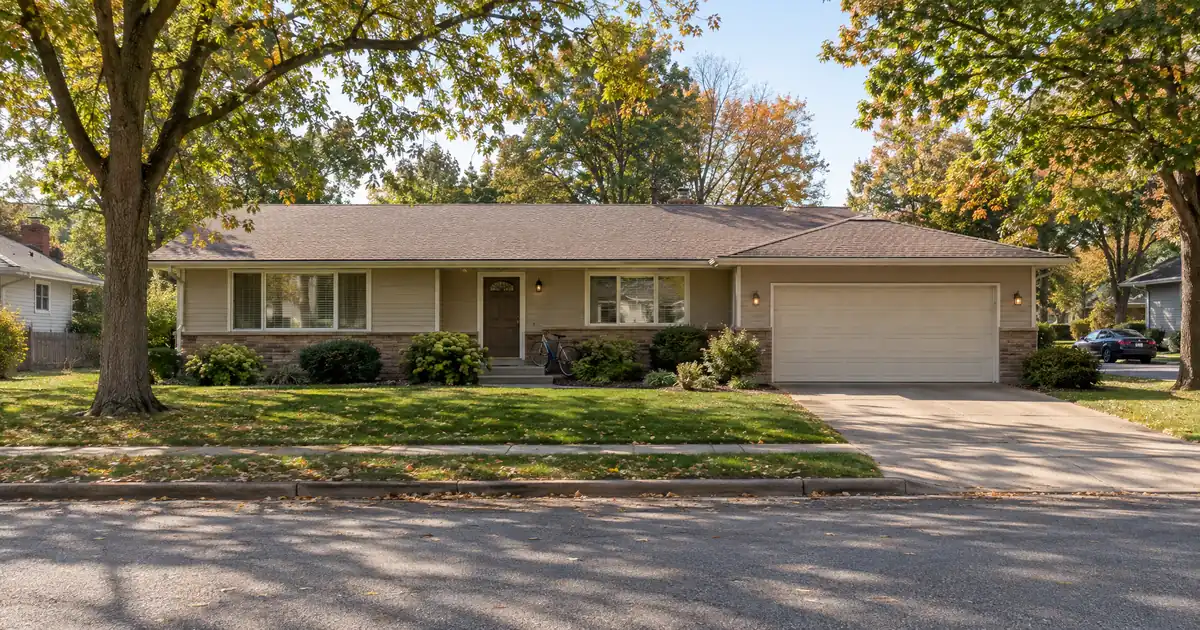
The Quick Read: One whole-house lease is the easier structure to qualify on a portfolio DSCR loan. Most programs size coverage on the appraiser’s market rent for the whole property, so room leases can raise your real income without raising the rent figure the lender counts. Some programs also screen out room-leased houses before any ratio is run. A portfolio DSCR loan is one note secured by several rentals, and this comparison matters most when one of those rentals is rented by the room.
- Most programs we place files with test coverage against whole-property market rent, not the sum of the room leases.
- Eligibility is the bigger risk: some lenders exclude room-leased houses, and others review them case by case.
- Room leases usually help cash flow and vacancy protection more than they help the coverage ratio.
- On a portfolio loan, coverage is tested on the pool, so one strong property can offset a thinner one.
- Local occupancy rules and insurance terms can matter as much as the loan.
The honest answer is that each structure fits a different investor. A single whole-house lease suits an investor who wants the cleanest file and the widest choice of lenders. Room leases suit an investor who wants higher gross income and can live with more management, more turnover, and a narrower lender list. Neither is wrong. They answer different questions.
Side-by-Side
The table shows how most programs in a wholesale network treat each structure. Individual lenders differ.
| Factor | Room Leases | One Whole-House Lease |
|---|---|---|
| Review basis | Rent to debt, pooled | Rent to debt, pooled |
| Rent usually counted | Appraiser’s whole-house rent | Lease or appraiser’s market rent |
| Documentation | Every lease, payment history, listing language | One lease, payment history |
| Property types | Narrower; some programs exclude | Broad: SFR, 2-4 unit, condo, townhome |
| Entity vesting | LLC common, subject to program terms | LLC common, subject to program terms |
| Reserve expectations | Vary by lender, leverage, loan size | Same; many files sit near 6 months |
| Liability if a tenant stops paying | Limited to that room | Shared if all sign one joint lease |
| Biggest risk | Eligibility and local rules | Total vacancy if the tenants leave |
Both columns qualify primarily on property-level rental income covering the payment, subject to lender guidelines. The difference is which rent number the lender accepts.
What Does the Lender Count as Rent?
For most programs, the rent that counts is the appraiser’s opinion of market rent for the property as a whole. McKissock, an appraisal education provider, explains that Form 1007 estimates monthly market rent for a single-family or condo investment property. Form 1025 covers duplexes, triplexes, and fourplexes. Neither form is built to add up individual bedrooms.
That gap explains most of the confusion. Say you rent a four-bedroom house by the room, and the room total looks far stronger than a whole-house rent. The appraiser still opines on what the house rents for as one unit. If the lender sizes on that figure, the extra room income helps your pocket and does nothing for the ratio.
The ratio itself is simple. Monthly rent is divided by the full monthly obligation: principal, interest, taxes, insurance, and any HOA dues, together called PITIA. The result is the coverage number. Where a lease is missing, such as a vacant unit in the pool, the lender typically substitutes the appraiser’s market-rent opinion.
A few programs go further and read a stack of room leases as a rent roll. Others call the house a rooming house and decline it. Across our wholesale network, treatment varies enough that the property type itself, not the math, often decides the outcome. Ask before you order an appraisal.
When Room Leases Are the Better Fit
Room leases earn their place when your goal is operating income, not the cleanest loan file. Gross rent by the room is usually well above a single lease, and the lease structure spreads the risk across tenants.
Consider these situations:
- The house is built for it. Several bedrooms, more than one bathroom, and a layout where tenants do not share bedrooms.
- The pool is strong without it. The other properties carry the pooled coverage, so this house does not need its room income to count.
- You can manage turnover. Rooms turn at different times, so you will fill vacancies more often, but you will rarely face an empty house.
- You want limited tenant liability. A practitioner in this BiggerPockets discussion of renting by the room uses individual leases so that one tenant’s nonpayment does not affect the others.
Two cautions apply. First, each tenant means another lease, another deposit, and another set of records. Second, local rules decide whether the model is allowed at all. PURE HomeRiver, a property-management firm, notes that many cities cap the number of unrelated adults in a single-family house, and that standard landlord insurance is often written assuming one household. Confirm the occupancy rules and the insurance terms before you plan around the income.
In some places a house leased room by room can be reclassified as a rooming house. The Apartment Association of Greater Los Angeles describes a California appellate case, Chun v. Del Cid, in which a house with separate leases and locked bedrooms was treated that way. That is a California example, not a national rule. It shows why the label on the lease can change the property’s legal status, and a lender may read it the same way.
When One Whole-House Lease Is the Better Fit
One lease is the better fit when your priority is a loan that moves through lender review without friction. The lease matches the appraisal, the appraisal matches the property type, and no one has to explain a stack of individual agreements.
This structure tends to win in four cases:
- The house is one of several in the pool. A uniform file is easier to review than a mixed one.
- You want the widest lender choice. More programs are comfortable with a single lease on a conventional single-family rental.
- You prefer low management. One tenant household means one point of contact.
- Coverage is tight. If the house needs every bit of rent to clear 1.00, you want the lender’s number to match the lease, not depend on how the lender classifies the house.
A joint lease, where all roommates sign one agreement, is a middle path. Each roommate is then liable for the full rent. You get one lease for the file, and the tenants share the risk among themselves. A master lease to a single operator can also read as one lease. A genuine arm’s-length master lease is typically treated that way, while a master lease to a related party may read differently.
The tradeoff is concentration. If one household leaves, the whole house goes vacant, and a vacant unit gets valued on market rent until it is leased again.
How the Pool Changes the Math
A portfolio DSCR loan tests coverage across the pool. Pooled rent is compared with pooled debt service, so stronger properties can offset weaker ones. Portfolio DSCR loan, blanket loan, and cross-collateralized loan all describe this same structure. Each property still gets its own valuation and its own lease or appraiser-supported market rent.
Two structures matter here:
- The 30-year portfolio DSCR loan covers 2 to 20 properties under one note, with loan sizes typically from $300,000 to $5,000,000 and leverage up to 80% of value on a purchase or rate-and-term refinance. The coverage floor is 1.00, measured on the pool.
- The rental portfolio term loan covers five or more rentals or units, with loan sizes from $500,000 to $50,000,000 and leverage up to 75% of value. Terms are fixed for 3, 5, 7, or 10 years with a balloon at maturity. Small multifamily of five or more units is eligible only on this term loan.
On either structure, a cash-out never exceeds 75% of pooled value. Credit floors on the portfolio programs start at 640, with 680 or 720 on some structures. Some structures require a special-purpose entity, typically an LLC, subject to lender program eligibility. Owner-occupied property, co-ops, mixed-use, and commercial property are ineligible in the pool. Manufactured and mobile homes are not reviewable on these programs.
Here is how room leases fit. A room-leased house that falls below 1.00 on its own can sit inside a pool, but underwriting tests the pooled coverage, the leverage, and the terms. The house also has to clear eligibility as a property type. A pool can carry a weak coverage number. It cannot carry an ineligible property.
Pooling has one more consequence. Because every property secures the same note, selling one house later depends on the loan’s release terms, and the remaining pool must still cover its debt service. If you hold some mortgages outside the pool, Lendmire also compares whole-portfolio and partial-pool DSCR loans.
Coverage Is Not Cash Flow
A coverage ratio above 1.00 only says rent covers PITIA. It does not say the house makes money. Repairs, vacancy, management, utilities, and capital expenses all sit outside the calculation.
Room-leased houses carry more of those costs. Turnover is more frequent, utilities are often included in the rent, and shared spaces take more wear. A house can show strong income and still net less than a quietly leased single-family rental. Judge the structure on net income as well as on what the lender counts.
Room leases are also not short-term rental income. Short-term rental rules can vary by city, county, HOA, and property type, so investors should confirm local rules before relying on projected rental income.
Key Terms Defined
Portfolio DSCR loan: One note secured by several rental properties, with coverage tested on the combined rent and debt service.
PITIA: Principal, interest, taxes, insurance, and any HOA dues, which is the full monthly obligation the rent is compared against.
Individual room lease: A separate agreement with each tenant for one bedroom plus shared common areas.
Joint lease: One agreement signed by all roommates, with each liable for the full rent.
Master lease: One lease to a single operator, who may then rent to others.
Form 1007 and Form 1025: Appraisal rent schedules for single-family or condo investment properties and for two-to-four-unit properties.
One Agency Contrast
Agency programs handle this differently, and the difference is a useful reference point. The Fannie Mae Selling Guide requires Form 1007 when a one-unit investment property uses rental income to qualify. DSCR loans are not agency products, and agency rules do not govern them. The form is the shared tool, but each DSCR lender decides how to use it.
The Verdict
Choose one whole-house lease when the file needs to be clean, the coverage is tight, or the pool depends on this house. Choose room leases when the house is built for them, the local rules allow them, the pool does not need the house’s room income to count, and you accept the extra management.
A common middle path is to lease the house as one unit for the loan and then operate it by the room only if the lender and local rules allow it. The lease and listing need to describe how the house is actually run. A mismatch between the file and the operation is a reason for a lender to pause.
Frequently Asked Questions
Can I add up my room leases to reach 1.00 coverage?
Usually not. Most programs size coverage on the appraiser’s market rent for the whole property, and room totals often exceed that figure. Some lenders may review the room leases as a rent roll, but that depends on the program, so ask first.
Can I live in one room and rent the rest?
That is a different loan. Portfolio DSCR programs are for non-owner-occupied investment properties, and owner-occupied property is ineligible in the pool. A house you occupy belongs under a different financing path.
Does a master lease count as one lease?
A genuine arm’s-length master lease is typically read as a single lease. A master lease to a related party can read differently, and lenders may look closely at who is behind the operator.
Does one weak property sink a portfolio?
Not by itself. Coverage is tested on the pool, so stronger properties can offset a thinner one. Underwriting tests the pooled coverage, the leverage, and the terms, and each property still needs its own valuation and rent opinion.
Can I switch from a whole-house lease to room leases after the loan?
That depends on the loan documents, the lender, and local rules. Many investors keep the lease structure consistent with how the house is operated, since a mismatch can create questions later. Check with your broker before you change the structure.
Next Step
If you are buying or refinancing a rental property and want to see how the numbers work, Lendmire can help you compare DSCR loan options based on the property income, credit profile, leverage, and investor goals. For the full background on these loans, read the complete DSCR loans guide. Lendmire is a broker that arranges these loans through select lenders in its wholesale network across 41 markets, including Washington, D.C., and every file is subject to lender guidelines and is not a commitment to lend.
About Lendmire
A DSCR-focused mortgage broker, Lendmire (NMLS# 2371349) places investor financing across 41 markets — 40 states plus Washington, D.C. — with DSCR eligibility generally reviewed by the lender on property cash flow instead of tax returns, subject to lender guidelines. Scotsman Guide named Lendmire a Top Mortgage Workplace in 2025 and 2026.
Get Started
Ready to find the right loan for you?
In about 30 seconds you can review financing options available for your investment property. No commitment required.
Informational only. Not a Loan Estimate, approval, or commitment to lend. Program availability and eligibility are subject to lender guidelines, credit approval, property review, and underwriting.
References
1. McKissock Learning, Form 1007 and short-term rental appraisals
2. BiggerPockets, renting by the room FAQs
3. PURE HomeRiver, renting a single-family home to multiple tenants
4. Apartment Association of Greater Los Angeles, when a home becomes multiple rentals
5. Fannie Mae Selling Guide B4-1.2-01
This article is part of Lendmire’s DSCR loan program — full qualification details, guidelines, and scenarios live on the program page.
Related reading: Can a Mixed Portfolio of Small Buildings Get a DSCR Loan? · Can You Deed a Home to an LLC and Still Get a DSCR Loan on a Lease? · How Much a Rent Gap Moves a DSCR Loan on a Newly Signed Lease
Brandon Miller
Founder & CEO, Mortgage Loan Originator, Lendmire LLC
- Mortgage Loan Originator · NMLS# 1129696 · Verify on NMLS Consumer Access
- North Carolina Real Estate Broker · License# 343312 · Verify on NCREC
- North Carolina Insurance Producer · License# 19053198 · Property, Casualty, Life, Health · Verify on NAIC SBS
- Lendmire LLC · Firm NMLS# 2371349 · Verify firm licensure
Disclosures. The information presented in this article is general market commentary, not financial, legal, or tax advice. Lendmire is a mortgage brokerage (NMLS# 2371349) — not a direct lender or depository institution — and loan placement is subject to lender underwriting. Nothing in this content represents a commitment to lend. Loan terms, pricing, and program availability vary based on borrower qualifications, property characteristics, and state of subject property, and are subject to change at any time. Lendmire complies with Equal Housing Opportunity requirements. Consumer access: nmlsconsumeraccess.org.