
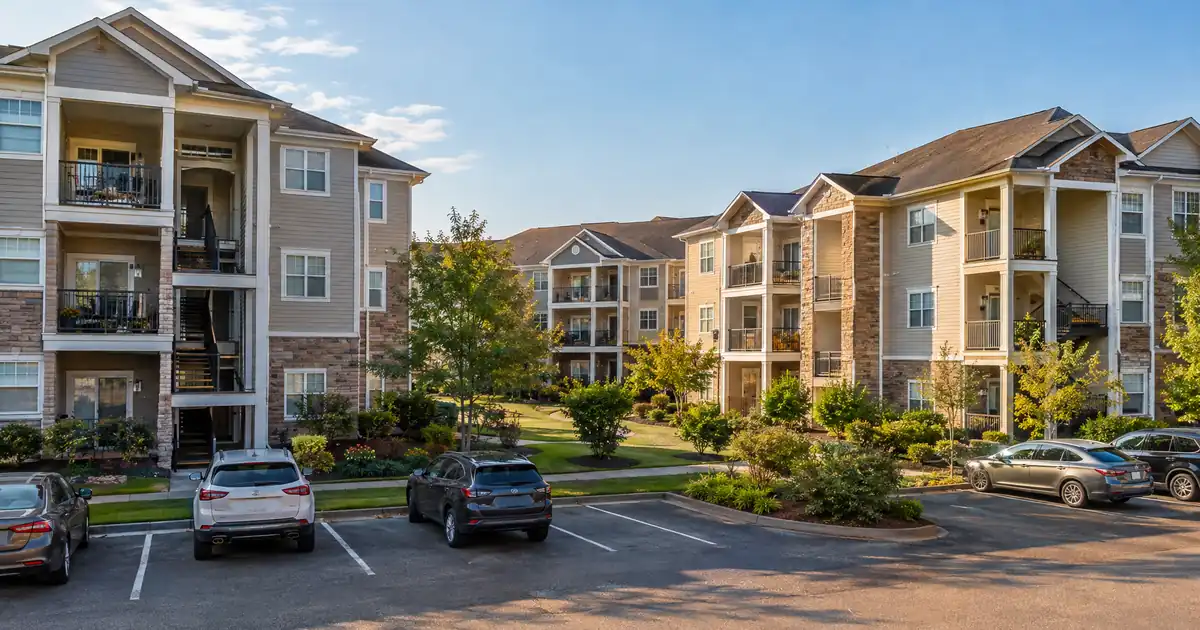
The Quick Read: Documenting basement apartment rent on a jumbo loan means proving the unit is a legal, rentable space, supporting its rent with an appraiser’s rent schedule, and backing that figure with a lease and proof of payment, because “jumbo” describes only the loan size and each lender sets its own rent treatment. On a non-owner-occupied rental, the rent is tested against the full payment in a DSCR file. On an owner-occupied jumbo, the same rent is usually credited at a reduced amount.
- Occupancy decides the lane: rental property goes the DSCR route, and an owner-occupied home goes the consumer route.
- Legal status of the unit matters more than the lease.
- Most programs use the lower of the lease rent and the appraiser’s market rent.
- The packet is a signed lease, proof of payment, the appraisal rent schedule, and entity documents if an LLC holds title.
Does a Jumbo Loan Change How Basement Rent Is Documented?
No. Jumbo is a size label, not a documentation rule. A jumbo can be full-documentation or non-QM, and a non-QM loan can be conforming size. Across the wholesale network Lendmire places files with, standard DSCR programs reach up to $3,000,000, so a high balance alone does not change the rent paperwork.
DSCR Calculator
Run the numbers in your market
Rate source: Freddie Mac 30-yr average via FRED® — Federal Reserve Bank of St. Louis · effective Oct 15, 2026
Prefilled with starting assumptions — enter your own rent or nightly figures, taxes, insurance, and HOA for a more accurate picture.
Program parameters update from Lendmire’s centralized guideline source. Taxes and insurance are editable estimates.
As of Oct 15, 2026 · General Freddie Mac market benchmark, not a Lendmire loan offer. Rent, nightly rate, occupancy, taxes, and insurance are editable estimates. Short-term rental figures are estimates only and vary significantly by season, property type, management approach, and local short-term-rental rules — confirm local regulations before relying on them. Qualifying income for short-term rentals varies by program — some use appraisal market rent, others use documented STR history or projections — and is confirmed in underwriting. Not a Loan Estimate, approval, or commitment to lend. Program availability and eligibility are subject to lender guidelines, credit approval, property review, and underwriting.
Two things do change it. The first is occupancy: whether you live in the home or rent the whole property to others. The second is the unit itself: whether the basement is a legal, separate dwelling.
If you live upstairs, the basement rent is a consumer-loan question. Lenders usually credit only part of that rent, and any shortfall lands in your personal debt-to-income ratio. If the property is a rental and you live elsewhere, the rent sits inside the property-level coverage test. That is the DSCR lane, and the rest of this article follows it.
Key Terms Defined
Basement apartment: A finished lower-level unit with its own sleeping, cooking and bathroom facilities, usually with a separate entrance.
Accessory dwelling unit (ADU): A self-contained living unit on the same parcel as a main home. Fannie Mae’s ADU sheet defines it as having living, sleeping, cooking and bathroom facilities.
Market rent: The rent the appraiser supports with comparable rentals, shown on the rent schedule.
Lease rent: The rent written in the signed lease.
PITIA: Principal, interest, taxes, insurance and association dues, which together make up the payment tested against rent.
DSCR: rent used for lender review divided by PITIA. It leaves out repairs, vacancy, management and utilities.
How Do Underwriters Treat Basement Rent, Step by Step?
Underwriters work through the same six steps in nearly every file. The order matters because an early failure, such as a unit that is not legal, changes everything after it.
1. Classify the occupancy. An investor-owned rental goes to the DSCR lane. An owner-occupied home with a basement unit stays in the consumer lane.
2. Classify the unit. Is the basement a legal, separate dwelling? Is it a finished area of a one-unit home? Or is the whole building a legal two-to-four-unit property? This decides the appraisal form. A single-unit rent schedule is the 1007. A two-to-four-unit income report is the 1025.
3. Collect the lease package. That means the executed lease, any amendments, and proof that rent was actually paid.
4. Order the appraisal with a rent schedule. The appraiser describes the unit’s condition, size and room count, then supports the rent with comparable rentals. Fannie Mae’s sheet says the appraiser must explain that the rent estimate is specific to the accessory unit. Basement-apartment comparables can be scarce, so this step is where files stall.
5. Apply the lender’s rent rule. On most programs in the network, the lower of the lease and market rent is the qualifying figure. A month-to-month, expired or vacant situation typically falls back to market rent alone. A two-to-four-unit file counts each unit’s rent and adds a rent roll.
6. Compute coverage. Divide rent used for lender review by PITIA. Most select programs start at 1.00. A separate select-lender path takes coverage below 1.00, with leverage and terms adjusted.
Clearing 1.00 is not the same as positive cash flow. Repairs, vacancy, utilities and management all sit outside the calculation.
What Does a Worked Example Look Like?
These ratios are hypothetical and show the logic only. Picture a rental where the main unit alone covers the payment at roughly 0.90x. The basement unit is legal, leased, and supported by the appraiser.
| Scenario | Rent counted | Coverage read |
|---|---|---|
| Basement excluded (unit not legal) | Main unit only | About 0.90x |
| Lease equals market rent | Both units | About 1.20x |
| Lease above market rent | Market rent for basement | About 1.20x, not higher |
| Lease below market rent | Lease for basement | Slightly under 1.20x |
The third row is the one that surprises people. A lease above the appraiser’s number does not raise the qualifying figure under a lower-of rule. The second row shows why legality matters: the same tenant and payment history produce very different coverage depending on whether the unit counts.
What Documents Go in the Packet?
Build the packet before the appraisal is ordered. Each document proves one specific thing.
| Document | What it proves | Common problem |
|---|---|---|
| Executed lease | Term and agreed rent | Unsigned or expired |
| Proof of payment | Rent is really received | Cash with no deposit trail |
| Appraisal rent schedule | Market rent for the unit | Too few basement comps |
| Rent roll (two to four units) | Rent per unit | Missing units or dates |
| Entity documents | Who owns the property | Title and LLC mismatch |
| Reserves statements | Cash after closing | Funds not seasoned |
Entity-owned rentals are common in this lane, subject to lender program eligibility. Match the lease landlord name to the title holder. A lease signed by you personally while an LLC owns the property creates a question the underwriter will ask.
For informal tenants, build the trail now. Move rent into a dedicated account by deposit or transfer. Put the arrangement in writing, even if it is simple. Never create or backdate a lease. Underwriters check dates against deposit history, and a mismatch costs more than a missing lease.
Where Does the General Rule Break?
The lower-of rule is a convention, not a law, so several situations push the answer in different directions.
Illegal or unpermitted unit. This is the most common failure. Egress and ceiling height are the usual code problems. When the unit is not a legal dwelling, lenders typically value the property as one unit and count one-unit rent. The appraiser can also describe the space as storage or recreation space. A tenant who pays reliably does not change the unit’s legal status.
Local law can undo the rent itself. One law-firm article explains that rent recovery for a unit without a proper certificate of occupancy is sharply limited in New York City. Rules differ by place. The point is that legality affects whether rent is collectible, not just whether it is countable.
Lease status. Month-to-month, expired and vacant units typically fall back to market rent. Proof of receipt matters most when a lender leans on the lease.
Second-home occupancy. Rental income from a second home generally cannot qualify the loan. If you plan to rent it, the property needs to be financed as a rental.
Owner-occupied homes. Here the rent offsets debt-to-income at a reduced credit. A basement rented to a tenant is not the same as a rented room, and lenders treat the two differently.
Short-term rentals. A basement listed on a short-term platform follows a different program with its own hosting-history expectations. Short-term rental rules can vary by city, county, HOA, and property type, so investors should confirm local rules before relying on projected rental income.
Ineligible property types. Manufactured homes, log homes and barndominiums are not offered through the network’s DSCR programs, whether or not they have a basement unit.
DSCR loans are designed for non-owner-occupied investment properties. Because they are business-purpose investor loans, they are reviewed differently from a standard owner-occupied mortgage. That does not mean anything goes. Lenders still verify what they rely on.
For a closer look at the legal-unit question, see Lendmire’s explainer Does a Basement Apartment’s Rent Count on a DSCR Loan?. For lease-versus-market questions, see its piece Does a Tenant’s Lease Set the Rent on a Jumbo DSCR Purchase?.
How Does This Differ From Agency Rules?
Agency programs haircut rent and cap its share of income. Freddie Mac’s ADU fact sheet limits lease-documented ADU rent to 75% of the lease amount, for example. Those are agency conforming rules and do not govern DSCR files. In the network, each lender sets its own rent treatment, and the common convention is the lower-of rule with no fixed haircut.
Investors still borrow the agency forms. The 1007 and 1025 are standard formats that non-QM lenders and their appraiser panels use.
What If the Rent Won’t Count?
When the unit fails on legality or comps, the file has fallback paths. Which one fits depends on the borrower’s goal.
| Situation | Path | Tradeoff |
|---|---|---|
| Unit not legal, main unit covers payment | Qualify on one-unit rent | Lower rent counted |
| Main unit falls short | Larger down payment lowers the payment and can lift coverage | More cash in |
| Coverage near but under 1.00 | Sub-1.00 path through select lenders | Leverage and terms adjust |
| Owner will live there | Consumer jumbo lane | Rent credited at a reduced amount |
| Unit can be legalized | Permit, then reappraise | Cost and delay |
A larger down payment helps, but it does not erase leverage caps, credit floors, reserve rules or property eligibility. The strongest files clear both tests: enough equity and enough rental coverage.
If a deal only works with the basement rent counted and the unit is not legal, treat that as a signal about the deal, not the loan type.
What Does the Decision Look Like in Practice?
Treat the basement as upside until the appraiser confirms it. Then run the file in this order:
1. Confirm the unit’s legal status with the local permitting office.
2. Gather the packet while the appraisal is being scheduled.
3. Run coverage twice, once with the unit and once without.
4. Check that the without-unit case still works, or that you accept the fallback.
5. Match the structure to the program.
On the program side, purchase files typically land at 75% to 80% LTV on an investment property, with select high-leverage programs reaching higher on stronger scores. Cash-out refinances on standard rentals top out around 75% LTV. Credit tiers start at a 620 floor in parts of the network, most programs prefer around 660, and 700 or higher opens the strongest leverage. Reserves commonly run about 6 months of PITIA, stepping up to about 9 months on loans above $1,500,000. All of this is subject to lender guidelines, and every file is underwritten individually.
Larger loans draw more appraisal scrutiny, so expect rent support to get tighter, not looser, as the balance climbs. The complete DSCR loans guide walks through how these pieces fit together.
Frequently Asked Questions
Do I have to tell my lender about the basement tenant?
Yes. The appraiser describes the unit, and the lender relies on disclosed rent. On an owner-occupied loan, undisclosed rent can change how the property is classified. Concealing a tenant creates far more risk than it avoids.
Can a family member’s rent count?
Sometimes, but expect more scrutiny. Lenders look for a written lease, market-level rent and a deposit trail. Because the appraisal sets market rent anyway, a below-market family lease usually counts at the lease figure under a lower-of rule.
What if the appraiser’s rent is lower than my lease?
Most programs use the lower of the two, so the appraiser’s figure typically governs. A strong lease still helps by showing history, but it does not raise the coverage figure above market rent.
Does a new landlord get treated differently?
Often only slightly on a DSCR file, since qualification runs primarily on property-level rental income covering the payment. Some programs ask for management experience or higher reserves with a first rental. Terms vary by lender.
Can I count the rent on a refinance?
Yes, when the unit is legal and supported by the appraisal. A cash-out refinance on a standard rental tops out around 75% LTV, and about 6 months of seasoning is the common expectation. Final terms depend on lender guidelines, property type, leverage, and the borrower’s complete credit picture.
Next Step
If you are buying or refinancing a rental property and want to see how the numbers work, Lendmire can help you compare DSCR loan options based on the property income, credit profile, leverage, and investor goals. Lendmire is a broker arranging financing through select lenders in its wholesale network across 41 markets, including Washington, D.C. This is not a commitment to lend.
A basement unit is a bonus only when the paperwork proves it, so settle the legal-status question before the appraiser walks through the door.
About Lendmire
Lendmire is a non-QM mortgage brokerage (NMLS# 2371349) arranging DSCR investor loans in 41 markets, including Washington, D.C., through wholesale and investor-lending channels. DSCR loans are evaluated by the lender on rental income rather than personal income, subject to lender guidelines — a fit for LLC-owned portfolios, self-employed investors, and operators scaling beyond conventional loan caps. Recognized as a Scotsman Guide Top Mortgage Workplace in 2025 and 2026.
Get Started
Ready to find the right loan for you?
In about 30 seconds you can review financing options available for your investment property. No commitment required.
Informational only. Not a Loan Estimate, approval, or commitment to lend. Program availability and eligibility are subject to lender guidelines, credit approval, property review, and underwriting.
References
1. Fannie Mae ADU income sheet
2. NYC law-firm article on rent from an illegal basement apartment
This article is part of Lendmire’s DSCR loan program — full qualification details, guidelines, and scenarios live on the program page.
Related reading: Can a Mixed Portfolio of Small Buildings Get a DSCR Loan? · Market-Rent Lease to a Relative vs. a Stranger on a DSCR Loan · Renting to a Parent vs. a Stranger on a DSCR Loan
Brandon Miller
Founder & CEO, Mortgage Loan Originator, Lendmire LLC
- Mortgage Loan Originator · NMLS# 1129696 · Verify on NMLS Consumer Access
- North Carolina Real Estate Broker · License# 343312 · Verify on NCREC
- North Carolina Insurance Producer · License# 19053198 · Property, Casualty, Life, Health · Verify on NAIC SBS
- Lendmire LLC · Firm NMLS# 2371349 · Verify firm licensure
Legal disclosures. Lendmire (NMLS# 2371349) is a state-licensed mortgage brokerage that arranges financing through wholesale lender relationships. Lendmire is not a direct lender, depository institution, or registered financial advisor. The discussion above is general informational content about real estate financing — it is not financial, legal, or tax advice, and readers should consult licensed professionals for guidance on their individual circumstances. Loan inquiries are subject to lender underwriting; this article does not represent a commitment to lend. Loan terms, rates, and qualification standards vary by borrower, property, and state, and are subject to change at any time. Equal Housing Opportunity. NMLS Consumer Access: nmlsconsumeraccess.org.