
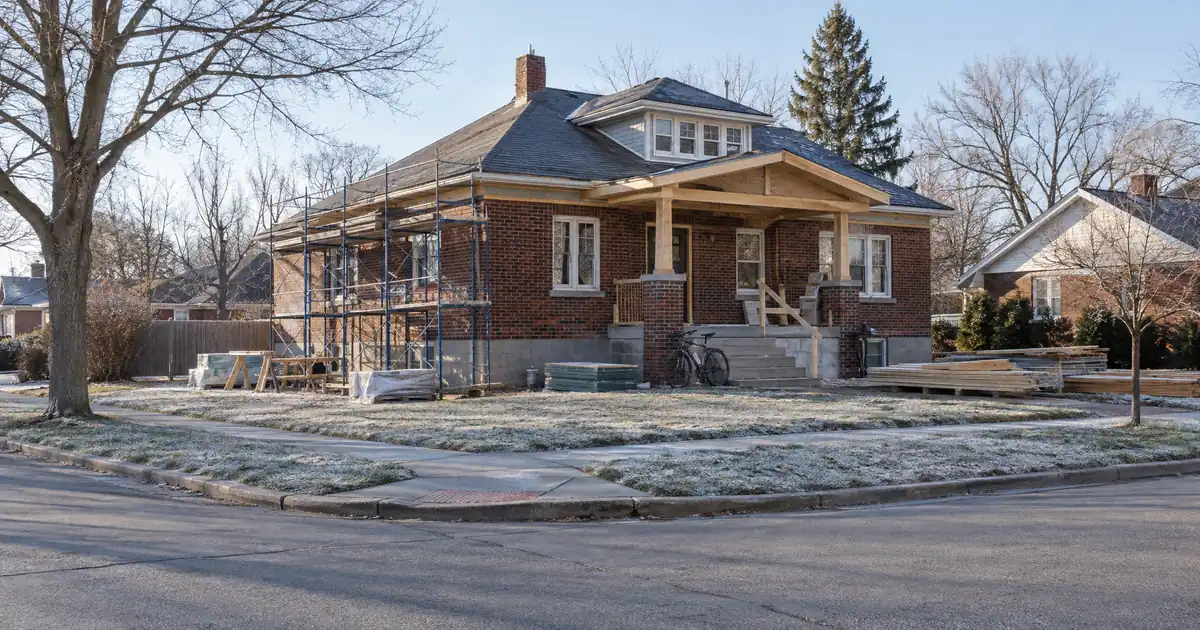
The Quick Read: Usually no. A flood zone or a high premium rarely makes a property ineligible for a hard money loan, but it changes the conditions: required coverage, a larger carrying cost, and sometimes lower leverage. The real block is a policy that cannot be bound or a premium that breaks the deal’s numbers.
- A flood zone adds a coverage requirement. It does not add an automatic denial.
- A high premium hits your budget, reserves and exit math. An uninsurable property hits the closing.
- Hard money lenders set their own insurance policy, so requirements vary by lender, property, and experience.
- Pull a flood determination and a real insurance quote before you go under contract.
- Many investors later refinance into long-term rental financing, where the same premium counts against rent coverage.
Premium Problem or Availability Problem?
A high premium is a cost problem. An unbindable policy is a closing problem. Mixing them up is a common mistake on these files.
What this loan actually costs to carry.
Hard money is sized against the project and priced by time. Enter the deal and see how much the program will lend, the cash required at closing, the carry while you hold it, and what is left at the exit.
Leverage tiers on the current program: 85% with fewer than 2, 90% with 2 or more, 93% with 5 or more completed projects — every tier capped at 75% of after-repair value. Loan amounts up to $5,000,000, larger by exception; terms of 6 to 18 months, interest-only, no prepayment penalty. The rehab portion funds in draws against completed work, not at closing.
Program parameters shown update from Lendmire’s centralized guideline source. Rate, points, and months are editable assumptions, not quoted terms.
Cost cap sets the loan · positive spread
Illustrative estimate only — not a quote, Loan Estimate, approval, or commitment to lend. Rate, points, and months are editable assumptions. Hard money is business-purpose financing for real estate investors, not a consumer mortgage. Leverage on the current program tops out at 93% of project cost for investors with a documented track record, capped at 75% of after-repair value, with rehab funding up to 100% of the documented budget released in draws; actual terms vary by lender, borrower experience, property, and exit. Lendmire is a mortgage broker, not a lender.
| Issue | What it affects | Typical outcome |
|---|---|---|
| High premium, coverage available | Carrying cost, reserves, exit math | Deal clears, or leverage and budget change |
| Coverage cannot be bound | Closing itself | Funding stalls or the deal is declined |
| Coverage binds but is inadequate | Lender’s collateral protection | Lender asks for more coverage |
Hard money is asset-based. The lender looks at the property, the plan, and the exit. A big premium reduces your margin on a flip, but it does not by itself fail a ratio test, because short-term loans are not judged on rent coverage. Coverage that will not bind is different. No insurer on the policy means the lender’s collateral is unprotected, and most lenders will not fund that.
Does a Flood Zone Make a Property Ineligible?
No. A flood zone makes flood insurance part of the deal. The property type still has to fit the program: non-owner-occupied residential, 1-4 units, or ground-up construction to 10 units, as the network’s hard money guidelines set it.
The federal rule matters here. The Flood Disaster Protection Act made flood insurance mandatory for loans from federally regulated lenders secured by buildings in a Special Flood Hazard Area, as the Federal Register interagency Q&A explains. A triggering event is a loan being made, increased, extended, or renewed.
Private capital sits in a different spot. The federal mandate attaches to regulated lenders, and no primary source says it reaches private non-bank money. So the requirement on a hard money file is lender policy. In practice, most hard money capital still asks for flood coverage on a property in a mapped high-risk area. A lender can also require it outside one, as the OCC’s consumer help site notes about lenders generally.
Who Sets the Requirement?
Three layers can apply: federal rule, lender policy, and whoever buys or refinances the loan later. Ask which one governs your file.
| Layer | Source | What it means for you |
|---|---|---|
| Federal rule | Applies to regulated lenders | Coverage required in a high-risk zone |
| Lender policy | Private or regulated lender | Set lender by lender; varies by lender, property, and experience |
| Exit lender | Your refinance or buyer | Sees the same flood cost later |
Across the wholesale network, the pattern is consistent. Lenders want proof of coverage before funding, continuous coverage while the loan is open, and the lender named on the policy as mortgagee or loss payee. Exact wording varies by lender, and nothing here is a commitment to lend.
How the Flood Check Works, Step by Step
The lender decides whether the building is in a high-risk zone, then confirms coverage exists. The order below keeps surprises off the file.
1. Flood determination. The lender checks FEMA’s mapping to see whether the building sits in a Special Flood Hazard Area. Zones starting with A or V are the high-risk ones. Zones B, C and X do not trigger the federal purchase rule.
2. Real quote. Get an actual quote or declarations page. A zone-based guess is not a quote.
3. Premium into the numbers. On a flip, the premium goes into holding costs. On a long-term rental loan, the annual premium is divided by 12 and sits inside the monthly payment that rent has to cover.
4. Binder and proof. Typical documents are a certificate or binder, an effective date on or before closing, and the lender listed on the policy.
5. Outcome. The deal clears at the quoted premium, gets restructured with a smaller loan or more cash in, or is declined if the numbers or coverage fail.
Flood coverage is also separate from the standard policy. A standard homeowners or landlord policy does not cover flood damage, so flood needs its own policy, federal or private.
Vacant and Renovating Properties
Standard policies often restrict vacant properties, so a rehab usually needs builder’s-risk or vacant-property coverage. This trips up fix-and-flip files more than flood does.
Plan for it early. A flip that is empty during the rehab can lose the coverage the lender expects to see on the closing date. Ask the agent about vacancy terms before you bind. One practical note: BiggerPockets hosts an investor thread steering flippers toward builder’s-risk coverage, though it is an older discussion.
Leverage on the hard money side runs on project cost, not on a plain LTV. Fix-and-flip loans fund up to 93% of project cost at 5+ completed projects, 90% of project cost at 2+, and 85% of project cost with fewer than 2, and every tier is capped at 75% of after-repair value. Bridge purchases without rehab go up to 80% of purchase price, and refinances go up to 65% of value. A high premium that shrinks your cash cushion matters most at the top tiers, where you have the least equity in the deal. All of this varies by lender, property, and experience.
What a Premium Does to Your Deal
A bigger premium eats margin, and it can push your loan sizing toward more cash in. It rarely kills a hard money deal alone, but it can tip a thin one.
Take two flips, identical except one sits in a mapped high-risk zone. Same purchase price, same rehab budget, same resale value. The flood-zone flip carries a larger holding cost for the whole rehab and sale period. If that cost pushes total project cost up, the lender may fund a smaller share of it, and you cover the gap. Run that math before you offer.
Premiums also move. Under Risk Rating 2.0, FEMA says annual increases are generally capped at 18%. Confirm the cap that applies to your property. For a 6-18 month hold, that glide path rarely matters. For a rental you keep, it does.
Can You Remove the Flood Requirement?
Sometimes, but the lender has the last word. A Letter of Map Amendment or Letter of Map Revision based on Fill can show a building is not in the high-risk area. FEMA’s guide says the lowest adjacent grade must be at or above the Base Flood Elevation.
Here’s the catch. An LOMA lifts the federal requirement, but a lender can still require flood insurance as a loan condition. Get the lender to agree to waive it in writing before you spend time on the paperwork.
A map revision can also work against you. If a property is remapped into a high-risk zone during the loan, a new coverage requirement can follow. Short terms reduce that risk, but do not remove it.
Exit Risk: The Flood Cost Follows the Property
The refinance lender or buyer who takes you out will see the same flood zone and the same premium. Plan the exit on the numbers they will use, not yours.
Many investors refinance out of hard money into long-term DSCR investor loans once the property is stabilized, and Lendmire brokers that path. There, the annual premium sits in the payment that rent must cover. Select programs in the network start at a 1.00 coverage ratio, and stronger ratios open better leverage. A premium that looked fine over a six-month flip can pull a rental’s coverage ratio down. As an illustration from one analysis, each extra $100 of monthly insurance shaved roughly 0.04x off coverage in a modeled duplex. That is an illustration, not a market statistic. Clearing 1.00 is also not the same as positive cash flow, since repairs, vacancy, and management sit outside the ratio.
For the full long-term side, see the complete DSCR loans guide. On the flip side, the National Association of Realtors notes that policyholders can assign a flood policy to a new owner, which keeps your sale options open. And if your lender flagged a price problem instead, Lendmire’s piece Hard Money Loan Denied Because The Purchase Price Is Too High Compared With ARV covers that separate issue.
Triage: Will This Block My Loan?
Match your situation to the likely lender reaction.
| Situation | Likely reaction | What to do |
|---|---|---|
| High-risk zone, affordable policy | Coverage required, deal proceeds | Bind early, send declarations page |
| High-risk zone, very high premium | Deal may shrink or reprice | Re-run holding costs and project cost |
| No insurer will bind | Funding likely stalls | Try other carriers or private flood; or walk |
| Zone X, normal premium | Usually no flood requirement | Still ask the lender about policy |
| Vacant rehab | Builder’s-risk expected | Confirm vacancy terms before closing |
Mitigation Options
Try these before you walk away from a property.
- Elevation documentation. An elevation certificate can lower a quote or support a map amendment.
- Private flood quotes. Compare them with the federal program. Acceptance depends on the lender.
- Higher deductibles. They lower the premium but raise your risk.
- Restructure the deal. Lower leverage or more cash in can absorb a larger carrying cost.
- Adjust the offer. Price the premium into what you pay.
The federal program caps building coverage at $250,000 for residential, per the NAR. If your project cost runs well above that, ask whether a private policy fills the gap.
What to Hand the Lender
- Flood determination for the property
- Declarations page or binder showing coverage and effective date
- Lender named as mortgagee or loss payee
- Proof the premium is paid
- Builder’s-risk or vacancy endorsement, if renovating
- Elevation certificate or map amendment letter, if you have one
Key Terms Defined
Special Flood Hazard Area: A zone FEMA maps as having a high flood risk, usually labeled A or V.
Flood determination: A check of the property against flood maps to see if it sits in that area.
Mortgagee or loss payee: The lender named on the policy so it gets paid first after a covered loss.
Binder: Temporary proof that a policy is in force before the full policy issues.
LOMA: An FEMA letter stating a building is not in the high-risk area.
Builder’s-risk coverage: A policy for property under renovation or construction.
Loan-to-cost: The loan as a share of total project cost, which is how hard money leverage is measured.
Frequently Asked Questions
Can I close a hard money loan without flood insurance?
In a mapped high-risk zone, usually not. The federal mandate attaches to regulated lenders, so for private capital it is lender policy, and most lenders still want proof of coverage before funding. Ask early, because requirements vary by lender, property, and experience.
Does hard money always require flood insurance?
No. Practice varies. Some lenders require it only in high-risk zones, and some require it more broadly. Standard property coverage with the lender named on the policy is the common baseline.
Can a lender reject my flood policy?
Yes, a lender can set conditions on carriers, coverage amount, and named parties. Regulated lenders must accept private flood that meets the statutory definition. Private lenders set their own rules, so confirm acceptable carriers up front.
What if my premium rises after closing?
On a short hold, the effect is usually small. On a rental you keep, it lowers coverage. Stress-test the premium before you plan a refinance.
What if I can’t get any coverage?
That is the situation most likely to stop a closing. Try other carriers and private flood options, then ask the lender what it will accept. If nothing binds, expect the deal to stall.
Is the federal program’s cap enough?
Not always. Building coverage for residential is capped at $250,000, so a larger project may need private flood coverage or excess coverage on top.
If you are buying, rehabbing or refinancing an investment property on a short timeline and want to see how the numbers work, Lendmire can help you compare hard money options based on the project, the exit plan, leverage, and your goals. Short-term rental rules can vary by city, county, HOA, and property type, so confirm local rules before relying on projected rental income. Tax treatment varies; consult a qualified professional. Lendmire is a broker arranging financing through select lenders in its wholesale network across 41 markets, including Washington, D.C. Nothing here is a commitment to lend.
About Lendmire
Lendmire, NMLS# 2371349, is a non-QM mortgage broker serving real estate investors in 41 markets, including Washington, D.C., through DSCR investor loan programs. Qualification is generally reviewed around the subject property’s rental income, not the borrower’s W-2 history — a practical fit for LLC-titled portfolios and self-employed investors. All scenarios remain subject to lender review and program guidelines. Two consecutive Scotsman Guide Top Mortgage Workplace recognitions (2025, 2026).
Get Started
Ready to find the right loan for you?
In about 30 seconds you can review financing options available for your investment property. No commitment required.
Informational only. Not a Loan Estimate, approval, or commitment to lend. Program availability and eligibility are subject to lender guidelines, credit approval, property review, and underwriting.
References
1. Federal Register: Loans in Areas Having Special Flood Hazards, Interagency Q&A
2. OCC HelpWithMyBank: Flood Insurance
3. BiggerPockets: Insurance for Flips
4. National Association of Realtors: Risk Rating 2.0 Myth Buster
This article is part of Lendmire’s hard money loan program — full qualification details, guidelines, and scenarios live on the program page.
Related reading: DSCR Cash-Out Now vs Waiting for Hard Money and Rehab Card Payoff · Can a Mixed Portfolio of Small Buildings Get a DSCR Loan? · How to Document Private Loan Money on Your First DSCR Rental Loan
Brandon Miller
Founder & CEO, Mortgage Loan Originator, Lendmire LLC
- Mortgage Loan Originator · NMLS# 1129696 · Verify on NMLS Consumer Access
- North Carolina Real Estate Broker · License# 343312 · Verify on NCREC
- North Carolina Insurance Producer · License# 19053198 · Property, Casualty, Life, Health · Verify on NAIC SBS
- Lendmire LLC · Firm NMLS# 2371349 · Verify firm licensure
Important disclosures. Lendmire (NMLS# 2371349) is a licensed mortgage brokerage. Lendmire is not a direct lender, depository institution, or financial advisor. All loan inquiries are subject to lender underwriting; this article does not constitute a commitment to lend. Rates, terms, and program guidelines are subject to change without notice and vary by borrower profile, property type, and state. Information in this article is general in nature and is not financial, legal, or tax advice. Equal Housing Opportunity. NMLS Consumer Access: nmlsconsumeraccess.org.