
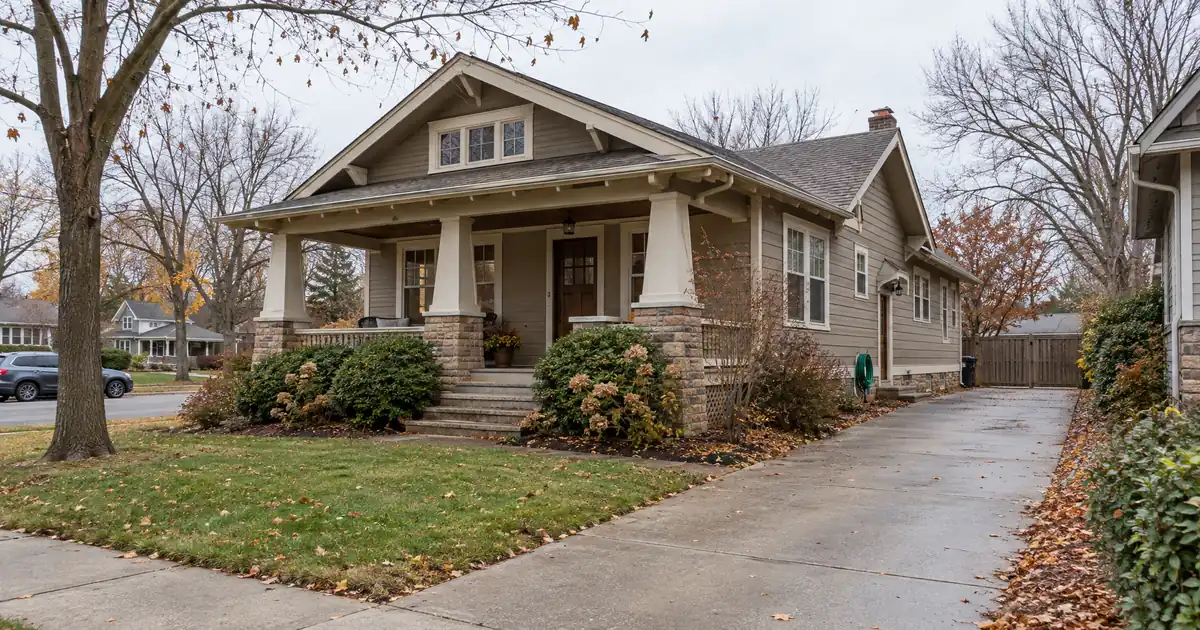
The Quick Read: A W-2 investor who has hit the conventional financed-property count can still finance a co-living house with a DSCR loan, because the loan is reviewed primarily on property-level rental income covering the payment, subject to lender guidelines. The catch is that no national rule governs room-by-room rent. Each program writes its own, so eligibility turns on how the property is classified, how the lease is structured, and which rent figure the lender counts.
- The conventional cap is a count of financed properties, not an income test, so a strong W-2 paycheck does not move it.
- DSCR compares rent to the full monthly obligation (principal, interest, taxes, insurance, and any association dues) and nothing else.
- Co-living acceptance is program-specific. One lender may decline a house that another will review.
- The rent counted is usually the lower of the lease or the appraiser’s market-rent opinion, not the sum of room rents.
- DSCR is for non-owner-occupied investment property only. Living in one of the rooms takes the file out of this lane.
Co-living gets pitched as a way to squeeze more income out of a house. For a W-2 investor near the conventional ceiling, the bigger question is whether the financing will recognize that income at all. This guide walks through the mechanics step by step, the structures that exist, and the places where the general rule breaks.
DSCR Calculator
Run the numbers in your market
Rate source: Freddie Mac 30-yr average via FRED® — Federal Reserve Bank of St. Louis · effective Oct 15, 2026
Prefilled with starting assumptions — enter your own rent or nightly figures, taxes, insurance, and HOA for a more accurate picture.
Program parameters update from Lendmire’s centralized guideline source. Taxes and insurance are editable estimates.
As of Oct 15, 2026 · General Freddie Mac market benchmark, not a Lendmire loan offer. Rent, nightly rate, occupancy, taxes, and insurance are editable estimates. Short-term rental figures are estimates only and vary significantly by season, property type, management approach, and local short-term-rental rules — confirm local regulations before relying on them. Qualifying income for short-term rentals varies by program — some use appraisal market rent, others use documented STR history or projections — and is confirmed in underwriting. Not a Loan Estimate, approval, or commitment to lend. Program availability and eligibility are subject to lender guidelines, credit approval, property review, and underwriting.
What Is the Conventional Cap, and Why Does a W-2 Investor Hit It?
The conventional cap is a rule set by an agency, not a law. Under the Fannie Mae Selling Guide, a second-home or investment-property loan run through its automated underwriting is limited to 10 financed properties. The count covers 1-4 unit residential properties where the borrower is personally obligated on the mortgage, and it includes the borrower’s financed principal residence.
Three details catch salaried investors off guard:
- The count is properties, not mortgages. A two-unit building counts as one.
- Rent offsetting the payment does not remove a property from the count. Fannie Mae’s financed-property FAQ confirms a property counts whenever the borrower is obligated on the mortgage, whoever pays it.
- Reserve requirements rise as the count grows, so the conventional path tightens well before the ceiling. Leverage, reserves, and pricing vary by lender and program; the final terms follow the full file review.
So the cap is a count, not an income test. A W-2 investor earning well above the typical range still stops at the same number as everyone else. That is the point where a DSCR loan becomes the working alternative, because it qualifies the property rather than the borrower’s pay stubs. Agency financed-property limits do not apply to DSCR files.
If you are weighing the broader comparison, Lendmire’s complete DSCR loans guide covers how the two lanes differ.
How Does Underwriting Treat a Co-Living Property, Step by Step?
Underwriting treats co-living as a classification question first and a math question second. The program decides how the property is read, the appraiser supplies a market-rent opinion, and the lender divides the rent it accepts by the monthly obligation. Here is the sequence across most programs in a wholesale network.
Step 1: The property gets classified. Common categories include:
- Rent-by-room with separate leases (often restricted or excluded)
- Co-living or PadSplit-style operations (program-specific)
- SRO or rooming-house buildings (often ineligible)
- A master lease to one operator (read as one lease)
- Roommates on one joint lease (may read as a standard rental)
- A whole-house single lease (standard treatment)
Step 2: The appraiser forms a rent opinion. Lenders typically want a full interior appraisal with a rent schedule. For a single-family house that is the market-rent form described in Freddie Mac’s form instructions, where the lender obtains market rent from the appraiser, who adjusts for comparable rents. Two- to four-unit properties use the multi-unit version of the same idea. The appraiser needs by-the-room comparables to support a room-level figure. If none exist, the opinion comes from the broader market, usually the whole-house rent.
Step 3: The lender picks the rent to count. Where a program accepts the structure, it usually counts the lower of the in-place lease or the market-rent opinion. A lender will not simply multiply a rent-per-room figure by the room count.
Step 4: The ratio gets calculated. Monthly rent divided by the monthly obligation gives the coverage number. Utilities, furnishing, turnover, management, vacancy, and capex do not appear anywhere in it.
Step 5: The file gets sized. Where room-by-room properties are accepted, the loan is generally sized on a whole-property basis. On co-living files, coverage often binds before leverage does.
Across the programs Lendmire places files with, most want around 660 credit, 620 exists in parts of the network, and 700 or better unlocks the strongest leverage. Purchases typically land at 75%-80% LTV on an investment property. Reserves commonly run about 6 months of PITIA, stepping up to roughly 9 months on larger loans, though they vary by lender, leverage, and transaction. All of it is subject to lender guidelines.
Key Terms Defined
DSCR (debt service coverage ratio): Monthly property rent divided by the monthly obligation, used to judge whether the property’s income covers its own payment.
PITIA: Principal, interest, taxes, insurance, and association dues, the full monthly obligation on the property.
Conventional financed-property count: The number of 1-4 unit properties on which a borrower is personally obligated, which agency loans cap.
Co-living: A house rented by the room, usually with shared kitchen and common areas and a separate agreement per occupant.
Market-rent opinion: The appraiser’s estimate of what the property would rent for, which often drives the income a lender counts.
Master lease: One lease between the owner and a single operator who then sublets the rooms.
Where Does the Math Land for Room-by-Room Rent?
The math lands on whichever rent number the program accepts, and that is rarely the room total. Picture a five-bedroom house that an investor rents by the room. Operationally, the stacked room rents may look far stronger than a single whole-house lease. Underwriting, though, often caps the income at the appraiser’s whole-house market rent, because the appraisal may have no by-the-room comparables to support more.
That gap matters because the coverage ratio drives pricing and leverage. A file that clears roughly 1.2x on whole-house rent sits in a different place than one that lands near the 1.00 line. Many select programs start at 1.00, and a separate select-lender path takes coverage below 1.00 with leverage and terms adjusted. Stronger ratios open better pricing and leverage.
Taking the maximum cash-out pushes the payment up and the ratio down, so a co-living refinance that looks fine at modest leverage can fall short at the ceiling. Cash-out on a standard rental tops out around 75% LTV across most of the network, with about 6 months of seasoning the common expectation. Terms vary by lender guidelines, property type, leverage, credit profile, and full file review.
One more point: a coverage number at or above 1.00 is not positive cash flow. Co-living is operationally heavier. More showings, more screening, utilities often included for tenants, furnishing, and faster turnover all sit outside the calculation. Model cash flow separately from the DSCR figure, and test whether the property still covers its debt if occupancy slips to about half the rooms. Treat that as a stress idea, not a benchmark.
How Do Lease Structures Change the File?
Lease structure changes how a lender reads the income, the risk, and the paperwork. The same house can look like four different loans depending on how it is papered.
| Structure | Typical lender reading | File implication |
|---|---|---|
| Separate room leases | Restricted or program-specific | Needs rent roll, payment history |
| Co-living operator model | Program-specific | Expect operating-history requests |
| Master lease to one operator | One lease, one payment | Lender scrutinizes the lease terms |
| Joint lease, roommates | Often a standard rental | Cleanest read |
| Whole-house single lease | Standard treatment | Underwritten on market rent |
Documents that help a co-living file include executed room leases, a rent roll with payment history, room-level rent detail, an insurance quote, tax information, reserve documentation, and a management plan. Qualification still centers on property income, but “no personal income documents” is not “no documents.” Leases, an appraisal, and reserve proof all still apply.
Occupancy adjustments vary by program. Some underwriters prorate in-place rent for move-ins and expirations, and some apply a higher vacancy factor to room-by-room properties. Ask before you order the appraisal.
Where Does the General Rule Break?
The general rule breaks in several named places. Each one can turn a workable co-living plan into a declined file.
The investor wants to live in a room. DSCR is for non-owner-occupied investment property only. An investor who plans to occupy one of the rooms should not use a DSCR loan. The cap does not bind a principal-residence purchase the way it binds investment loans, so an owner-occupied path may fit that plan better. Sequencing matters: a live-in purchase first, then a DSCR purchase for the next property, is a common order.
Master lease structures. A lease to a single operator reads as one lease and one payment. Expect close review, because it can look like a workaround for a program restriction.
Whole-house rent basis. Some investors underwrite on the whole-house market rent while operating by the room. That carries disclosure and lease-structure risk. Describe the real operating model accurately; do not use the rent basis to hide it.
Larger or SRO-style buildings. Properties with five or more units, or rooming-house layouts, move toward commercial or multifamily underwriting or are simply not eligible.
Ineligible property types. Manufactured homes (single- and double-wide), log homes, and barndominiums are not offered in the network’s DSCR programs, however well they might perform as shared housing.
Local legality. Many cities treat a certain number of unrelated occupants as the point where a house becomes a rooming or boarding house, and some jurisdictions set the cap lower. The threshold is local, so verify the ordinance for your address before relying on any room count. A missing permit can sink both the appraisal and the insurance.
Insurance. Some insurers will not write coverage for roomers or for more than a few unrelated occupants. Get a quote that matches the real use before the file goes to a lender.
Entity and recourse. DSCR loans to an LLC are generally full recourse to its members, subject to program terms, and personal credit remains a pricing factor.
DSCR vs. conventional financing
There are two common ways to finance an investment property, and they qualify you differently — here’s how investors weigh them.
Why investors choose it
- Qualifies on the property’s rental income — no personal tax returns, W-2s, or pay stubs needed to document income.
- No personal debt-to-income ceiling to clear, so existing mortgages and obligations don’t cap your borrowing the same way.
- Can be closed in an LLC, keeping the property inside a business entity.
- Built for scaling — not held to the limit on number of financed properties that conventional financing applies.
- Underwriting centers on the deal: generally qualifies when the rent covers the payment, a 1.00x coverage ratio being a common baseline (confirmed in underwriting).
- Designed specifically for investment property, including long-term and, where the program allows, short-term rentals.
Where it’s strong
- Often the lowest ongoing financing cost for a buyer who fully qualifies on personal income — a fit for a first property or a cost-first purchase.
Trade-offs for investors
- Requires full personal income documentation and must fit within a debt-to-income limit — salary, existing debts, and other mortgages all count.
- Typically held in your personal name rather than a business entity.
- Caps how many financed properties you can carry, which can become a ceiling as a portfolio grows.
- Evaluates you as a borrower as much as the property, which usually means more paperwork.
How investors usually choose: a first or single property often optimizes for the lowest financing cost; portfolio builders often optimize for leverage, vesting in an LLC, and scaling past conventional caps. The right answer depends on your goals, the property, and current guidelines — both paths run through select lenders in Lendmire’s wholesale network, with eligibility and terms confirmed in underwriting.
What Does the Decision Look Like for a W-2 Investor?
For a W-2 investor, the decision is mostly about property type and portfolio position, not paycheck size. Here is how it tends to sort.
| Investor situation | Likely lane |
|---|---|
| Under the count, whole-house single lease | Conventional may cost less |
| At or near the count | DSCR becomes the practical path |
| Co-living or rent-by-room property | Program-specific DSCR review |
| Wants to live in a room | Owner-occupied financing, not DSCR |
| Holds title in an LLC | DSCR, subject to program terms |
If you are under the count with a plain single-lease rental, conventional financing can carry a lower cost, and the traditional employment income does real work there. The flip happens when the count runs out or when the property type is one conventional underwriting will not read favorably. That is when the property-level lane earns its place.
A related guide on how a DSCR loan buys a package for a W-2 investor at the cap explains how a W-2 investor who has reached the conventional financing cap can use DSCR to keep buying.
A word on what the W-2 job still does: it does not qualify the loan, but it supports the credit profile and the liquid reserves that DSCR files lean on. Strong credit moves pricing and leverage tiers, and reserve proof is a standard requirement.
What Should You Ask Before Ordering the Appraisal?
Ask the lender these questions first. They save an appraisal fee and a surprise.
1. Does this program accept rent-by-room or co-living at all, and under which lease structures?
2. Which rent will you count: the lease, the appraiser’s market rent, or the lower of the two?
3. Is an operating history required, and for how long?
4. Do you apply a higher vacancy factor to room-by-room properties?
5. What leverage and reserve levels apply to this property type?
6. Does the program need proof the use is legal under local zoning?
7. What coverage level do I need to reach, and what happens to leverage if I land lower?
Working with a broker helps here because the answers differ across lenders. Lendmire arranges DSCR investor loans across 41 markets, including Washington, D.C., and can compare how select lenders in its network read a given structure. Short-term rental rules can vary by city, county, HOA, and property type, so confirm local rules before relying on projected rental income, and the same caution applies to room rentals.
Common Misconceptions
- “DSCR has no limits at all.” Individual lenders set their own exposure and eligibility limits.
- “The 10-property rule is a universal mortgage law.” It is an agency execution rule, not a statute.
- “Room rents add up to my DSCR income.” The counted rent is usually the lower of lease or market opinion.
- “W-2 income gets me past the cap.” The cap is a count, not an income test.
- “1.00 means I’m making money.” It means rent covers the payment, with operating costs left out.
- “DSCR can finance the house I’ll live in.” It cannot.
Tax treatment varies; consult a qualified professional.
Frequently Asked Questions
Can a W-2 investor use a DSCR loan for a co-living house?
Yes, if the program accepts the structure. The loan is reviewed primarily on property-level rental income covering the payment, subject to lender guidelines, so the W-2 paycheck is not the test. What decides it is the property classification, the lease structure, the appraiser’s rent opinion, reserves, and credit.
Does the conventional cap count rentals that pay for themselves?
Yes. A property counts toward the financed-property total whenever you are personally obligated on the mortgage, even if rent covers the payment. The count is by property, and a two-unit building counts as one.
Will the lender add up every room’s rent?
Usually not. The counted rent is typically the lower of the lease or the appraiser’s market-rent opinion, and without by-the-room comparables the appraiser may land near the whole-house figure. That is why the program choice matters as much as the rooms.
Can I live in one room and still use DSCR?
No. DSCR is for non-owner-occupied investment property. If you plan to occupy a room, an owner-occupied loan fits better, and a DSCR purchase can follow for the next property.
Does a DSCR above 1.00 mean the co-living house cash flows?
Not necessarily. The ratio compares rent to the monthly obligation only. Utilities, furnishing, turnover, management, vacancy, and capex sit outside it, so run a separate cash-flow model.
If you are buying or refinancing a rental property and want to see how the numbers work, Lendmire can help you compare DSCR loan options based on the property income, credit profile, leverage, and investor goals. Reach the team at 828-256-2183 or request a quote.
The investors who handle co-living best treat the DSCR number as a gate to clear and the operating model as the real business, because a house can pass one test and fail the other.
About Lendmire
Lendmire is a DSCR-focused mortgage brokerage, NMLS# 2371349, placing investor loans across 41 markets, including Washington, D.C. DSCR eligibility is generally reviewed by the lender around a property’s rental income rather than personal income documentation, which fits LLC-held rentals, self-employed investors, and portfolios scaling past conventional financed-property limits. Scotsman Guide named Lendmire a Top Mortgage Workplace in both 2025 and 2026.
Get Started
Ready to find the right loan for you?
In about 30 seconds you can review financing options available for your investment property. No commitment required.
Informational only. Not a Loan Estimate, approval, or commitment to lend. Program availability and eligibility are subject to lender guidelines, credit approval, property review, and underwriting.
References
1. Fannie Mae Selling Guide B2-2-03: Multiple Financed Properties for the Same Borrower
2. Fannie Mae: Top Trending Selling FAQs
This article is part of Lendmire’s DSCR loan program — full qualification details, guidelines, and scenarios live on the program page.
Related reading: DSCR Loan Rent Rules for Lease vs Appraiser Market Rent · DSCR HOA Dues and Special Assessment Rules for Condos and PUDs · How to Request a Reconsideration of Value on a DSCR Appraisal
Brandon Miller
Founder & CEO, Mortgage Loan Originator, Lendmire LLC
- Mortgage Loan Originator · NMLS# 1129696 · Verify on NMLS Consumer Access
- North Carolina Real Estate Broker · License# 343312 · Verify on NCREC
- North Carolina Insurance Producer · License# 19053198 · Property, Casualty, Life, Health · Verify on NAIC SBS
- Lendmire LLC · Firm NMLS# 2371349 · Verify firm licensure
Required disclosures. Lendmire (NMLS# 2371349) operates as a licensed mortgage broker, not a direct lender or depository. The discussion in this article is general in nature and should not be relied upon as financial, legal, or tax advice — every investment scenario is unique and should be reviewed by a qualified professional. Any loan inquiry is subject to lender underwriting, and this article is not a commitment to lend or a guarantee of approval. Mortgage rates, loan terms, and program guidelines vary by borrower, property, and state, and may change without notice. Equal Housing Opportunity. Verify licensure at NMLS Consumer Access.