
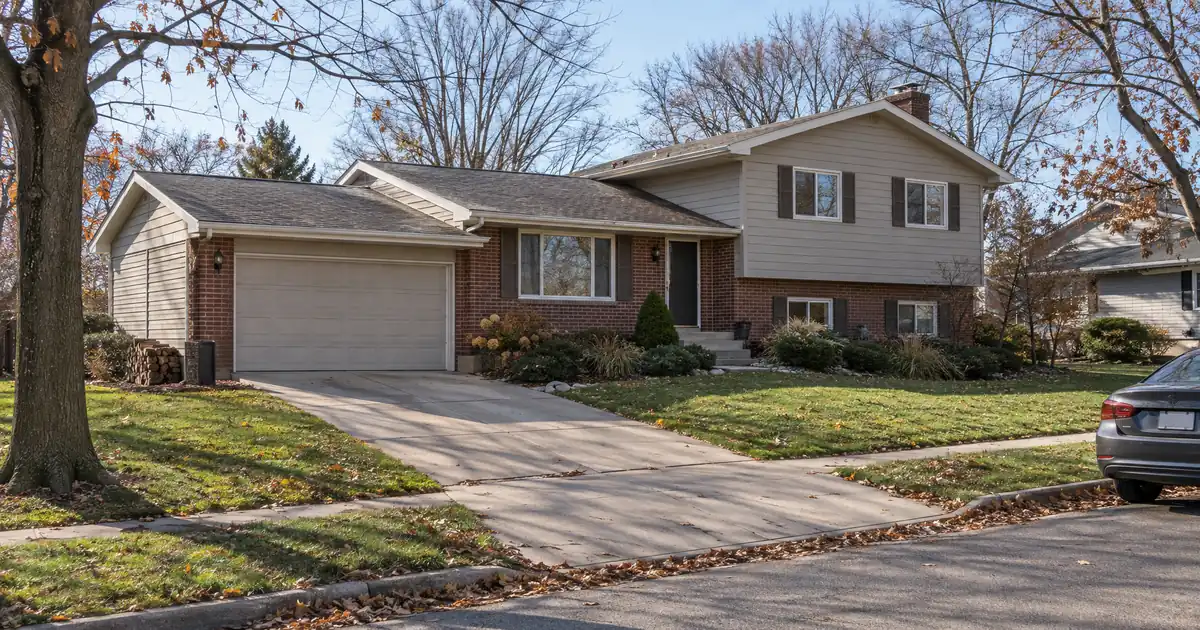
The Quick Read: Owning the rental in another state does not create a separate set of insurance rules. The lender treats the property as sitting in the state where it sits, and the policy is written for that address, not your home address. Being remote changes the logistics: who can write the policy, whether flood is needed, and how you prove coverage.
- The annual premium goes into the monthly payment (PITIA), so a higher quote lowers the coverage ratio even when rent stays flat.
- A landlord-form policy is the norm. A homeowners policy from your primary residence does not fit a rental.
- Flood is a separate policy, and on DSCR files the requirement usually comes from the loan terms.
- The named insured should match the borrower or the LLC on the loan, with the lender listed as mortgagee.
- Get the quote before you make the offer, not after the file is in review.
DSCR loans are business-purpose loans for non-owner-occupied rentals. Because they are reviewed differently from a standard owner-occupied mortgage, the insurance file gets its own scrutiny. The rest of this piece walks through how that review works. For the broader program picture, see Lendmire’s complete DSCR loans guide.
DSCR Calculator
Run the numbers in your market
Rate source: Freddie Mac 30-yr average via FRED® — Federal Reserve Bank of St. Louis · effective Oct 15, 2026
Prefilled with starting assumptions — enter your own rent or nightly figures, taxes, insurance, and HOA for a more accurate picture.
Program parameters update from Lendmire’s centralized guideline source. Taxes and insurance are editable estimates.
As of Oct 15, 2026 · General Freddie Mac market benchmark, not a Lendmire loan offer. Rent, nightly rate, occupancy, taxes, and insurance are editable estimates. Short-term rental figures are estimates only and vary significantly by season, property type, management approach, and local short-term-rental rules — confirm local regulations before relying on them. Qualifying income for short-term rentals varies by program — some use appraisal market rent, others use documented STR history or projections — and is confirmed in underwriting. Not a Loan Estimate, approval, or commitment to lend. Program availability and eligibility are subject to lender guidelines, credit approval, property review, and underwriting.
Key Terms Defined
PITIA: The full monthly payment: principal, interest, taxes, insurance, and any association dues.
Landlord policy: A property policy written for a rented dwelling, usually covering the building, liability, and lost rent.
Named insured: The person or entity listed on the policy as the owner of the coverage.
Mortgagee clause: The wording that lists the lender on the policy so it is paid and notified if there is a claim or cancellation.
Loss of rents: Coverage that replaces rental income when a covered loss makes the unit unrentable.
Special Flood Hazard Area (SFHA): A mapped zone with a 1% annual chance of flooding, per NAR’s flood zone guidance.
Binder: Short-term proof that a policy has been bound, issued before the full declarations page.
How Does Insurance Enter the DSCR Math?
Insurance sits in the denominator. DSCR divides rent used for lender review by PITIA, and the lender takes the annual hazard premium, divides it by 12, and adds it to the payment. If flood coverage is required, that premium goes in too.
That makes insurance the quiet variable on a remote file. Rent is set by the lease or the appraiser’s rent schedule. The premium is set by a carrier you may have never dealt with, on a risk you cannot see from your driveway. Run the numbers this way: a file that clears at roughly 1.25x on a quote from last year can slide toward 1.15x when the new quote lands, with no change in rent. Nothing about the property changed. The payment did.
Most programs across the wholesale network are built around a 1.00 coverage floor, and stronger ratios open better pricing and leverage. Coverage below 1.00 is available through select lenders in the network, with leverage and terms adjusted. A passing ratio is also not the same as positive cash flow. Repairs, vacancy, management, and utilities sit outside the calculation.
What Insurance Do DSCR Lenders Usually Require?
Most files need a property policy on the building, in force by closing, with the lender named correctly. Requirements vary by program, so the items below are what the network’s programs commonly look at, not a universal list.
| Item | What lenders usually look for | What changes out of state |
|---|---|---|
| Policy form | Landlord or dwelling-fire form | Carrier availability by address |
| Valuation | Replacement cost on the dwelling | Local rebuild costs drive the limit |
| Named insured | Matches borrower or LLC | Entity must line up with deed |
| Mortgagee clause | Exact lender wording | Agent in another state must get it right |
| Loss of rents | Often requested on rentals | Matters more when you can’t check the unit |
| Flood | Separate policy where required | Zone depends on the property’s map |
| Proof | Declarations page and paid proof | Delivered remotely, so start early |
Homeowners forms are the usual mistake. BiggerPockets notes that a homeowners policy covers the owner’s primary residence and does not cover damage once the property is rented. Insuring a rental as owner-occupied is also a misrepresentation problem on a claim. Skip it.
The items that trip files are acceptable policy forms, mortgagee wording, deductible caps, separate wind or hail limits, flood rules, and proof of paid premium.
What Actually Changes When the Property Is in Another State?
Three things change: who can write the policy, which perils drive the price, and how you verify what you bought. The requirement itself does not change.
Carrier and agent availability. Your home-state agent may not be licensed where the property sits. Use an agent who writes landlord policies in the property’s state. In tight markets, admitted carriers may decline the risk and coverage can move to surplus lines. The NAIC explains that these placements are regulated and require a licensed surplus lines broker. The North Carolina Department of Insurance adds that the broker must tell the insured the insurer is unlicensed in the state and that no state guaranty fund will pay if it fails. Whether a given DSCR program accepts non-admitted carriers is a program-level question. Ask before you bind, not after.
Regional perils. Wind, hail, wildfire, and flood show up in the premium and in separate deductibles. A property in a hail corridor can carry a separate wind or hail deductible that the lender caps. Check this before the offer.
Entity matching. If an LLC holds title, the policy should be in the LLC’s name, with the lender as mortgagee. A borrower name on the policy and an LLC on the deed is one of the most common preventable gaps. LLC-titled loans are subject to lender program eligibility, so confirm the entity setup first.
Remote verification. You cannot walk the roof. Roof age, inspection findings, and condition reports carry more weight on insurability, so read them closely before the contract deadline.
How Does Flood Work on a DSCR File?
Flood is its own policy, and on most DSCR files the requirement comes from the loan terms. A standard property policy excludes flood.
The federal rule is narrower than many investors assume. NAR explains that flood insurance is federally required for a federally related mortgage in an SFHA, while Zones X, B, and C are moderate or low risk and coverage there is recommended, not required. FEMA’s FloodSmart says the requirement applies to an SFHA property with a government-backed mortgage, and that some lenders require flood coverage even outside high-risk areas.
DSCR loans are non-agency products. So the flood requirement on a DSCR rental is generally written into the loan terms rather than driven by statute. The lender orders its own flood zone determination, and a listing site does not decide it. Ask which data source the lender uses.
Two practical points. Mapped zones do not capture all risk, so a Zone X property can still draw a flood request. And the federal flood program caps coverage well below the value of high-value homes, so a pricier property may need private flood coverage to meet the lender’s requirement. Private coverage sometimes adds loss-of-rent protection, which the federal program does not.
Where the General Rule Breaks
Short-term rentals. Standard landlord and homeowners forms rarely cover nightly-guest use. An STR file needs a policy built for it, with guest liability and lost-income coverage. Across the network, STR purchases run up to 75% LTV with a 640+ score and about 12 months of hosting history expected, and many STR markets are second-home areas with wind and flood exposure. Short-term rental rules can vary by city, county, HOA, and property type, so investors should confirm local rules before relying on projected rental income. Terms vary by lender guidelines, property type, leverage, credit profile, and full file review.
Nonrenewals and premium jumps. Reporting on NAIC data in The Close shows company-initiated nonrenewal rates rising between 96% and 216% depending on region, and inflation-adjusted average premiums per policy rising between 18.3% and 43.3%, over the 2018-2024 period. Those are homeowners-market figures, not landlord-policy pricing. They show direction. A remote owner can miss a nonrenewal notice, and a lapse can trigger force-placed coverage that is costlier and thinner.
Cheaper but non-compliant renewals. The renewal quote that is lowest is not always the one that keeps the file clean. Watch for a switch to actual cash value, a higher deductible, dropped loss of rents, a homeowners form swapped in, or a named insured that no longer matches the borrower.
Umbrella and renters coverage. An umbrella policy adds liability limits but does not replace landlord coverage. A tenant’s renters policy is helpful to you but does not satisfy the lender.
Ineligible property types. Manufactured homes, log homes, and barndominiums are not offered in the network’s DSCR programs, so insurance on those does not matter for these loans.
What Does the Remote Owner’s Sequence Look Like?
Quote first, then bind. The order matters more when the property is hundreds of miles away.
1. Get the lender’s insurance requirements in writing. Ask about policy form, mortgagee wording, deductible caps, flood, and proof of premium.
2. Quote a landlord-form policy for the property address before you offer. Compare replacement cost against actual cash value on the dwelling.
3. Check the flood zone and ask which determination source the lender uses.
4. Set the named insured to match the borrower or LLC exactly, with the lender as mortgagee.
5. Rerun the coverage ratio with the real premium, including any flood line.
6. Bind and deliver the declarations page to the lender with proof of paid premium.
7. Calendar the first renewal. Compare the renewal terms against the loan terms before you accept a cheaper option.
Premium can jump between underwriting and closing. Rerun the number when the final quote lands. The same logic applies to a cash-out or refinance file: the insurance line is the same, and the network’s cash-out ceiling is 75% LTV on standard rentals, with about 6 months of seasoning commonly expected.
DSCR vs. conventional financing
There are two common ways to finance an investment property, and they qualify you differently — here’s how investors weigh them.
Why investors choose it
- Qualifies on the property’s rental income — no personal tax returns, W-2s, or pay stubs needed to document income.
- No personal debt-to-income ceiling to clear, so existing mortgages and obligations don’t cap your borrowing the same way.
- Can be closed in an LLC, keeping the property inside a business entity.
- Built for scaling — not held to the limit on number of financed properties that conventional financing applies.
- Underwriting centers on the deal: generally qualifies when the rent covers the payment, a 1.00x coverage ratio being a common baseline (confirmed in underwriting).
- Designed specifically for investment property, including long-term and, where the program allows, short-term rentals.
Where it’s strong
- Often the lowest ongoing financing cost for a buyer who fully qualifies on personal income — a fit for a first property or a cost-first purchase.
Trade-offs for investors
- Requires full personal income documentation and must fit within a debt-to-income limit — salary, existing debts, and other mortgages all count.
- Typically held in your personal name rather than a business entity.
- Caps how many financed properties you can carry, which can become a ceiling as a portfolio grows.
- Evaluates you as a borrower as much as the property, which usually means more paperwork.
How investors usually choose: a first or single property often optimizes for the lowest financing cost; portfolio builders often optimize for leverage, vesting in an LLC, and scaling past conventional caps. The right answer depends on your goals, the property, and current guidelines — both paths run through select lenders in Lendmire’s wholesale network, with eligibility and terms confirmed in underwriting.
What Do Leverage and Reserves Have to Do With It?
A higher premium squeezes coverage, and coverage feeds the leverage and pricing a file can reach. On purchases, most files land at 75%-80% LTV, and select high-leverage programs reach 85% with roughly a 700+ score. Credit tiers commonly run from 620 up through 660, 680, and 700, with the strongest leverage at the top. Reserves are commonly around 6 months of PITIA, stepping up to about 9 months above $1,500,000, subject to lender guidelines. A larger down payment lowers the payment and can lift the ratio, but it does not erase leverage caps, credit floors, or reserve rules.
If the property sits in a high-premium area, a file near the floor may need less leverage to stay clean. For related out-of-state mechanics, Lendmire’s piece DSCR Cash-Out Rules for a Solar Lien on an Out-of-State Rental covers another lien item that surfaces on remote files.
Common Mistakes on Out-of-State Files
- Quoting on a stale estimate, then finding the new quote lowers coverage.
- Using a homeowners form from your primary residence.
- Leaving flood off because the listing says low risk.
- A policy name that doesn’t match the LLC on the deed.
- A missing or misworded mortgagee clause from an agent who has not done a DSCR file.
- Accepting a cheaper renewal that quietly drops loss of rents.
Tax treatment varies; consult a qualified professional.
If you are buying or refinancing a rental property and want to see how the numbers work, Lendmire can help you compare DSCR loan options based on the property income, credit profile, leverage, and investor goals. Lendmire is a broker arranging DSCR financing through select lenders across 41 markets, including Washington, D.C.; every file is underwritten individually and this is not a commitment to lend.
Frequently Asked Questions
Does my own homeowners policy cover a rental in another state?
No. A homeowners form is written for your primary residence and generally does not respond to damage once the property is rented. A rental needs a landlord-form policy written for that address, with the lender named as mortgagee.
Is flood insurance required on every DSCR rental?
No, but it is common. The federal flood mandate applies to loans tied to federally regulated lenders or federal programs when the property sits in a mapped high-risk zone. A DSCR loan is reviewed primarily on property-level rental income covering the payment, subject to lender guidelines, and on these files the flood requirement usually comes from the loan terms. A lender can ask for flood coverage even in a lower-risk zone.
Does the insurance premium count in the DSCR calculation?
Yes. The annual premium is divided by 12 and added to the monthly payment, along with taxes and any dues. A higher premium lowers the ratio even if rent stays the same.
Can I use a carrier that is not licensed in the property’s state?
Sometimes coverage comes through surplus lines when standard carriers decline. Whether a given program accepts a non-admitted carrier is a program question, so ask before you bind.
What if my LLC owns the property?
Put the LLC on the policy as named insured, with the lender as mortgagee, so it matches the loan and the deed. This is subject to lender program eligibility.
What happens if the policy lapses or is not renewed?
The lender can buy force-placed coverage on the property and add the cost to the loan, and that coverage is usually costlier and thinner than a policy you chose. A lapse can also put the file in default under the loan terms. A remote owner can miss a nonrenewal notice, so confirm the lender has your mailing address and calendar the renewal. Compare the renewal terms against your loan requirements before accepting a cheaper quote.
About Lendmire
Lendmire (NMLS# 2371349) is a mortgage brokerage built around DSCR investor lending, with programs available in 41 markets, including Washington, D.C. DSCR lenders commonly evaluate rental-income coverage instead of personal income paperwork — a practical fit for LLC-owned and multi-property investors. Terms vary by lender, property, leverage, and program. Scotsman Guide named Lendmire a Top Mortgage Workplace in both 2025 and 2026.
Get Started
Ready to find the right loan for you?
In about 30 seconds you can review financing options available for your investment property. No commitment required.
Informational only. Not a Loan Estimate, approval, or commitment to lend. Program availability and eligibility are subject to lender guidelines, credit approval, property review, and underwriting.
References
2. BiggerPockets – Rental Property Insurance
4. North Carolina Department of Insurance – Surplus Lines
5. FEMA FloodSmart – Eligibility
6. The Close – Homeowners Insurance Market
This article is part of Lendmire’s DSCR loan program — full qualification details, guidelines, and scenarios live on the program page.
Related reading: Can a DSCR Portfolio Close With One Eviction for an Out-of-State Owner? · Can a Multi-State Rental Pool Be Split Into 30-Year DSCR Loans? · Can a High-Equity Rental Pool Fund Down Payments With DSCR Cash-Out?
Brandon Miller
Founder & CEO, Mortgage Loan Originator, Lendmire LLC
- Mortgage Loan Originator · NMLS# 1129696 · Verify on NMLS Consumer Access
- North Carolina Real Estate Broker · License# 343312 · Verify on NCREC
- North Carolina Insurance Producer · License# 19053198 · Property, Casualty, Life, Health · Verify on NAIC SBS
- Lendmire LLC · Firm NMLS# 2371349 · Verify firm licensure
Required disclosures. Lendmire (NMLS# 2371349) operates as a licensed mortgage broker, not a direct lender or depository. The discussion in this article is general in nature and should not be relied upon as financial, legal, or tax advice — every investment scenario is unique and should be reviewed by a qualified professional. Any loan inquiry is subject to lender underwriting, and this article is not a commitment to lend or a guarantee of approval. Mortgage rates, loan terms, and program guidelines vary by borrower, property, and state, and may change without notice. Equal Housing Opportunity. Verify licensure at NMLS Consumer Access.