
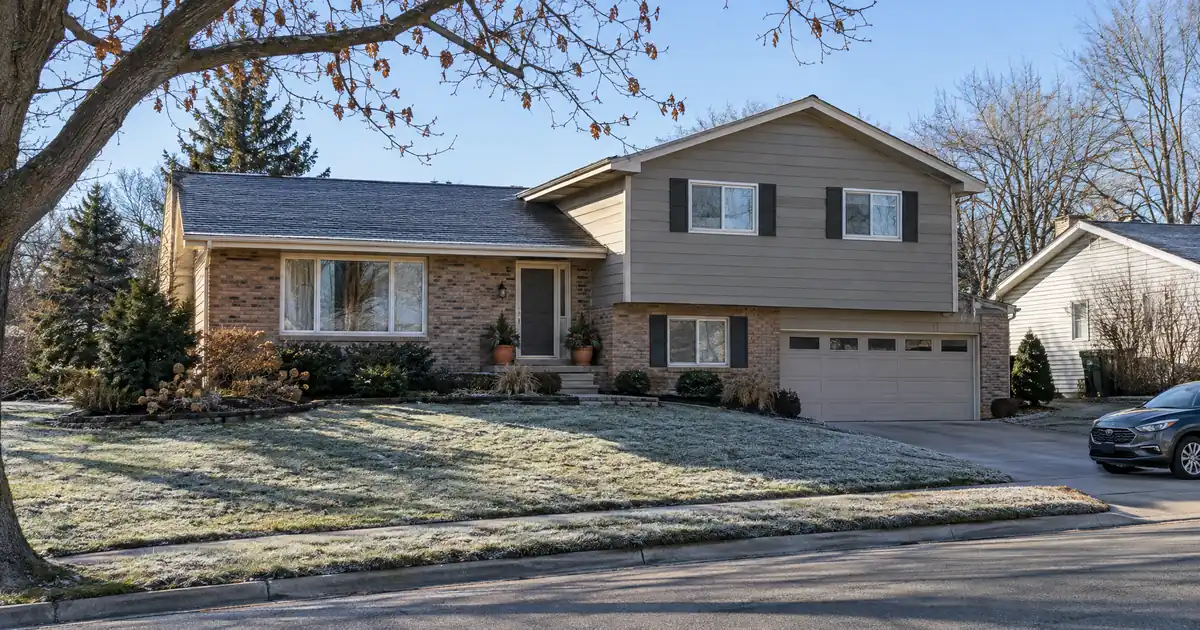
The Quick Read: Most programs do not count a vacant, rent-ready rental as zero income. They credit it at the appraiser’s market rent, and in a portfolio loan that rent is tested inside one blended ratio across every property. A weak property drags the pool down by its share of the total payment, so a small thin house costs little and a large empty one costs a lot.
- Residential DSCR compares gross rent to the full monthly payment. It does not subtract a vacancy allowance.
- A vacant property is generally rated on market rent. A leased property is generally rated at the lower of the lease and market rent.
- On the 30-year portfolio DSCR loan, the pool is tested against a 1.00 floor, so stronger rentals can offset weaker ones.
- Property-level review still happens. A weak asset can lower leverage or be pulled from the pool even when the blended number looks fine.
- Clearing the floor is not the same as positive cash flow. Vacancy, repairs, and management sit outside the ratio.
What Do DSCR Vacancy Rules Actually Say?
They say less than most investors expect. There is no single rulebook. Each lender sets its own vacancy treatment, and DSCR loans are business-purpose investor loans, so they follow program guidelines rather than a consumer-mortgage template.
The debt service coverage ratio (DSCR) is a simple test. It divides a property’s rent by its monthly payment. The payment is PITIA, which stands for principal, interest, taxes, insurance, and association dues. A result of 1.00 means rent equals the payment.
Residential DSCR programs use gross rent over PITIA. They do not subtract a vacancy factor from the top of the fraction. That is where search results get confusing. Commercial-style explainers use net operating income, which already has vacancy and expenses taken out, and they hold higher benchmarks. Those are different formulas for different products. If you read a guide that tells you to add a vacancy deduction, check which formula it means.
| Factor | Residential DSCR program | Commercial-style DSCR |
|---|---|---|
| Income used | Gross rent or market rent | Net operating income |
| Vacancy deduction | Not in the ratio | Built into income |
| Debt side | Full PITIA | Debt service |
| Typical use | 1-4 unit rentals | Larger income property |
Vacancy risk does not vanish. It moves. It shows up in leverage limits, reserves, property review, and your own cash flow. The rest of this piece follows it through each of those places. The complete DSCR loans guide covers the basics if you want the single-property foundation first.
How Is One Vacant Property Rated?
A vacant property is rated on the appraiser’s estimate of market rent, not on zero and not on your own number. This is the same logic as buying a vacant rental. No tenant exists, so the appraisal supplies the income figure.
Across the wholesale network Lendmire works with, the pattern is consistent:
1. Each property gets an appraisal with a rent opinion. Single-family homes and condos get a rent schedule. Buildings with two to four units get an appraisal that reports rent per unit. Fannie Mae’s forms index lists both: Form 1007, the Single-Family Comparable Rent Schedule, and Form 1025, the Small Residential Income Property Appraisal Report. DSCR files borrow these two forms for rent evidence and nothing else from that agency.
2. A vacant property uses market rent. The appraiser’s figure governs. Your own estimate does not.
3. A leased property is generally rated at the lower of the lease and market rent. An above-market lease does not lift the ratio.
4. An occupied multi-unit building usually needs a rent roll. That is a unit-by-unit list of who pays what.
The appraiser also comments on area vacancy. The text of Form 1007 asks for the range of rents, an estimated vacancy rate, and rent and vacancy trends. That is context for the file. It is not a deduction from the rent the lender credits.
Purchase and refinance are not treated the same. Vacant, rent-ready purchases are commonly allowed. Refinances of vacant properties are tighter, and the line varies by lender. Condition matters more than the empty status. A clean, rent-ready house with working utilities is a different file from a gutted one.
How Does the Pool Change the Math?
A pooled loan tests total rent against total payment across all the properties. That one idea explains nearly everything else. The term is defined once here: a portfolio loan, blanket loan, and cross-collateralized loan are the same thing. One note is secured by several rentals.
On the 30-year portfolio DSCR loan, you can put two to twenty properties under one note. Loan sizes run from $300,000 to $5,000,000, with larger balances on review. Leverage goes up to 80% of value on an investment-property purchase or rate-and-term refinance. The pooled coverage floor is 1.00, subject to lender guidelines. Eligible types are single-family, two-to-four-unit, condo, and townhome. The loan carries a 30-year term, with fixed and adjustable options and an interest-only period available.
Here is a modeled example. These are assumptions, not market data. Picture four rentals with equal payments. Three each cover their payment at 1.20x. The fourth is vacant and rated at a market rent that covers its payment at only 0.70x.
- Add the four coverage numbers: 1.20 + 1.20 + 1.20 + 0.70 = 4.30.
- Divide by four equal payments: 1.075.
The pool clears 1.00, even though one house sits below it. Underwriting tests the pooled coverage, the leverage, and the terms.
Now treat the vacant house as zero rent. The total becomes 3.60 over four, which is 0.90. That is the gap between a market-rent credit and a zero credit. It is the point investors miss most often.
Payment share matters as much as the weak ratio. Say the vacant property carries only a tenth of the pool’s total payment. It barely moves the number. Say it carries a third. The same shortfall now hurts three times as much.
Lendmire’s piece How One or Two Weak Rentals Pull Down DSCR Portfolio Coverage walks through the share effect in more depth.
Weak Property Types: What the Lender Leans On
Not every weak property is weak in the same way. The table sorts the common cases. Treatment varies by lender, so read it as the general pattern.
| Situation | What the lender relies on | Effect on the pool | Usual fix |
|---|---|---|---|
| Vacant, rent-ready | Appraiser’s market rent | Rated at market, not zero | Often fine as is |
| Vacant, under renovation | Not rent-ready | Usually excluded | Finish work, add later |
| Just turned over | New lease or market rent | Lower of lease and market | Provide the new lease |
| Month-to-month | Lease, but short runway | Often treated cautiously | Sign a fixed term |
| Expired lease | Market rent, maybe holdover | Varies by lender | Renew before submission |
| Active eviction | Little proof of income | Hardest to rate | Resolve first, or exclude |
An active eviction deserves its own note. A lease that is not being paid does not prove income. A vacant, rent-ready unit is easier to rate than an occupied one with an unpaid tenant. That sounds backward until you see it from the underwriter’s chair: the empty unit has an appraisal-backed rent, and the unpaid lease has a dispute.
Multi-unit buildings with partial vacancy add a wrinkle. Many programs want most units leased, and they will ask for the rent roll. Buildings with five or more units are eligible only inside the rental portfolio term loan, not on the 30-year structure.
Where the Blended Number Misleads You
A passing pool can hide a weak file. Property-level review runs alongside the pooled test, not instead of it. A lender can look at each property’s condition and rent-readiness. A weak or vacant asset can lower the leverage tier for the whole note even when the blended ratio looks healthy.
Some lenders also discount vacant units or trim leverage instead of crediting full market rent. That treatment is lender-specific, and it is one of the main reasons to ask before you bundle. Across a network of lenders, you see a range. Some credit market rent in full. Others haircut it. Some limit how many vacant doors a pool can hold.
Two weak properties are a different problem from one. Each is manageable alone. Together they can push a thin pool under the floor. A pool that clears 1.00 by a hair has no room for the next vacancy.
The reverse risk is a pool carried by one strong building. If that building is sold later, its rent leaves the pool, and the remaining properties are re-tested. Lendmire’s article Can One or Two Weak Rentals Stay in a Portfolio DSCR Loan? covers that keep-or-remove question directly.
Experience from the broker’s desk: files with a vacant or recently turned-over door often fail on paperwork rather than on math. The appraisal rent opinion is missing, utilities are off, or the lease is unsigned. A file that arrives with every property rent-ready and every lease or rent opinion in hand gets reviewed more cleanly than one that needs follow-up on each weak door.
Pass Is Not Profit
Clearing the floor does not mean the portfolio makes money. DSCR compares rent to PITIA only. Repairs, vacancy, management, utilities, and capital spending all sit outside the calculation. A pool at 1.05x can lose money in a bad month. The lender’s math is frozen at closing, and your cash flow is not.
Run your own stress test before you submit. It takes ten minutes:
1. Remove the rent from your two weakest properties. Look at the pooled ratio.
2. Cut every lease by a modest amount. Look again.
3. Add one large repair to the weakest property. Decide how you would pay for it.
4. Compare your reserves to the largest single rent in the pool. That is the check that matters most. If one tenant leaving would drain you, your cushion is too thin.
Reserve requirements differ by structure. The rental portfolio term loan holds reserves for taxes, insurance, and capital expenditures. Your own reserves, held apart from the lender’s, are the real vacancy backstop. Final terms depend on the lender’s guidelines, the property type, and the borrower’s complete credit picture.
Short-term rentals add another wrinkle. A rent schedule rarely drives the income figure for a hosted property, because the income is documented differently. Short-term rental rules can vary by city, county, HOA, and property type, so investors should confirm local rules before relying on projected rental income.
Keep, Cure, Carve Out, or Wait?
Every weak property has four possible paths. Choose by asking what each does to the pool.
- Keep it in. Works when the pool clears the floor with room to spare and the property is rent-ready. Leave a cushion for the next vacancy.
- Cure first. Finish the repairs, sign the lease, or renew the expired term. Then submit. This often beats the other options when the fix is small.
- Carve it out. Pull the property and finance it separately. Leverage and terms on a standalone loan adjust to the one house, which may suit a property that has trouble standing near the others.
- Wait. Hold the file until an eviction resolves or a renovation ends. A delayed file with clean properties usually reads better than a rushed file with a messy one.
Lowering the loan amount is a fifth lever. A smaller note means a smaller payment, which lifts the pooled ratio. It never erases leverage caps, credit floors, or property eligibility. The strongest files have enough equity and enough rental coverage.
Cash-out follows tighter limits. On a portfolio cash-out, proceeds never exceed 75% of the pooled value, and the structure’s own ceiling still applies.
What Are the Structure Risks?
Cross-collateralization is the cost of pooling. One note secured by several properties means a default on one can reach all of them. A personal guaranty usually survives the release of a single lien.
Release terms decide your exit. A release clause is a negotiated contract term, not a legal right. It exists only if the loan documents include it. When it does, the release price runs above the property’s allocated balance, and the remaining pool may be re-tested. A vacant or delinquent property can block a later release. Selling one property out of the pool can also carry tax consequences; tax treatment varies, so consult a qualified professional.
Entity structure does not fix this. Putting each property in its own LLC does not split a single note’s collateral. Whether titled entities are accepted depends on the lender’s program terms. A special-purpose entity, typically an LLC, is required on some structures.
The rental portfolio term loan works differently. It covers five or more rentals or units, with loan sizes from $500,000 to $50,000,000 and leverage up to 75% of value. Terms are fixed at 3, 5, 7, or 10 years with a balloon at maturity. Both recourse and non-recourse versions exist. A non-recourse loan looks to the real estate, with carve-outs for fraud and bankruptcy. Prepayment follows yield maintenance. Properties in several markets can sit under one note. Each figure is subject to lender guidelines and a complete review of property type, leverage, and credit.
Credit floors on the portfolio programs start at 640, with 680 or 720 on some structures. Every property needs a lease or an appraiser-supported market rent. Owner-occupied property, co-ops, mixed-use, and commercial property are ineligible. Manufactured and mobile homes are not reviewable on any of these programs.
The word portfolio has a second meaning. A bank’s portfolio loan is a loan the bank keeps on its own books. That is a different sense of the word and not what this piece covers.
Pre-Submission Checklist
Before you send a bundle to a lender, work through this list:
1. Confirm every property has a lease or an appraiser-supported market rent.
2. Confirm vacant properties are rent-ready, with utilities and insurance in place.
3. Find the payment share of your weakest property and size its drag.
4. Run the two-vacancy stress test.
5. Read the release and re-test language before you sign.
6. Ask the lender how it rates vacant units and whether it limits vacant doors.
Common mistakes follow the same pattern: assuming your own rent estimate counts, treating vacancy as a default (it is not, because default means a payment or covenant failure), and assuming a strong pool hides a weak asset.
Key Terms Defined
Pooled ratio: total credited rent across all properties divided by total PITIA across all properties.
Market rent: the appraiser’s estimate of what a property would rent for today.
PITIA: principal, interest, taxes, insurance, and association dues, the full monthly obligation on a property.
Cross-collateralization: one note secured by several properties, so each property backs the whole loan.
Release: a loan-document term that lets one property leave the pool, usually at a price above its allocated balance.
Rent-ready: a property in condition to be leased now, with working utilities and no open repairs that block occupancy.
Frequently Asked Questions
Does one vacant house disqualify a portfolio DSCR loan?
Not by itself. A vacant, rent-ready house is generally credited at market rent, and the pool is tested as a whole. Underwriting tests the pooled coverage, the leverage, and the terms, so a weak property can still change the outcome. Eligibility depends on lender guidelines and credit approval.
Is a purchase easier than a refinance for a vacant property?
Often, yes. Refinances of vacant properties are tighter and vary by lender. If you are refinancing, signing a lease before you apply can simplify the file.
Can I sell the weak property out of the pool later?
Only if the loan documents allow it. Release terms are negotiated, and the release price runs above the allocated balance. The remaining properties must still cover their combined debt service.
Do I need a lease before the loan funds?
Not always. A vacant property can rely on the appraisal, though some lenders prefer a lease in hand for properties in lease-up.
What happens if a tenant is being evicted?
It makes the property harder to rate. An unpaid lease does not prove income. Most investors resolve the eviction first or leave that property out of the bundle.
Next Steps
If you are buying or refinancing a rental property and want to see how the numbers work, Lendmire can help you compare DSCR loan options based on the property income, credit profile, leverage, and investor goals. Lendmire is a mortgage broker that arranges investor financing through select lenders in its wholesale network, across 41 markets, including Washington, D.C. Program terms are subject to lender guidelines and credit approval, and none of this is a commitment to lend.
About Lendmire
Lendmire, NMLS# 2371349, is a mortgage brokerage focused on investor financing, arranging DSCR loans in 40 states plus Washington, D.C. — 41 markets total. Qualification is based on the property’s income rather than personal income documentation, subject to lender guidelines, making it a fit for LLC-held rentals and scaling portfolios. Scotsman Guide named Lendmire a Top Mortgage Workplace in both 2025 and 2026.
Get Started
Ready to find the right loan for you?
In about 30 seconds you can review financing options available for your investment property. No commitment required.
Informational only. Not a Loan Estimate, approval, or commitment to lend. Program availability and eligibility are subject to lender guidelines, credit approval, property review, and underwriting.
References
1. Fannie Mae Selling and Servicing Guide Forms
2. Fannie Mae Form 1007, Single-Family Comparable Rent Schedule
This article is part of Lendmire’s DSCR loan program — full qualification details, guidelines, and scenarios live on the program page.
Related reading: DSCR Loan Servicing Transfer Rules for Escrow and Autopay · Closing a Portfolio DSCR Loan in a Trust vs Deeding Out First · How Community-Property Rules Limit a W-2 Investor’s Portfolio DSCR Loan
Brandon Miller
Founder & CEO, Mortgage Loan Originator, Lendmire LLC
- Mortgage Loan Originator · NMLS# 1129696 · Verify on NMLS Consumer Access
- North Carolina Real Estate Broker · License# 343312 · Verify on NCREC
- North Carolina Insurance Producer · License# 19053198 · Property, Casualty, Life, Health · Verify on NAIC SBS
- Lendmire LLC · Firm NMLS# 2371349 · Verify firm licensure
Legal disclosures. Lendmire (NMLS# 2371349) is a state-licensed mortgage brokerage that arranges financing through wholesale lender relationships. Lendmire is not a direct lender, depository institution, or registered financial advisor. The discussion above is general informational content about real estate financing — it is not financial, legal, or tax advice, and readers should consult licensed professionals for guidance on their individual circumstances. Loan inquiries are subject to lender underwriting; this article does not represent a commitment to lend. Loan terms, rates, and qualification standards vary by borrower, property, and state, and are subject to change at any time. Equal Housing Opportunity. NMLS Consumer Access: nmlsconsumeraccess.org.