
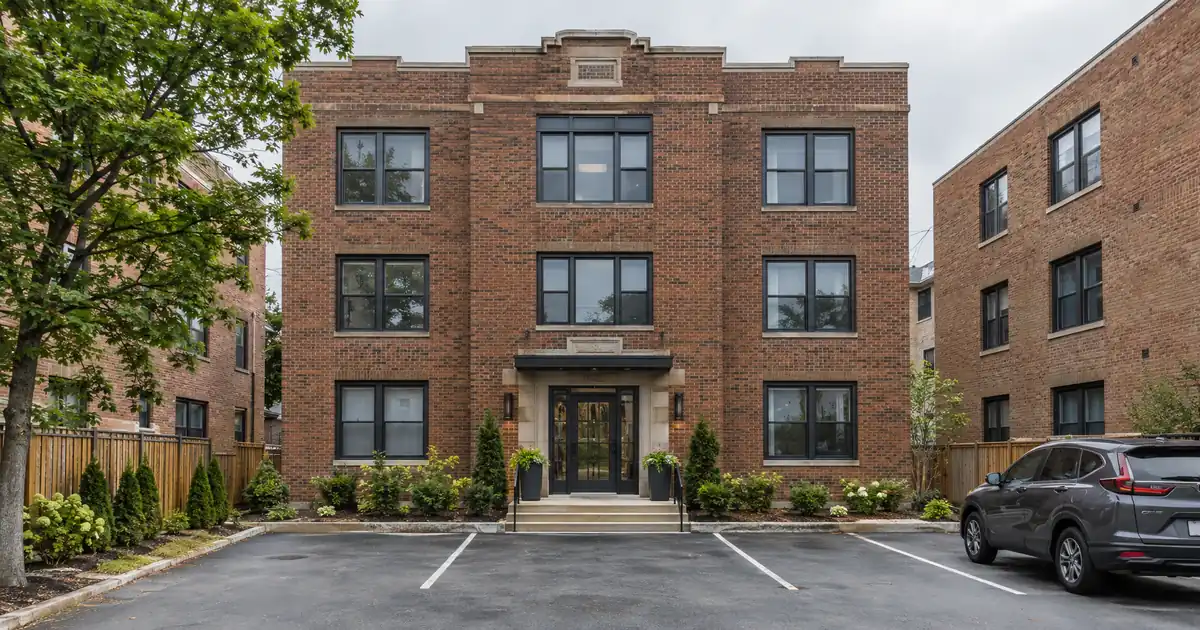
The Quick Read: Ten or more rentals held in an LLC can sit under one DSCR portfolio loan when the properties, the entity paperwork and the guarantor all clear lender review, and the property’s state is not a barrier on the rental portfolio term loan, which allows properties in several states under one note. The pool is tested as a whole: pooled rent against pooled debt service, with every door still needing a lease or an appraiser-supported market rent.
- The 30-year portfolio DSCR loan covers 2 to 20 properties under one note, with leverage up to 80% on a purchase or rate-and-term refinance, subject to lender guidelines.
- The rental portfolio term loan covers five or more properties or units, with leverage up to 75%, and allows properties in several markets or states under one loan.
- The LLC must be authorized to do business where each property sits, and the name must match title, note and insurance.
- Credit and reserves attach to the guarantor, not the entity.
- Release terms and ineligible property types decide more files than the headline ratio.
Most of the friction on these files is paperwork. Lenders rarely reject a pool because the ratio is a hair short. They stall it because one LLC is unregistered in one state, or one lease does not match the rent roll.
What Is a Portfolio DSCR Loan?
A portfolio DSCR loan is one note secured by several rentals. Lenders call the same thing a blanket loan or a cross-collateralized loan. Each property secures the whole debt, and the lender tests the group as one unit.
The formula is simple: total monthly rent across the pool divided by total monthly PITIA across the pool (principal, interest, taxes, insurance, and any HOA dues). The result is one blended ratio. A strong property can carry a weak one, which is the main reason investors pool.
One note on terms. A bank’s “portfolio loan” is a loan the bank keeps on its own books. That is a different use of the word, and it is not what this article covers. Lendmire arranges DSCR loans through a wholesale network of non-QM and DSCR lenders, and the loans here are the pooled kind described above.
A DSCR ratio of 1.00 or better does not mean the portfolio produces positive cash flow. The calculation compares rent to PITIA only. Repairs, vacancy, management, utilities and capital expenses sit outside it.
For the full background, see Lendmire’s complete DSCR loans guide.
Does Being Out-of-State Change the Answer?
Out-of-state ownership adds three separate questions, and files get tangled when they are blended. They are the investor’s home state, the LLC’s state of formation, and the state where each property sits.
| Question | What it affects | What to prepare |
|---|---|---|
| Where the investor lives | Mostly nothing on a DSCR file | Guarantor ID and credit |
| Where the LLC was formed | Good-standing evidence | Formation records, operating agreement |
| Where each property sits | Title, appraisal, insurance, registration | Local title, appraisal, policy per door |
Where you live rarely decides approval. DSCR files qualify primarily on property-level rental income covering the payment, subject to lender guidelines, so a borrower in one state buying in another is routine. What changes is the work around each property, because appraisal, title and recording all happen where the property sits.
Which Structure Fits a 10+ Door Package?
Two structures matter for a 10+ door package. Both are program ceilings and floors, not quotes, and both are subject to lender guidelines.
The 30-year portfolio DSCR loan holds 2 to 20 properties under one note. Loan size runs from $300,000 to $5,000,000, with larger balances on review. Leverage goes up to 80% of value on a purchase and on a rate-and-term refinance. The coverage floor is 1.00, measured on the pool. Rates can be fixed or adjustable, the term is 30 years, and an interest-only period is available. Eligible types are single-family, 2-4 unit, condo and townhome.
The rental portfolio term loan is built for five or more rental properties or units under one loan. Loan size runs from $500,000 to $50,000,000, with larger balances on review. Leverage goes up to 75% of value. Terms are fixed at 3, 5, 7 or 10 years with a balloon at maturity. Both recourse and non-recourse versions exist. A non-recourse loan looks to the real estate, with recourse limited to carve-outs such as fraud and bankruptcy. Properties in several markets or states can sit under one loan. Small multifamily of five or more units is eligible only on this term structure.
Which one fits depends on the exit plan. Investors who want a long fixed schedule and no maturity event lean toward the 30-year structure. Investors with a five-to-ten-year hold and a larger or more varied pool lean toward the term loan. Cross-state packages generally point toward the term loan, because multi-market collateral is a stated feature of it.
Prepayment on the term loan runs on yield maintenance, with a 54-month period on the 5-year note and 114 months on the 10-year note. Reserves are held for taxes, insurance and capital expenditures.
How Do Lenders Treat the 10-Property Count?
The ten-property ceiling that investors hear about is a conventional-loan rule. The Fannie Mae Selling Guide counts financed one- to four-unit properties where the borrower is personally obligated, and it counts properties, not mortgages. A two-unit counts as one.
DSCR files do not run on that rule. They run on each program’s own guidelines. An investor with 10+ doors is not capped out. The practical limits are the program’s property count, the total balance it will hold with one guarantor, and the loan-size range.
Counting still matters for packaging. Ten houses are ten properties. Ten units in four buildings are four properties. Count the way the program does before you decide which structure to approach.
What Does the LLC Need Before the File Goes In?
An LLC that rents property in another state usually has to register there as a foreign entity. Most states treat renting real estate as doing business, so the home-state LLC either foreign-qualifies in the property’s state or the investor forms a new LLC there.
The cost of registration compounds across states, so budget for it qualitatively before you buy in a third or fourth market. Skipping it can bring penalties and can limit what the LLC can do in court.
Registration is not a stated lender rule in every program. It is how these files tend to run: a lender or title company wants the vesting entity authorized and in good standing where the property sits. An unregistered LLC is one of the quieter reasons a closing stalls. Subject to program terms, the entity document set generally looks like this:
1. Formation records for every title-holding LLC, plus a certificate of good standing from the home state, which most states require to file for foreign registration.
2. Operating agreement showing who owns the entity, who signs, and that the entity may borrow.
3. Foreign registration evidence in each property state where one is required.
4. Vesting match. The name on title, the note and the insurance policy must be identical.
5. Ownership trace. If the LLC is owned by another LLC, the lender must be able to trace ownership through each layer to the individual guarantors.
If the doors sit in several LLCs, every title-holding entity generally has to join the loan as a borrower or pledge its collateral. Some structures require a special-purpose entity, typically an LLC. Irrevocable trusts and non-profits are disfavored because a personal guarantee is hard to enforce against them.
Who Is the Guarantor, and What Gets Underwritten?
The LLC takes title and signs the note. An individual signs a personal guarantee on recourse loans, and credit, reserves and experience attach to that person.
On the pooled programs the credit floor is 640, and some portfolio structures want 680 or 720. Those figures are for the portfolio programs, and they differ from the single-property DSCR tiers. Multi-member LLCs usually require guarantees from owners above a set ownership threshold, and the threshold varies by program. When two guarantors sign, a weak partner’s score can set the terms for the whole file.
Many people assume a property-income loan means no personal exposure. On recourse structures, the guarantee is the exposure. Non-recourse exists on the term loan, with the carve-outs noted above. Read which one you are signing.
What Does Each Property Need Inside the Pool?
Every property in the pool carries its own paperwork even though the ratio is blended. Checking each door against this list before submission prevents most pended files:
- Rent evidence. A lease or an appraiser-supported market rent for every unit. Lenders generally credit the lower of the two when both exist.
- Appraisal. It sets value for leverage and market rent for coverage. Appraisers use Fannie Mae Form 1007 as the rent schedule on single-family and Form 1025 on two- to four-unit properties.
- Rent roll. It must reconcile to the leases. A rent roll that disagrees with a lease is a fast way to get a condition added.
- Insurance. A policy for every property, in the vesting name.
- Title. Clearing title happens locally, door by door, so a multi-state pool means several title companies.
- Reserves documentation. Statements for the guarantor’s liquid funds.
Not every property can enter. Owner-occupied property, co-ops, mixed-use property and commercial property are ineligible in the pool. Manufactured and mobile homes are not reviewable on these programs. Log homes and barndominiums are not offered either.
Low-value doors deserve a careful look. Some lenders value each asset individually, so a very small-balance property may not pool as easily as the rest.
Can a Weak Property Sit in the Pool?
Yes, within limits. A rental below 1.00 coverage can sit in the pool, and underwriting tests the pooled coverage, the leverage and the terms. The 30-year structure’s pooled floor is 1.00, so the pool as a whole must clear it. The only sub-1.00 fact on this structure is a single property inside a pool whose combined coverage still clears the floor.
Say you own twelve single-family rentals across several markets. Nine cover their own payment comfortably and three do not. The blended number can still clear 1.00 because the stronger doors carry the weaker ones. That helps at submission. It also means the weak doors are a drag on any future release, because the remaining pool must still cover its debt service after a sale.
Separately, single-property DSCR loans can go below 1.00 coverage through select lenders in the network, with leverage and terms adjusted. That is a different path from the portfolio structures and does not change the pooled floor above.
Why Do 10+ Door Files Stall?
Beyond paperwork, the quiet limiter at 10+ doors is lender exposure. A program with a generous property count still limits how much total balance one guarantor or entity can carry. Those limits are not always published, which is why a pool that looks eligible on paper can get pended. Ask about exposure before the package is built, not after the appraisals are ordered.
Pools with uneven collateral markets draw extra review. A weak submarket, a thin rental market, or a property needing work can pull on the whole note, because the lender is secured by every door.
Remote ownership draws questions too. Reviewers often want to see how a pool spread across markets is managed: a management arrangement, local insurance coverage, and some evidence that the owner understands each market. Assemble that once for the whole portfolio rather than answering it property by property. Short-term rental rules can vary by city, county, HOA and property type, so investors should confirm local rules before relying on projected rental income.
Release, Cross-Collateralization and Exit
Cross-collateralization means every property backs the full debt. That is the cost of pooling. If you sell one house, partial releases, substitutions and sales follow the loan documents and the lender’s release terms. The release price runs above the property’s allocated balance, and the remaining portfolio must still cover its debt service.
Questions to put to the lender before committing:
| Question | Why it matters |
|---|---|
| Is a partial release mandatory or discretionary? | Discretionary can mean a refusal |
| Is the remaining pool retested? | A weak remainder can block a sale |
| Is there a minimum remaining property count? | It can trap the last few doors |
| How does yield maintenance stack with release? | Costs can add up on the term loan |
Lendmire’s piece How to Sell One House Out of a DSCR Portfolio With 10+ Doors in LLCs walks through that exit in more detail.
On a cash-out, the pooled ceiling is 75% of pooled value. Inside the first six months of ownership the loan is also capped at 90% of total cost (purchase price plus documented improvements), and at 100% of total cost from six to twelve months. The leverage ceiling still applies, and the loan is the lower of the two. After twelve months the appraised value alone is the basis. A rate-and-term refinance is not subject to the cost-basis cap.
Pool or Keep Separate Loans?
| Factor | One pooled loan | Separate loans |
|---|---|---|
| Closings and payments | One note | One per door |
| Collateral | Every door backs the debt | Each door stands alone |
| Selling one door | Release terms apply | Pay off that loan |
| Weak property | Can ride on stronger ones | Tested alone |
| Entity paperwork | Filed once, heavy | Repeated per loan |
Pooling fits investors who want one servicing relationship, who hold a few lower-value doors that would struggle alone, or who are buying a package from one seller. Separate loans fit investors who sell often or want each exit to stay clean. The honest answer for many 10+ door LLCs is a mix: pool the stable core and keep the doors you plan to trade on their own notes.
Key Terms Defined
Blanket loan: One note secured by several properties, so each property backs the whole debt.
Pooled coverage: Total rent across the pool divided by total PITIA across the pool.
Foreign qualification: The registration an LLC files to do business in a state other than where it was formed.
Cross-collateralization: The structure where every property in the pool secures the full balance.
Recourse: A loan with a personal guarantee. Non-recourse limits the lender to the real estate, with carve-outs.
Partial release: Lender consent to remove one property from the pool on payment of the release price.
Frequently Asked Questions
Can one portfolio loan cover properties in different states?
On the rental portfolio term loan, yes: properties in several markets or states may sit under one loan. The 30-year portfolio structure is a separate product with its own footprint, so confirm eligibility for each state in your package before ordering appraisals.
Does a Delaware or Wyoming LLC work for out-of-state rentals?
It can hold title, but it still has to register in the property’s state where that state requires it, and the vesting name has to match title, note and insurance everywhere. The formation state does not replace foreign registration.
Do I need to sign a personal guarantee?
On recourse loans, yes. Non-recourse versions exist on the rental portfolio term loan, with recourse limited to carve-outs such as fraud and bankruptcy. Credit and reserves are reviewed on the guarantor either way.
Is there a ten-property limit on DSCR loans?
No. That cap belongs to conventional agency loans. DSCR programs set their own limits on property count, loan size and total exposure, so the ceiling is program-specific and subject to lender guidelines.
Which properties can’t go into the pool?
Owner-occupied property, co-ops, mixed-use and commercial property are ineligible. Manufactured and mobile homes are not reviewable on these programs, and log homes and barndominiums are not offered.
If you are buying or refinancing a rental property and want to see how the numbers work, Lendmire can help you compare DSCR loan options based on the property income, credit profile, leverage, and investor goals. Terms are subject to lender guidelines and are not a commitment to lend. Tax treatment varies; consult a qualified tax professional.
About Lendmire
As a DSCR and non-QM mortgage broker, Lendmire — NMLS# 2371349 — connects investors with wholesale lending channels across 41 markets, including Washington, D.C. The property’s rental income, not the borrower’s tax returns, is central to lender review, which works for self-employed operators and portfolios beyond four financed properties. Scotsman Guide named Lendmire a Top Mortgage Workplace in both 2025 and 2026.
Get Started
Ready to find the right loan for you?
In about 30 seconds you can review financing options available for your investment property. No commitment required.
Informational only. Not a Loan Estimate, approval, or commitment to lend. Program availability and eligibility are subject to lender guidelines, credit approval, property review, and underwriting.
References
1. Fannie Mae Selling Guide B2-2-03
This article is part of Lendmire’s DSCR loan program — full qualification details, guidelines, and scenarios live on the program page.
Related reading: Closing a Portfolio DSCR Loan in a Trust vs Deeding Out First · Can a Portfolio DSCR Loan Close While One Tenant Is Being Evicted? · How Community-Property Rules Limit a W-2 Investor’s Portfolio DSCR Loan
Brandon Miller
Founder & CEO, Mortgage Loan Originator, Lendmire LLC
- Mortgage Loan Originator · NMLS# 1129696 · Verify on NMLS Consumer Access
- North Carolina Real Estate Broker · License# 343312 · Verify on NCREC
- North Carolina Insurance Producer · License# 19053198 · Property, Casualty, Life, Health · Verify on NAIC SBS
- Lendmire LLC · Firm NMLS# 2371349 · Verify firm licensure
Disclosure information. Lendmire is a state-licensed mortgage brokerage under NMLS# 2371349. Lendmire is not a depository institution, direct lender, or financial advisor — all loans referenced are placed through wholesale lender partners and are subject to each lender's underwriting standards. This article is provided for general informational purposes and is not a commitment to lend, nor does it constitute financial, legal, or tax advice. Loan programs, terms, rates, and qualification standards change without notice and depend on borrower profile, property type, and the state in which the subject property is located. Equal Housing Opportunity provider. NMLS Consumer Access: nmlsconsumeraccess.org.